
🌿 American Elm: Growing Guide
What it looks like

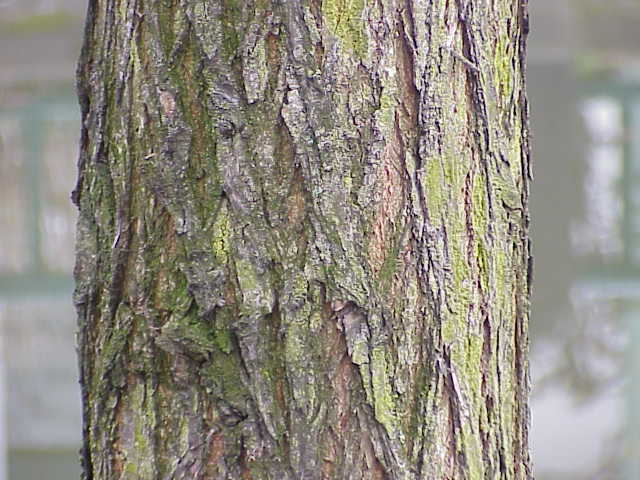

Meet the tree
If trees had a signature silhouette, the American elm’s would be the vase: a tall, straight trunk that forks upward and outward into a symmetrical, fountain-like crown. UF/IFAS describes a fast-growing tree reaching 70 to 90 feet tall with a 50- to 70-foot spread, and old trunks can grow enormously wide. The leaves are dark green through the growing season and turn yellow before dropping in fall, so this is a shade tree with an actual autumn moment — a rarer treat in Florida than it should be. Flowers appear in early spring, before the leaves, and the small winged fruits (samaras, 3/8 to 1/2 inch long) attract birds. Dad joke, mandatory: an elm is the only tree that can hold up a whole street’s worth of shade and still insist it is just vase-ing around.
There is also a Florida form worth knowing by name: Florida elm (Ulmus americana var. floridana), the form UF/IFAS Gardening Solutions profiles for Florida gardens. It is described there as a tall, straight-trunked tree with an elegant vase-shaped crown, typically 60 to 80 feet tall and 50 to 60 feet wide, with six-inch-long leaves, moderate drought tolerance, and moderate salt-spray tolerance. If you are shopping in Florida, ask which form or cultivar you are actually buying — “elm” on a tag is not a complete answer.
This guide is the standalone growing guide for American elm. For the native-plant profile, see American elm on Living Root Garden, and for the wider elm family, see Elm: Growing Guide.
Where it grows in Florida — and where it does not
American elm occurs naturally in north and central Florida south to Lake Okeechobee, according to UF/IFAS. That sentence does a lot of quiet work: this is not a plant-it-anywhere-in-Florida tree. In the far south, heat and a lack of chill make it a poor bet, and UF/IFAS notes that while the species is listed to zone 9B, individual trees have been seen growing well in zone 10 in Florida near water and along streets. Treat that as “possible near water in a favorable spot,” not as a promise for a dry inland lot in zone 10. In north and central Florida, give it the classic elm site: full sun, room to become a 70-foot vase, and soil that drains. It adapts to a wide variety of soils — clay, loam, or sand, acid or alkaline — which is part of why it was so popular before disease rewrote its story. It is, however, a tree with an extensive but shallow root system, so plan for surface roots near walks and drives in time, and never plant it where a 50- to 70-foot crown will fight the power lines in twenty years. Future you, holding a pruning saw under a power line, will not be amused.
Planting: buy the resistance, not just the romance
Here is the honest heart of this guide. American elm was once one of the most popular street trees in North America until Dutch elm disease (DED) — a fungus spread by bark beetles — began its march across the continent, in UF/IFAS’s words. The good news, specific to Florida, is that UF/IFAS Gardening Solutions reports Dutch elm disease has not yet been detected in Florida, and that in areas such as Texas and Florida, where elm populations are lower than in northern climates, the disease is not likely to be as big a problem as in regions with more elms. The bad news is “not yet” and “not likely” are not “never,” so plant like a pessimist and enjoy the tree like an optimist.
Practical rules:
- Choose resistant selections where you can. UF/IFAS names ‘Valley Forge’, ‘New Harmony’, ‘Princeton’, and ‘Jefferson’ among selections reported to tolerate Dutch elm disease, with ‘Valley Forge’ and ‘New Harmony’ described as the most tested. Check the cultivar’s zone range before buying — several of these are rated for colder zones than much of Florida, so a Florida-adapted form may be the smarter local choice. Ask your nursery and your county extension office, not just the tag. For a side-by-side look at these selections, with National Elm Trial results and which growers list each one, see HortOS’s guide to Dutch elm disease resistant elms.
- Plant in fall or early spring from a container or balled-and-burlapped tree, at the same depth it grew in the nursery. Dig the hole wide, not deep: a wide planting hole in loosened soil helps those shallow roots get going, and the root flare should sit visible at the surface, not buried like a secret.
- Give it 25-plus feet from structures, drives, and lines. The group-guide spacing advice exists because a vase 50 to 70 feet wide does not negotiate.
- Water it in deeply and mulch wide. A 3- to 4-inch mulch ring, kept off the trunk itself, holds moisture and keeps mowers and string trimmers away from bark. Volcano mulching — mulch piled against the trunk — is how a good tree gets a slow rot problem. The trunk is not a volcano. It does not want to erupt.
Water & feeding: soil food first
Water deeply through the first two years while the root system establishes, then water in dry spells; established elms tolerate heat and drought reasonably well but grow best with occasional deep watering rather than daily sprinkles. Shallow, frequent watering trains shallow roots, which is the opposite of what a big vase-shaped tree needs in a storm. Feed the soil, not the ego of the tree: a spring top-dressing of compost — worm castings included, if you have them — plus that mulch ring will do more good than a bag of fast-release fertilizer. Elms are not hungry in the way a tomato is hungry. If growth is genuinely poor, check drainage, compaction, and root flare before reaching for fertilizer, because a drowning or buried elm will not be fixed by feeding it.
One Florida-specific note: the Florida elm form is described as moderately tolerant of drought and salt spray. “Moderately” is doing honest work there. It is not a beachfront tree, and it is not a set-it-and-forget-it tree in a drought. Think “forgiving,” not “invincible.”
Pruning & structure: this is the real work
UF/IFAS is blunt about this, and so is this guide: elms are susceptible to breakage in storms because of bark inclusions that form in the crotches of co-dominant stems where branches join at a narrow angle. Translation: a fork with bark pinched inside it is a weak fork, and a weak fork on a 70-foot tree is a future headline. A regular pruning program is required to develop good structure, starting young: pick one central leader where possible, remove or subordinate co-dominant stems before they get big, and take out dead, crossing, and rubbing branches. Prune in late fall through winter, never in spring or summer when the bark beetles that spread Dutch elm disease are active — that timing rule from the elm group guide is the single easiest disease precaution you can take. Make clean cuts just outside the branch collar, never flush, never topped. Topping an elm does not make it smaller; it makes it a sprouting, weakly attached mess that will cost more later.
Pests, diseases & problems
- Dutch elm disease — the big one. UF/IFAS advises a monitoring program if you plant American elm: watch for wilting, yellowing, and browning leaves on individual branches, and act fast. Remove dead wood promptly, and talk to an arborist or your extension office at the first suspicious branch rather than waiting to see if it spreads. It spreads. That is its whole personality.
- Elm leaf beetle and elm leafminer — cosmetic defoliation in bad years, listed in the elm group guide. Healthy trees usually outgrow it; do not panic-spray a 60-foot tree because of chewed leaves.
- Storm breakage — see pruning above. Structure is prevention.
- Pollen allergies — UF/IFAS Gardening Solutions notes elms are reported to produce allergenic pollen. If spring pollen already ruins your month, site the tree away from bedroom windows and patios, or pick another shade tree.
- Wood that refuses to split — not a growing problem, but a fun fact for anyone who has ever swung a maul at elm: UF/IFAS notes the wood weighs about 54 pounds per cubic foot and is very difficult to split because of its crossed grain. Your firewood pile has opinions about this tree.
Wildlife & ecology
American elm is a genuine wildlife tree: its fruits attract birds, and its broad crown is nesting and shelter habitat. UF/IFAS Extension Lake County lists Ulmus americana among keystone plants for central Florida — the smaller group of native species that support insect populations out of proportion to their numbers. Planting a native elm is therefore not just shade for your house; it is a cafeteria for the food web, with caterpillars feeding birds in a chain that starts at the leaf. The wood has a long working history too: UF/IFAS notes it was a valuable timber tree, used for furniture, and that indigenous peoples made canoes from it. A tree with a past like that deserves a planting hole dug with some respect.
Florida mistakes to avoid
- Planting a generic, susceptible seedling for nostalgia and skipping the cultivar question entirely.
- Pruning in spring or summer, when disease-carrying beetles are active.
- Planting under power lines or 10 feet from the driveway because the nursery pot looks small. The pot is lying. The tree is not.
- Volcano mulching, burying the root flare, or letting a string trimmer girdle the trunk.
- Assuming “not detected in Florida” means “cannot happen here” and skipping monitoring.
Saving seeds
American elm (Ulmus americana) breaks the usual tree-seed rules, and that is good news for anyone impatient. Most famous trees make you wait out a long winter of stratification before a seed will even consider sprouting. Elm does not. It flowers in spring, drops its seed in spring, and expects that seed to get growing almost immediately, the way it would on a damp floodplain after the samaras flutter down. If you remember one sentence from this section, make it this one: sow elm seed fresh, and sow it now.
The seed is the samara, the small, flat, papery-winged disc that spins down in spring, usually from April into June depending on where you live. Collect when the samaras are mature but still fresh, ideally as they start to fall, and handle them gently; the seed inside has no endosperm to fall back on, so a battered samara is a wasted samara.
Here is where sources disagree, and you should know it rather than be handed a false certainty. Freshly collected elm seed generally germinates without any cold stratification at all, often within days to a few weeks when kept warm and evenly moist. Some growers still give seed a short cold, moist chill of a few weeks and report good results, especially with seed that has dried or been stored. The honest reading is that freshness matters more than chilling: sow fresh seed shallowly, barely covered, about an eighth of an inch deep, in moist seed mix, and keep it moist without waterlogging. If your seed has already dried out or sat in storage, a few weeks in the refrigerator in damp sand or peat may help, but expect lower germination than from fresh seed, because elm seed loses viability quickly under ordinary storage. Do not bank on last year’s envelope; this is a use-it-or-lose-it seed.
For storage, if you must hold seed at all, dry the samaras briefly for a day or two, then seal them airtight with a desiccant packet and keep them cool and dark. Even then, think in terms of weeks to months, not years, and sow generously to cover the duds.
The most important caution in this whole section is about disease. Seedlings grown from seed are genetically variable, and they do not inherit a parent’s disease resistance in any reliable way. A seedling raised from a Dutch elm disease-resistant cultivar is not a resistant tree; it is a gamble. If you want a resistant elm, buy a named resistant cultivar from a nursery. Grow from seed for the joy of it, for wildlife, for a fast shade tree from a tree you love, but do not sell yourself a seedling as a resistant tree, because it is not one. Seedlings will be true American elms, not copies of a named cultivar, and not F1 hybrids either, just variable, open-pollinated offspring of whatever elms were flowering nearby.
Florida note: this guide places American elm in north and central Florida, and notes Dutch elm disease has not been detected in Florida, which is not the same as saying it cannot arrive. Keep monitoring, buy resistance when you buy a tree, and do not let a seed-grown seedling’s vigor talk you out of that. In Florida heat, sow fresh seed in light shade and never let the seedbed bake dry; humidity is no excuse to store seed damp and warm, which only invites mold.
Sources
- UF/IFAS Gardening Solutions, “Florida Elm” — Florida elm form, size, zones, drought and salt-spray tolerance, Dutch elm disease not yet detected in Florida: gardeningsolutions.ifas.ufl.edu/plants/trees-and-shrubs/trees/florida-elm/
- UF/IFAS EDIS ST649, Gilman et al., “Ulmus americana: American Elm” — size, zones, root system, seed age, fruit size: edis.ifas.ufl.edu/publication/ST649/pdf
- UF/IFAS, Gilman, “American Elm — Tree selection” — soil tolerance, natural range in Florida, resistant cultivars, bark inclusions: ask.ifas.ufl.edu/publication/ST649
American elm native profile • Elm: Growing Guide • Browse all plant & pest guides