
🌸 Aurora Korean Spice Viburnum
What it looks like
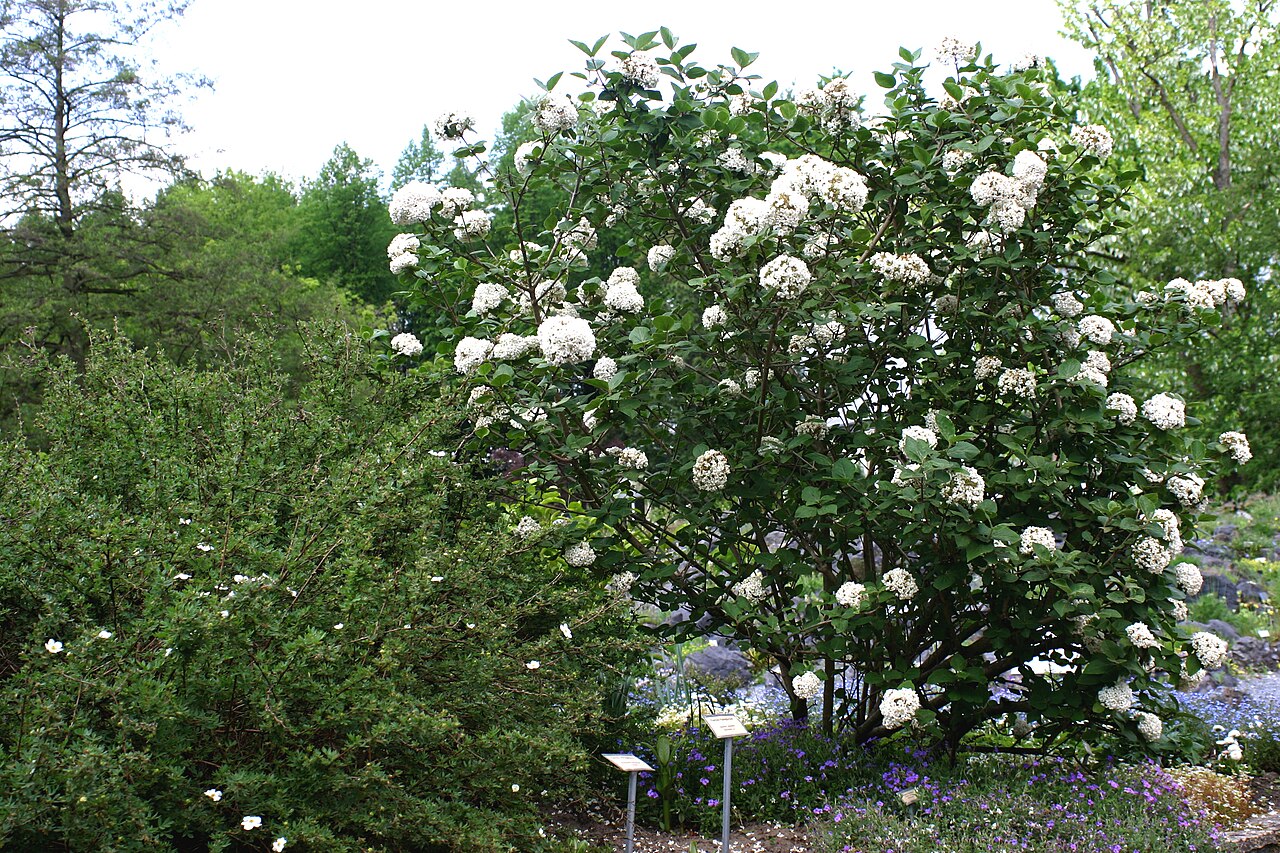
This photo was taken by Rüdiger Wölk. Please credit this photo Rüdiger Wölk, Münster.
View all photos (large page) of Rüdiger Wölk
I would also appreciate an email to rudiger.wolk@gmail.com with details of use.
Für Hinweise auf Veröffentlichungen (rudiger.wolk@gmail.com) oder Belegexemplare bin ich Ihnen dankbar., CC BY-SA 2.5.


Why this variety
Aurora is the Korean spice viburnum for gardeners who want the fragrance turned up: a spreading form 6 to 8 feet tall and wide, with prolific deep pink-red buds that open to pinkish-white flowers in clusters larger than the species’, and a fragrance described as very strong — the spicy, clove-like scent that makes this species famous, at full volume. It is a Royal Horticultural Society Award of Garden Merit winner, with red fall color and bronze spring foliage as a bonus.
The trade-off is size: Aurora grows larger than most Korean spice selections, so it is a specimen or back-of-the-border shrub, not a foundation plant for a small house. Give it room, sun to part shade, and moist, well-drained soil, and it will stop foot traffic in April. Florida honesty: this viburnum needs real winter cold to bloom well, and Florida mostly does not provide it — in Florida treat it as a north-Florida experiment, not a reliable bloomer. Without enough chill, flowering is sparse and the plant spends summer merely surviving heat it was never bred for.
If you are new to choosing between cultivars, the Varieties Matter guide explains why the name after the plant matters as much as the plant itself. See also the species guide: Korean Spice Viburnum.
How to grow
Plant in full sun to part shade in moist, well-drained soil — it tolerates clay if drainage is decent. Space plants 6-8 feet apart and water in well. Because it flowers on old wood, plant it where it can reach full size without hard annual pruning; a Korean spice viburnum hacked back every year blooms poorly.
Water & feeding
Water to establish and in dry spells; it likes steady moisture but hates waterlogged soil. Work worm castings into the planting hole and mulch to hold moisture. Feed lightly in spring; heavy feeding grows soft wood that winter damages.
Common problems
- Sparse bloom after hard pruning — it flowers on old wood, so prune only right after flowering.
- Leaf spot and bacterial blight in wet weather — improve air flow, clean up fallen leaves.
- Aphids on new growth — blast with water; predators usually follow.
- Viburnum beetle larvae skeletonizing leaves — hand-pick or encourage birds.
- Winter dieback at the cold edge of its range — site out of harsh wind and mulch the root zone.
Pruning & care
Prune immediately after flowering finishes — never in winter or early spring, or you cut off that year’s bloom. Remove dead wood and crossing branches, and let the shrub keep its natural rounded form; shearing ruins both the shape and the flowering.
Browse all plant & pest guides
Saving seeds
Aurora is a named cultivar, so seed saved from it won’t come true — buy a nursery shrub instead. The Saving seeds section of the Korean Spice Viburnum guide covers seed for the straight species.