
🌸 Korean Spice Viburnum
What it looks like
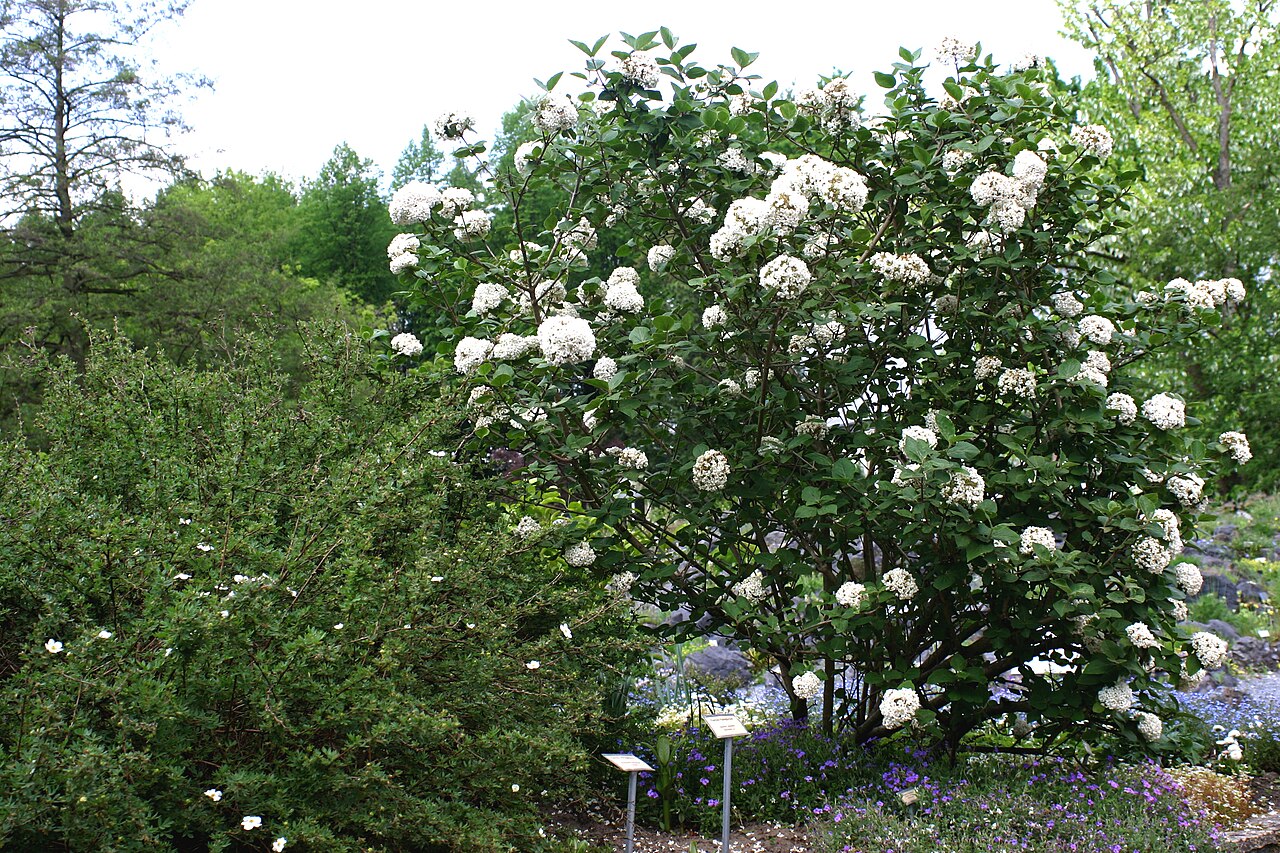
This photo was taken by Rüdiger Wölk. Please credit this photo Rüdiger Wölk, Münster.
View all photos (large page) of Rüdiger Wölk
I would also appreciate an email to rudiger.wolk@gmail.com with details of use.
Für Hinweise auf Veröffentlichungen (rudiger.wolk@gmail.com) oder Belegexemplare bin ich Ihnen dankbar., CC BY-SA 2.5.


Quick facts
- Sun: Full sun to part shade; more sun means more flowers and fruit
- Soil: Average, moist, slightly acidic, well-drained soil; does not tolerate soggy soil
- Spacing: 4–6 feet apart
- Mature size: Typically 4–8 feet tall and wide, slow-growing, rounded
- Zones: USDA zones 4–7 (some listings to 8)
- Florida: North Florida trial only — heat is the limit; see the honest Florida note below
What it is
Korean spice viburnum is a shrub with a one-sentence reputation: the most fragrant viburnum you can plant. Viburnum carlesii, native to Korea and Japan, is a slow-growing, bushy, deciduous shrub with a rounded habit, downy, toothed leaves, and spring flower clusters that are the whole reason it exists in gardens. The buds are deep pink; they open to waxy, blushing-pink flowers that fade to brilliant white, arranged in rounded, snowball-like clusters about 2 to 3 inches across. The fragrance is sweet, spicy, and clove-like, and it carries — plant one near a path, patio, or window, and spring will announce itself before you see a single bloom.
After flowering, small berries follow, ripening from red to black in autumn, though they are often hidden in the foliage and are more of a bird treat than a display feature. Autumn foliage turns red and burgundy, giving the shrub a second season of interest after the perfume fades. The fragrance lasts roughly two weeks at peak, which is why placement matters: this is a plant to put where you actually walk, not at the back of a border you visit twice a year.
How to grow
Plant in spring or autumn in full sun to part shade, in average, moist, slightly acidic, well-drained soil. It tolerates a range of soil types but draws two firm lines: no soggy soil, and no deep shade (which cuts flowering). Water deeply during the first growing season to establish an extensive root system, then keep soil evenly moist — not wet, not bone-dry. Mulch to conserve moisture and keep roots cool.
Pruning has one rule that matters: flower buds form on old wood, so prune immediately after flowering, never in winter or early spring, or you will cut off the year’s show. It tolerates pruning well and can be cut back hard every few years after flowering to renew an overgrown plant. Otherwise, let its naturally rounded shape do the work — this is not a shrub that needs shearing into submission.
Water & feeding
Evenly moist soil is the goal through the growing season; drought stress reduces flowering and autumn color. Feed with a general-purpose fertilizer before new growth begins in spring, if the soil is poor — in decent soil, compost mulch is enough. Avoid high-nitrogen feeds that push soft, leggy growth at the expense of the flower buds you planted it for.
Common problems
Korean spice viburnum is relatively pest-light, though aphids and scale may appear, and bacterial leaf spot can occur in wet conditions. Good airflow, correct spacing, and not overwatering the foliage prevent most trouble. Its slow growth is a feature, not a flaw — do not try to hurry it with fertilizer, or you will get a big, floppy shrub with fewer flowers.
Seasonal interest
Spring is the headline: pink buds, white flowers, perfume. Summer is quiet, green, and structural. Autumn brings red and burgundy foliage plus dark berries for birds. Winter is bare branches with a handsome, branching structure — plant it where the winter silhouette is not an eyesore, or underplant it with evergreens.
The honest Florida note
Korean spice viburnum’s hardiness range stops at zone 7 or 8, and Florida heat is the honest limit. It needs a cold winter to set buds properly and cool springs to flower well, and Florida’s warm winters and long, hot summers work against both. A far north Florida gardener in the coolest microclimate, with afternoon shade and evenly moist, acidic soil, could trial it as a fragrant experiment — but it should not be sold, even to yourself, as a reliable Florida shrub. Central and south Florida gardeners who want viburnum fragrance should look to heat-adapted viburnum relatives and enjoy this one as a reference plant for what a great fragrant shrub smells like where it belongs.
Nerdy fact: fragrance of Korean spice viburnum comes from the same family of spicy-sweet compounds that perfumers chase in cloves and carnations — which is why one shrub can perfume a whole garden. Plant breeders have spent decades crossing it with other viburnums trying to keep that perfume while gaining size and heat tolerance; the hybrids are good, but purists will tell you the original still smells best.
Where it fits in the Living Root guides
This plant is also covered in our survey guide to the wider group — see Viburnum: Growing Guide for how it compares with its relatives. Browse all the plant guides in the Plant Guides index.
Saving seeds
Korean spice viburnum makes seed, but it makes you wait for it — and the wait is the whole story of this section. The fragrant white flower clusters give way to red berries that ripen to black in late summer and fall, each holding a single flat seed. Birds love the berries, so if you want the seed for yourself, you will need to be quicker than they are: watch for the berries turning black, then collect them before the birds strip the shrub bare.
Clean the seed before you store it. Soak the berries overnight to soften the pulp, then rub them through a sieve or squeeze them by hand until the pulp is gone, and rinse the seed clean. Pulp left on the seed invites mold in storage and can slow germination, so do not skip this step. Dry the cleaned seed thoroughly, spread thin on paper, then store it in a labeled envelope or jar, cool and dark, until you are ready to start the stratification — and stratification is where the patience comes in.
Here is the honest disagreement: sources do not agree on exactly how much chilling this seed needs, and the reason is that it has double dormancy — the seed needs a warm period first, then a cold one, and the two stages can add up to well over a year. Some guides give about three months of warm-moist stratification followed by three months of cold; others say the full process can take 18 months before a seedling appears. The practical answer is to let nature do the measuring: sow fresh seed outdoors in fall, in a pot of moist mix sunk in a sheltered spot, and let a warm autumn and a cold winter do the work in sequence. Or, indoors, mix the seed with damp vermiculite in a sealed bag, keep it warm (around 70°F) for about three months, then move the bag to the fridge for another three months, checking now and then that the mix stays moist, never soggy. Sow thickly — germination is often uneven, and a batch that looks dead in spring can still surprise you the following year, so do not throw the pot away.
Two truths before you fill the seed rack. First, named cultivars — the selected forms with the best fragrance or the tidiest habit — do not come true from seed. Seed-grown plants vary, and the only way to copy a named cultivar exactly is a semi-hardwood cutting taken in summer, rooted in a moist, well-draining mix. Grow from seed when you want more shrubs and do not mind a little variation; take cuttings when you want the exact plant you already have. Second, this shrub is slow from seed in every sense — slow to germinate, slow to grow, and several years from a seedling to a flowering shrub. That is not a reason to skip it; it is a reason to start the seed now and let time do what time does.
In Florida, be honest with yourself about this one. Korean spice viburnum is a cool-climate shrub that wants a real winter chill and summers that are not a furnace. In north Florida it may settle in with afternoon shade and moist, well-drained soil; in central and south Florida, treat it as a short-lived experiment rather than a permanent resident. Good seed cannot fix a climate mismatch — it can only give you the best possible start in the right spot.
Varieties
Every named variety of Korean Spice Viburnum with its own growing guide:
- Aurora Korean Spice Viburnum — The showiest spice: larger clusters, deep pink buds, and fragrance you can smell from the path.
- Compactum Korean Spice Viburnum — The dwarf spice: full fragrance on a plant that seldom tops 3 feet.
- Spice Baby Korean Spice Viburnum — The small-space spice: compact fragrance for gardens the species would swallow.