
✨ Touch of Class Creeping Jacob's Ladder
What it looks like
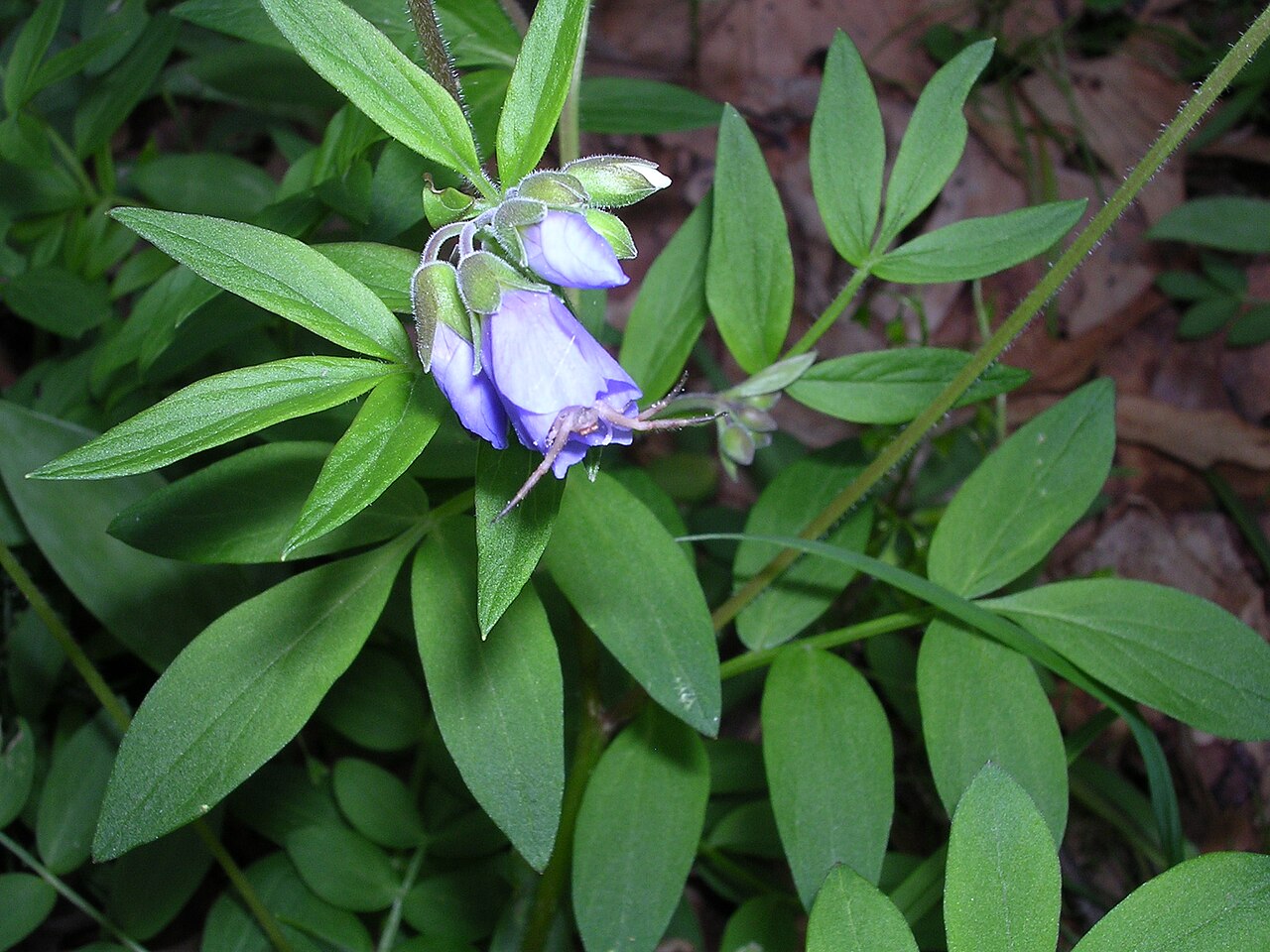

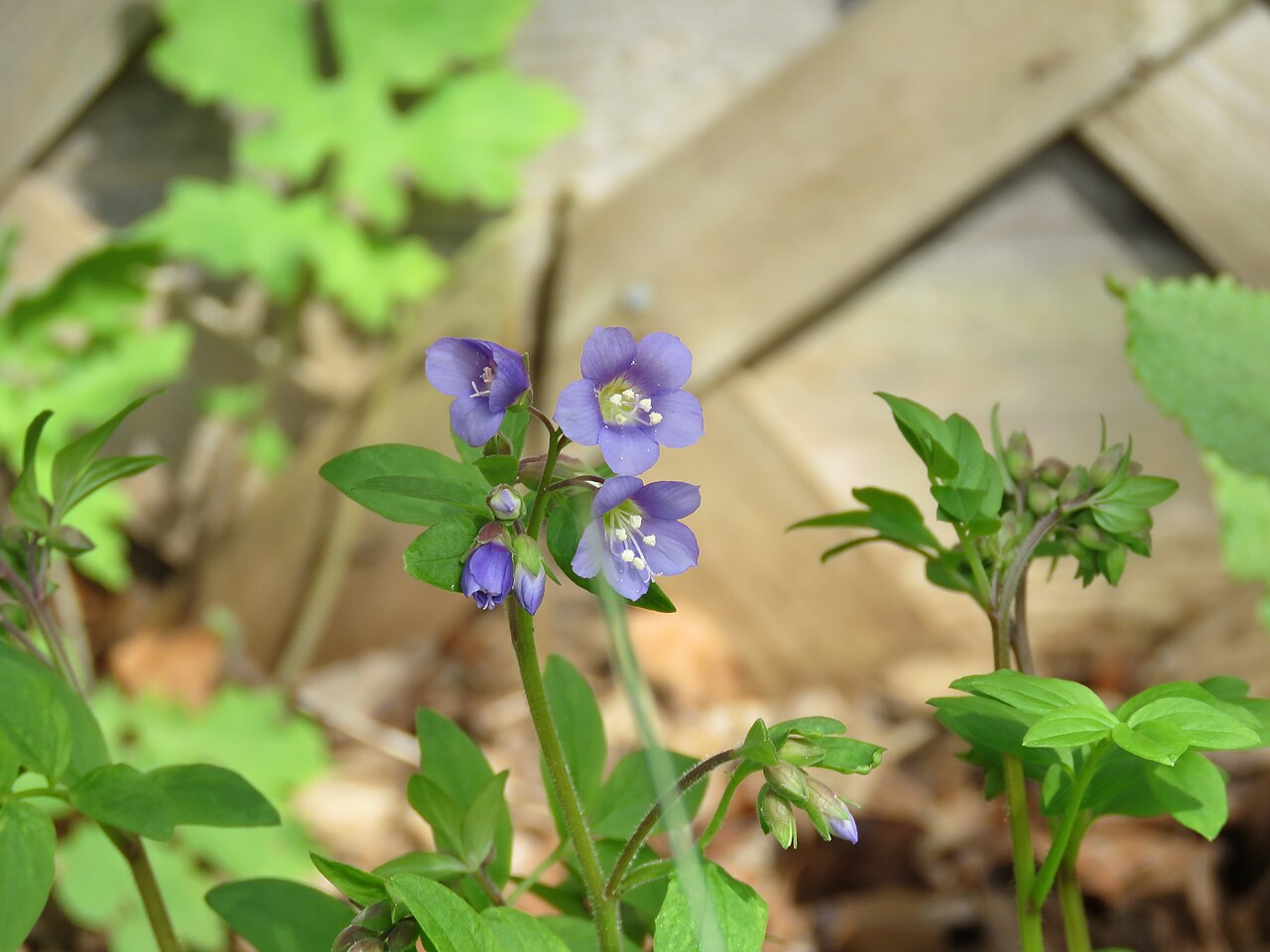
Why this variety
Touch of Class is a sport of Stairway to Heaven — a refined, patented (PP 19,768) selection of Polemonium reptans bred for a compact habit and vivid variegation. The foliage is a mound of sage-green, ferny leaves with each leaflet neatly edged in white, and pink buds open to pale, sky-blue flowers in late spring. It is smaller and tidier than its parent: about 14 inches tall, 18 inches wide, with flower stalks reaching about 24 inches.
It is also the best-behaved variegated ladder for the front of the border — compact enough for edging and containers, showy enough to carry a shady corner on foliage alone before a single flower opens. Like all variegated polemonium, it is a little less vigorous than plain green forms and wants cool, moist, humus-rich soil. Florida honesty: polemonium hates Florida heat and humidity — it is a cool-climate woodland plant, so in Florida treat it as a north-Florida shade trial only, with cool, humus-rich, moist soil and afternoon shade, and expect it to go dormant or sulk through summer. It is not a reliable Florida perennial, and no variety changes that; variegated forms are, if anything, a little less vigorous in heat than plain green ones.
If you are new to choosing between cultivars, the Varieties Matter guide explains why the name after the plant matters as much as the plant itself. See also the species guide: Creeping Jacob's Ladder.
How to grow
Plant in spring or autumn in part shade, in fertile, humus-rich soil that holds moisture but drains. Space plants about 15 inches apart and mulch lightly with leaf litter to keep roots cool. It shines at the front of a shade border, along a path, or in a container kept out of hot sun.
Water & feeding
Water during establishment and in dry spells; drought may send it dormant early. Work worm castings into the bed at planting and feed lightly — variegated plants do not want a heavy nitrogen push, which grows soft, floppy foliage that sun-scorches.
Common problems
- Variegation fading in warm weather — normal for variegated polemonium; cream margins return in cool weather.
- Summer dormancy in heat or drought — keep roots moist and wait for next spring.
- Crown rot in wet, poorly drained soil — drainage is the whole game.
- Slugs and snails on soft shade foliage — hand-pick or barrier.
- Sun-scorch on white leaf margins in hot sun — give it afternoon shade, especially in warm climates.
Cutting back
Cut back spent flower stems after bloom to keep the mound tidy and encourage fresh foliage. Divide congested clumps in spring or autumn, and remember that as a patented cultivar it is not licensed for unlicensed propagation — buy new plants rather than splitting for sale.
Browse all plant & pest guides
Saving seeds
Touch of Class is a sport of Stairway to Heaven — a refined, patented (PP 19,768) selection of creeping Jacob’s ladder bred for a compact habit and vivid variegation: a mound of sage-green, ferny leaves with each leaflet neatly edged in white, and pink buds opening to pale, sky-blue flowers in late spring, about 14 inches tall and 18 inches wide. Seed will not repeat the variegation — seedlings revert to plain green — so Touch of Class is kept true by division, not by seed. Divide an established clump in spring or fall, keeping a good piece of root with each division, and replant at the same depth. The full method is in the Saving seeds section of the Creeping Jacob’s Ladder guide.