
🪜 Creeping Jacob's Ladder
What it looks like
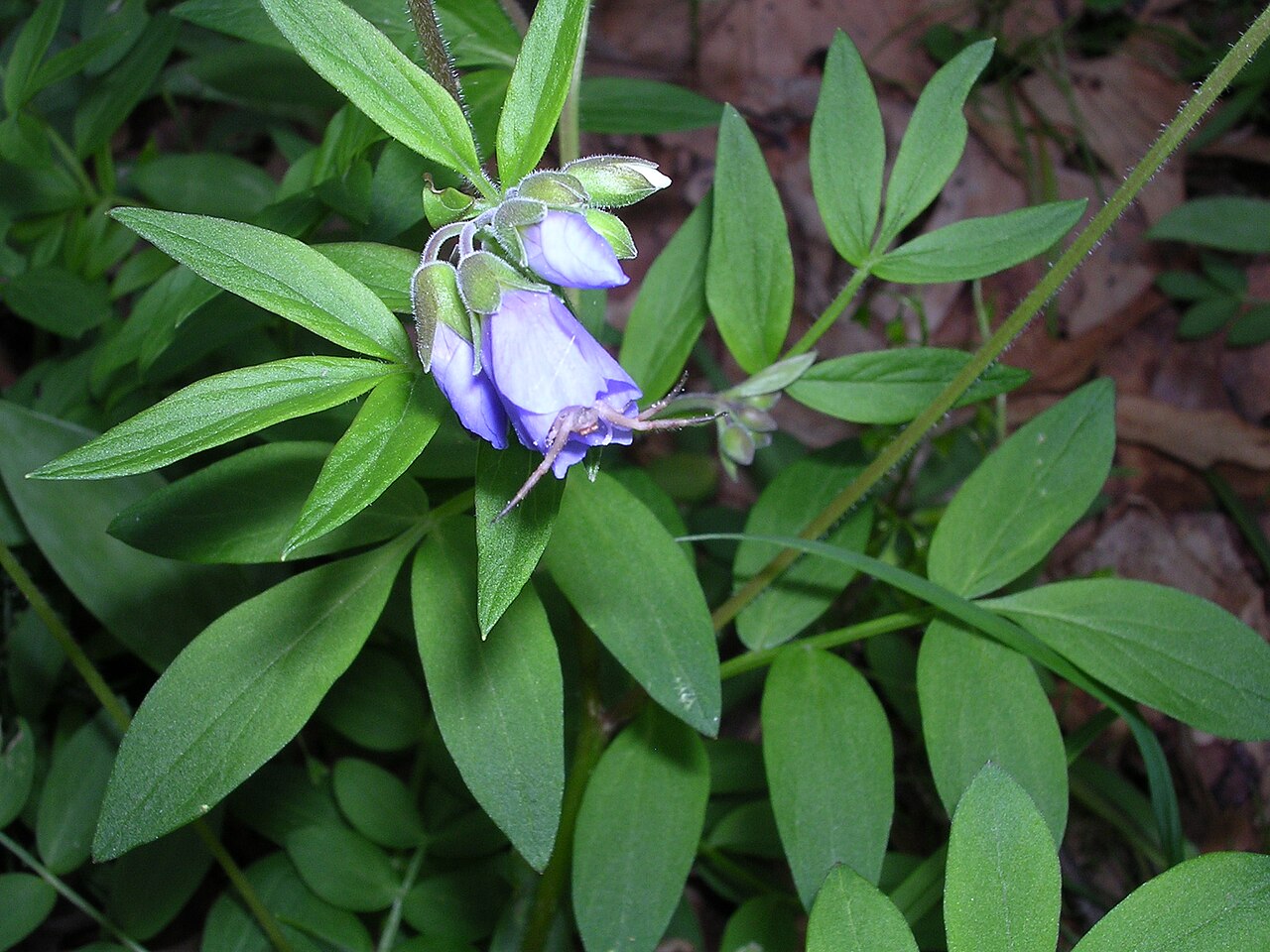

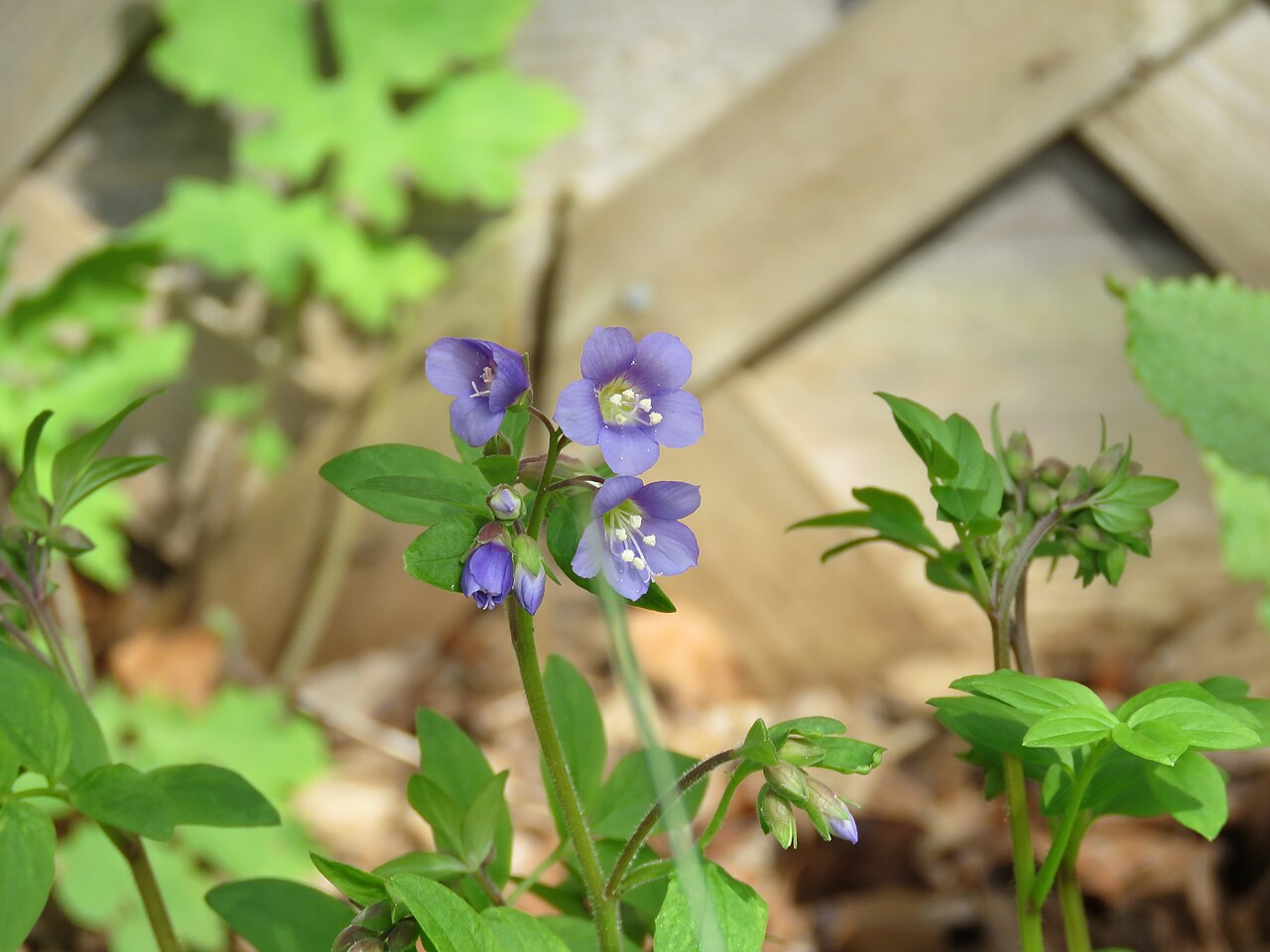
Quick facts
- Sun: Part shade is best; tolerates full sun only where summers stay cool
- Soil: Fertile, humus-rich, moist but well-drained; slightly acidic to neutral
- Spacing: 12–18 inches apart
- Mature size: 12–18 inches tall and wide in bloom
- Zones: USDA zones 3–8
- Florida: North Florida shade trial only — heat and humidity are its enemies; see the honest Florida note below
What it is
Creeping Jacob’s ladder is a native eastern woodland wildflower with one of the best leaf stories in the garden. Polemonium reptans carries pinnate leaves — a central stem with leaflets arranged in offset pairs — that look, unmistakably, like the rungs of a ladder, which is where the common name comes from. In mid-spring to early summer, loose clusters of light blue to violet bell-shaped flowers open above the foliage, on sprawling, weak stems that give the plant its low, mounding shape.
Two naming notes keep the confusion down. First, despite “creeping” in the name and reptans (meaning creeping) in the Latin, this plant does not actually creep much — it is technically rhizomatous, but it forms a clump rather than a running groundcover, and its spread mostly comes from freely self-seeding when it is happy. Second, it is also sometimes called Greek valerian, a name it shares with its taller European cousin in the next guide — a reminder that common names are folk labels, not filing systems. It is not related to true valerian (Valeriana officinalis).
Native from New York to Minnesota and south to Georgia and Alabama, it grows in rich, moist woods and along shaded streams. It is a pollinator plant — bees and butterflies visit the bells — and a classic woodland-garden subject: plant it under deciduous trees, along a shaded path, or at the front of a shade border, where its spring flowers catch the light before the canopy closes.
How to grow
Plant in spring or autumn in part shade, in fertile, humus-rich soil that holds moisture but drains. Think forest floor: leaf litter, cool roots, dappled light. Water during establishment and dry spells; drought may send the plant into early summer dormancy, which looks alarming but is often just the plant’s way of sitting out weather it does not like. Do not plant it in a hot, sunny, dry bed and expect it to thrive — that is the opposite of its habitat.
After flowering, you can cut back spent stems to tidy the plant and encourage fresh foliage, and you can let some seed heads stand if you want it to self-sow into a colony. Division in early spring, before growth starts, is the easiest propagation: lift the clump, split it into sections with at least one or two growing points, and replant. Seed needs a cold, moist stratification period of roughly 60 to 90 days — a winter outdoors does the job — before it germinates.
Water & feeding
Consistent moisture is the requirement, not a preference. A spring mulch of compost or leaf mold feeds the soil and holds moisture, and that is usually all the feeding it needs. In rich woodland soil, fertilizer is unnecessary; in poor soil, compost beats chemicals, because what this plant wants is soil structure and biology, not a nitrogen spike.
Common problems
Heat and drought are the problems, manifesting as summer dormancy, scorched foliage, or a plant that simply fades by July. In zone 7 and warmer, summer dormancy is common and should be expected, not panicked over — mark the spot so you do not dig it up by accident in autumn. Slugs may nibble in damp shade, and crowded, airless plantings can develop leaf spots; spacing and airflow prevent most of it.
Seasonal interest
Spring is the show: ladder leaves unfurling, then weeks of blue bells. Summer is quieter, especially in warm climates where the plant may rest. Autumn brings little color drama, and winter is dormancy — the plant disappears below ground and returns in spring, which is the perennial gardener’s annual trust exercise.
The honest Florida note
Creeping Jacob’s ladder reaches zone 8, which technically includes parts of north Florida — and that is where the honesty has to kick in, because hardiness zones measure winter cold, not summer heat. This is a cool-summer woodland plant, and Florida’s long, hot, humid summers will stress it into dormancy or decline in most gardens. A north Florida gardener with deep shade, rich, moist, humus-heavy soil, and realistic expectations could trial it as a spring ephemeral — enjoy the spring show, accept the summer disappearance — but it is not a statewide or even a reliable north Florida perennial. Treat it as a beautiful northern woodland plant that visits Florida gardens on probation.
Nerdy fact: ladder-leaf arrangement is not just pretty — it is a botanical signature of the whole genus Polemonium, in the phlox family. Every Jacob’s ladder, on every continent where the genus grows, carries its leaflets like rungs. The biblical Jacob’s ladder story gave gardeners the metaphor; the plant supplied the architecture.
Where it fits in the Living Root guides
This plant is also covered in our survey guide to the wider group — see Jacob’s Ladder: Growing Guide for how it compares with its relatives. Browse all the plant guides in the Plant Guides index.
Saving seeds
Creeping Jacob’s ladder is a generous seeder, which is handy, because it is also a plant that likes to be deadheaded. The two habits are in direct competition, so the seed saver’s first move is a decision: deadhead most of the plant for more flowers, but leave a few flower heads untouched to ripen. After the blue-violet bells fade in late spring and early summer, small capsules form where the flowers were. Leave them on the plant until they turn brown and dry and feel papery, then snip the whole heads into a paper bag on a dry day, before the capsules split and scatter their contents. If you wait too long you will find the plant has done the sowing for you, which is not a disaster, just a loss of control over where the seedlings land.
Cleaning is a kitchen-table job. Rub the dried heads gently between your fingers over a tray, pick out the larger bits of stem and capsule, and winnow the fine chaff away with a light breath or a fine sieve. The seeds are small and brown, and the plump ones are the keepers; flat, pale, or broken ones can go. Sow them in fall directly where you want them, which lets winter do whatever chilling work nature intended, or start them indoors in spring in a moist, free-draining seed mix, barely covered, kept consistently damp and out of harsh sun. Germination is usually measured in weeks rather than months, and seedlings want the same thing the parent wants: humus-rich soil that stays moist, and shade from hot afternoon sun. Thin or transplant them once they have a couple of sets of true leaves, giving each plant room to form its own ladder-leaved clump.
Two honest notes before you label the packet. First, named cultivars do not always breed true from seed. A seedling from a variegated or specially colored form may revert to plain green leaves and ordinary blue flowers, which can still be lovely, but it is not the plant you started with. If you need an exact copy, divide a mature clump in early spring or fall instead, making sure each piece carries roots and shoots. Second, this plant will self-seed in favorable conditions, so a seed patch left to its own devices will quietly populate the shady corners around it. That is usually welcome rather than weedy, but it is worth knowing before you let every head ripen.
For storage, dry the seed thoroughly indoors before it goes anywhere near a jar. Florida humidity is the enemy of stored seed everywhere, but especially for a cool-climate woodlander like this one, and damp seed in a sealed container will mold rather than wait. Store dry seed in a paper envelope inside an airtight jar with a desiccant packet, kept cool and dark, and sow it sooner rather than later, since fresher seed germinates more reliably. And a Florida reality check: this is a North Florida shade-trial plant whose enemies are heat and humidity, so seed saving here is a bonus, not a promise. If your plant is merely surviving a Florida summer, enjoy its flowers and let a cooler-climate gardening friend do the seed banking.
Varieties
Every named variety of Creeping Jacob’s Ladder with its own growing guide:
- Stairway to Heaven Creeping Jacob's Ladder — The variegated ladder: cream-edged leaves, pink winter blush, and the same blue bells.
- Album Creeping Jacob's Ladder — The white-flowered ladder: clean white bells on plain green foliage.
- Touch of Class Creeping Jacob's Ladder — The refined ladder: sage-green leaflets edged in white, topped with sky-blue flowers.