
🌲 Nana Balsam Fir
What it looks like
Why this variety
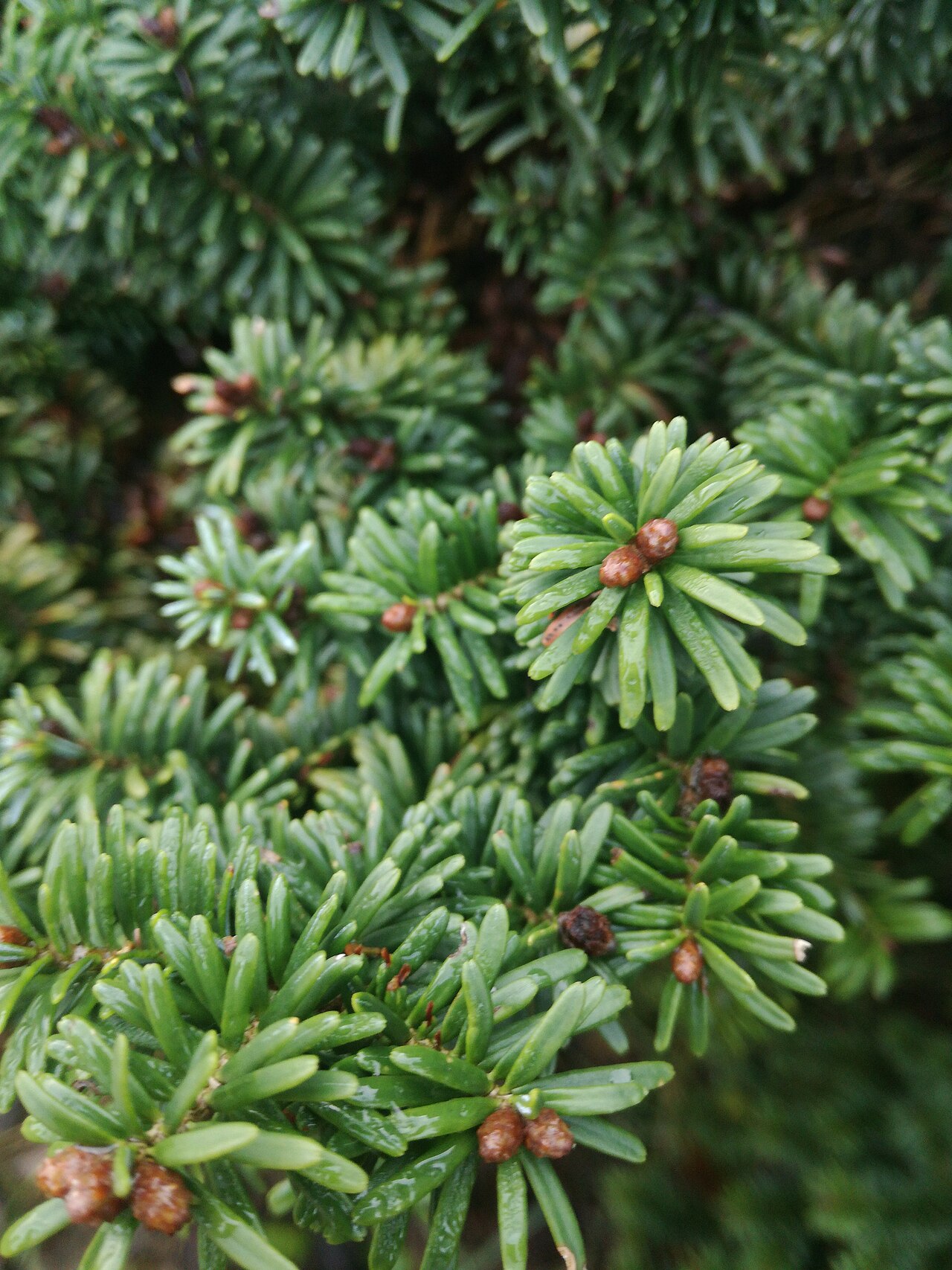
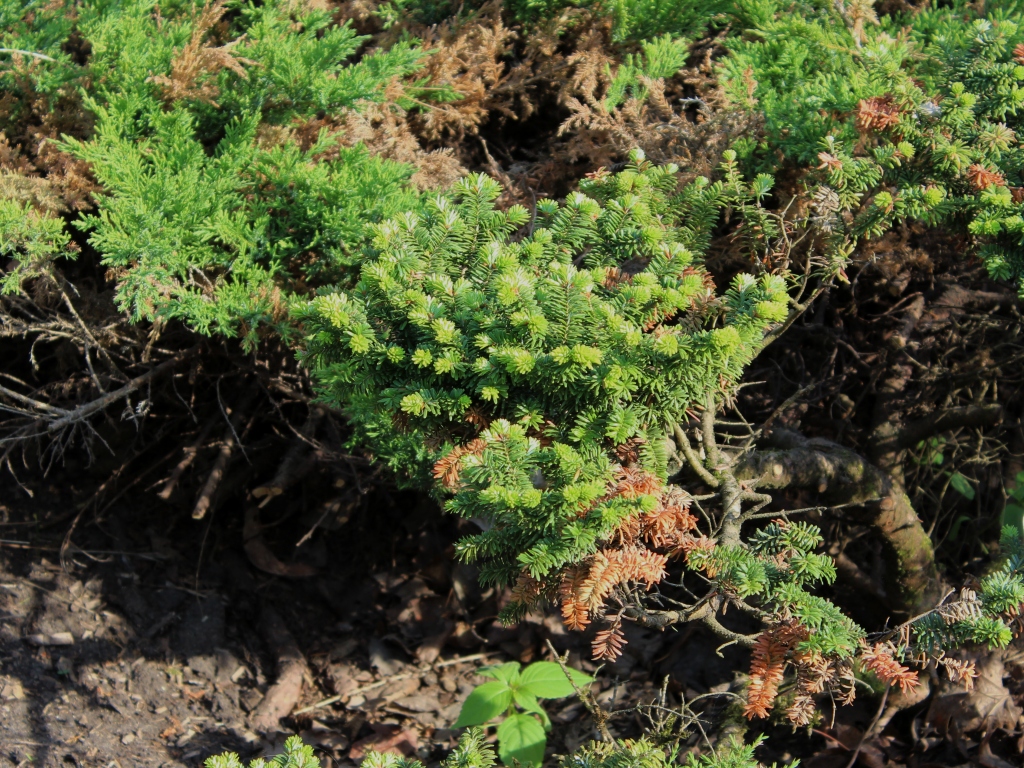
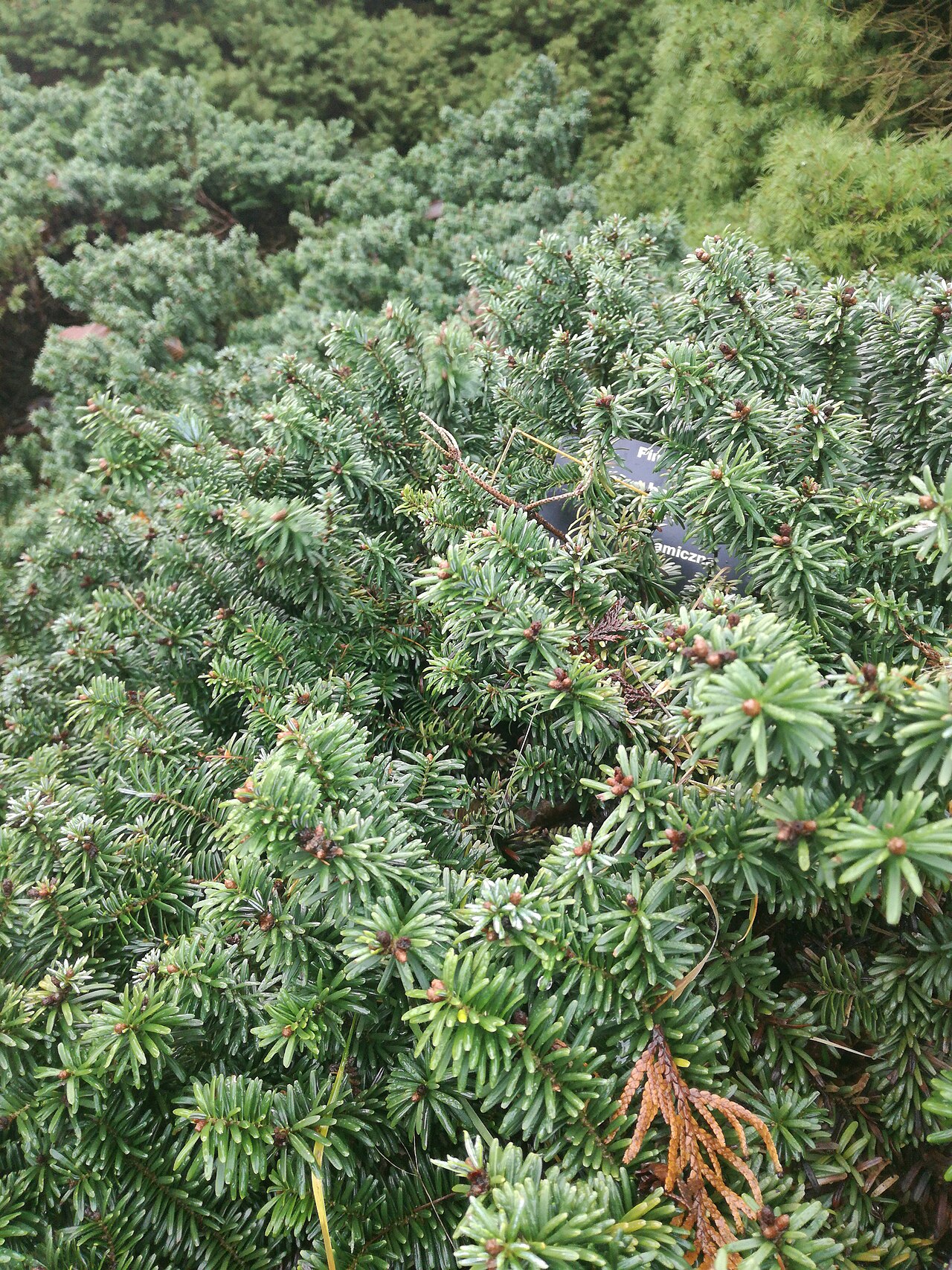
Nana is the dwarf balsam fir most gardeners actually meet: a compact, rounded, densely branched globe of short, dark-green, fragrant needles with pale undersides, in the Hudsonia Group of balsam fir, the mountain dwarf forms first recorded in New Hampshire before 1810. It is the small-space answer to a species that otherwise wants to be a 50-foot Christmas tree — same balsam scent, same soft needles, in a package you can walk around without a ladder.
The trade-off is speed, or rather the lack of it: Nana grows slowly, a few inches a year, and it wants cool, moist, acid soil. Give it a sheltered spot with afternoon shade in warmer parts of its range, and it rewards you with a tidy mound that needs essentially no pruning. Crowd it, bake it, or drown it, and it thins out — dwarf does not mean indestructible, it means the mistakes show up smaller.
Florida honesty: this is a northern-tree guide, not a Florida planting promise. Firs want cool summers, cold winters, and steady moisture, and Florida heat and humidity work against all three. Treat this variety as reference for a northern garden, or as the story behind a cut Christmas tree — not as a tree to plant expecting it to thrive statewide in Florida. At most, a far-north trial in a cool, sheltered, irrigated microclimate is an experiment, not a recommendation, and a failed experiment here says nothing bad about the tree: it is simply out of its climate.
If you are new to choosing between cultivars, the Varieties Matter guide explains why the name after the plant matters as much as the plant itself. The species guide for Balsam Fir covers the species as a whole; this guide is about what makes this one selection different.
How to grow
Plant in spring or early autumn, in full sun to light shade, in moist, well-drained, slightly acid soil. Dig the hole no deeper than the root ball and twice as wide, settle the plant so the root flare sits at soil level, water deeply, and mulch without piling mulch against the trunk — the classic mulch volcano is how good trees get bark rot. Stake only if the site is windy, and remove the stake within a year.
Set Nana where it can be seen up close — a rock garden, a container, the front of a conifer bed — because its charm is in the fine needles and the dense, almost sheared look it achieves all by itself. Do not shear it into a ball: the natural globe is the point, and cutting into old wood leaves bare patches that fill in slowly, if at all.
Water & feeding
Water deeply to establish, and keep the soil evenly moist but never waterlogged through the first two growing seasons. Firs sulk in both drought and wet feet: mulch holds moisture, but soggy clay is a slow death sentence. Once established, water in dry spells; feed lightly, if at all — worm castings worked into the surface in spring is plenty, because rich, fast growth on a fir is soft growth that winter punishes.
Common problems
- Heat and humidity stress — the limiting factor south of its zone; browning needles and thin growth in hot summers mean the climate, not your care, is the problem.
- Root rot in wet or heavy soil — plant high, improve drainage, and never let a fir sit in standing water.
- Spider mites and balsam woolly adelgid on stressed trees — keep the tree vigorous, hose foliage in dry weather, and remove badly infested branches.
- Winter burn on exposed sites — shelter from cold, drying wind matters more than wrapping; a windbreak beats a blanket.
- Slow fill after pruning — never cut back into leafless wood; tip-prune only the soft new growth if shaping is needed.
Pruning & enjoying it
Nana’s job is year-round structure at ankle height: winter interest, a fragrant brush-past on a path edge, and a living Christmas decoration you can dress with a few outdoor lights without a ladder. It rarely cones at this size, so do not buy it for cones — buy it for the mound, the scent, and the joke that your Christmas tree fits in a wheelbarrow.
Browse all plant & pest guides
Saving seeds
Nana is the dwarf balsam fir most gardeners actually meet: a compact, rounded, densely branched globe of short, dark-green, fragrant needles with pale undersides, in the Hudsonia Group of balsam fir, the mountain dwarf forms first recorded in New Hampshire before 1810. It is the small-space answer to a species that otherwise wants to be a 50-foot Christmas tree — same balsam scent, same soft needles, in a package you can walk around without a ladder. As a named dwarf cultivar it is kept true by cuttings or grafting, not by seed — seedlings would not hold the dwarf globe habit. Plant in spring or early autumn, in full sun to light shade, in moist, well-drained, slightly acid soil, and set Nana where it can be seen up close — a rock garden, a container, the front of a conifer bed. The full method is in the Saving seeds section of the Balsam Fir guide.