
🌸 Briggs Moonlight Burkwood Daphne
What it looks like
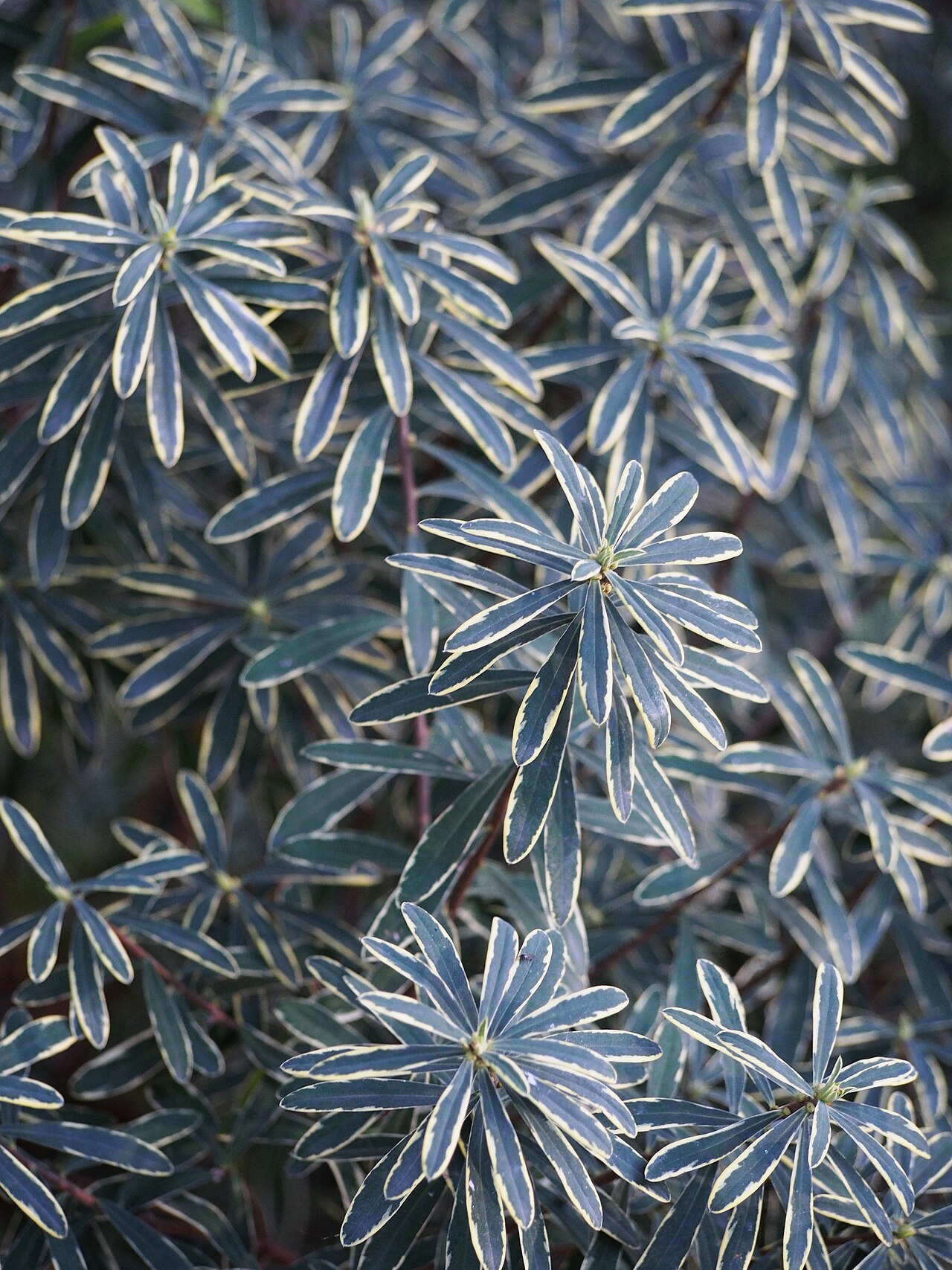
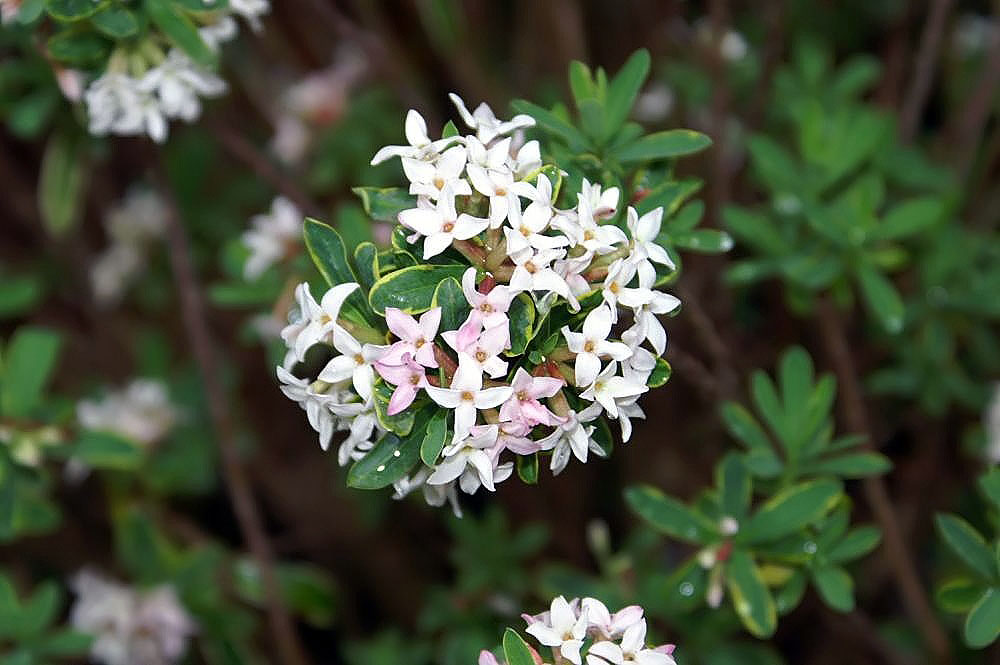
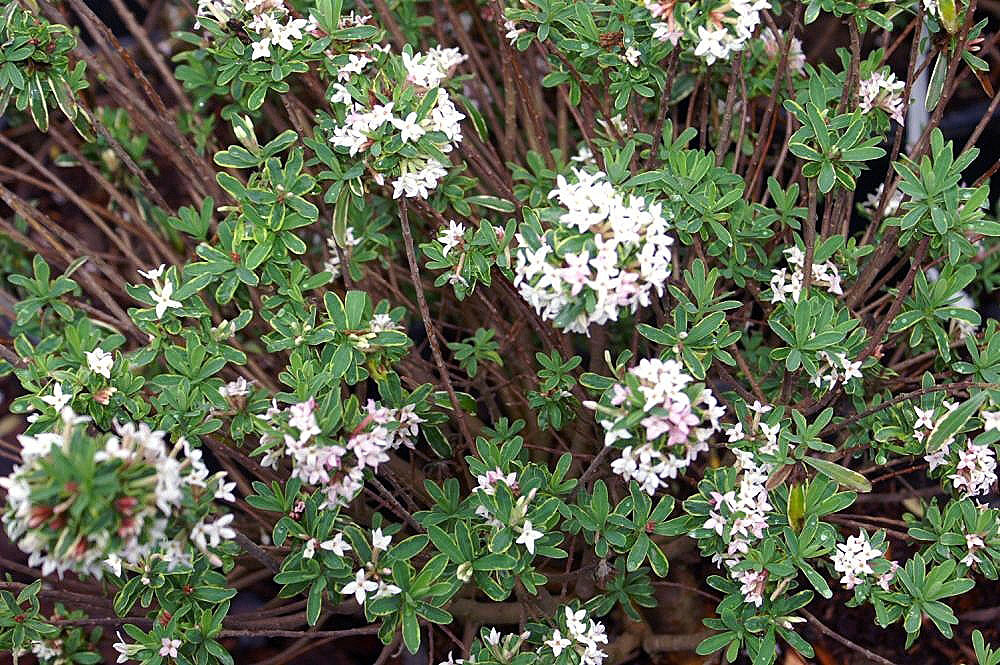
Why this variety
Briggs Moonlight is variegation turned inside out. Where Carol Mackie has green leaves with cream edges, Briggs Moonlight has cream centers with green edges — a reverse variegation that makes the shrub glow in shade like a lantern. The effect is striking: a dense, rounded mound of luminous foliage, topped in late spring with clusters of light pink, sweetly scented flowers. In a shady corner it reads as a light source, which is a rare trick for a shrub that is not actually on fire.
The catch, and there is always a catch with variegated daphnes, is vigor. With so much of each leaf unable to photosynthesize, Briggs Moonlight grows more slowly and less robustly than its green relatives, and it needs the best spot you can give it: part shade, cool roots, perfect drainage, and no competition. It is also less commonly available than Carol Mackie, so finding one feels like a small victory. Give it that best spot, though, and it is the most eye-catching daphne in the family — a plant that stops visitors mid-path, which is exactly what a specimen shrub is for.
If you are new to choosing between cultivars, the Varieties Matter guide explains why the name after the plant matters as much as the plant itself.
Florida honesty: Briggs Moonlight is the least Florida-suited daphne on this list — a cool-climate, low-vigor variegated shrub that wants part shade and cool roots, the opposite of a Florida summer. Even in north Florida it is a gamble, and in central and south Florida it is not a realistic border plant. Admire it in cooler gardens, or grow it in a shaded container you can baby — and even then, expect a short, high-maintenance relationship.
How to grow
Plant in spring from a container, in part shade with morning sun only, in soil that is moist, humus-rich, and sharply drained. Amend heavily with compost, plant at pot depth, water in, and mulch to keep roots cool — cool roots are non-negotiable for this cultivar. Buy small, plant once, and do not move it. Prune only dead wood or reverted shoots, right after flowering; daphnes bloom on older wood and resent hard pruning.
Water & feeding
Water steadily and evenly — Briggs Moonlight wants consistent moisture and cool roots, and it punishes both drought and waterlogging. Mulch generously (away from the crown) to hold moisture and moderate soil temperature. Feed lightly in spring only. In hot weather, afternoon shade and mulch matter more than any fertilizer; a stressed variegated daphne scorches, sulks, and sometimes simply gives up.
Common problems
- Low vigor — the cream centers cannot photosynthesize, so growth is slow and the plant needs coddling.
- Leaf scorch in sun or heat — part shade is essential; full sun burns the pale foliage.
- Root rot in wet soil — the daphne killer, as always; drainage first.
- Reversion — remove any all-green shoots entirely, or vigorous green growth overtakes the variegation.
- All parts toxic — poisonous if eaten, sap irritates skin; gloves, and keep away from children and pets.
Pruning & garden use
Use Briggs Moonlight as a shade-garden specimen, where its luminous foliage can brighten a dark corner and its spring fragrance can be appreciated up close — near a shaded path or a north-facing entrance. It also suits containers in shade, where soil and drainage can be controlled. Pair it with dark-leaved shade plants (hostas, ferns, dark heucheras) that make its pale leaves pop. Prune almost never, and enjoy the fact that the most dramatic plant in the shade garden is also the one that asks the least of you — once you have given it the right spot, that is.
Back to the Burkwood Daphne guide
Browse all plant & pest guides
Saving seeds
Briggs Moonlight is a variegated cultivar, so seed saved from it won’t come true — buy a nursery shrub instead. The Propagation section of the Burkwood Daphne guide covers how the species is propagated.