
🐻 Bearberry
What it looks like
Bearberry is a plant that has made a radical life choice: it will not grow up. Where other shrubs reach for the sky, bearberry spreads sideways, forming a dense, evergreen mat that rarely rises more than 6 to 12 inches off the ground but can spread 3 to 6 feet wide, and over many years much wider, rooting at the nodes as its trailing stems creep outward. The leaves are small, leathery, glossy, and dark green — oval to spoon-shaped, about an inch long — and they stay on the plant all winter, turning bronze-red in the cold like the plant is blushing at its own hardiness. In spring, the mat is dotted with small, urn-shaped flowers, white to pink, hanging in little terminal clusters like tiny bells. By late summer those bells have become bright red berries, round drupes about a quarter to a half inch across, which persist into winter and glow against the snow and the dark foliage.
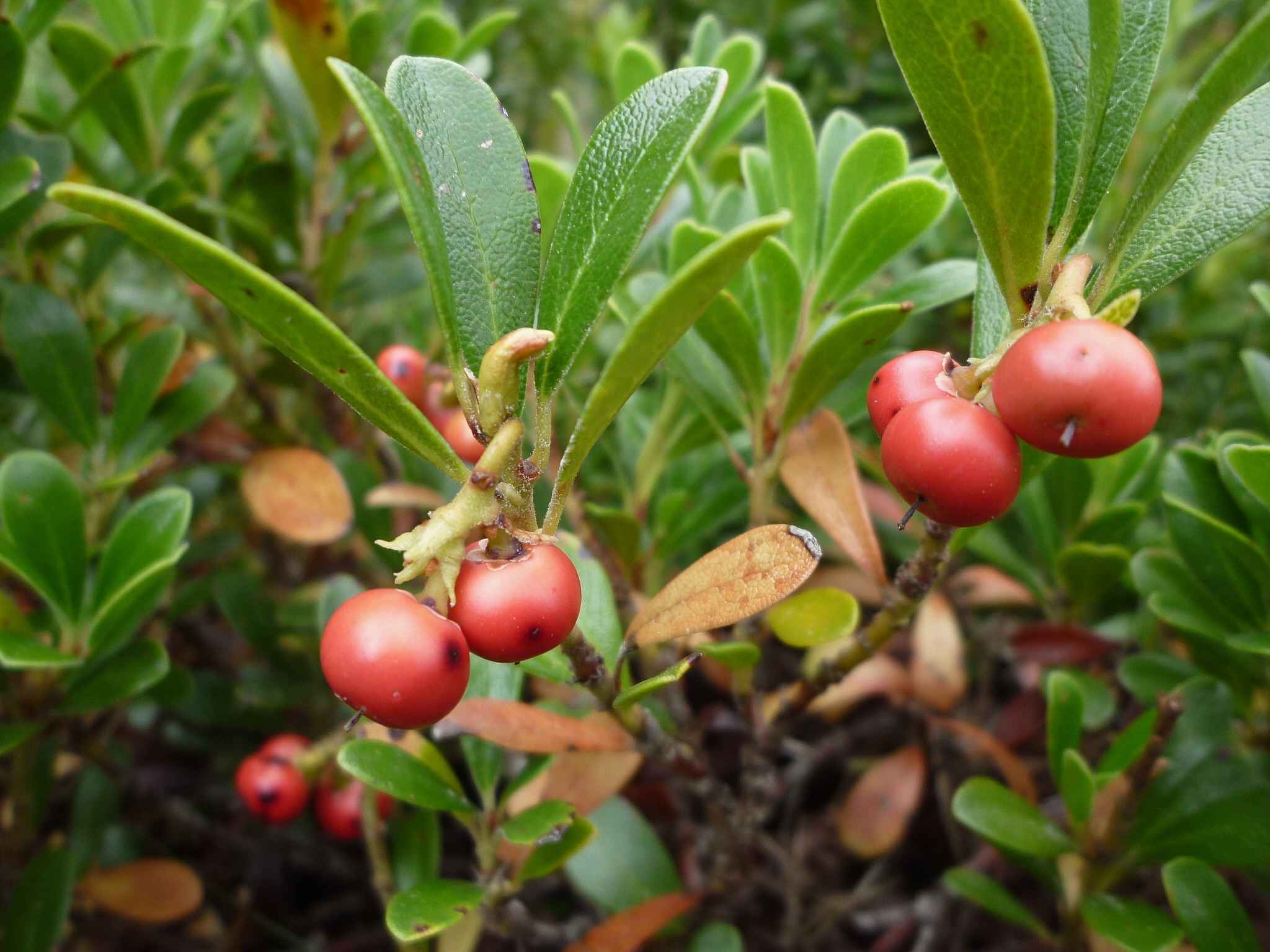
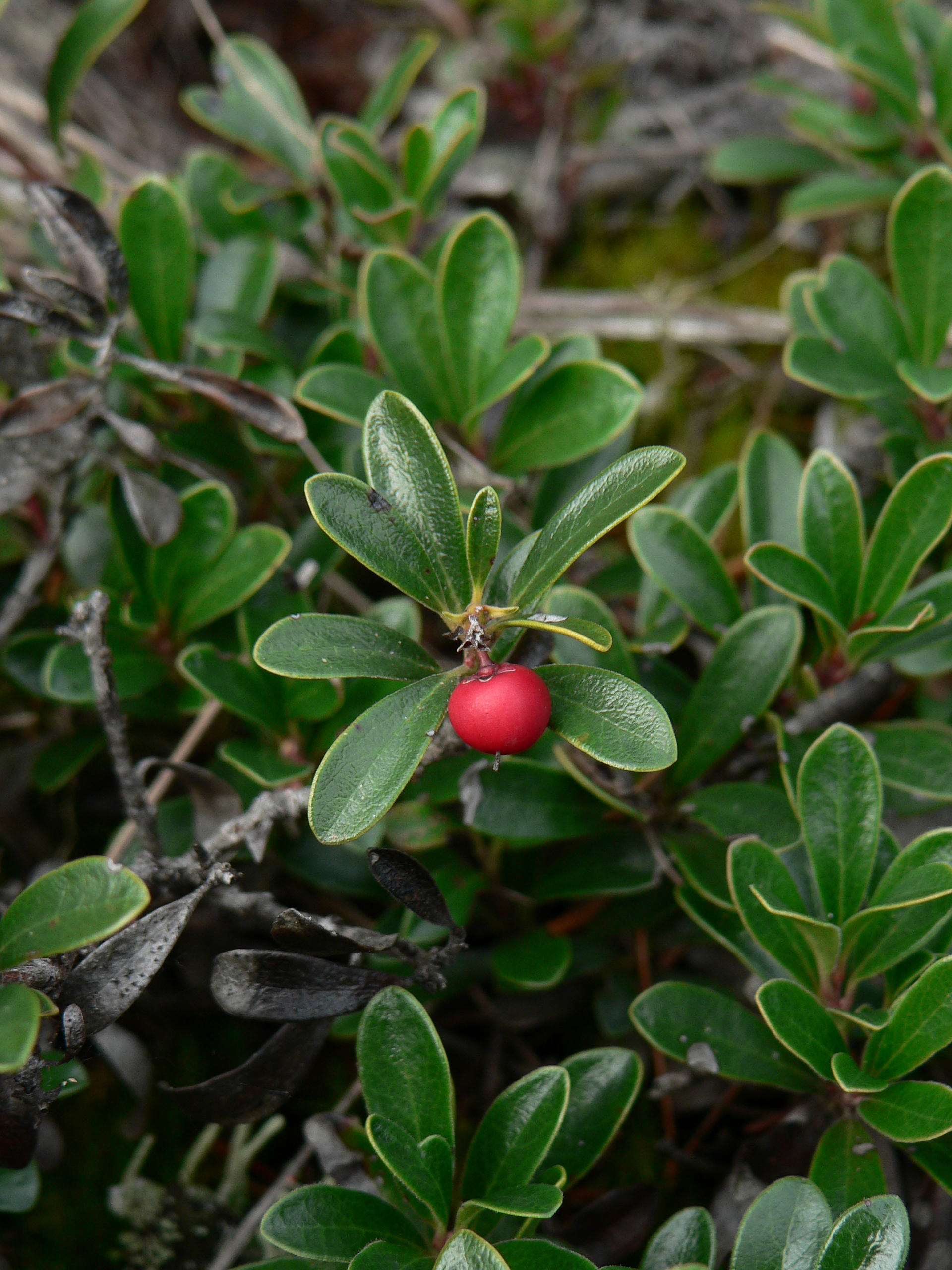
The name is a double translation of the same joke. Arctostaphylos comes from Greek for bear grapes, and uva-ursi is Latin for grape of the bear — so the whole scientific name says bear-grape bear-grape, which is either emphatic or the botanists really wanted you to know who eats it. Bears do eat the berries, along with grouse, thrushes, and other birds, and the berries persist through winter precisely because something needs food when everything else is gone. Humans can eat them too, but the honest review is that they are dry, mealy, and not very tasty fresh — the common name mealberry exists for a reason — and they are traditionally cooked or processed rather than eaten raw by the handful. The other common name, kinnikinnick, comes from an Algonquian word meaning mixture, reflecting the plant’s historical use in smoking mixtures, and it is the name most often used in Canada and the northern United States.
Bearberry is circumboreal, which is a fancy way of saying it grows all around the northern hemisphere: across northern North America from Alaska to the Atlantic, through Europe, and across northern Asia, from Arctic tundra to mountain slopes to dry pine forests and coastal bluffs. It is a plant of harsh places — poor, infertile, sandy or gritty soil, exposed sites, thin soil over rock — and it does its best work where other plants give up. That toughness is the point. A plant that survives Arctic winters does not need your coddling; it needs you to stop trying to improve its life. Butterflies use it too: elfin butterflies lay eggs on bearberry, and their caterpillars feed on it, which is why it appears in butterfly guides as both a host plant and a nectar plant. A mat of bearberry in a northern garden is a small, tough, evergreen wildlife pantry.
Florida note: Say this plainly: bearberry is not a Florida plant for most of the state. It grows poorly in hot, humid summers and is not recommended for planting in most areas south of zone 7. If you garden in Florida, this guide is for admiration, for northern friends, and for understanding the plant in butterfly guides — not for planting in a Keystone Heights yard. Northern gardeners, this one is yours.
How to grow
Plant bearberry in full sun to part shade — it tolerates light shade but fruits best and stays densest in sun — in acidic, dry to medium, well-drained, sandy or gritty soil. It grows well in poor, infertile soils, and that is not a polite euphemism: bearberry genuinely prefers lean ground, and plants should generally not be fertilized. Rich soil and heavy feeding produce soft growth that winter kills. Space plants about 18 inches apart for a groundcover that fills in reasonably quickly; each plant will spread 3 to 6 feet wide over time, so do not plant them like bedding annuals or you will be digging out extras in year three. Water to establish in the first season, then back off: bearberry is drought-tolerant once established and likes exposed, open sites with good air movement.
Propagation is where bearberry tests your patience, and the plant is honest about it. Seed has a hard coat and needs scarification — nicking or abrading the seed coat — plus cold stratification to break dormancy, and even then germination is slow and uneven. Most gardeners propagate by cuttings or layering instead: trailing stems root at the nodes where they touch soil, so you can pin a stem down, wait for roots, and sever it as a new plant, or take semi-hardwood cuttings in late summer. Buying nursery plants is the sane option for most people, and named cultivars are the most readily available. Once established, bearberry needs almost nothing: no fertilizing, no regular watering, no pruning beyond removing dead wood in spring and trimming back stems that wander onto paths. It is a plant for gardeners who like to plant things and then go do something else for a decade.
For wildlife, the rule is to leave the berries alone. The red drupes ripen in late summer and persist into winter, feeding birds and mammals through the coldest months. Do not strip the berries for decoration and do not mow the mat in fall; the plant’s winter value is exactly those berries and that evergreen foliage. A bearberry mat under a pine, on a slope, or along a rocky edge is doing quiet, year-round work that a lawn never will.
Water & feeding
Water to establish, then drought-tolerant. Bearberry wants dry to medium soil moisture and sharp drainage above all; wet feet in winter rot it faster than cold ever will. If your soil holds water, plant bearberry on a slope, a berm, or a raised bed of gritty, sandy mix, and mulch with gravel or pine needles rather than heavy bark that stays soggy. Do not fertilize. This cannot be said too often for a plant whose entire strategy is thriving on starvation rations: fertilizer produces soft, leggy growth that is more vulnerable to winter damage and disease, and it is the single most common way gardeners kill a plant that would otherwise outlive them.
On soil acidity: bearberry is a heath-family plant, Ericaceae, and like its relatives it prefers acidic soil. If your soil is alkaline, bearberry will chlorose — yellow leaves, weak growth — and no amount of watering fixes a pH problem. Test first; if your soil is strongly alkaline, grow bearberry in a container of acidic mix or choose a different groundcover. Mycorrhizal fungi in the soil help bearberry take up nutrients from poor ground, which is another reason not to disturb an established mat or drench it with fungicides.
Common problems
- Hot, humid summers: The deal-breaker for southern gardeners. Bearberry grows poorly in hot, humid summer climates and is not recommended south of zone 7. Do not try to force it; plant a warm-climate groundcover instead.
- Wet soil and crown rot: Poor drainage kills bearberry faster than cold. Plant on slopes or gritty, raised soil, and never let water sit on the crown in winter.
- Alkaline soil chlorosis: Yellow leaves on a bearberry in limy soil mean the pH is wrong, not that the plant needs fertilizer. Test the soil and acidify or relocate.
- Fertilizer damage: Fertilizing produces soft growth and winter kill. Leave the fertilizer bag in the shed.
- Slow establishment: Bearberry is slow-growing, especially from seed. A first-year plant looks like almost nothing. Judge it in year three, when the mat starts to knit together.
- Leaf gall and fungal spots: Bearberry can suffer leaf spot fungi and a distinctive leaf gall in wet seasons. Good air movement, sun, and avoiding overhead watering reduce pressure; remove badly affected stems rather than spraying a wildlife groundcover.
- Mealy berries, disappointed humans: The berries are edible but dry and mealy and not tasty raw. They are wildlife food first. If you want to use them, cook or process them, and note that large doses of the leaves’ arbutin content have been reported to cause nausea and other effects — this is a plant to admire and to leave mostly to the bears.
Harvest
Bearberry’s harvest is the berry, and the honest harvest advice is to leave most of it for wildlife. The berries ripen in late summer, turn bright red, and persist on the plant into winter; birds, bears, and small mammals eat them through the cold months when little else is available. If you do harvest for traditional use, take only a small share, leave the majority for wildlife, and process the berries by cooking rather than eating them raw — they are mealy and astringent fresh, and their value has always been as a cooked or dried preparation, not a fresh snack. The leaves have a long traditional history, but they contain arbutin, and large doses have been associated with nausea and other adverse effects, so leaf harvest is not something this guide recommends as a casual project. The best bearberry harvest is visual: a mat of glossy evergreen leaves, pink bells in spring, and red berries against snow, year after year, with no work from you at all.
Saving seeds
Let us be honest up front, because bearberry (Arctostaphylos uva-ursi) rewards honesty and punishes wishful thinking: its seed is famously tricky, and germination is unreliable even when you do everything right. This is a plant whose seeds in the wild are broken open by fire sweeping over the soil or by passing through the gut of an animal that ate the berry — the hard seed coat is a vault, and the embryo inside also needs a winter before it will stir. If you want a guaranteed new bearberry, skip to the last paragraph. If you want the seed adventure anyway, here it is, with no promises attached.
Collect ripe, bright red berries in late summer, and leave most of them for wildlife — birds, bears, and small mammals eat them through winter when little else is available, and that is a large part of this plant’s job. Mash the berries you do take, wash away the pulp, and you will find one to five hard seeds inside each berry. Those seeds carry two kinds of dormancy at once: a physical lock in the coat and a chemical sleep in the embryo. Home gardeners approximate the wild treatment by nicking or abrading the seed coat, soaking the seed in warm water, and then giving it a long warm stratification followed by a long cold one — sources describe warm periods of roughly two to four months and cold periods of roughly two to three months, and even then germination is slow and uneven, sometimes taking up to two years from sowing, and sometimes simply not happening. That spread is not a typo: it is the plant telling you seed is its backup plan, not its main strategy.
One thing not to do at home: do not try to reproduce the professional acid scarification treatment with concentrated acid. Commercial and research protocols use strong acid soaks to dissolve the seed coat, and that chemistry belongs in a lab with proper safety equipment, not in a kitchen. The nick-and-soak method above is the safer home approximation, and you should expect poorer results from it — that trade is worth making, because your eyesight is worth more than a flat of seedlings.
The reliable route, and the one most gardeners should actually use, is vegetative: bearberry’s trailing stems root at the nodes where they touch soil, so pin a stem down, wait for roots, and sever it as a new plant, or take semi-hardwood cuttings in late summer, noting that even cuttings are slow and can take a long time to root. Named cultivars, propagated this way, come true; seed-grown plants are the straight species with individual variation. Grow seedlings on in lean, acidic, gritty soil — rich, fertilised ground is not a kindness to this plant — and disturb their roots as little as possible, since bearberry resents being moved. A final range warning: this is a zones 2–6 plant that grows poorly in hot, humid summers and is not recommended south of zone 7, so Florida gardeners should admire bearberry in other people’s northern gardens rather than forcing it. This guide makes no medicinal claims for the berries or leaves; the harvest worth celebrating is a tough evergreen mat and the wildlife it feeds.
Varieties
- The species — Arctostaphylos uva-ursi: The wild plant, the most readily available form, and the baseline for everything else. Prostrate, evergreen, 6 to 12 inches tall, spreading 3 to 6 feet or more, with pinkish-white urn flowers and bright red berries. Hardy roughly in zones 2 to 6, with some sources extending to zone 7.
- Massachusetts Bearberry — The flat-growing, free-fruiting workhorse — the bearberry nurseries reach for first, and the one that shrugs off leaf spot.
- Vancouver Jade Bearberry — The glossy jade mat that stays low, spreads steady, and turns red-bronze in winter like it planned the outfit.
- Wood’s Compact Bearberry — The small-space bearberry — a tighter, denser mat with outsized red berries for its size.
- Emerald Carpet Bearberry — The shade-tolerant carpet form — dark green, dense, and happy where other bearberries sulk.
- Point Reyes Bearberry — The coastal tough guy — few berries, big spread, and the heat and drought tolerance of a plant raised on ocean wind.
- San Bruno Mountain Bearberry — The big-leaf, big-berry low grower — glossy foliage and fruit you can actually spot from the path.
- Anchor Bay Bearberry — The quiet, dependable groundcover form — a compact mat that does the job without asking for attention.
- Alaska Bearberry — The northernmost bearberry — bred by latitude, built for the coldest gardens where bearberry feels most at home.
- Big Bear Bearberry — The vigorous bearberry with a name that doubles down — a strong, spreading mat for big cold-climate spaces.