
🌿 Vana Holy Basil
What it looks like
Why this variety
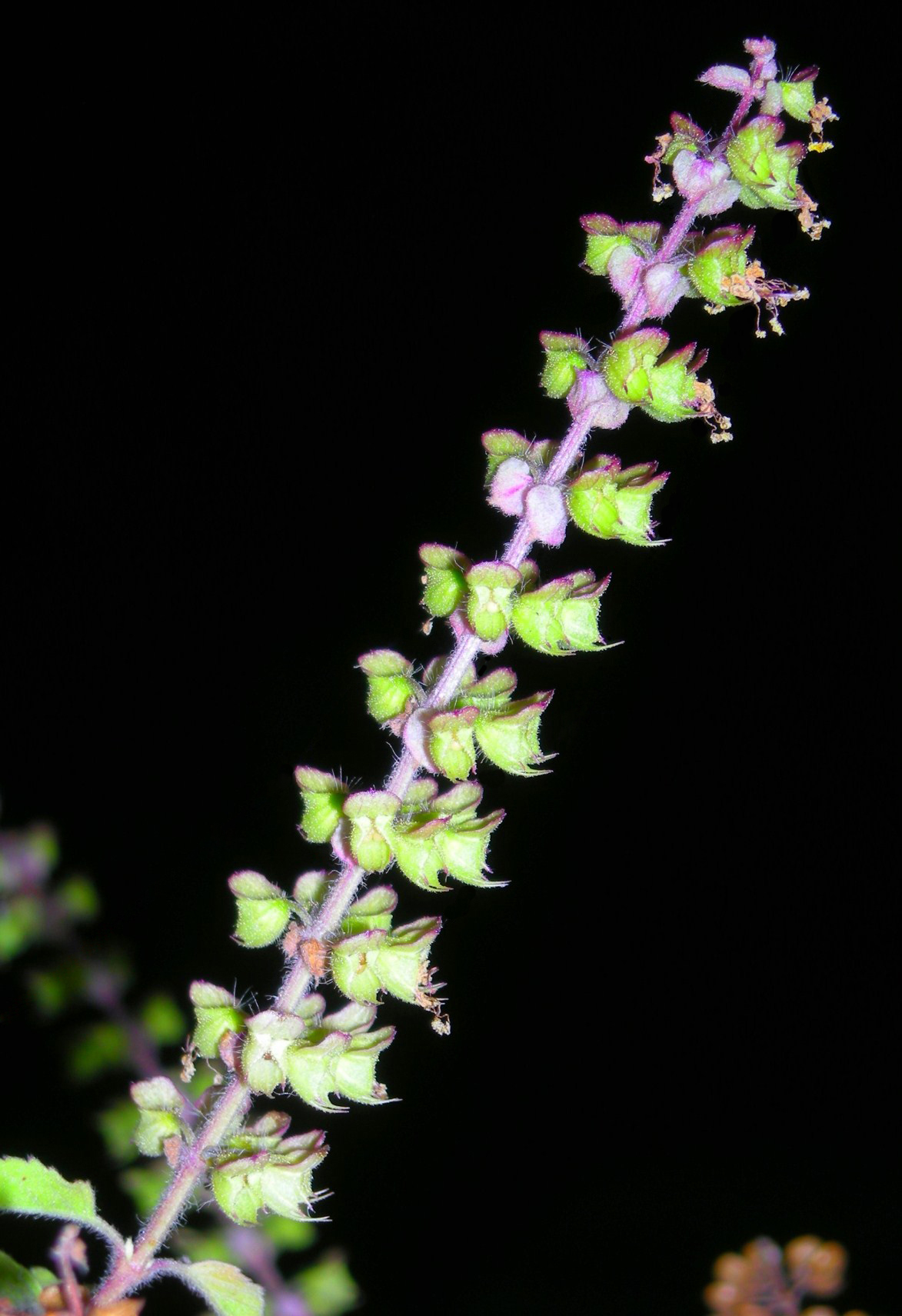
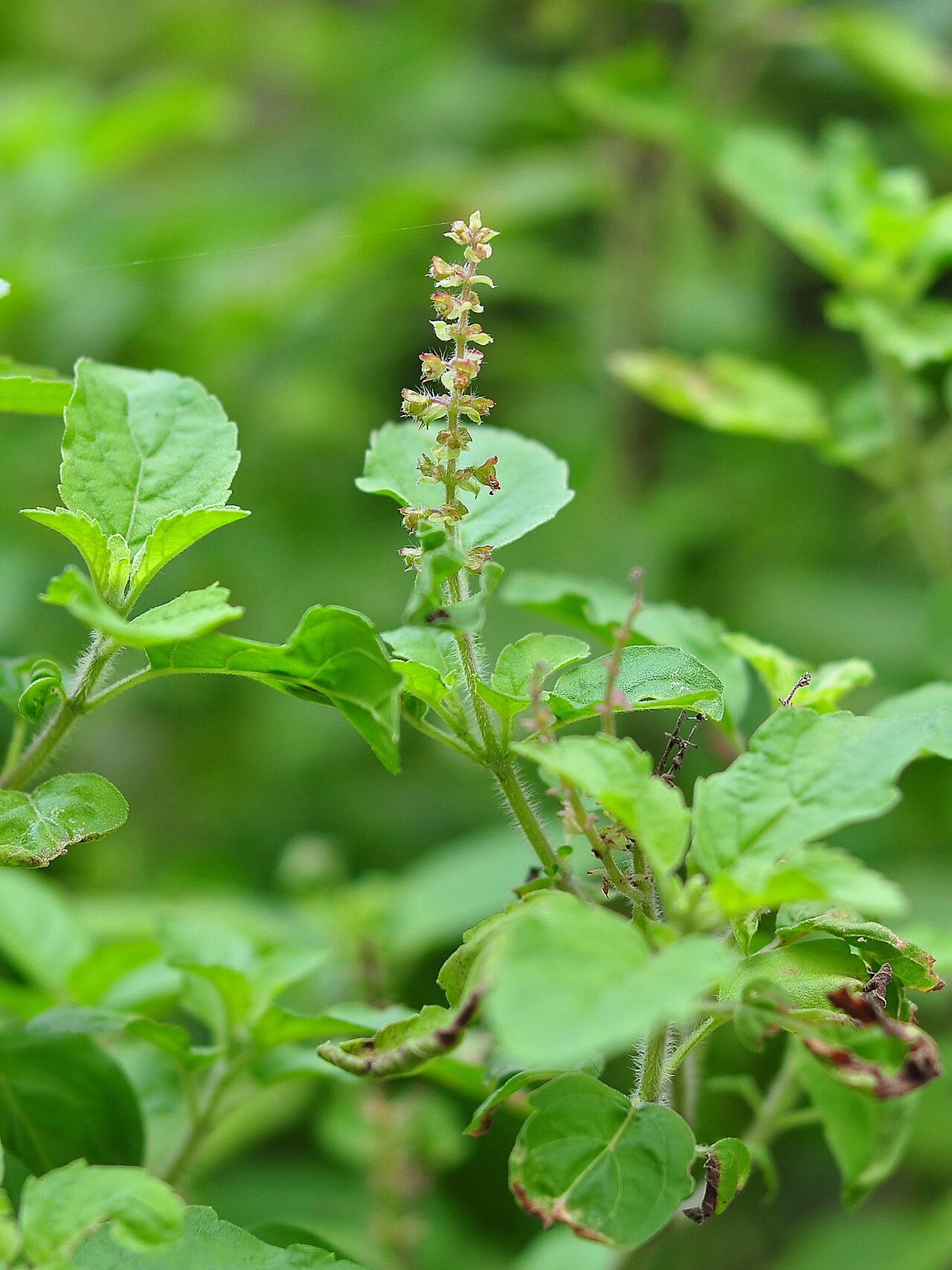
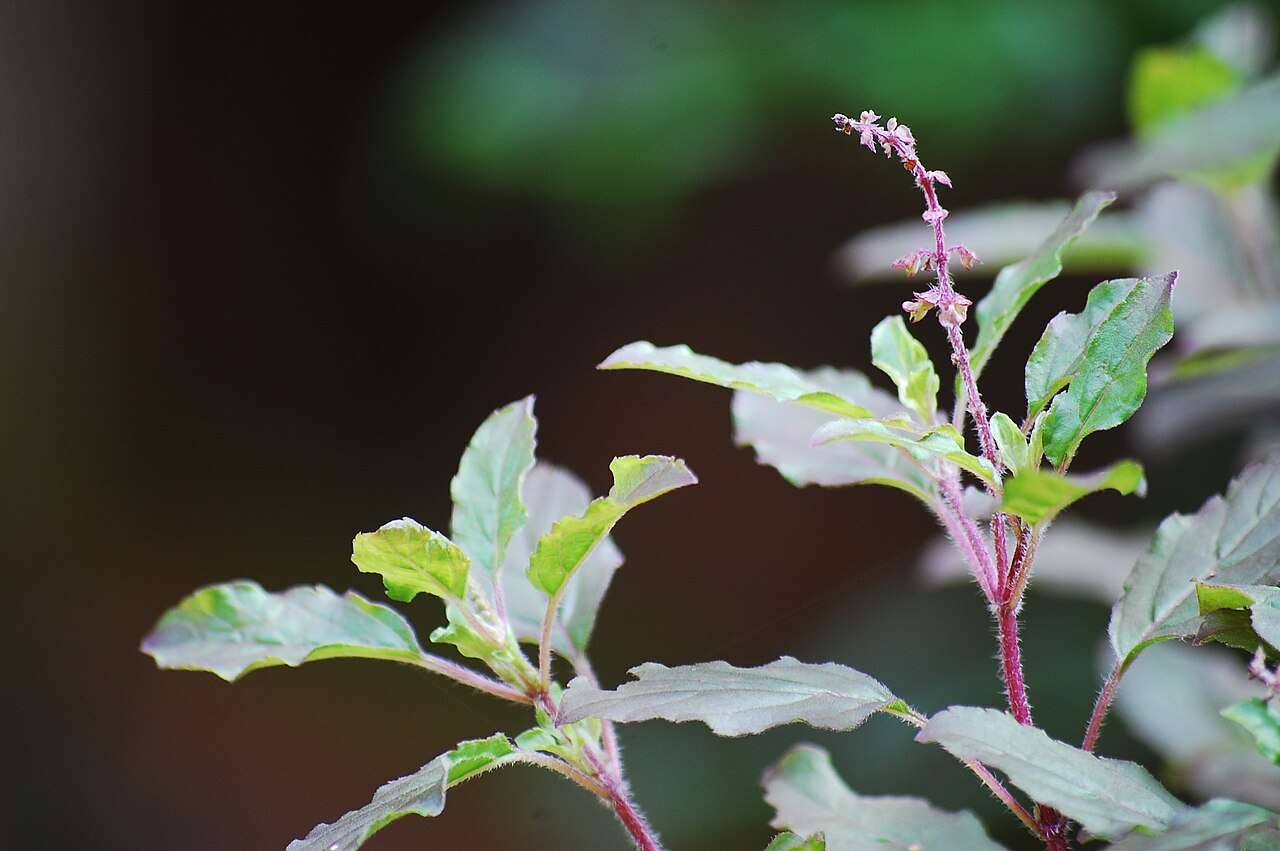
Vana, or ‘forest’ tulsi, is the wild cousin of the tulsi family: a distinct species, Ocimum gratissimum, traditionally grouped with holy basil in Ayurvedic practice, with large, slightly hairy, serrated green leaves, a strong lemony-clove scent, and a habit that can easily reach 5 feet even when grown as an annual. Where Rama Holy Basil is mellow and Krishna Holy Basil is sharp and purple, Vana is big, bold, and lemony — the tree basil of the group.
It is used mainly for tea and traditional preparations rather than as a lone cooking herb, and its chemistry differs considerably from tenuiflorum tulsi — one analysis found its dried leaves rich in eugenol and rosmarinic acid. In the garden, its size is the story: this is not a windowsill tulsi, it is a back-of-the-bed presence that smells like cloves and lemons from three feet away.
How to grow
Start seeds indoors 6–8 weeks before last frost with warmth and light, or buy transplants, and transplant only after nights are reliably warm — tulsi is tropical and dies at the first frost. Give Vana full sun, rich, well-drained soil, and room: it grows taller and leggier than other tulsis, so don’t crowd it against shorter herbs it will shade out by July.
Pinch growing tips to encourage bushier growth and delay flowering, though Vana flowers freely and its white flowers are part of its charm. In Florida and the Gulf South it grows nearly year-round and may persist through mild winters; elsewhere, treat it as a warm-season annual and harvest hard before frost.
Water & feeding
Keep soil evenly moist, about an inch a week, more in containers. Vana is a bigger plant than other tulsis and drinks accordingly — a large plant in a small pot is a daily watering commitment, so give it ground or a large container.
Feed moderately: worm castings at planting and a light midsummer top-dress keep it lush. Mulch to hold moisture and keep soil warm; tulsi likes warm roots the way it likes warm nights.
Common problems
- Cold damage — tropical to the core; transplant only after nights are warm and harvest before first frost.
- Size surprise — a 5-foot basil shades its neighbors; site it at the back of the bed or in its own large pot.
- Aphids and Japanese beetles — blast aphids with water; handpick beetles.
- Damping off in cold, wet seedbeds — start seeds indoors with bottom heat.
Harvest
Harvest leaves and tender sprigs as needed once plants are established, taking no more than a third at once. For tea, use fresh or dried leaves — Vana dries well and keeps its spicy-lemon scent; steep a handful of fresh leaves or a teaspoon of dried leaves per cup for 5–10 minutes.
Because Vana is usually blended rather than used alone in traditional practice, try it mixed with Rama or Krishna leaves for a fuller tulsi tea, or on its own when you want the lemony-clove note front and center. Harvest hard before frost: a frost-killed Vana is a lost harvest, and a big plant gives a lot to lose.
Browse all plant & pest guides
Saving seeds
Vana, or ‘forest’ tulsi, is the wild cousin of the tulsi family: a distinct species, Ocimum gratissimum, traditionally grouped with holy basil in Ayurvedic practice, with large, slightly hairy, serrated green leaves, a strong lemony-clove scent, and a habit that can easily reach 5 feet even when grown as an annual. Where Rama Holy Basil is mellow and Krishna Holy Basil is sharp and purple, Vana is big, bold, and lemony — the tree basil of the group. Vana is a wild species brought into cultivation, grown from seed rather than a hybrid — so seed saved from it comes true as Vana. Let some flowers bloom and set seed, then follow the holy basil guide for drying and storing it. The full method is in the Saving seeds section of the Holy Basil guide.