
🦩 Pink Flamingo Muhly Grass
What it looks like
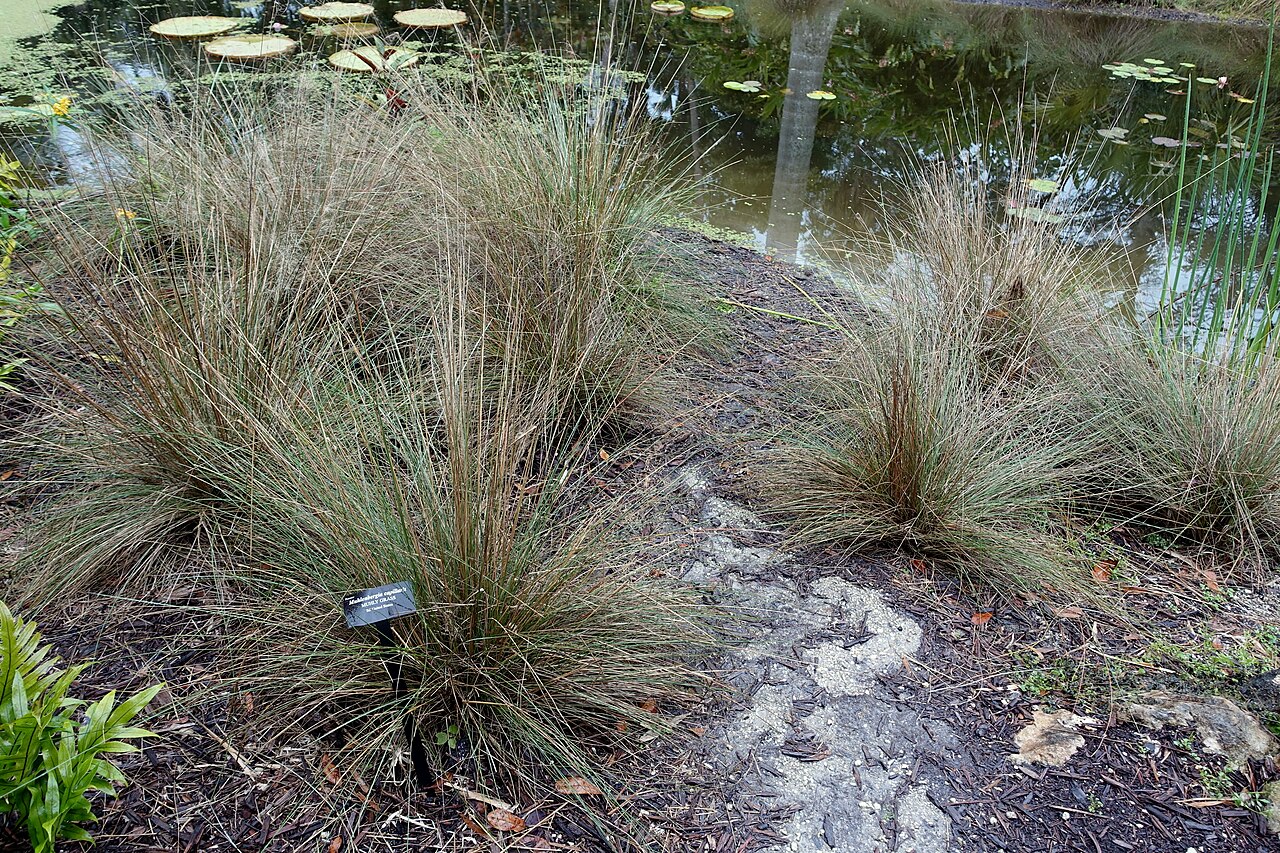
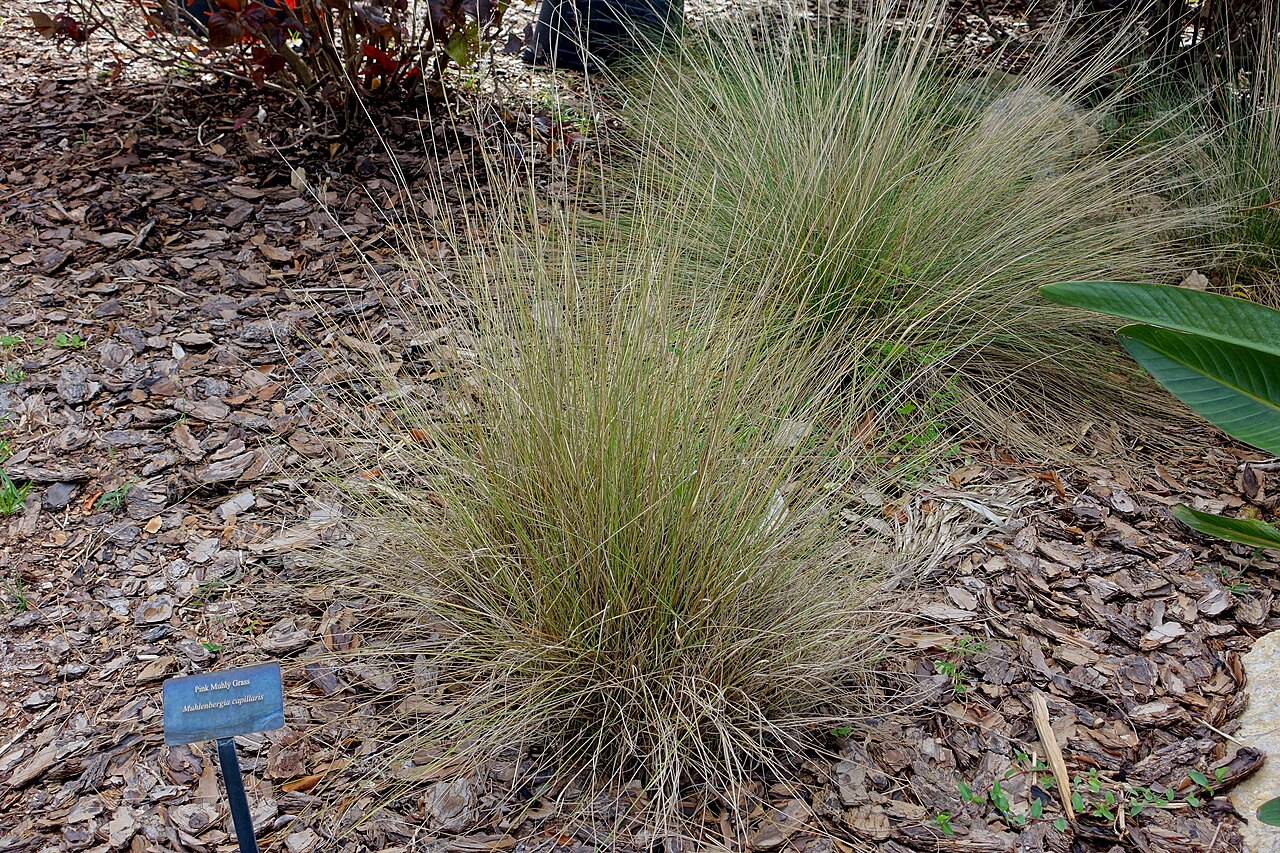
Pink Flamingo is a hybrid muhly, a cross between pink muhly (Muhlenbergia capillaris) and Lindheimer’s muhly (Muhlenbergia lindheimeri), and it looks like what that cross promises: a big, vigorous grass with fine, arching foliage and plumes that are larger and more robust than the straight pink muhly, in a vivid pink that reads from across the yard. Nurseries describe it as a selection from Peckerwood Garden in Texas, and gardeners use it where they want the muhly cloud effect at a larger scale, in mass plantings and naturalistic landscapes rather than as a single specimen tucked into a border.
Expect a clump-forming, warm-season grass that builds a fountain of narrow leaves through spring and summer, then throws its airy, diffuse seed heads in fall. The plumes are the whole show, and they last: cut them for dried arrangements at peak color, or leave them standing through winter for movement and for the birds that pick at the seed heads. In form it is closer to its pink muhly parent than to the tall, upright Lindheimer’s parent, but with extra vigor, which is why spacing matters more here than with the compact cultivars.
Why this variety
Choose Pink Flamingo when the job is scale. The compact cultivars, Regal Mist and White Cloud, are the right muhlys for a small garden, a pot, or a tidy border edge. Pink Flamingo is the one for a drift, a bank, or a meadow edge where a single plant would be a whisper and you want a shout. Its larger plumes mean fewer plants fill a view, and its hybrid vigor means it establishes with enthusiasm in heat, sun, and lean soil.
It is also a well-behaved substitute for the invasive ornamental grasses it resembles. Like all muhlys, it stays where you plant it, while fountain grass, miscanthus, and pampas grass escape and crowd out native plants in warm regions. If you want tall plumes without the ecological guilt, this is the trade-up.
How to grow
Plant in spring or fall in full sun and well-drained soil, spacing plants 3 to 4 feet apart so each clump has room to arch without crowding its neighbors. Mass it in groups of three or more for the full cloud effect, since muhly planted as a lone specimen is pretty but never spectacular. Dig a hole no deeper than the pot, settle the plant at the same depth it grew in the nursery, water it in well, and mulch lightly, keeping mulch away from the crown.
Florida note: Pink Flamingo is a southern hybrid, and it is at home in Florida gardens that give it sun and drainage. It is not a Florida native species in its own right, so do not claim it as one, but it is Florida-suitable in the same way its pink muhly parent is: heat, humidity, sand, and salt air are all in its comfort zone, as long as the soil drains. In a soggy, shady, or heavily irrigated bed it will sulk, flop, and disappoint, which is the plant telling you it wanted the sunny, lean spot instead.
Water & feeding
Water regularly until established, then water sparingly. Muhly grasses are drought-tolerant once their roots are down, and wet winter soil is a bigger risk than summer dryness. Do not fertilize heavily: compost at planting is enough, and rich soil plus extra water makes muhly flop instead of plume. If a plant flops, the usual culprits are too much water, too much fertilizer, or too little sun, in that order.
Common problems
Flopping: too much water or fertilizer, or too little sun. Move it to sun, lean soil, and a drier watering schedule rather than staking it forever.
Late emergence: muhly is a warm-season grass and waits until late spring to show new growth. Do not dig it up in April thinking it died; it is just fashionably late.
Winter shagginess: cut the whole clump back to a few inches in late winter before new growth starts, and it will come back tidy. Leaving plumes standing through fall and winter is fine and looks good; leaving last year’s dead leaves into spring is not.
Self-seeding: seedlings may appear around established plants. Pull extras or let a drift form, depending on how much cloud you want.
Harvest
There is no edible harvest here, and that is the point. The harvest is the plume season: in fall, cut stems at peak pink for dried arrangements, where they hold their airy shape for months, or leave the whole clump standing for winter interest and seed-eating birds. The real yield, measured honestly, is the second fall, when an established clump throws the full cloud that makes neighbors slow down. Plant it, give it a year or two, and then enjoy the show every fall with almost no work in between.
Browse all plant & pest guides
Saving seeds
Choose Pink Flamingo when the job is scale. The compact cultivars, Regal Mist and White Cloud, are the right muhlys for a small garden, a pot, or a tidy border edge. Pink Flamingo is the one for a drift, a bank, or a meadow edge where a single plant would be a whisper and you want a shout. Its larger plumes mean fewer plants fill a view, and its hybrid vigor means it establishes with enthusiasm in heat, sun, and lean soil. As a southern hybrid it is kept true by division, not by seed — seedlings would not hold the large plumes or the hybrid vigor. Plant in spring or fall in full sun and well-drained soil, spacing plants 3 to 4 feet apart so each clump has room to arch without crowding its neighbors, and mass it in groups of three or more for the full cloud effect. The full method is in the Saving seeds section of the Muhly Grass guide.