
💗 Muhly Grass
What it looks like
How to grow
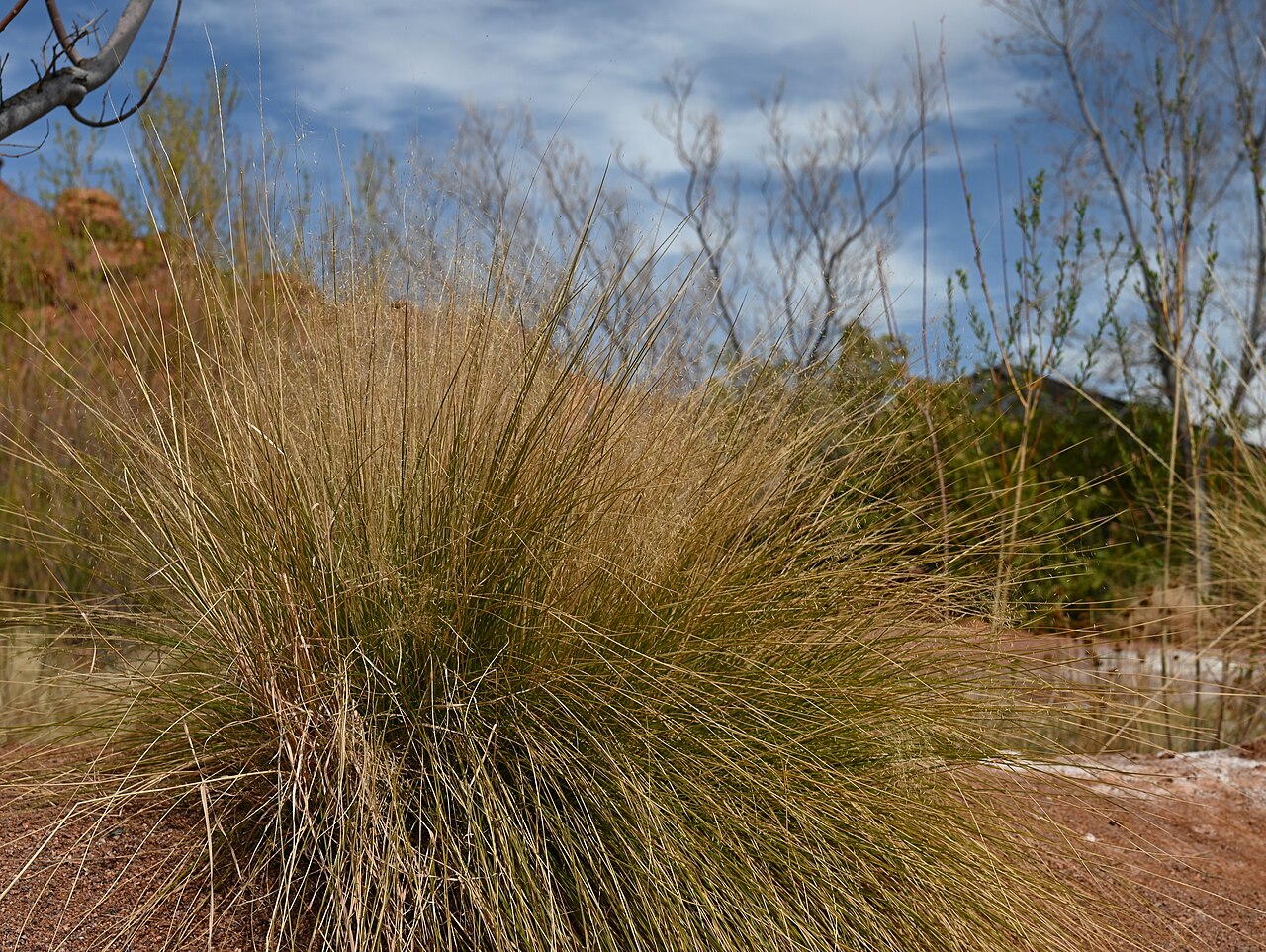
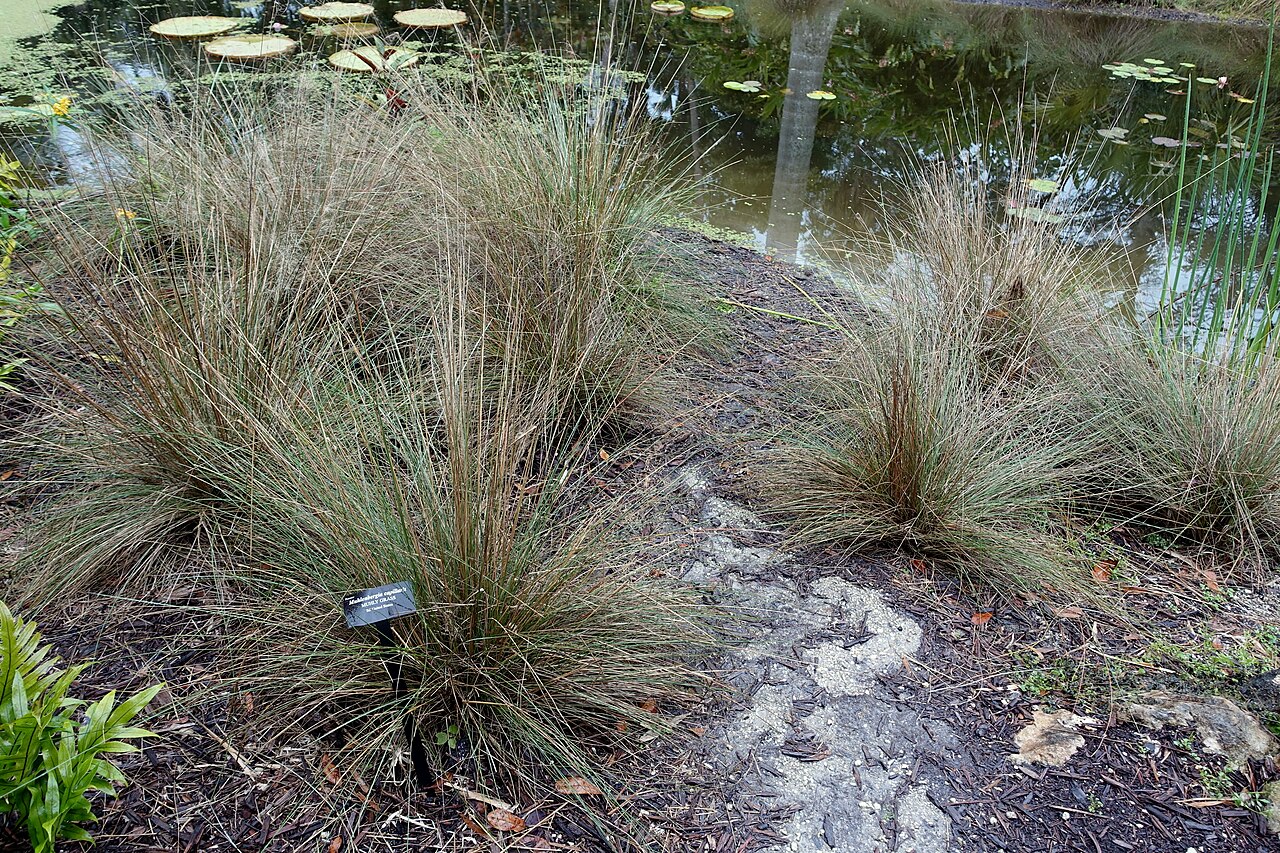
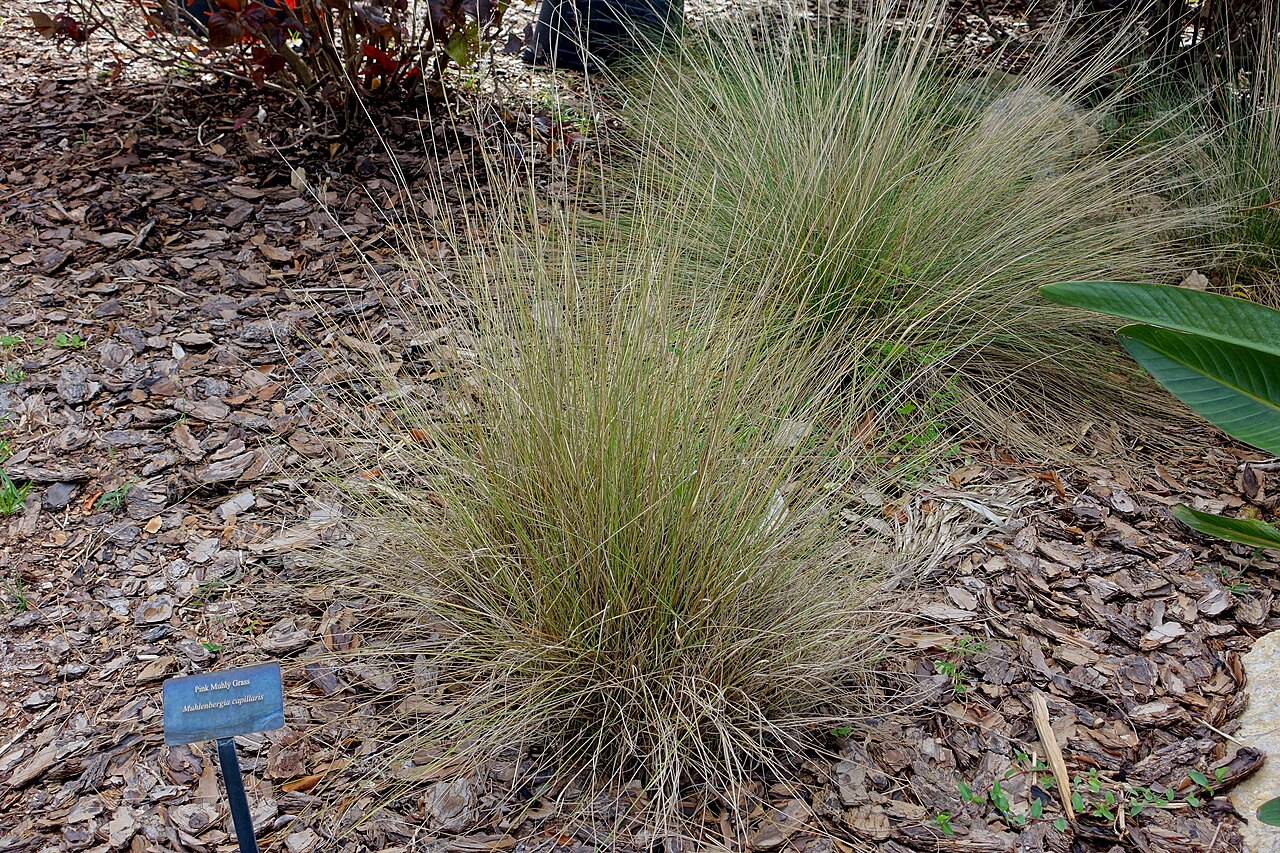
Pink muhly grass is a warm-season native grass, 3–4 feet tall and wide, with fine dark-green foliage topped in fall by airy, diffuse pink seed heads that look like a pink cloud hovering over the plant — the effect is so striking that massed plantings stop passersby. It is native to the central and eastern US, drought-tolerant once established, tolerant of poor soil and reflected heat, and long-lived with almost no care. Plant in spring in full sun and well-drained soil, spacing 24–36 inches apart; mass it in groups of three or more for the full cloud effect, since a single plant, while pretty, is not the spectacle. White-flowered forms exist for a softer look. In zones colder than 6, grow it as an annual or in a container moved to shelter for winter.
Water & feeding
Water regularly until established, then water sparingly; muhly grass is drought-tolerant and wet winter soil is a bigger risk than summer dryness. Do not fertilize heavily — compost at planting is enough, and rich soil makes it flop.
Common problems
- Flopping — too much water or fertilizer; give sun and lean soil.
- Winter loss in cold zones — hardy to zone 6; colder gardens should treat it as an annual.
- Late emergence — warm-season grass; it waits until late spring.
- Self-seeding — seedlings may appear; remove extras or let a drift form.
Notes
Cut back to a few inches in late winter before new growth starts, leaving the plumes standing through fall and winter for as long as they last. Divide in spring every few years if needed. Muhly grass pairs with switchgrass, coneflowers, and salvias, and its plumes are lovely in dried arrangements if cut at peak color.
Plant this instead of invasive grasses
If you are shopping for a showy ornamental grass, skip Fountain Grass, Miscanthus (Maiden Grass), and Pampas Grass: all three escape cultivation and are listed as invasive in warm regions of the US, where they crowd out native plants. Pink muhly grass gives you the same drama — the same tall plumes, the same massed-planting spectacle — as a well-behaved native that stays where you plant it. When a grass looks this good and belongs here, there is no reason to plant the one that runs wild.
Browse all plant & pest guides
Saving seeds
Muhly grass seed is small, light-loving, and a little fussy about timing — but once you know its two rules, it is straightforward to save. Collect the seed in fall, when the feathery plumes have faded to tan and the seed shakes loose easily into a paper bag. Strip the plumes by hand, crush them gently, and winnow out the chaff. A single plume holds far more seed than one garden needs, so a small bag is plenty.
The first rule is light: muhly seed needs light to germinate, so sow it on the surface of a moist seed-starting mix and press it in gently, but do not bury it. The second rule is a chill: a cold, moist stratification of about 30 days in the fridge improves germination, though some growers report decent results without it — the sources do not fully agree, so treat the chill as cheap insurance rather than a strict requirement. Sow in spring, keep the mix moist and bright, and expect sprouts within a few weeks.
Seedlings are fine and grassy at first and need a season in pots before planting out. And here is the honest headline: seed-grown muhly grass varies, and the named cultivars — the ones with white plumes or a particular habit — will not come true from seed. Division is the faithful route for those. Dig and split an established clump in spring or early fall, making sure each division has roots and shoots, and you have an exact clone.
Save seed from your strongest, best-colored plants, and label the jar — muhly seed all looks alike, and next spring you will not remember which bag was which. Keep it dry and cool: Florida humidity is the enemy of stored seed, so dry it thoroughly, jar it with a silica gel packet, and keep it in a cool, dark place.
Varieties
Every named variety of Muhly Grass with its own growing guide:
- Regal Mist Muhly Grass — The compact pink cloud: deep pink plumes on a tidy, smaller muhly, the muhly for small gardens.
- White Cloud Muhly Grass — The white cloud: airy ivory plumes that float above blue-green foliage, the moon-garden muhly.
- Pink Flamingo Muhly Grass: Growing Guide — The big pink cloud: a vigorous hybrid muhly with larger, brighter plumes for mass plantings and naturalistic drifts.
- Undaunted Muhly Grass: Growing Guide — The weeping pink cloud: seep muhly selected for deeper color, a fountain habit, and cold hardiness the species cannot match.
- Lindheimer’s Muhly Grass: Growing Guide — The big muhly: a tall, blue-green Texas bunchgrass with silvery plumes, the native screen that replaces pampas grass without the invasion.
- Deer Grass: Growing Guide — The pencil-plume muhly: a tall southwestern bunchgrass with stiff, narrow seed heads, basketry stems, and serious drought manners.
- Autumn Glow Lindheimer’s Muhly: Growing Guide — The named Lindheimer’s muhly: the tall, blue-green bunchgrass in its selected ornamental form, for screens with a silvery fall glow.