
🌾 Undaunted Muhly Grass
What it looks like
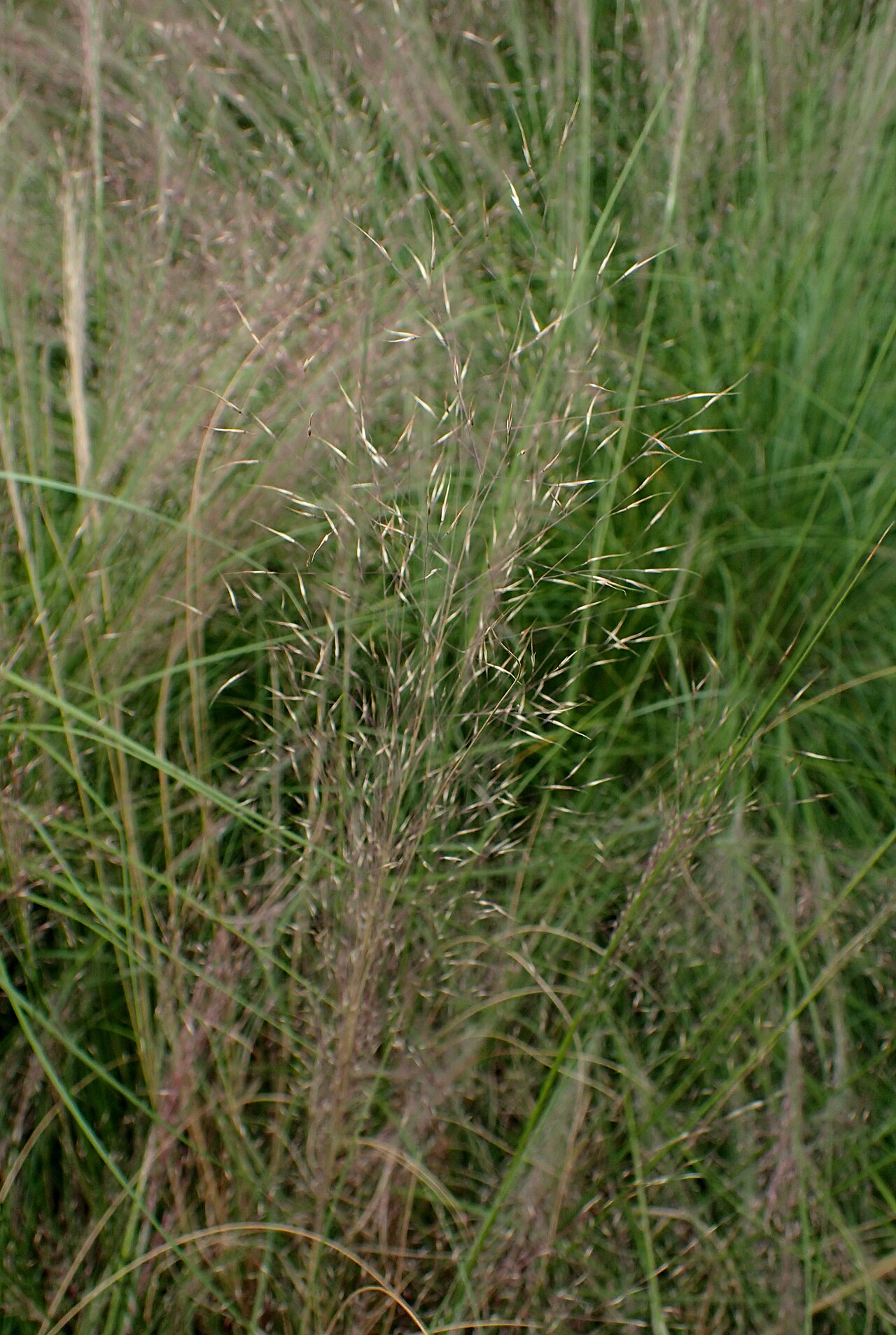
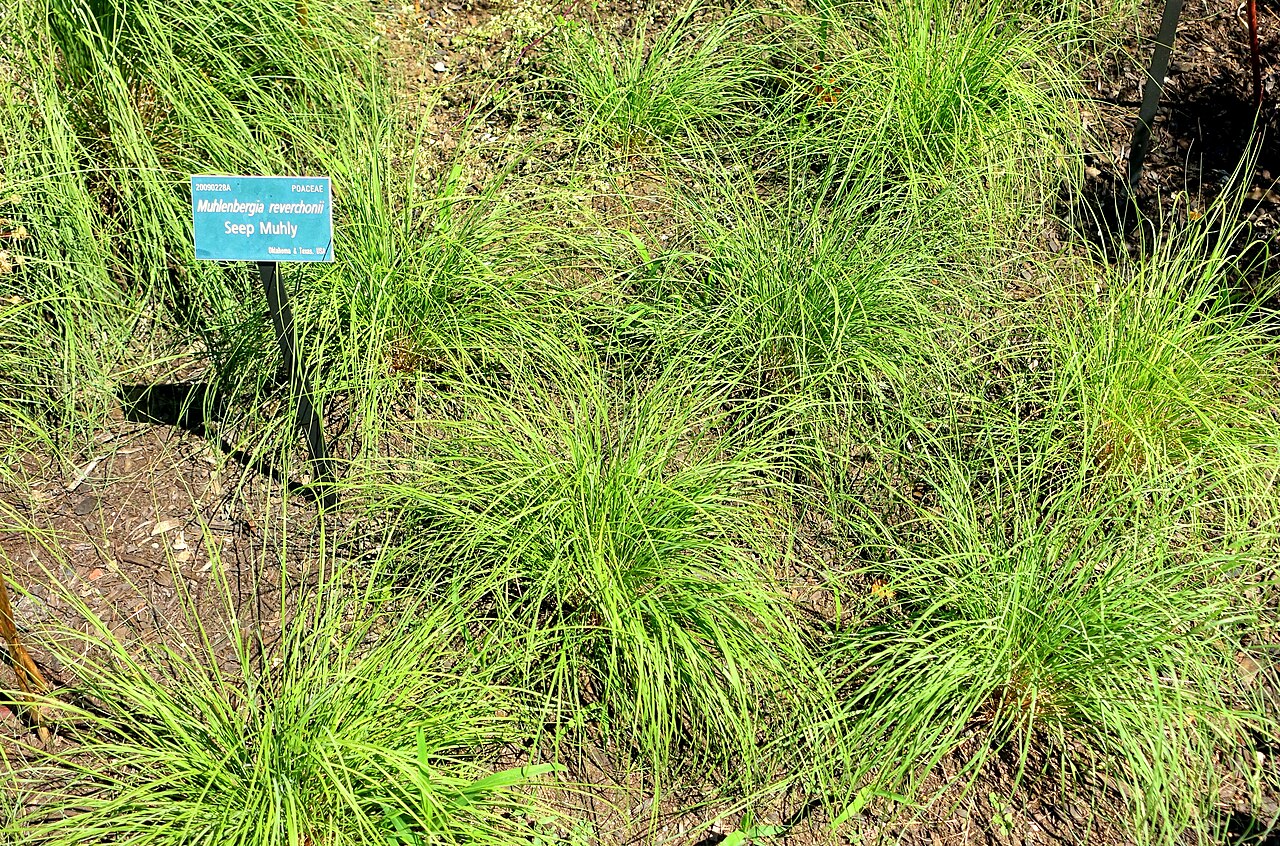
Undaunted is the cultivar that made seep muhly (Muhlenbergia reverchonii) a garden plant instead of a botanical curiosity. The species is a Texas and Oklahoma native of rocky, limestone ground, smaller and less stiff than pink muhly, with graceful blades that arch and curl rather than standing straight up. Undaunted keeps that weeping, fountain-like habit and improves on it: its seed heads start upright and then arch gracefully over the plant, its panicle color is deeper pink at first flush than the species, and it is notably hardier in northern zones, which is why nurseries list it down to zone 5 while pink muhly stops sooner.
Expect a rounded clump about 2.5 feet tall in leaf and 3.5 to 4 feet wide, with plumes lifting the display a little higher in fall. The color is pink, but a softer, airier pink than the deep rose of Regal Mist, and the texture is the selling point: from a distance it reads as a pink haze with movement, up close as a fountain of fine stems. It is a specimen grass in the perennial border sense, a plant you site where its arching habit can be seen against a wall, a path, or a darker evergreen backdrop.
Why this variety
Choose Undaunted when you want muhly drama with a softer shape and a wider hardiness range. Pink muhly is upright and vivid; Undaunted is weeping and romantic, and it survives winters that would end a pink muhly. It is also the muhly for gardeners who like a plant that looks good after the color fades: the plumes keep standing, fading to tan, and carry winter interest instead of collapsing into a sad heap.
In the trade, Undaunted is sometimes listed simply as a pink muhly, which causes confusion at the nursery. Check the tag: if it says Muhlenbergia reverchonii ‘Undaunted’, you are buying seep muhly, not capillaris, and you should expect the arching habit and the extra hardiness that come with it.
How to grow
Plant in spring in full sun and lean, well-drained soil, spacing 3 to 4 feet apart. Seep muhly comes from thin, rocky, limestone soils, so it wants drainage more than it wants richness: a raised bed, a slope, or a sandy border suits it better than a rich, irrigated perennial bed. Water to establish, then back off. Cut back hard in late winter before new growth, and divide in spring every few years if the center thins.
Florida note: Undaunted is a Texas and Oklahoma native, not a Florida native, but it is grown across the southern United States and is Florida-suitable in sun with excellent drainage. In Florida, give it the sunniest, best-drained spot you have and do not plant it in a low, wet corner or a heavily watered bed, where seep muhly’s thin-soil heritage works against it. North and central Florida gardens suit it best; in the far south, treat its summer performance as a trial and plant pink muhly first if you want a sure thing.
Water & feeding
Water regularly until established, then sparingly. Like all muhlys, Undaunted is drought-tolerant once rooted and hates wet feet, especially in winter. Skip the fertilizer, or use a light compost top-dressing at planting only: rich soil makes it flop and dilutes the very color you bought it for.
Common problems
Flopping: usually too much water or fertilizer. Give it sun and lean soil and let it dry between waterings.
Winter loss in cold zones: hardy to zone 5, which is generous for a muhly, but in colder gardens treat it as an annual or grow it in a container moved to shelter.
Late emergence: warm-season grass, late to wake in spring. Wait until late spring before deciding it failed.
Center die-out in old clumps: divide in spring every few years to renew the plant.
Harvest
No edible harvest, and no apologies. The harvest is the fall plume display, and the second harvest is the winter silhouette: cut plumes at peak pink for dried arrangements, or leave them standing for winter interest and for birds. Established plants plume every fall with almost no input, which is the whole bargain of a good ornamental grass.
Browse all plant & pest guides
Saving seeds
Choose Undaunted when you want muhly drama with a softer shape and a wider hardiness range. Pink muhly is upright and vivid; Undaunted is weeping and romantic, and it survives winters that would end a pink muhly. It is also the muhly for gardeners who like a plant that looks good after the color fades: the plumes keep standing, fading to tan, and carry winter interest instead of collapsing into a sad heap. In the trade, Undaunted is sometimes listed simply as a pink muhly, which causes confusion at the nursery — check the tag: if it says Muhlenbergia reverchonii ‘Undaunted’, you are buying seep muhly, not capillaris, and you should expect the arching habit and the extra hardiness that come with it. Seed will not reliably repeat this named selection — seedlings vary in habit and hardiness — so Undaunted is kept true by division: divide in spring every few years if the center thins, and cut back hard in late winter before new growth. The full method is in the Saving seeds section of the Muhly Grass guide.