
🫘 Chiba Green Edamame
What it looks like
Why this variety
Chiba Green is the edamame you plant when you want a sure thing: a sturdy, reliable variety, listed by university extension at about 82 days to green pods, with sweet beans, good pod set, and plants that stand up to a season without fuss. It does not have a flashy story or a joke name; it has the quieter virtue of doing exactly what the packet says, which, after a season of varieties that overpromised, feels like luxury.
The beans are sweet and tender, the pods are generous, and the plants are vigorous enough to carry a heavy set without lodging — the trait that separates a good edamame season from a tangled one. Chiba Green is the variety extension writers reach for when they list dependable edamame, and it is the variety to plant alongside an earlier type so the harvest keeps rolling after the first flush is eaten.
If you are new to choosing between cultivars, the Varieties Matter guide explains why the name after the plant matters as much as the plant itself. And if you want the whole clan at a glance, the broader Edamame guide covers edamames generally.
How to grow
Sow directly in warm soil above 60°F, seeds an inch deep and 4 to 6 inches apart in rows 24 to 30 inches apart, in full sun and fertile, well-drained soil. Direct-sow only, inoculate with soybean rhizobium in beds new to soybeans, and give plants full sun — shaded soybeans make fewer pods, and Chiba Green’s reputation rests on pod count. In Florida, spring and late-summer sowings both work; pair it with an earlier variety like Tohya for a staggered harvest, since Chiba Green ripens a few days later and extends the season.
Succession-sow every two weeks for continuous pods, and check daily once pods swell — the green window is short for every edamame, reliable ones included. Water steadily, mulch sandy soil, and keep the bed weeded early, because young soybeans compete poorly with weeds and Chiba Green’s sturdy adult habit is no help to a seedling being shaded out.
Water & feeding
About an inch to an inch and a half a week, steady through pod fill, at soil level, with mulch holding moisture in sand. Work worm castings in at sowing and skip nitrogen fertilizer — soybeans fix their own, and extra nitrogen makes leaves, not pods. Keep watering through the green harvest itself; beans swell right up to picking day, and a dry finish makes them starchy instead of sweet.
Common problems
Bean beetles, stink bugs, and rabbits, plus humid-weather leaf diseases — row cover early, hand-pick, water at the base, and space for air. Drought during pod fill is the quality killer across all edamame, and Chiba Green is no exception: flat, tough pods mean the plants went thirsty at the wrong week. Yellow pods mean the window passed; harvest promptly, taste often, and do not trust the calendar over the pod in your hand.
Harvest
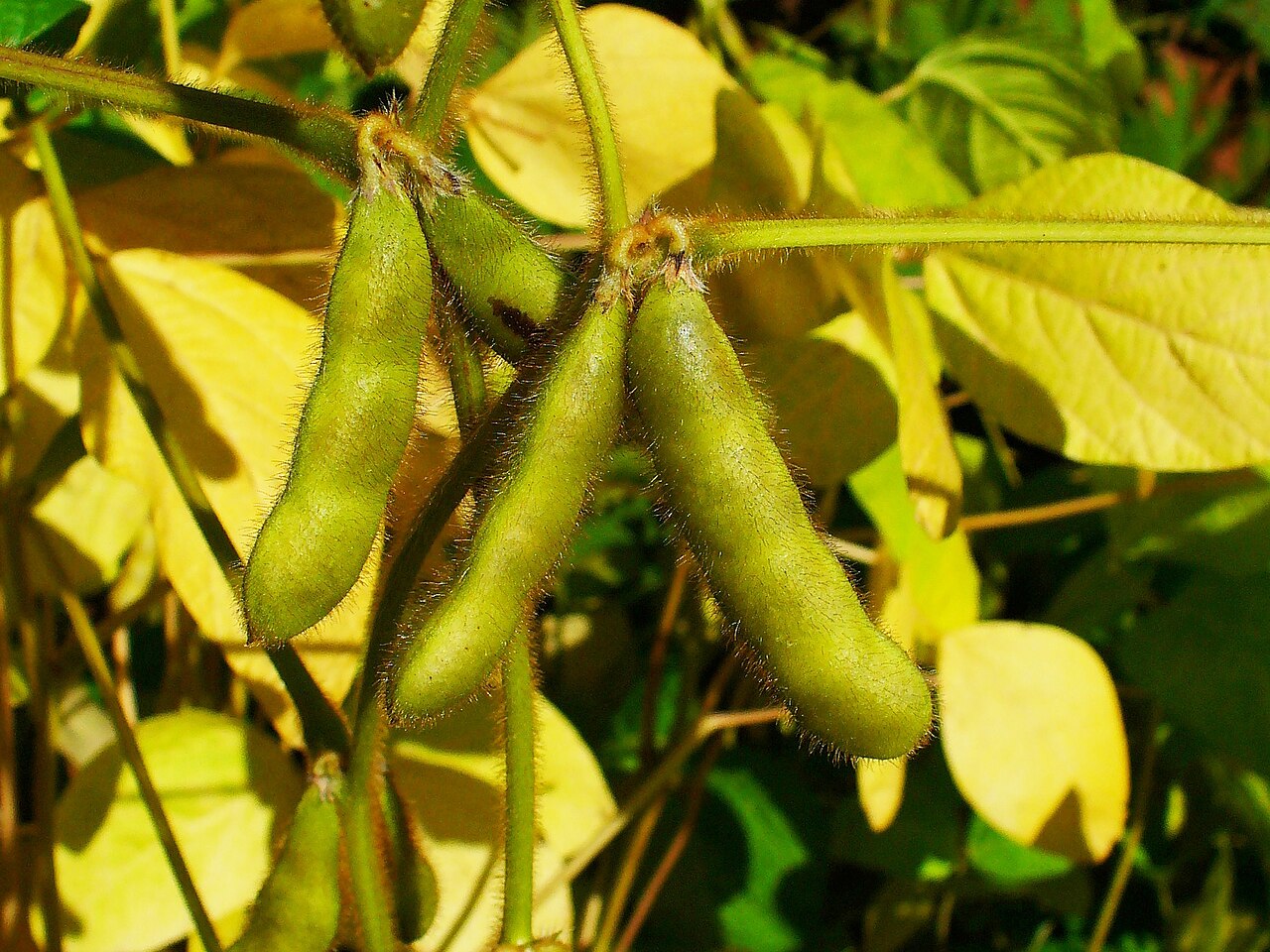
Pick pods when plump, bright green, and fuzzy, about 82 days after sowing, and eat fresh the same day for the sweetest result. Steam or boil in salted water, salt again, and serve warm. For freezing, blanch briefly, cool fast, and bag — Chiba Green’s sweet, sturdy beans hold up well frozen, which is convenient, because a reliable variety has a habit of producing more than one meal’s worth at once.
Nerdy fact: Chiba Green takes its name from Chiba, the Japanese prefecture famous for its soybeans, and it appears in university extension edamame tables alongside Midori Giant and Tohya — a short list of varieties that extension writers trust enough to name, which is a better endorsement than any seed packet poetry.
Saving seeds
Chiba Green is a reliable edamame variety, so it comes true from seed — save seed from your best pods and let them dry fully before storing. The full method is in the Saving seeds section of the Edamame guide.