
🍀 Fergus
What it looks like
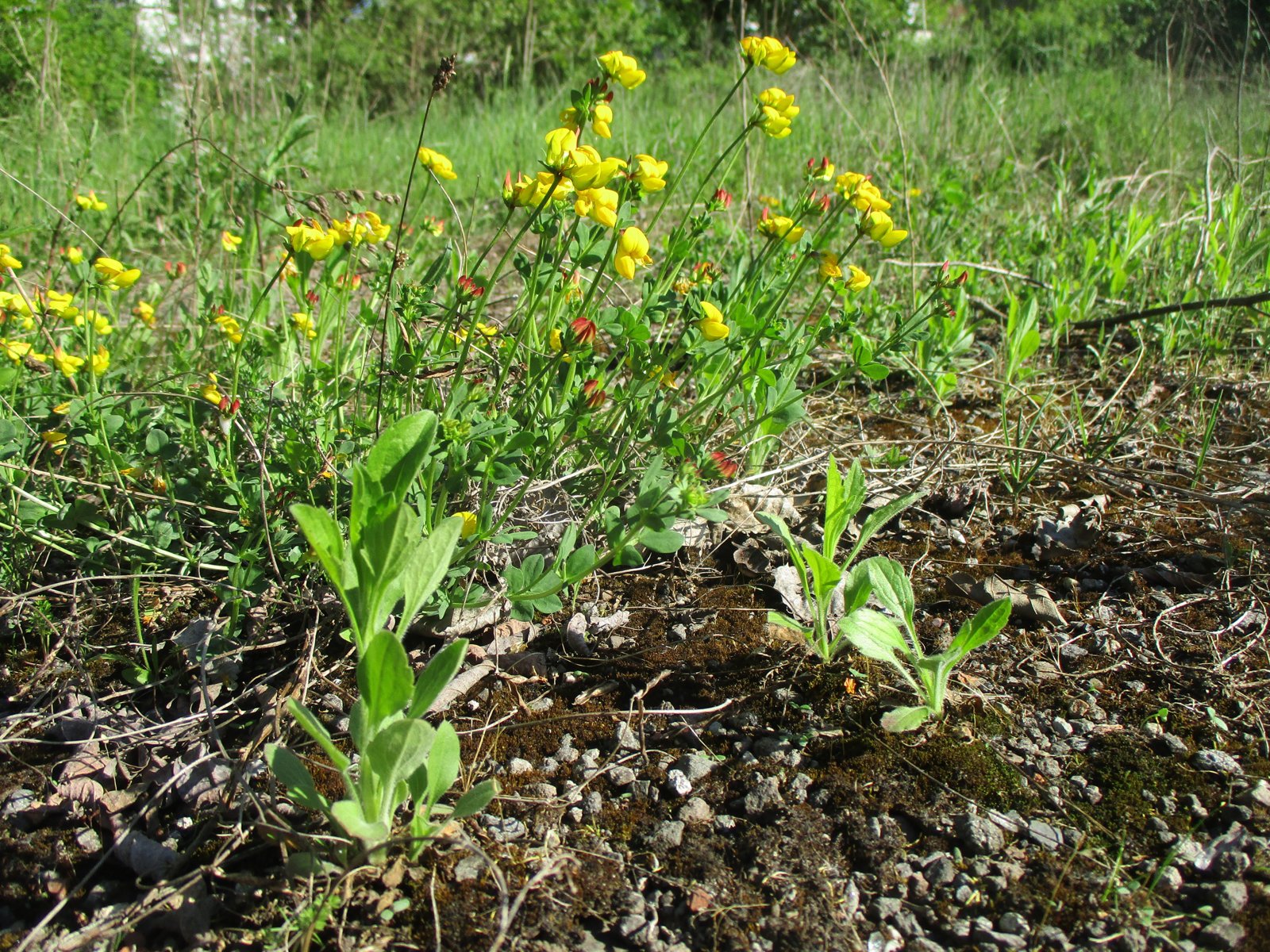
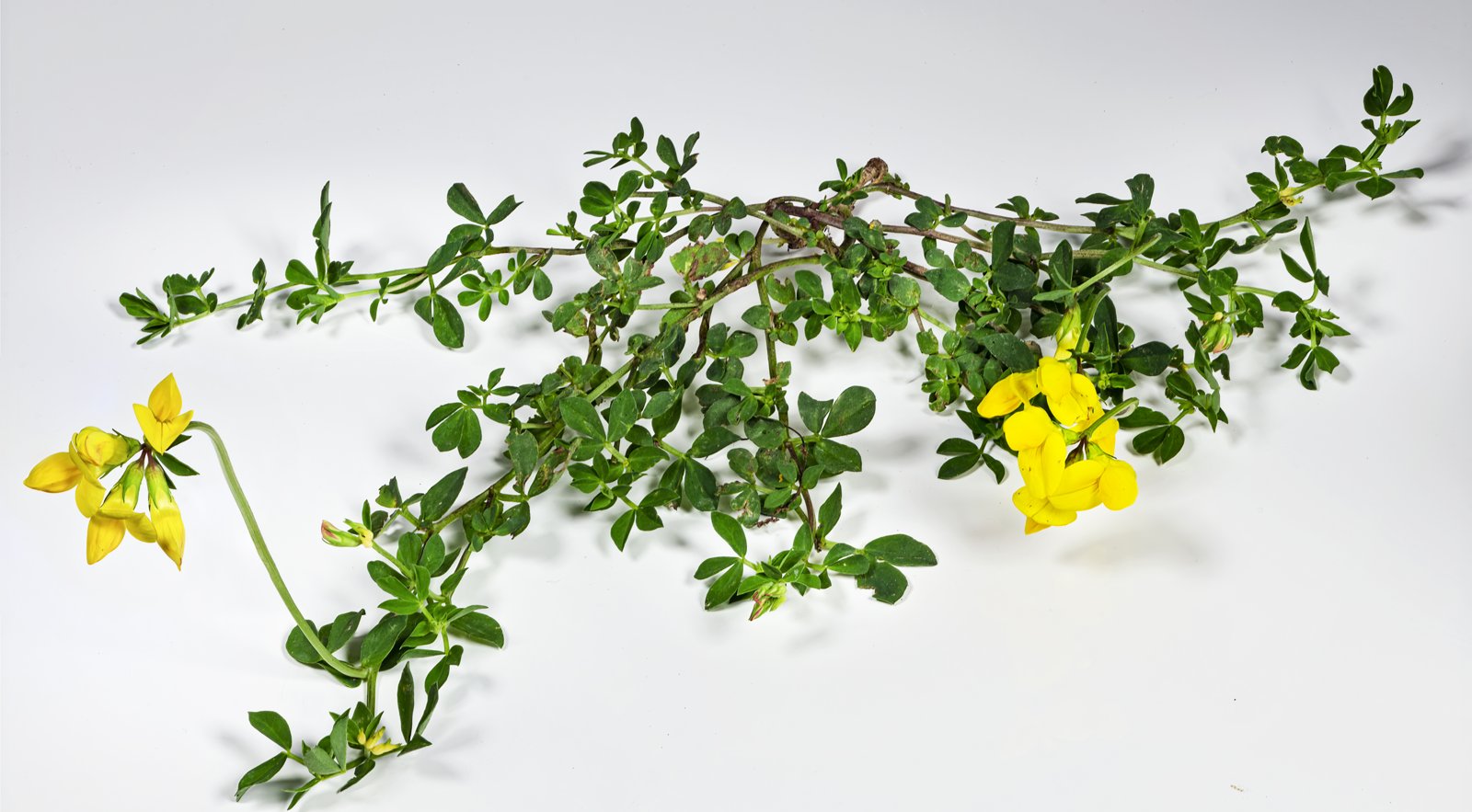
Fergus looks like trefoil with a plan: a semi-erect, intermediate habit that stands up more than the prostrate grazing types but never gets as tall and stemmy as the erect hay types. Expect the familiar trefoil package — leaves that look trifoliate until you count five leaflets, clusters of bright yellow pea flowers often flushed with orange-red as they age, and the slender pods that splay like a bird’s foot — carried on fine stems that hold up under grazing instead of flopping at the first bite. The species guide’s full portrait of the plant lives in the bird’s-foot trefoil species guide.
Why this variety
Fergus comes from the University of Kentucky, and its breeding brief reads like a southern pasture wish list: a semi-erect trefoil that matures earlier than Empire, carries moderate winterhardiness, and was developed for persistence in humid pastures. The North Central forage reference lists it among the prostrate-to-intermediate grazing types and notes its adaptation to southeastern states with good grazing tolerance — which makes Fergus the trefoil to reach for when the question is not ‘what yields most in a trial plot’ but ‘what is still standing in a grazed, humid pasture in year four.’ Earlier maturity than Empire matters because it shifts the whole season forward: earlier flower, earlier first grazing, and a stand that has already banked regrowth before summer stress arrives.
That southern adaptation is the variety’s real selling point. Most trefoil varieties were selected for northern winters; Fergus was selected for southern summers and the humidity, disease pressure, and grazing schedules that come with them. It is still a cool-temperate legume — nobody should mistake it for a tropical forage — but within trefoil’s range it is the one bred to lean south.
How to grow
Bird’s-foot trefoil seed is small and its seedlings are unhurried, so establishment is the whole game. Sow in spring or fall at about a quarter inch deep, spacing plants about 6 inches apart in a garden bed (field seedings run 8 to 10 pounds of seed per acre in monoculture), and keep the seedbed moist until the plants are up and running. Inoculate the seed with the right trefoil rhizobium if trefoil has never grown in that soil before — the nitrogen-fixing nodules do not appear by wishful thinking, and an uninoculated stand is a hungry stand. Trefoil reaches full size in one to two years, so do not judge it by its first summer. It is famously uncompetitive as a seedling, which is why forage references pair it with a gentle companion grass rather than an aggressive one: a small grain or a mild grass nurses it along, while a thug grass simply eats its lunch.
Give it full sun and well-drained soil, and it tolerates a remarkable range of abuse after that: light sandy, medium loamy, and heavy clay soils alike, nutritionally poor ground where fussier legumes sulk, soils down at pH 5.5 where alfalfa would demand lime first and ask questions later, and short wet spells that drown other forages. It prefers moist soil but tolerates dry, droughty ground once established.
For Fergus specifically, lean into its grazing strength: it tolerates frequent defoliation better than the erect hay types, so a rotational grazing setup suits it, with rest periods between passes rather than continuous set-stocking. Its earlier maturity also means an earlier first cut or graze than Empire in the same field — watch the flowers, not the calendar, and take the first pass when the stand is in early bloom.
Water & feeding
Keep the seedbed moist through establishment; after that, trefoil is a moderate drinker that tolerates dry spells better than its lush looks suggest, thanks to a taproot with many lateral branches running mostly through the upper 15 inches of soil. It does not want a swamp — persistent waterlogging invites crown and root rots, the quiet killers of legume stands — but it handles short wet spells and poorly drained corners far better than alfalfa, which is exactly why it became the forage of marginal land.
Feeding is mostly a matter of not overdoing it. As a legume, trefoil fixes its own nitrogen through rhizobium nodules on its roots, so nitrogen fertilizer is money spent on a problem the plant already solved. What it does appreciate is phosphorus and potassium kept up to soil-test levels, especially on the poor, acid soils it is usually asked to redeem. Lime only if a soil test says so: trefoil tolerates pH 5.5, but it will not complain about a nudge toward neutral either.
Common problems
Slow establishment is the classic trefoil complaint, and it is really a weed complaint in disguise. Seedlings that take their time are seedlings that weeds overtop, so a clean seedbed and a non-bullying companion grass matter more than any spray. Mowing weeds above the young trefoil — clipping the competition without scalping the crop — is the oldest fix and still a good one.
Overgrazing is the second trap. Trefoil persists by reseeding itself, and a stand grazed or mown to the dirt with no rest never gets to set that seed. Forage references give grazed trefoil 4 to 6 weeks of rest between grazings, and that rest is not laziness, it is the stand’s retirement plan. Cross-pollination is a third, subtler issue: because trefoil outcrosses freely, seed saved from an old stand is rarely pure variety anymore, so a stand that starts as one named variety gradually becomes a neighborhood mix. That is fine for a pasture, but it means variety purity is a starting condition, not a permanent one.
One thing trefoil does not do is bloat livestock. Its condensed tannins bind plant protein in the rumen and keep the foam down, which is why it can be grazed as a pure stand where alfalfa and clover cannot — a genuine superpower, and the reason graziers forgive its slow start.
Harvest
Graze it or cut it for hay, and either way the rule is the same: take a cutting, then let it recover. Trefoil holds its feed quality late into maturity better than many legumes because of its high leaf-to-stem ratio, so a slightly late first cut is not the disaster it is with some forages. Let some plants flower and set seed each year — those bird’s-foot pods are the next generation of the stand, and a stand allowed to reseed is a stand that outlives its planter’s patience. Mowing after grazing keeps the sward even and stops the ungrazed patches from going woody and stemmy while the grazed patches stay short.
Florida note: Be honest about geography: bird’s-foot trefoil is a cool-temperate forage for zones 3–9, and one garden reference describes it as found throughout North America except the Deep South — and the peninsula is the Deep South. In the warmest parts of the state, do not plant it expecting a pasture; at most, treat it as a cool-season trial where winters actually chill, and expect summer heat to end the experiment. The pollinator value, the nitrogen fixing, and the yellow flowers are real — they just belong to a cooler climate than a peninsula summer.
Browse all plant & pest guides
Saving seeds
Fergus’s hybrid status isn’t pinned down — no source states whether this naturalized Kentucky trefoil strain is open-pollinated or a hybrid, so buy fresh seed to be safe. The full method is in the Saving seeds section of the Birds-foot Trefoil guide.