
🌿 Eriogonum fasciculatum var. fasciculatum
Botanical form, not a garden cultivar: this guide covers a naturally occurring variety/subspecies of the species, with the species' growing guidance where variety-specific cultivation notes have not been published separately.
What it looks like
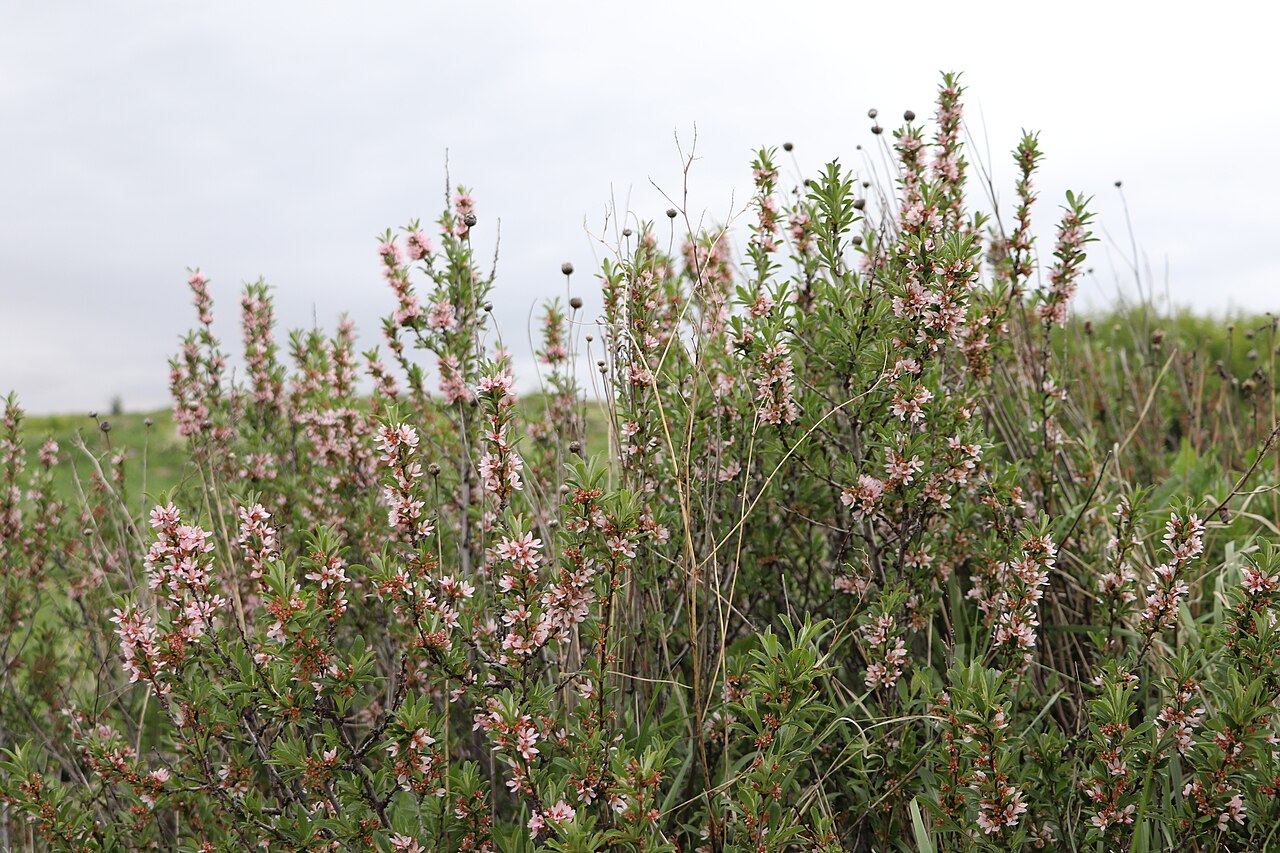
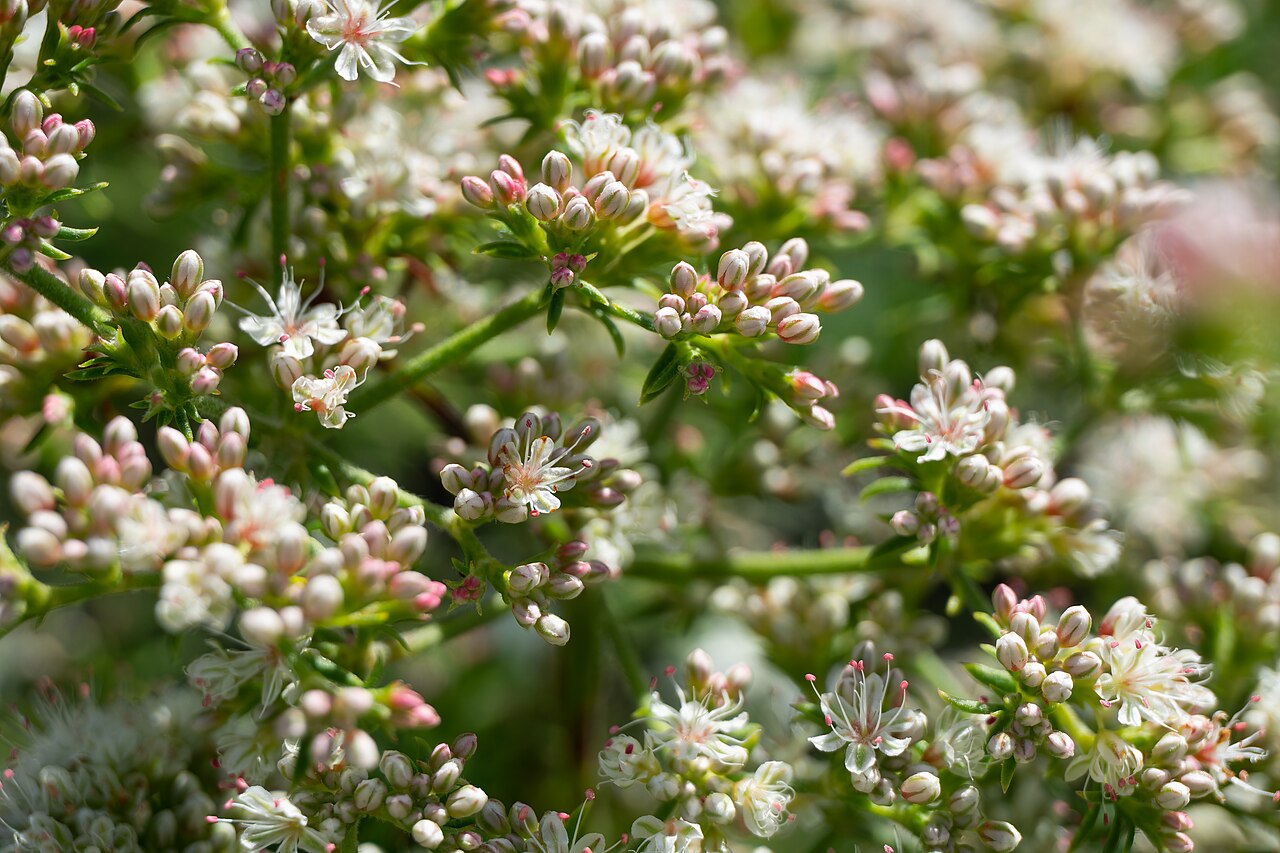
Var. fasciculatum is the coastal form and the autonym — the variety that carries the species name because it is the form the species was described from. It is a low, spreading to mounding evergreen shrub of dry coastal slopes, with narrow, dark-green leaves that are thinly white-felted underneath and smooth on top, and flat-topped clusters of tiny pink-white flowers that age to rusty brown and stay showy for months.
In the Flora of North America key it separates from its cousins by those leaves — thinly white-tomentose below, glabrous above — and by a usually decumbent (sprawling) habit, primarily coastal in distribution. The flowers are small individually and spectacular in aggregate: a single shrub in bloom looks dusted with pink snow, and pollinators treat it accordingly.
Why this variety
Plant this form if you garden on the California coast or in a similar dry, sunny, coastal climate and you want the buckwheat that actually belongs there — the local form, for local pollinators, in local soil. California buckwheat is a keystone pollinator plant: its long bloom feeds native bees, butterflies, and beneficial insects through the dry season when little else is flowering, and its seeds feed birds into fall.
It is also one of the toughest shrubs you can plant in a dry garden: deep-rooted, drought-tolerant once established, unbothered by poor soil, and evergreen enough to hold a slope together through winter.
How to grow
Plant in fall or early spring in full sun and very well-drained, lean soil — sandy, gravelly, or rocky soil is ideal, and rich, wet soil is the enemy. Space plants 3–4 feet apart, water deeply at planting, and then taper off: established California buckwheat wants a dry summer, like the Mediterranean climate it evolved in. Work worm castings into the planting hole lightly rather than enriching the whole bed.
Prune lightly after bloom if the shrub gets rangy, removing spent flower heads and any dead wood; do not shear it into a boxwood. It resents hard pruning into old wood, so keep cuts to the current season’s growth.
Water & feeding
Water deeply at planting and through the first dry season, then water sparingly — once a month or less in summer is plenty in most coastal gardens, and overwatering is the fastest way to kill it. Morning watering at the soil line keeps foliage dry.
Feed almost never. Lean soil is a feature for buckwheats; fertilizer produces soft, floppy growth that flops, rots, or both. A light casting mulch at planting is the whole feeding program.
Common problems
- Root rot in wet or heavy soil — the main killer. Sharp drainage and dry summers are the prevention; there is no rescue for a rotted crown.
- Flopping in rich soil or shade — site in full sun and lean soil, and prune lightly rather than staking.
- Hybridization with other buckwheats where planted together — roadside plantings have produced hybrid swarms with related species, so keep it pure if local genetics matter to you.
- Aphids on new growth — usually minor; a jet of water and the beneficial insects the flowers attract handle them.
Harvest
There is no food harvest; the harvest is ecological. Leave spent flower heads standing into fall — they turn a beautiful rust color, feed seed-eating birds, and look better than most ‘tidy’ shrubs do after pruning. Cut flowers for dried arrangements while the clusters are still pink-white, and they will hold their shape indoors for months.
If you are growing it for seed, let the flower heads dry fully on the plant, then strip and clean the tiny seeds; buckwheat seed is the reason birds visit, so expect competition.
See also: California Buckwheat: Growing Guide