
🌿 California Buckwheat
What it looks like
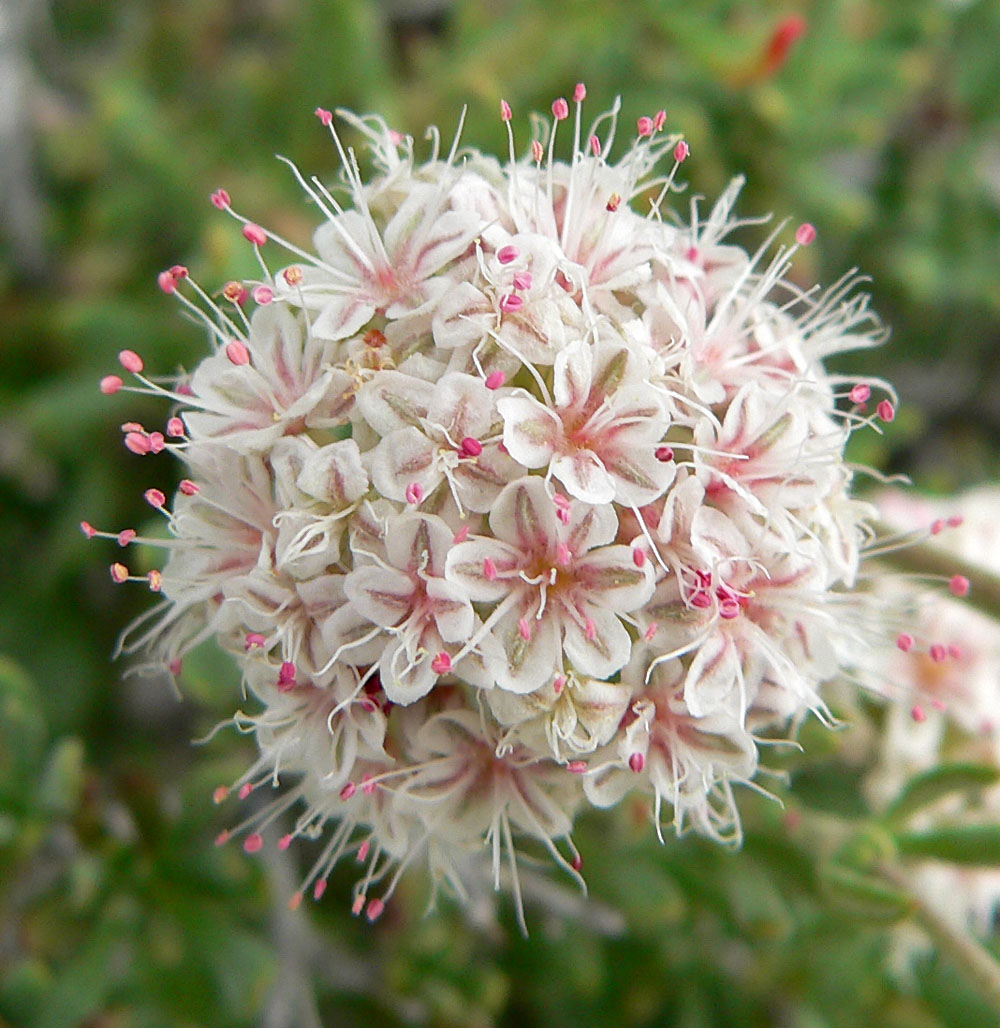
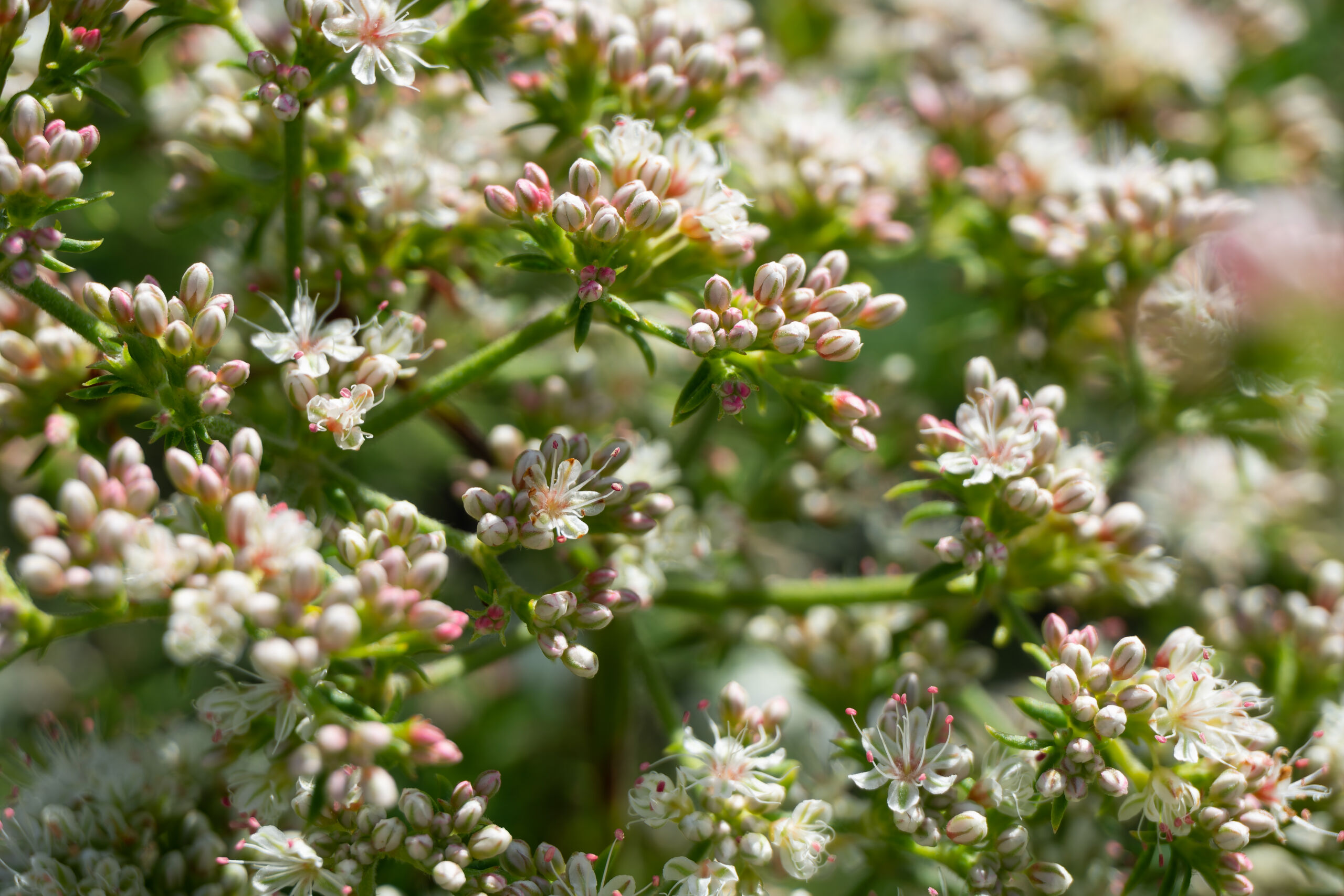
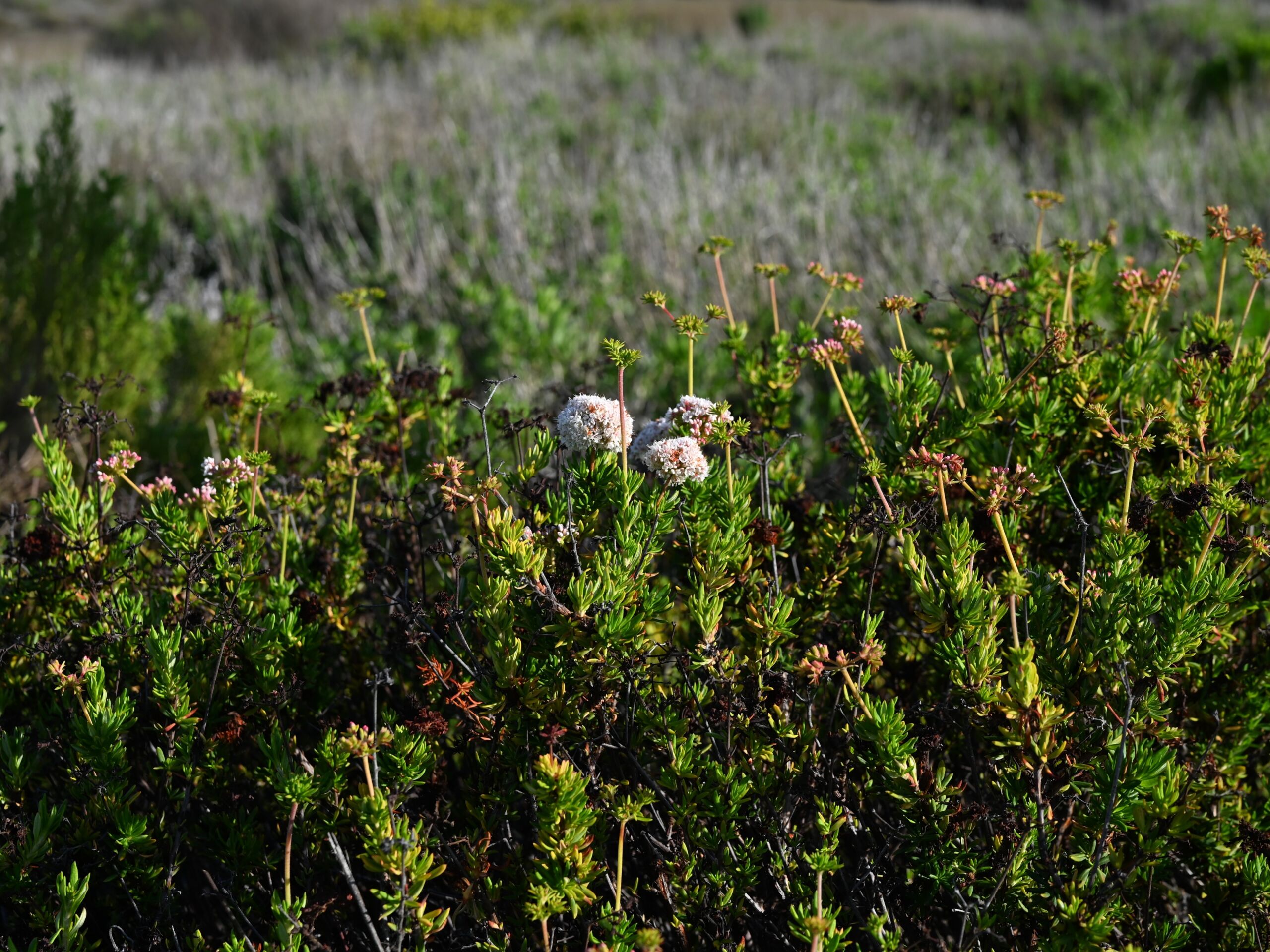
California buckwheat is a native evergreen shrub of the buckwheat family, Polygonaceae, and it is one of the most honest plants you can put in a dry garden: it looks like exactly what it is, a tough, twiggy mound built for sun, wind, and poor soil, and then it spends months covered in flowers. The United States Department of Agriculture’s plant guide describes it as about 12 to 39 inches high and 28 to 51 inches wide, with numerous slender, flexible branches, and garden references generally put it at 1 to 4 feet tall and 3 to 6 feet wide, with some vigorous forms reaching toward 6 feet. That spread of numbers is not sloppy reporting; it is the plant. California buckwheat is famously variable, and a coastal plant, a desert plant, and a garden plant fed on irrigation can all look like cousins rather than clones. Expect a low, spreading mound, wider than it is tall, and give it the room to be one.
The leaves are the first identification clue. They are small, narrow, and leathery, often rolled under at the edges, clustered in tufts along the branches, green above and paler or woolly beneath, depending on the variety. Some forms are bright green; the interior and desert forms are gray-green to silvery, a color that is doing real work, reflecting heat and cutting water loss. The branches are wiry and flexible, and the whole shrub has a slightly wild, windswept outline even when it is perfectly healthy. If your California buckwheat looks a little scruffy in August, congratulate it: scruffy is its native language.
The flowers are the reason this shrub is famous, and they come with a built-in color show. From late spring through summer and into fall, the branch tips carry flat-topped clusters of tiny white to creamy flowers, and as the season dries out, those clusters blush pink and then dry to a rich rusty red-brown, holding their shape and color on the plant for months. The USDA guide gives the flowering period as May through October, which is a long season by any standard, and it is the reason this plant is a pollinator workhorse: when most garden flowers have finished, California buckwheat is still serving nectar. The dried flower heads are ornamental in their own right, and many gardeners leave them standing through winter rather than cutting them off, which is both lazier and more beautiful than the alternative.
One plain-text clarification, because the name invites it: California buckwheat is not the buckwheat of pancakes and soba noodles. That grain is Fagopyrum esculentum, a different genus in the same family, an annual crop plant. Eriogonum fasciculatum is a wild shrub, not a grain crop, and nobody is harvesting flour from it. It is also not a single look: the genus Eriogonum holds well over a hundred species in California alone, and this species is the widespread, adaptable one, the buckwheat you see on dry slopes from the coast to the desert edge.
How to grow
Grow California buckwheat by copying a dry California slope, not a garden bed. It wants full sun, sharp drainage, and lean soil, and it is famously tolerant of the soils other plants reject: sandy to clay loam, decomposed granite, rocky ground, serpentine soils, and high-pH soils are all listed in the USDA guide as ground it handles. What it will not tolerate is wet feet. In heavy clay that holds winter water, plant it high, on a slope or a raised mound, and amend for drainage rather than for richness. Rich, heavily watered soil makes it grow fast, flop, and die young; lean soil makes it live long and look like itself.
Plant in fall or winter in mild climates, so winter rain establishes the roots before the dry season, or in spring where winters are cold. Water deeply but infrequently through the first year, then back off hard. Once established, California buckwheat needs no supplemental water in most California gardens, and garden references consistently describe it as drought-tolerant with low to very low water needs. It occurs naturally where annual rainfall is roughly 7 to 20 inches, and up to about 2,700 feet elevation in its Mediterranean-climate range, from coastal slopes near San Diego County north to Marin County, and east into Utah, Arizona, and northwestern Mexico. If your garden gets regular summer rain, plant it in your driest, sunniest, best-drained spot and resist the urge to water it like the rest of the border.
Hardiness needs a plain statement, because sources genuinely differ. Garden references commonly give zones 7 to 11, and that is the range used in this guide’s hero stats. Some nursery listings narrow it to zones 8 to 10 for particular selections, and the honest reading is that the species as a whole is hardy to about zone 7, while individual selections and desert forms vary, and a plant grown from coastal seed may be less cold-hardy than one from an inland population. In Florida, it is not a Florida plant at all: it wants dry summers and sharp drainage, and Florida’s wet, humid summers are the opposite of its native pattern. Admire it in California gardens, and plant a buckwheat relative suited to your region at home.
Pruning is light and forgiving. After flowering, or in late winter, cut back dead flower stems and any dead wood, and shear lightly to keep the mound tidy if you want a neater shape. It takes pruning well, and old plants can be cut back harder to rejuvenate them, though a hard cut on a very old, woody plant is a gamble rather than a guarantee. Do not fertilize it into softness: a yearly mulch of gravel or light organic mulch, kept off the crown, is plenty, and heavy nitrogen is the fastest way to turn a tough native into a floppy disappointment.
Water & feeding
Water to establish, then mostly stop. Through the first year, soak deeply every week or two in dry weather, letting the soil dry between waterings so roots chase moisture downward. Once established, California buckwheat in a Mediterranean climate needs little to no summer water, and many established plants get none at all. If you do water in summer, water deeply and rarely, never daily and shallow, and expect the trade: a little summer water keeps the plant greener and leafier, while a dry summer pushes it toward its rust-colored flower show and its summer-dormant look. Both are normal, and neither is a cry for help.
Do not feed it like a vegetable. California buckwheat evolved on poor soils, and it grows best in average to lean ground with no added fertilizer. If your soil is genuinely depleted and the plant is pale and stunted, a single light application of a balanced, slow-release fertilizer in spring is plenty, and in most native-soil gardens it is unnecessary. The most common feeding mistake is not underfeeding but overwatering a fertilized plant, which produces soft growth that the first dry spell then punishes.
Common problems
- Root rot from wet soil. The number one killer, and almost always a drainage problem rather than a disease problem. If a plant yellows, wilts, and collapses in wet ground, the soil stayed wet too long. Replant higher, on a slope or mound, in grittier soil, and do not water it on a lawn schedule.
- Flopping and short life in rich, irrigated soil. A plant given lawn water and fertilizer grows fast, sprawls, and often dies young. Lean soil, sun, and restraint are not neglect here; they are the care plan.
- Scruffy summer appearance. Not a problem, but the most common false alarm. A buckwheat that looks dry and rusty in late summer is flowering and seeding exactly as designed. Wait for winter rain and spring growth before judging it.
- Self-seeding. California buckwheat can self-sow where it is happy, and the USDA guide notes it may become weedy in some settings. In a native garden that is usually a gift; in a tidy border, deadhead before seed ripens if you want to keep it contained.
- Wrong climate. In humid eastern gardens it grows poorly and rarely achieves its California form. If your summers are humid and wet rather than dry, this is a plant to admire in photographs and in California, not to force into your border.
Harvest
There is no kitchen harvest from California buckwheat, and the harvest it gives is ecological. Its flowers feed an extraordinary roster of insects over a very long season: native bees, butterflies, beetles, and beneficial predators all visit it, and the Flora of North America notes it as a food plant for several butterflies, including the Bernardino dotted-blue, the lupine blue, the Mormon metalmark, and Behr’s metalmark. It is also described by the Flora as the most important native source of honey in California, which is a remarkable claim for a shrub most gardeners plant for drought tolerance and then ignore. Butterfly guides list California buckwheat as a nectar plant for the Hermes copper butterfly and the Propertius duskywing, and that is the honest guest list from the butterfly guides themselves, not a padded one.
The garden harvest is seed and cuttings, if you want more plants. Seed ripens in the dried flower heads in late summer and fall; sow it in fall in well-drained mix, and expect the usual wildflower patience, with germination following cool, moist weather. Softwood cuttings taken in spring or summer root readily in gritty mix, and branches that touch the ground can root where they lie, which is one more reason this shrub is good at holding a slope. Leave the dried flower heads standing through winter for birds and for winter interest, and cut them back in late winter before new growth starts, which is the one annual chore this plant really asks of you.
Saving seeds
California buckwheat is a desert shrub that makes seed the desert way: abundantly, small, and on its own schedule. The flowers fade into rusty-brown heads studded with tiny dark seeds, and late summer into fall is the time to collect them — strip the dry heads into a paper bag before wind and birds take their share, then clean out the chaff and store the seed cool and dry. The seeds are small, so a little patience with a sieve beats a lot of frustration with your fingers.
Before sowing, give the seed a pretend winter: mix it with moist sand and refrigerate it for roughly four to six weeks at 40–50 °F. Some seed will germinate without chilling, but the cold spell makes germination faster and more even, and fall sowing outdoors achieves the same thing naturally. Sow shallowly — about 3 mm deep, barely covered — in a sharply drained mix, keep it moist but never soggy, and expect sprouting in two to three weeks, staggered rather than all at once, which is a desert plant’s insurance policy, not a failure. Grow seedlings on for at least a year before transplanting, because a buckwheat with a weak root system is a buckwheat that will not survive its first dry summer.
Cuttings are the alternative for an exact plant: softwood cuttings in spring or early summer, dipped in rooting hormone and set in sandy soil, root in roughly six weeks. Seed-grown plants vary a little, which is fine for a wildflower shrub and irrelevant for a plant grown for pollinators and erosion control rather than for a named cultivar. In Florida, the honesty note is drainage: this is a plant of dry slopes and desert edges, and Florida’s summer wetness will rot it in heavy soil. Give it the sharpest drainage you have, full sun, and no summer coddling with water, and store any held seed airtight with a desiccant packet, because humidity is the enemy of every stored seed in this state.
Varieties
California buckwheat is sold mostly as the straight species, but it is a variable species with several recognized botanical varieties, and those varieties, not a catalog of garden cultivars, are the real diversity on offer. The botanical varieties are listed and linked here; the one named garden selection, ‘Theodore Payne’, links to its own growing guide below.
- Eriogonum fasciculatum var. fasciculatum: The coastal form, decumbent to mounding, with leaves thinly white-woolly beneath and smooth above, found along the central and southern coast and the coastal ranges.
- Eriogonum fasciculatum var. foliolosum: The leafy California buckwheat, the most commonly grown garden form, with hairier leaves and a fuller, more rounded habit; its flowers turn a notably red rust color as they dry.
- Eriogonum fasciculatum var. polifolium: The interior and Mojave Desert form, gray-leaved and often more upright, the toughest and most drought-hardy of the commonly grown varieties, and the form sold as interior California buckwheat.
- Eriogonum fasciculatum var. flavoviride: The Sonoran Desert form, with light yellow-green, nearly smooth leaves, from the eastern Mojave and Sonoran Desert regions.
- Eriogonum fasciculatum var. emphereium: A Baja California variety, endemic to the central Baja peninsula, rarely seen in gardens outside its native range.
- Eriogonum fasciculatum ‘Theodore Payne’: The low, spilling California buckwheat — a dense spreading mound that pours over walls and feeds pollinators for months.
Prostrate selections under two feet tall are also sold by native nurseries for groundcover use, and if a seller offers you a named prostrate form, ask which variety it was selected from, because the variety, more than the cultivar name, tells you how it will behave in your garden.