
🌿 Theodore Payne California Buckwheat
What it looks like
Why this variety
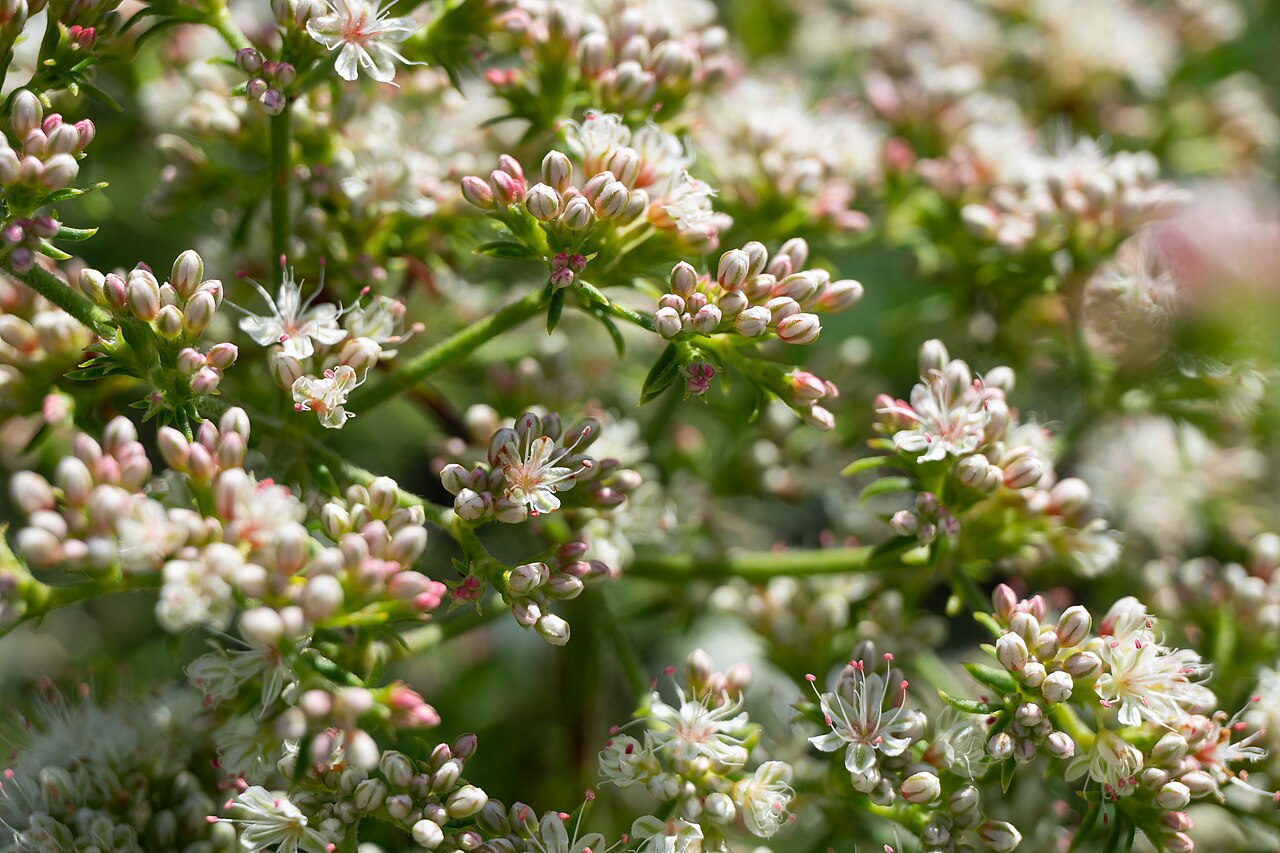
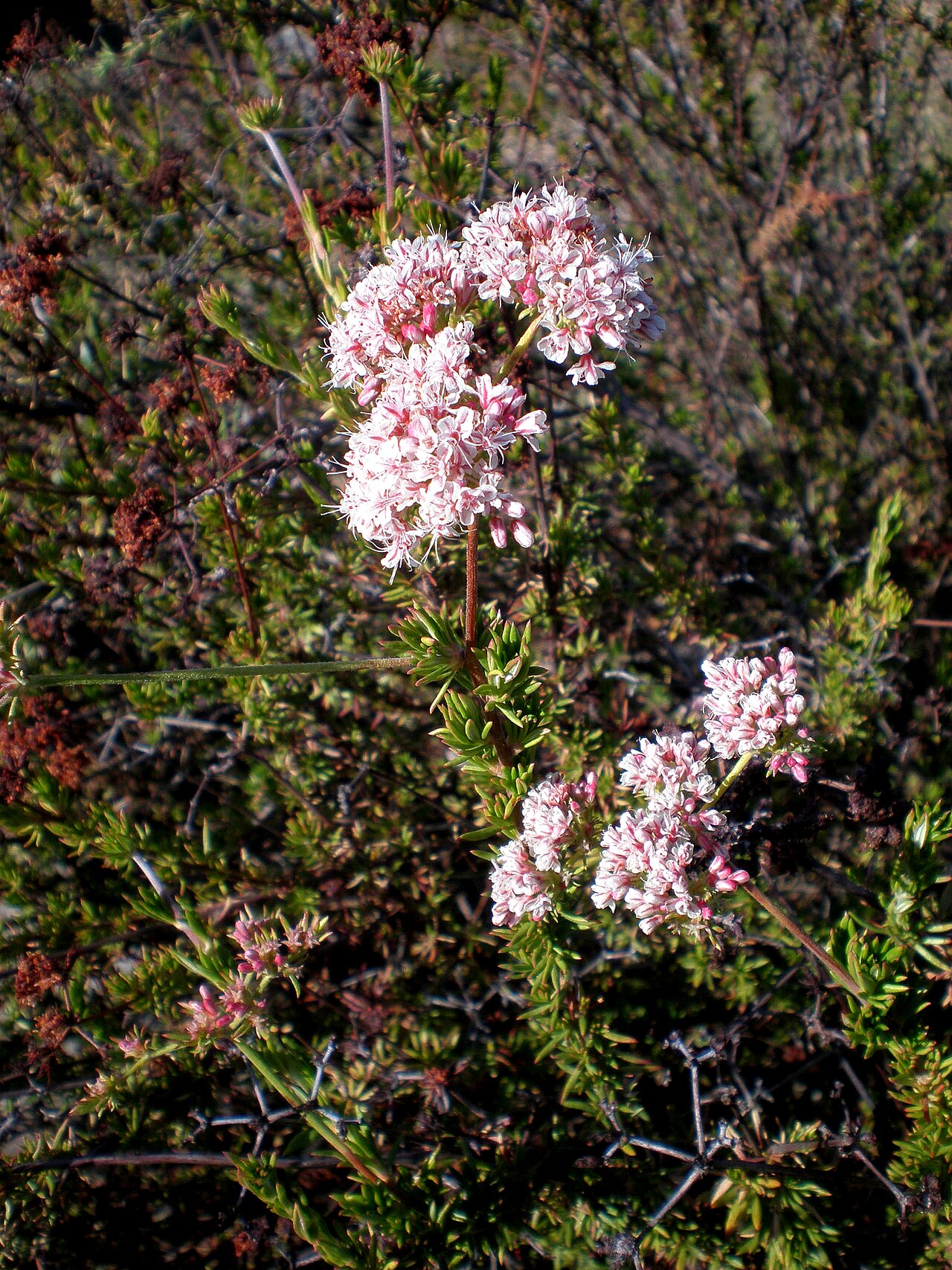
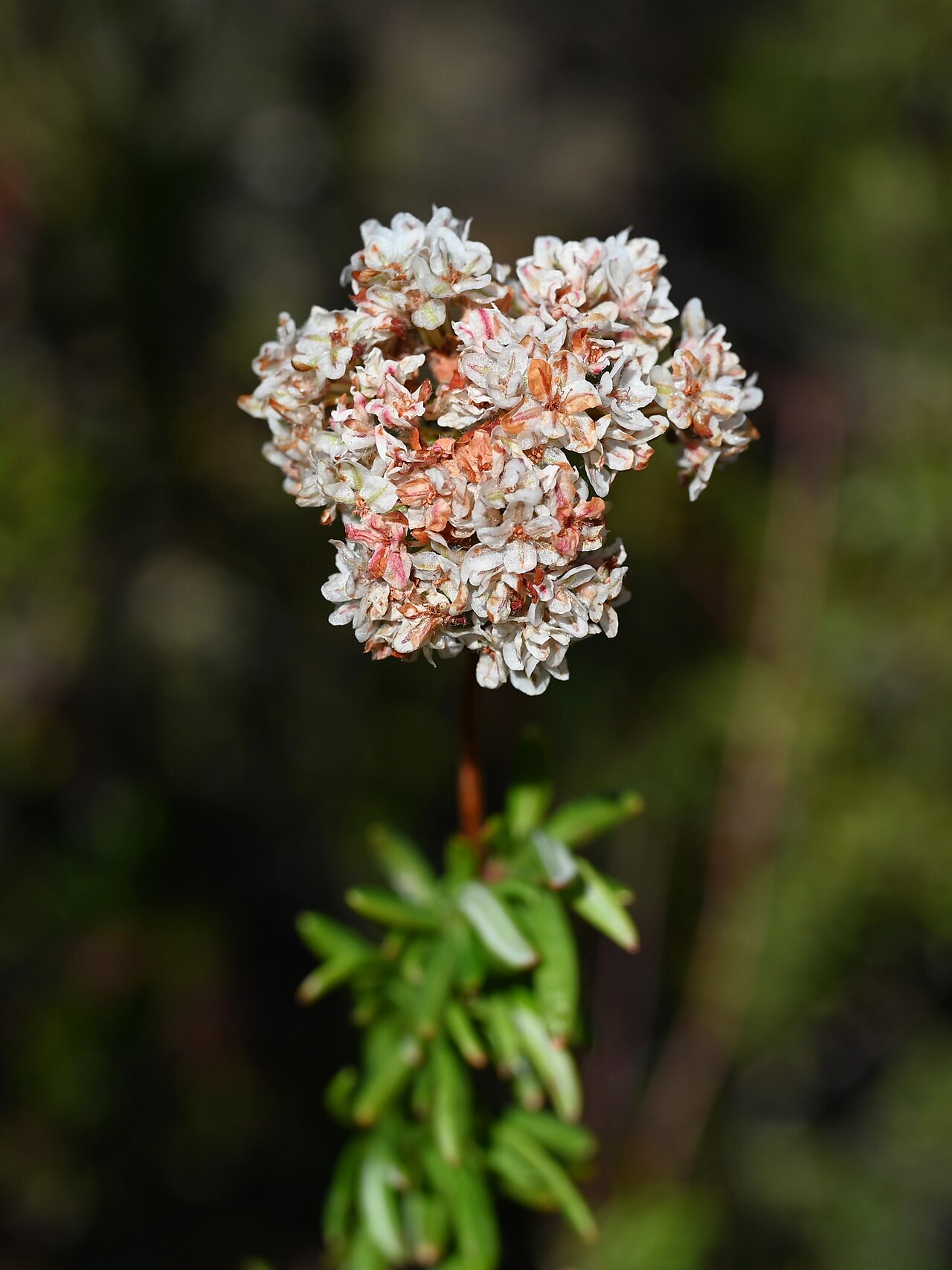
Theodore Payne is California buckwheat at its most garden-friendly: a named selection introduced by the Theodore Payne Foundation that grows as a dense, spreading mound to about two feet tall — low forms can stay near a foot tall while spreading several feet wide — and looks, out of bloom, a little like a low rosemary. Then spring arrives and it disappears under white flowers, which blush pink and dry to a beautiful rusty brown, feeding bees and butterflies for months and birds well into winter.
Its superpower is the spill. This is the buckwheat to plant at the top of a low wall, along a slope, or at the edge of a dry bed, where it can pour over the edge and soften hard lines while its roots grip the soil. It is evergreen, fast to establish, famously tough once settled, and it tolerates occasional summer water better than most extremely drought-tolerant western natives — a small mercy that matters in a trial garden.
The Florida honesty clause, stated upfront: California buckwheat is a dry-climate shrub from the far west, hardy in zones 7 to 11 as a species, but its real enemies — summer humidity, fungal pressure, and weeks of wet soil — do not show up on a zone map. In Florida, trial it only in the north of the state, in a raised bed or on a slope with sharp drainage and full sun, and expect an experiment, not a sure thing. The species range technically reaches zone 11, but humidity is not the same as heat, and this plant knows the difference.
How to grow
Plant Theodore Payne in full sun — it will tolerate a little shade but goes leggy and flowers poorly without strong light — in any soil from sand to clay provided it drains well. Drainage is the one non-negotiable: dig the hole no deeper than the pot, set the plant at its original level, and backfill with native soil, not a rich amended pit that holds water like a bowl. Space plants at least 4 feet apart, 6 feet if you want each mound to spill freely without crowding its neighbor.
For a north-Florida trial, a slope or raised bed is the smart move: lift the root zone above grade, lean the mix toward sand and grit, and give it the sunniest, breeziest position you have. In a container, use a very free-draining mix and a pot that empties completely. Site it where you can reach it for pruning, because a buckwheat in a happy spot grows fast and will need a haircut.
Propagation is straightforward: seed germinates readily, and softwood cuttings root well. But if you want Theodore Payne itself — the low, dense, spilling habit — buy a named container plant rather than sowing species seed, which will give you the variable species, not this selection. Seed-grown plants are a lottery; cuttings are a photocopy.
Water & feeding
Water to establish through the first year, then back off hard. Once established, California buckwheat should need no supplemental water in a dry climate, and in a Florida trial that means watering only during genuine dry spells, deeply and rarely, and never on an automatic schedule. It tolerates occasional summer water better than most desert natives, but ‘tolerates’ is not ‘wants’ — wet feet in warm soil invite root rot, the one problem that reliably kills it.
Fertilizer: none needed. This is a plant that thrives in nutrient-poor soils, and the documented species pH range runs 5.0 to 8.5 — acid to alkaline, it genuinely does not care — provided drainage is good. Skip the fertilizer, skip the rich mulch, and let lean soil do what lean soil does: keep growth tight, woody, and floriferous instead of soft and floppy.
Common problems
Root rot in wet or poorly drained soil is the main killer, and in Florida it is the whole story: warm, wet soil plus a dry-climate root system is a bad marriage. If the plant yellows or collapses after a rainy stretch, the bed needs lifting and the watering needs stopping. Do not plant it in a low spot, a clay bowl, or under a dripping gutter.
Otherwise it is generally pest and disease free, deer resistant, and famously tough — it even roots where branches touch the ground, which is a feature on a slope and a surprise anywhere else. The other management note is legginess: a plant grown in too much shade or never pruned gets woody and open. The fix is a hard cut back to about 6 to 15 inches in late fall, or a rejuvenation cut every couple of years, which it takes cheerfully and regrows from with fresh, dense growth.
Harvest
The harvest is flowers, seed heads, and wildlife. Leave the rusty seed heads standing into winter — a variety of birds feed on the seeds for months, and the rust color is genuinely beautiful against evergreen foliage. Cut stems for dried arrangements if you like; buckwheat heads dry well and hold their shape.
Prune for shape, not for harvest: a late-fall cut back keeps the mound dense and low, and a hard rejuvenation every few years keeps an old plant from going woody and bare in the middle. Do not shear it into a box — it is a spilling mound, not a hedge, and it looks best when allowed to be a little wild at the edges.
For the full species story, see the California Buckwheat guide.
Browse all plant & pest guides
Saving seeds
Theodore Payne is California buckwheat at its most garden-friendly: a named selection introduced by the Theodore Payne Foundation that grows as a dense, spreading mound to about two feet tall — low forms can stay near a foot tall while spreading several feet wide — and looks, out of bloom, a little like a low rosemary. Then spring arrives and it disappears under white flowers, which blush pink and dry to a beautiful rusty brown, feeding bees and butterflies for months and birds well into winter. But it is a named selection, not a seed strain: seed saved from your own plants will give you California buckwheat, but not necessarily this exact dense, spreading, garden-friendly mound. To keep this exact plant, propagate it from cuttings instead of from seed. The full method is in the Saving seeds section of the California Buckwheat guide.