
🌿 Eriogonum fasciculatum var. foliolosum
Botanical form, not a garden cultivar: this guide covers a naturally occurring variety/subspecies of the species, with the species' growing guidance where variety-specific cultivation notes have not been published separately.
What it looks like
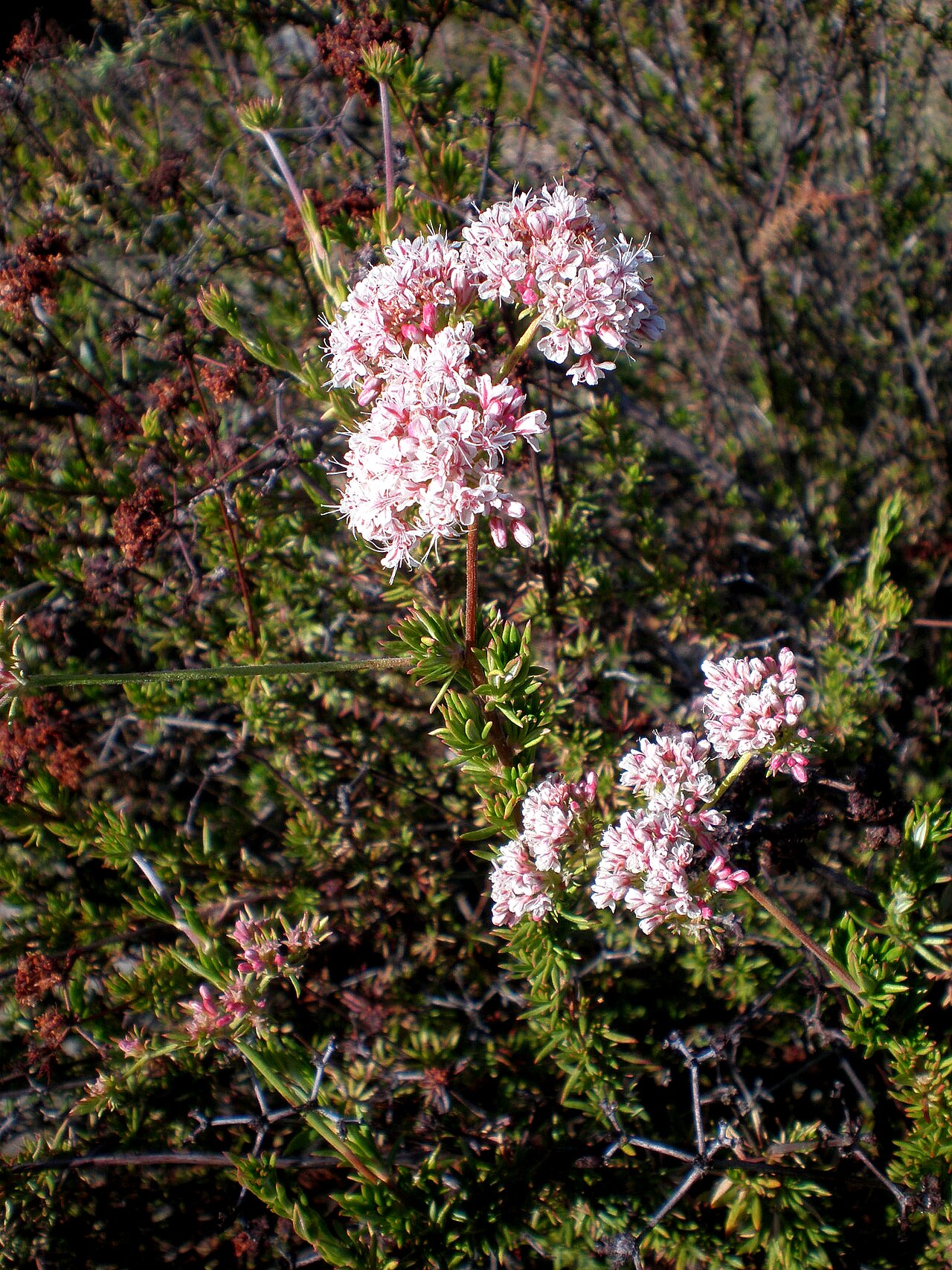
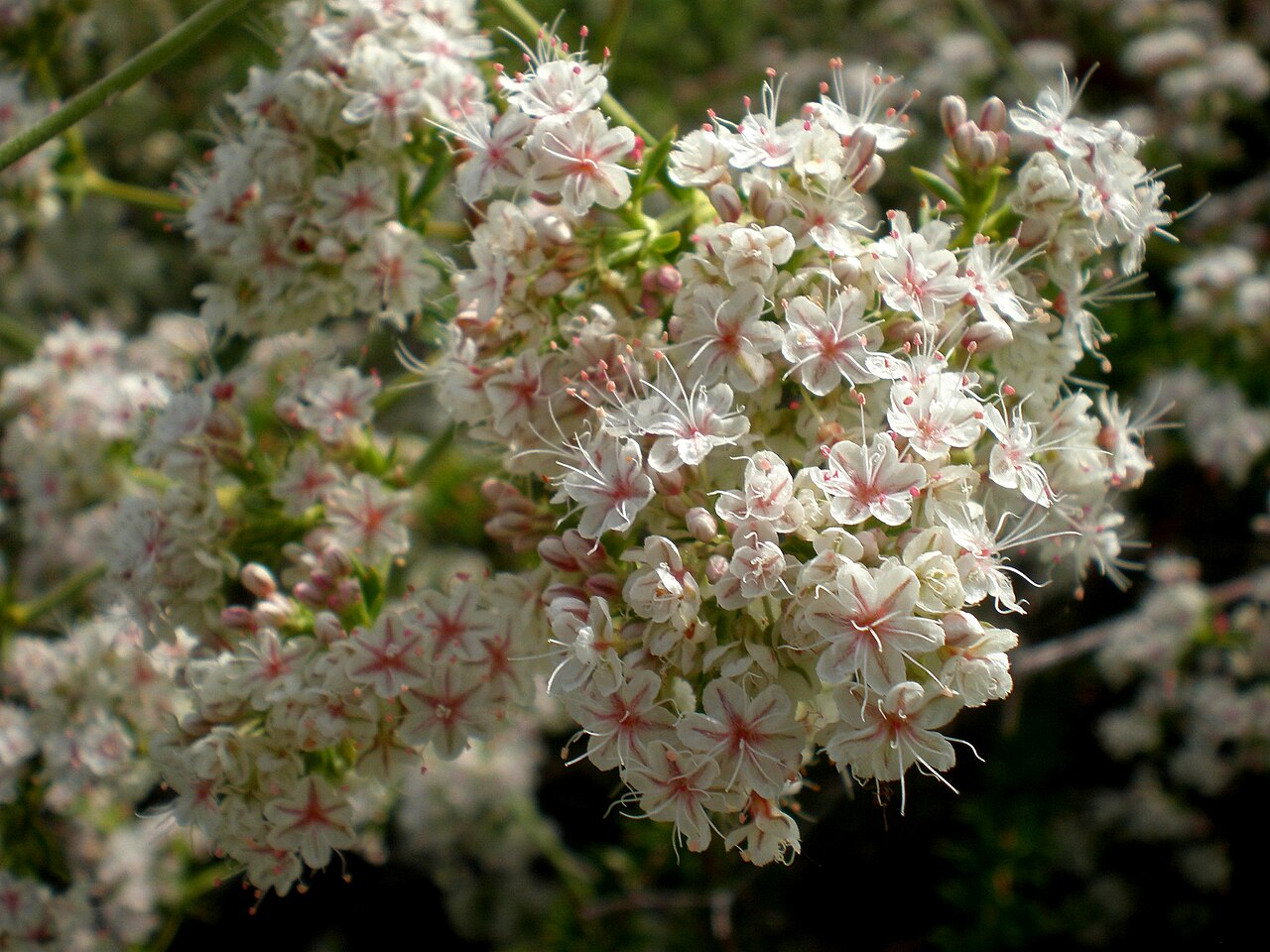
Var. foliolosum — red-topped buckwheat, also called leafy California buckwheat — is the inner coastal foothills form of California buckwheat. Its leaves are densely white-felted underneath and greener and floccose (woolly-tufted) on top, with margins usually tightly rolled under, and its inflorescences are open and mostly cymose rather than the tight flat tops of some cousins. In bloom the flower clusters carry a reddish cast that gives it the ‘red-topped’ name.
Like the species it is a low evergreen shrub of dry slopes, but the leaf and flower-cluster characters are what separate it in the key — and what a careful gardener can learn to spot in the field with a hand lens and a little patience.
Why this variety
Plant this form in a dry, sunny, inner-coastal garden where you want buckwheat character with a slightly airier, more open flower display than the tight-topped coastal form. It carries the same pollinator value — long bloom, dry-season nectar, bird seed in fall — and the same toughness on lean, dry soil.
It is also the form to know if you garden in Arizona, where the species complex has a complicated history: the aggressively weedy exotic var. foliosum (a different, similarly named taxon) has invaded the habitat of var. polifolium, which is a cautionary tale about planting buckwheats outside their home range without checking which variety you actually have.
How to grow
Plant in fall or early spring in full sun and very well-drained, lean soil, 3–4 feet apart, water deeply at planting, and taper off to a dry summer once established. Treat it like the species: castings at planting, no rich fertilizer, no summer coddling.
Prune lightly after bloom, removing spent heads and dead wood only; avoid cutting into old wood, which resprouts poorly.
Water & feeding
Water deeply through the first dry season, then sparingly — dry summers are its native condition, and wet feet in heavy soil will rot it faster than drought ever will. Water at the soil line in the morning.
Feed almost never. Lean, mineral soil is what this plant is built for; fertilizer buys flop and rot.
Common problems
- Root rot in wet or heavy soil — the main killer; drainage is everything.
- Confusion with similarly named buckwheat varieties — check the variety epithet letter by letter when buying seed or plants.
- Flopping in shade or rich soil — full sun and lean soil are the fix.
- Hybridization with nearby buckwheats — keep plantings pure if local genetics matter.
Harvest
No food harvest; the harvest is bloom, pollinators, and rust-colored winter seed heads for birds. Cut a few open clusters for dried arrangements while pink, and leave the rest for the birds.
Seed, if you collect it, should be fully dry on the plant before stripping — and labeled with the variety name, because buckwheat seed without a variety name is how the next garden mix-up starts.
See also: California Buckwheat: Growing Guide