
🌿 Eriogonum fasciculatum var. polifolium
Botanical form, not a garden cultivar: this guide covers a naturally occurring variety/subspecies of the species, with the species' growing guidance where variety-specific cultivation notes have not been published separately.
What it looks like
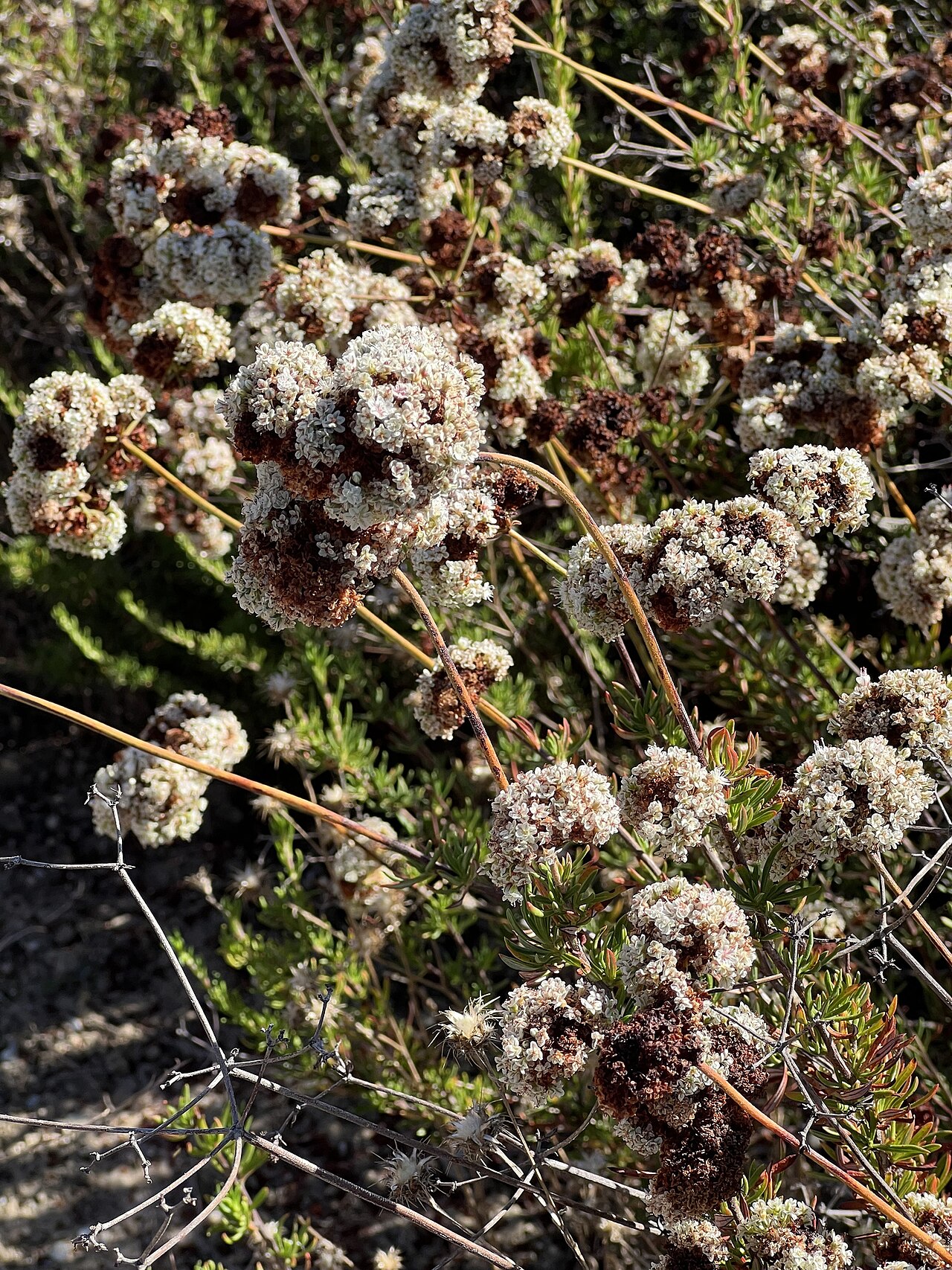
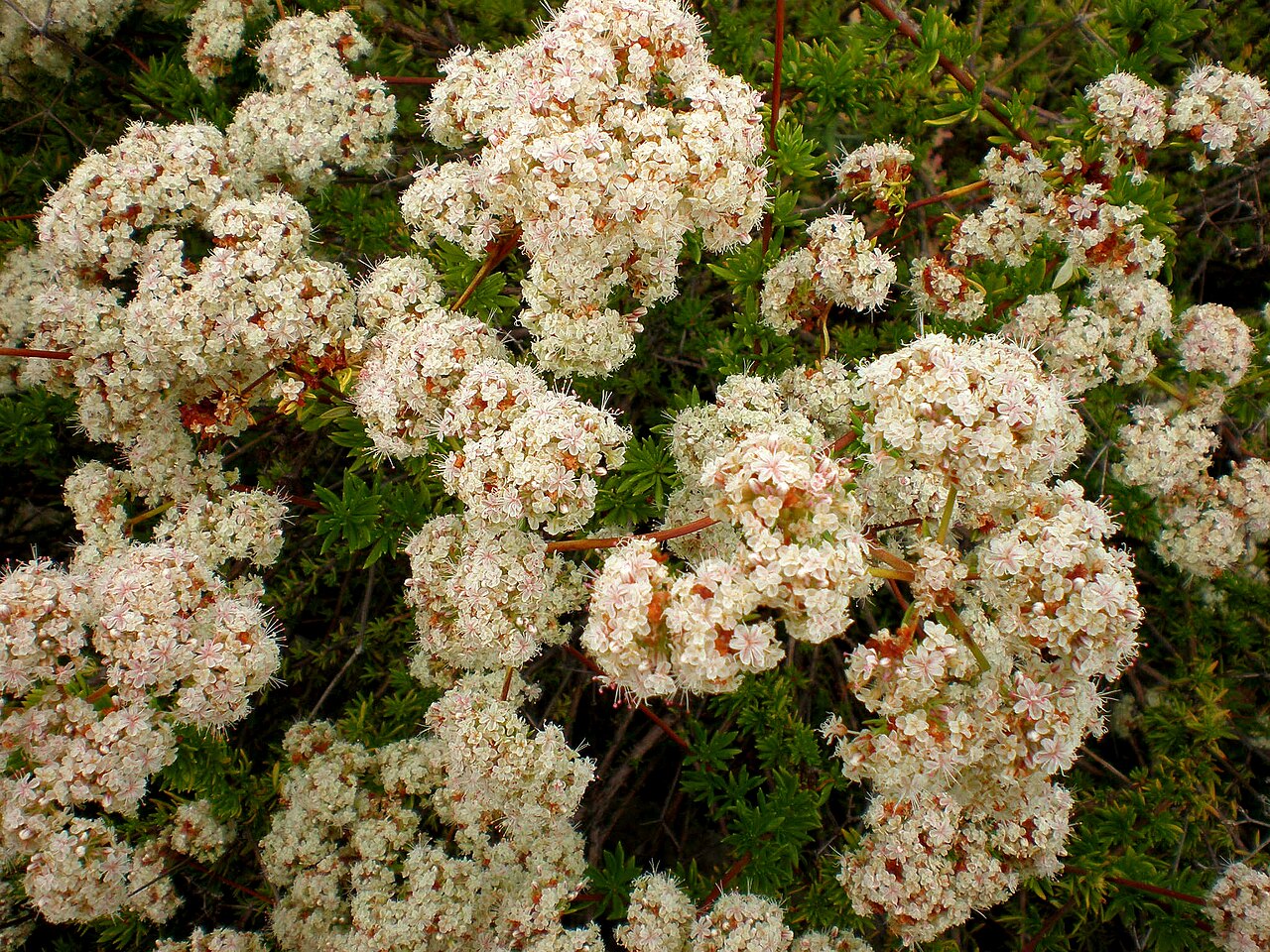
Var. polifolium — Mojave Desert California buckwheat, mountain buckwheat, gray-leaved California buckwheat — is the desert form, and the one most gardeners in Arizona will actually meet: nursery references note it is the most common variety around Tucson and Phoenix. Its leaves are gray with felt — canescent on both surfaces, or densely felted below and canescent above — and its inflorescences are capitate to cymose-umbellate, tighter and more clustered than the open sprays of var. foliolosum.
The gray is functional, not decorative: a felted leaf reflects sun and traps still air, cutting water loss in desert heat. A polifolium shrub in full desert sun looks silver-gray from a distance, and that silver is the plant’s sunscreen.
Why this variety
Plant this form if you garden in the Mojave or Sonoran desert, or in any hot, dry, sunny garden with lean, gravelly soil, and you want a native shrub that genuinely belongs there. It is the buckwheat of desert restoration plantings, a long-blooming pollinator plant in a landscape where summer nectar is scarce, and a slope-holder on rocky ground where little else will establish.
It is also a conservation-conscious choice: its Arizona habitat has been invaded by an exotic buckwheat variety, so planting the true local var. polifolium from a reputable native nursery is a small act of keeping a desert community intact.
How to grow
Plant in fall or early spring in full sun and very well-drained, lean, gravelly or rocky soil, 3–4 feet apart. Water deeply at planting and through the first hot season, then taper to deep, infrequent soaks — desert buckwheat wants water that arrives rarely and soaks deep, not frequent sprinkles.
Prune lightly after bloom for shape and spent heads; do not cut into old wood.
Water & feeding
Water deeply and infrequently once established; in a desert garden, a monthly deep soak in summer is generous, and in a wetter climate the plant needs raised, gravelly ground that never stays wet. Wet feet kill desert buckwheats faster than any heat wave.
Do not fertilize. Desert soil is lean by nature, and this plant is built for it; fertilizer produces soft growth that sunburns and flops.
Common problems
- Root rot in wet or heavy soil — the desert form is the least tolerant of wet feet in the whole species.
- Sunscald on soft, fertilized growth — keep it lean and sunny, not lush and shaded.
- Competition from exotic buckwheat varieties — buy from native nurseries and verify the variety name.
- Overwatering by well-meaning gardeners — the hardest problem to fix is a watering schedule set for roses.
Harvest
No food harvest; the harvest is desert bloom, pollinators, and seed for birds. Leave rust-colored heads standing into fall, and cut a few pink clusters for dried arrangements if you like.
For restoration use, seed should be collected from local populations of this variety — desert plants are locally adapted, and seed from a coastal variety will not behave the same in a Mojave summer.
See also: California Buckwheat: Growing Guide