
🌿 Eriogonum fasciculatum var. flavoviride
Botanical form, not a garden cultivar: this guide covers a naturally occurring variety/subspecies of the species, with the species' growing guidance where variety-specific cultivation notes have not been published separately.
What it looks like
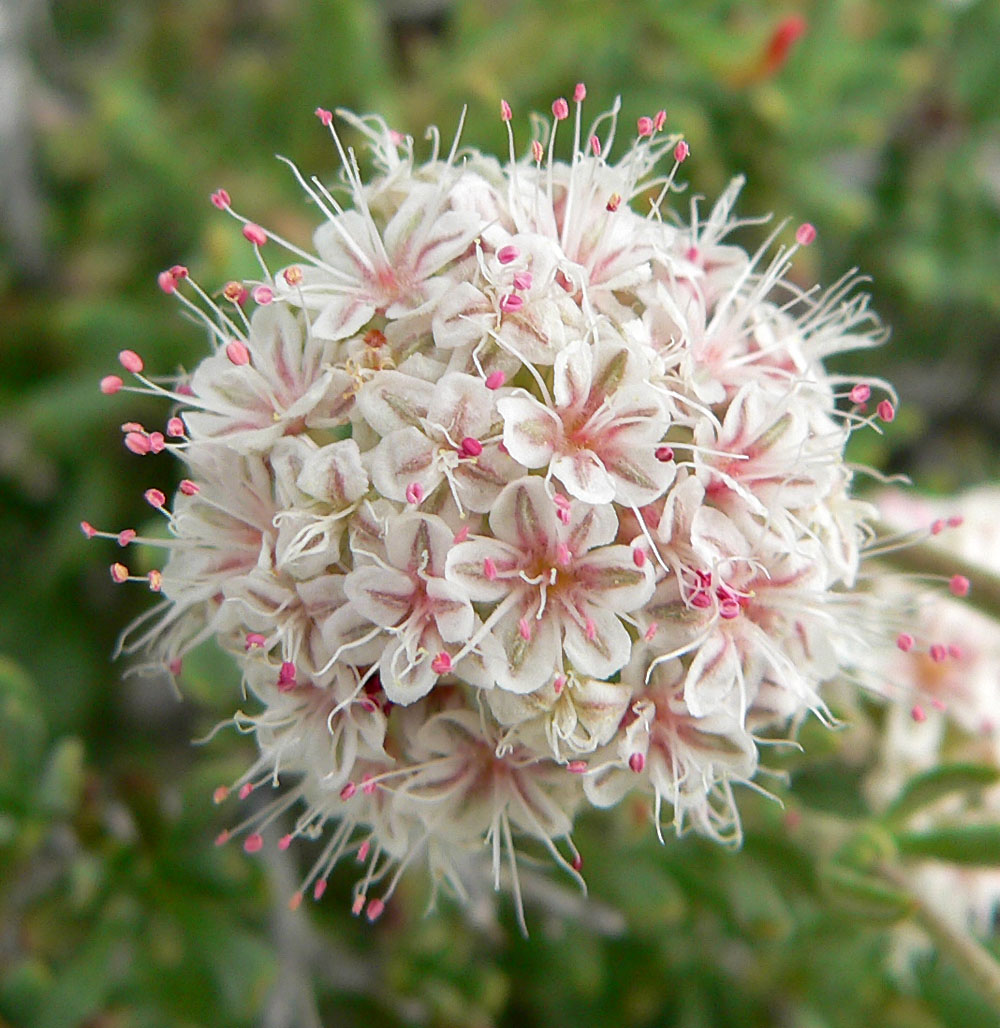
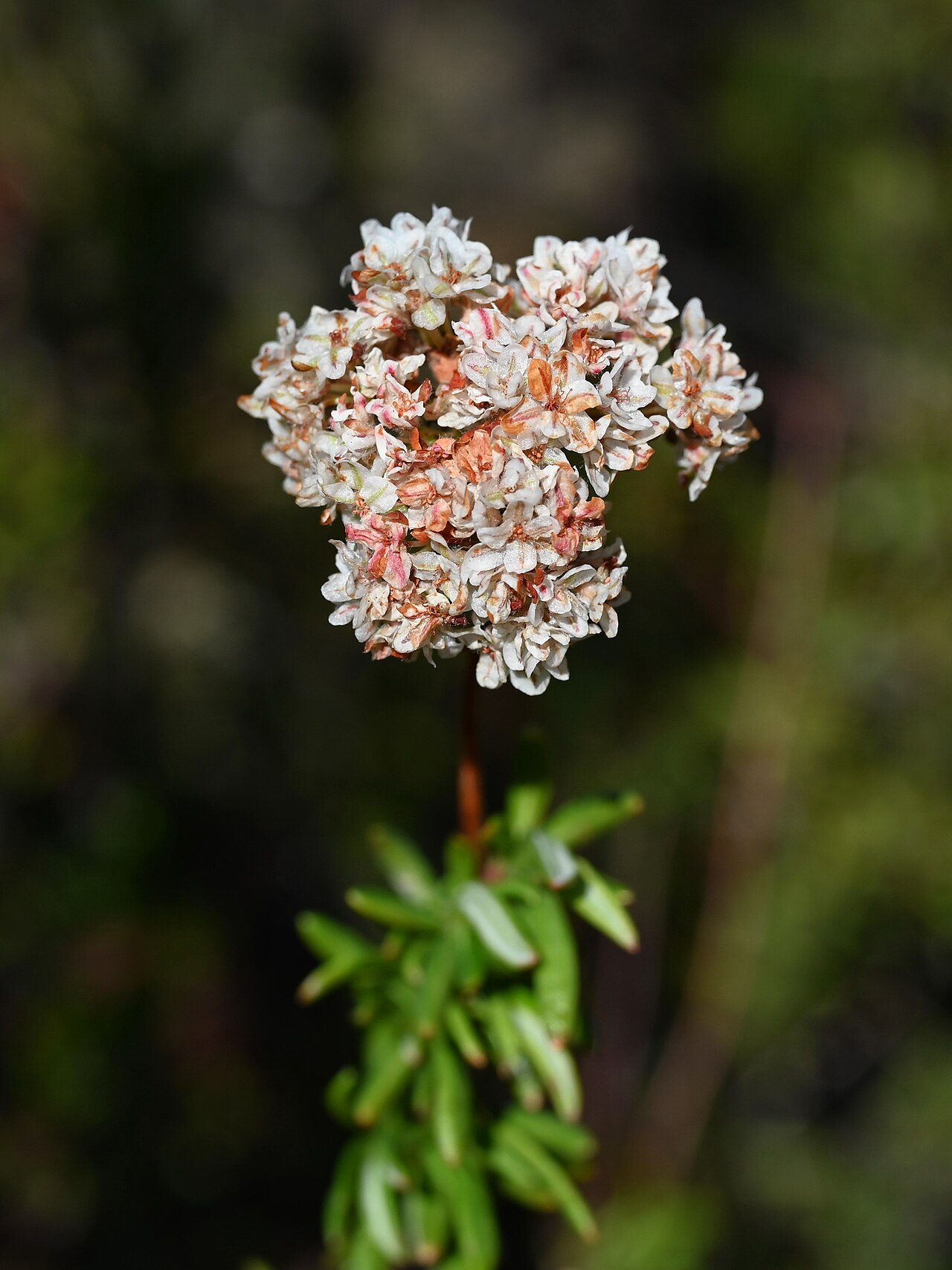
Var. flavoviride — eastern Mojave buckwheat, Sonoran Desert California buckwheat, bright-green California buckwheat — stands out in the species precisely because it is not gray. Its leaves are light yellow-green and nearly smooth on top, and its involucres and perianths (the little cups and petals of the flower clusters) are smooth or nearly so, where its cousins are felted. In a genus of silver-gray shrubs, a bright-green buckwheat is easy to spot once you know to look.
It is a low evergreen shrub of the eastern Mojave and Sonoran deserts, with the same flat-topped flower clusters as the species, opening pink-white and aging to rust.
Why this variety
Plant this form if you garden in the eastern Mojave or Sonoran desert and you want a buckwheat that reads green rather than gray in the landscape — a useful color contrast against gray desert shrubs, with the same long bloom and pollinator value. Its smooth flower parts also make it a good teaching plant: the differences between buckwheat varieties are often a hand-lens matter, and this one you can see from the path.
Like all California buckwheats, it is a dry-season nectar plant and a bird-seed plant, doing both jobs on lean soil and little water.
How to grow
Plant in fall or early spring in full sun and very well-drained, lean, gravelly soil, 3–4 feet apart. Water deeply at planting and through the first hot season, then taper to deep, infrequent watering. Castings at planting, no fertilizer program.
Prune lightly after bloom for spent heads and shape; avoid old wood.
Water & feeding
Water deeply and infrequently once established; raised, gravelly ground that drains fast is non-negotiable in any climate wetter than its desert home. Water at the soil line, in the morning.
Do not fertilize. Bright-green leaves on this variety are natural, not a sign it wants nitrogen — feeding it buys soft growth and rot.
Common problems
- Root rot in wet or heavy soil — the main killer across the species.
- Flopping in rich soil or partial shade — full sun and lean soil are the fix.
- Confusion with other varieties — leaf color and smooth flower parts separate it, but check the variety name when buying.
- Hybridization with nearby buckwheats — keep plantings pure if local genetics matter.
Harvest
No food harvest; the harvest is bloom, pollinators, and rust-colored seed heads for birds. Leave most heads standing, cut a few for dried arrangements.
Seed collected dry on the plant should be labeled with the full variety name — ‘buckwheat’ alone is not enough in this species.
See also: California Buckwheat: Growing Guide