
🌿 Bog Rosemary var. latifolia
Botanical form, not a garden cultivar: var. latifolia (formerly treated as the separate species Andromeda glaucophylla) is the larger, temperate North American form. Warning: all parts contain grayanotoxin and are toxic if eaten.
What it looks like
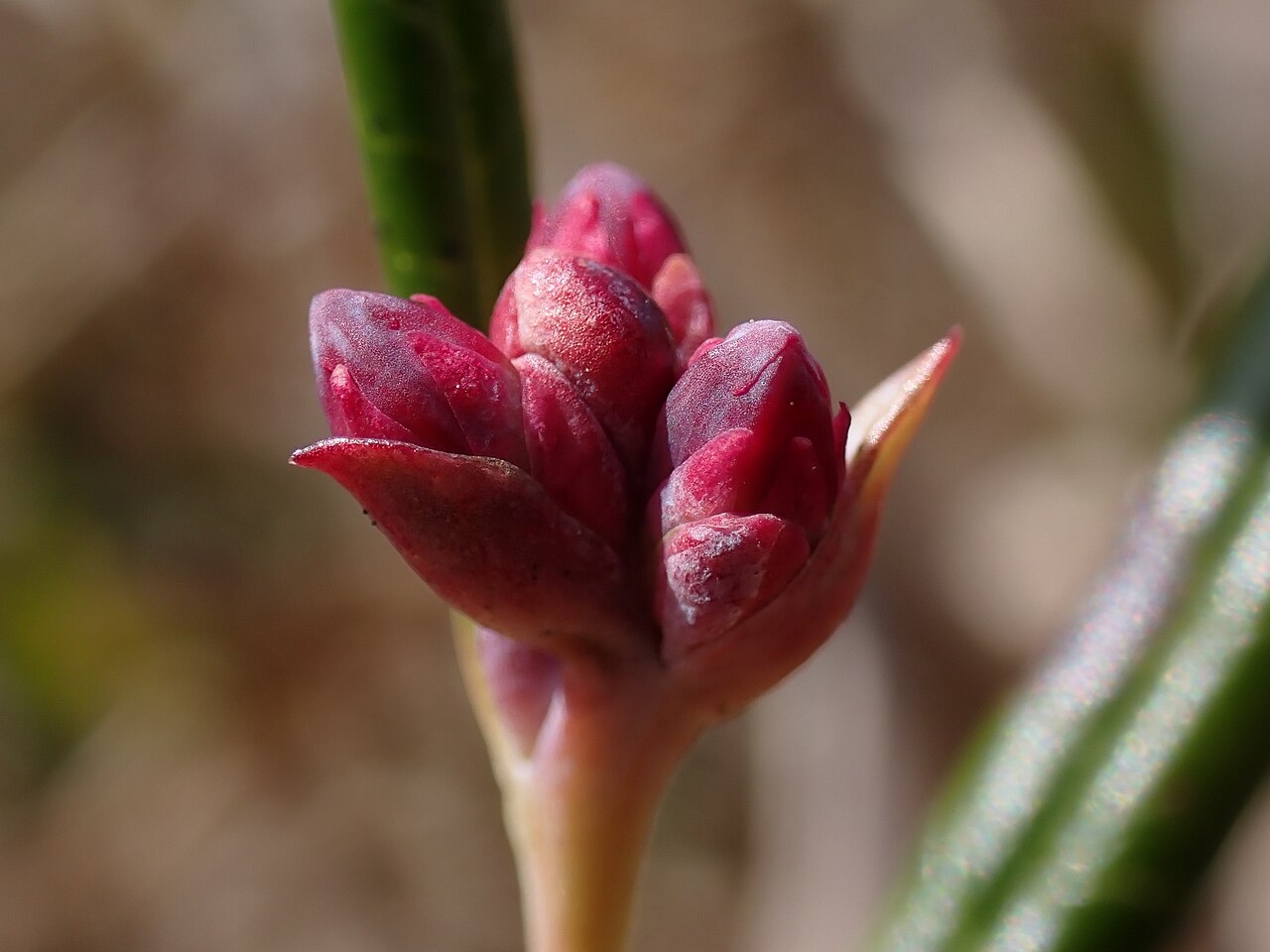
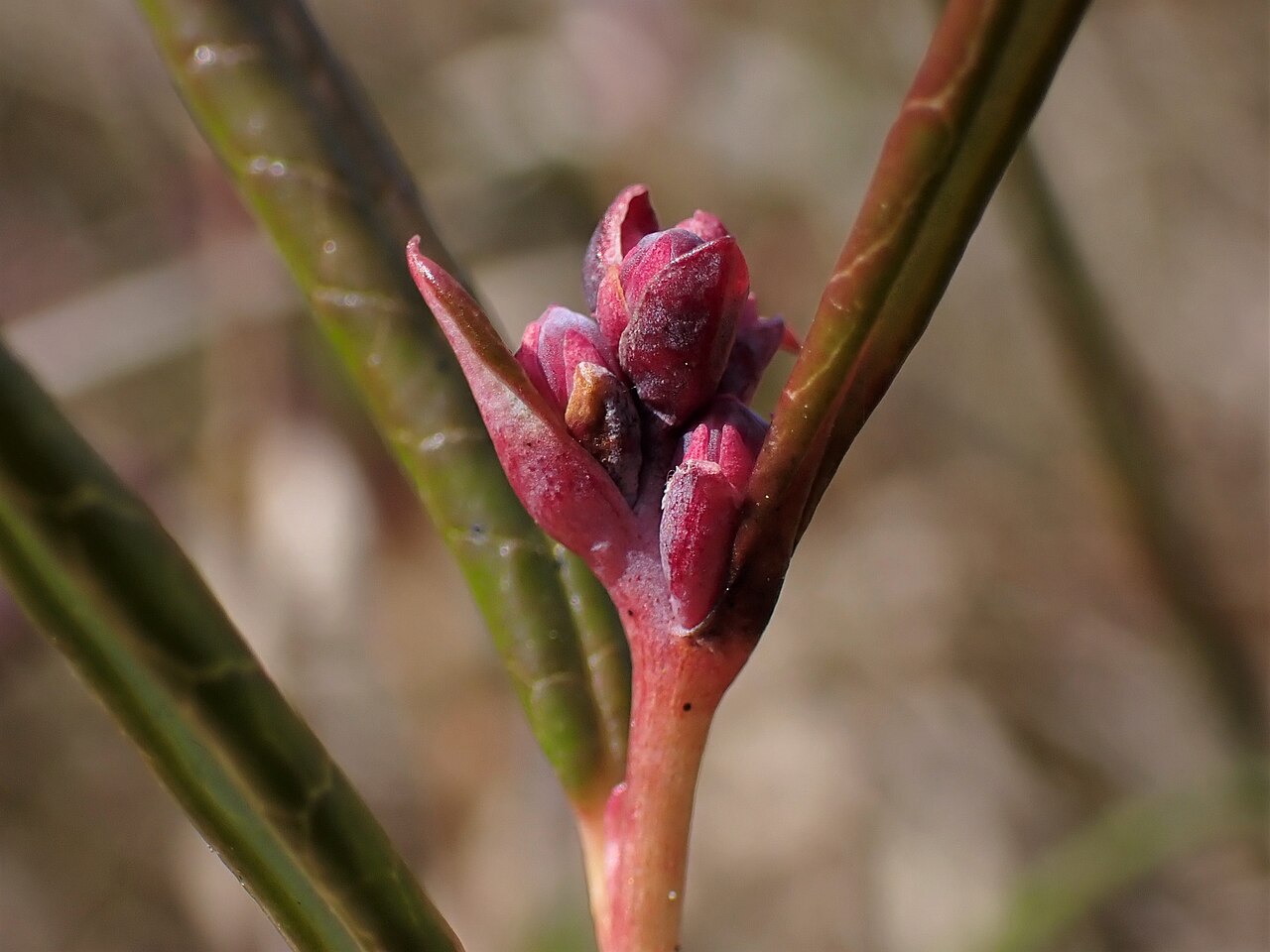
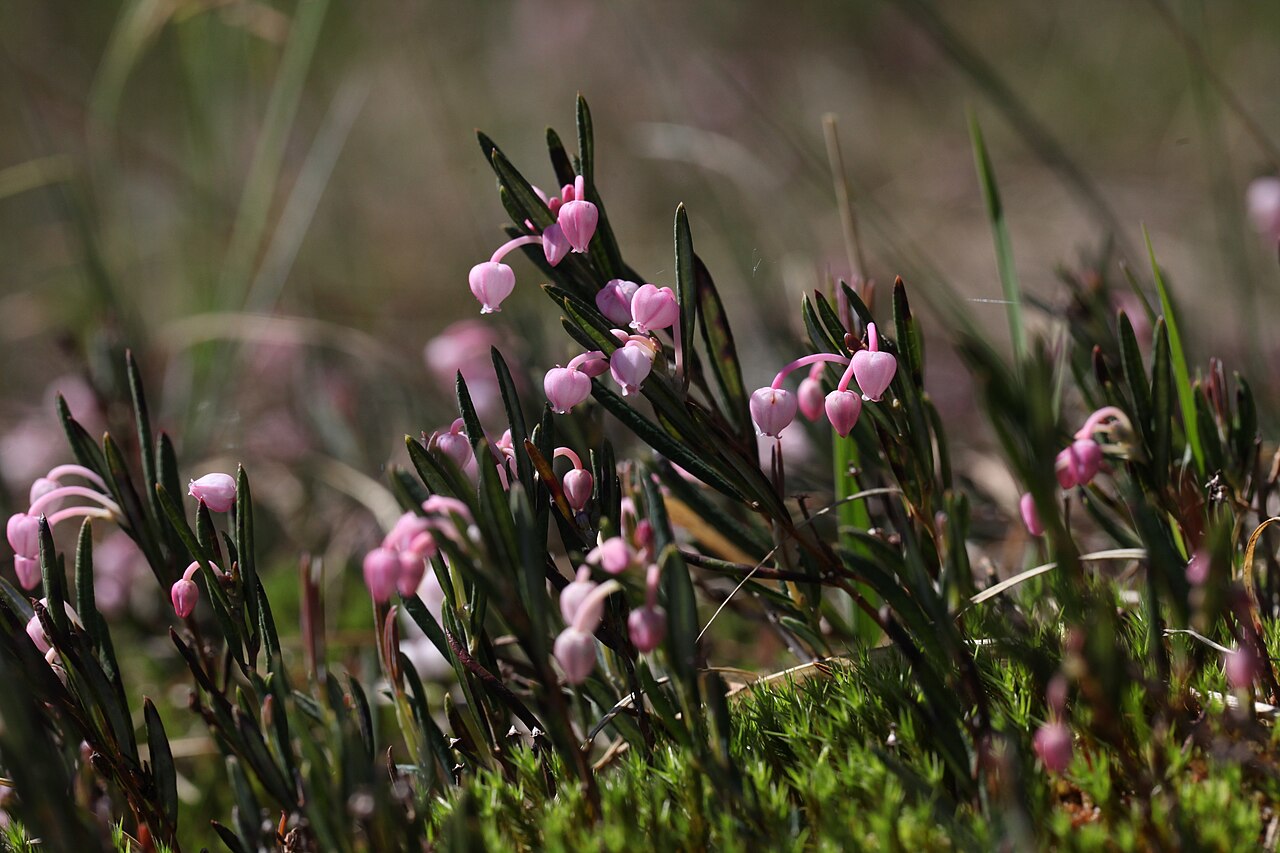
Var. latifolia is the bog rosemary most eastern gardeners actually meet: a larger plant than var. polifolia, commonly 1 to 2.5 feet tall, with broader leaves whose undersides are white-hairy to white-velvety rather than glaucous, young branches and scaly buds conspicuously glaucous, and flowers on thicker, curving pedicels seldom more than twice the length of the corolla. The capsules are glaucous and almost berry-like, broader than high — a neat contrast with var. polifolia’s taller, drier capsules on long straight stalks. In flower it is a charmer: nodding pink bells in terminal umbels over evergreen foliage, in May through July.
Why this variety
This is the plant that caused a century of taxonomic arguments. American botanists kept finding that the common bog rosemary of temperate eastern bogs — from Labrador to Pennsylvania, Minnesota, and Lake Winnipeg — differed from Linnaeus’s arctic plant in nearly every feature, and for decades it was treated as its own species, Andromeda glaucophylla. Modern treatments fold it back in as var. latifolia, but the old name survives in nursery lists and field guides, which is why you may meet the same plant under two names. It is also the form with a garden reputation: in eastern Canada and the northeastern United States it is regarded as an ornamental, with named cultivars, and it is cultivated successfully wherever acid bog conditions can be duplicated. Conservation note: it is globally secure but listed as threatened or endangered in several states at its southern edge, so buy nursery plants, never wild-dug ones.
How to grow
Same bog, slightly more forgiving plant: saturated acid peat, full sun to light shade, and cold winters, but this form ranges farther south and grows larger, so it is the better bet for a constructed bog garden in the upper Northeast and upper Midwest. Build the bog properly — a lined peat-and-sand bed kept wet with rainwater — and site it where winter cold is real. In Florida and the deep South it remains a non-starter outdoors: no amount of peat compensates for a missing winter.
Water & feeding
Wet, acid, and poor, as with the species: rainwater, sphagnum mulch, no lime, no fertilizer to speak of. Var. latifolia’s larger size means it drinks a little more and fills a bog bed a little faster, which is a virtue in a plant that is supposed to look like a small evergreen mound, not a specimen struggling in a pot. Keep the peat moist through summer droughts with rainwater top-ups, and let winter do the rest.
Common problems
- Toxicity — grayanotoxin in all parts; never eat it, and site it away from curious children and pets.
- Wrong soil — neutral or alkaline soil kills it slowly; acid peat is non-negotiable.
- Wild collection — it is of conservation concern in several southern-edge states; buy only nursery-propagated plants.
- Warm climates — insufficient winter chill and hot summers will defeat it; in Florida, enjoy it in photographs and northern gardens.
Harvest
No harvest — the yield is ornamental: evergreen foliage through winter, pink bells in late spring, and a plant with a genuine taxonomic backstory. If you grow it well in a bog garden, you have also done a small conservation good deed, since every nursery plant in a garden is one less reason to disturb a wild bog.
See also: Bog Rosemary: Growing Guide