
🌿 Purpureum Stonecrop
What it looks like

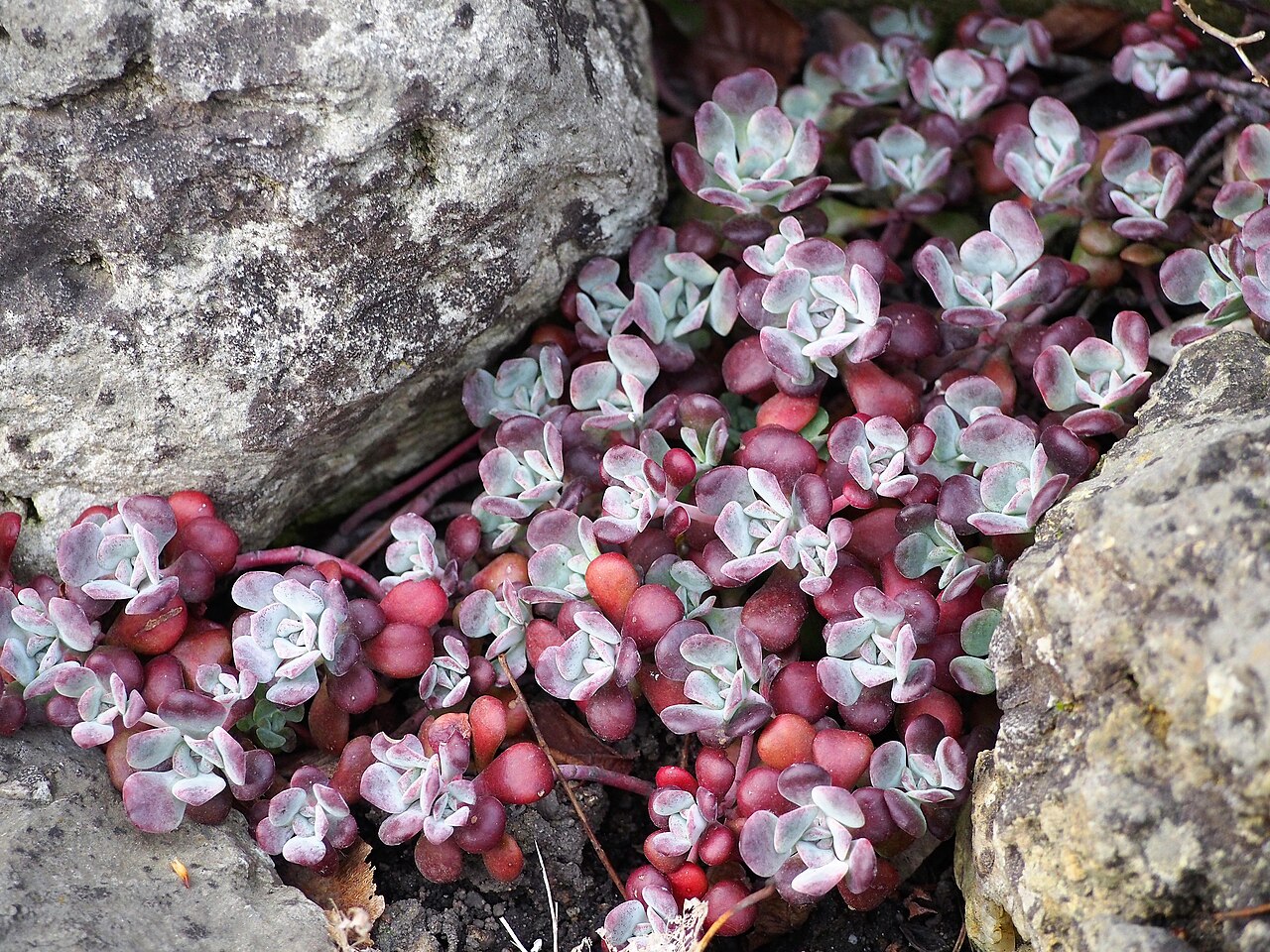
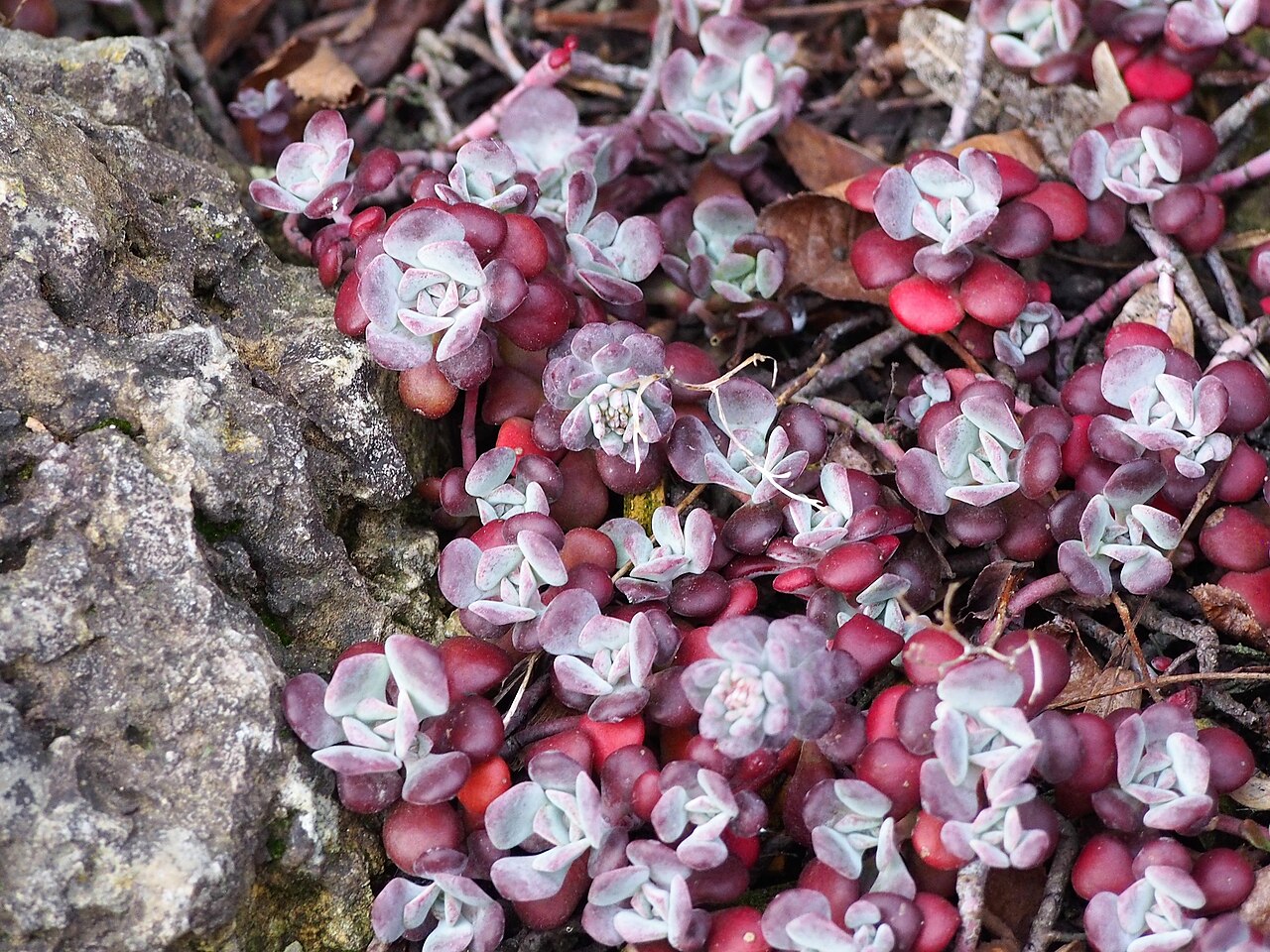
‘Purpureum’ is ‘Cape Blanco’ gone moody. It grows the same way — a vigorous, carpet-forming, evergreen perennial, about 4 inches tall and 24 inches wide, with branching, fleshy stems carrying terminal rosettes of spoon-shaped leaves about three-quarters of an inch long — but where ‘Cape Blanco’ is chalky white, ‘Purpureum’ is richly suffused reddish-purple, the purple showing through the white powdery coating like wine through frosted glass. The color intensifies under stress from full sun or drought, which is a polite way of saying the plant looks its best when you neglect it correctly. In summer it bears short-stemmed, flat clusters of star-shaped, bright yellow flowers about half an inch across — a color clash that somehow works beautifully.
Why this variety
Plant ‘Purpureum’ when you want the stonecrop carpet with a darker, richer palette. It is a sport of ‘Cape Blanco’ — the purple form that appeared on the white plant and, once separated, does not revert — and it is sometimes treated botanically as Sedum spathulifolium subsp. purpureum rather than as a garden cultivar, which is worth knowing when you go shopping: the same plant may be labeled either way. Against pale stone, dark basalt, or the silver of ‘Cape Blanco’ itself, its purple rosettes are a striking contrast plant. The trade-off is the same as for all broadleaf stonecrops: it is a cool-climate rock-garden plant, and in Florida it belongs in a container with gritty soil and good air, not in a humid summer bed.
How to grow
Grow ‘Purpureum’ exactly as you would ‘Cape Blanco’: full sun to light shade, light, sharply drained, even poor soil, 9 to 12 inches apart, and let it spread. It tolerates light shade better than many succulents, which makes it useful at a wall base or a trough edge that gets afternoon shade. Propagate from stem cuttings or divisions — it roots so easily that sowing seed seems pointless, and seed will not come true for the purple color anyway. Take cuttings if you want the cultivar; save seed if you want the species.
Water & feeding
Water sparingly and let the soil dry out between waterings. ‘Purpureum’ stores water in its leaves and rots in wet soil faster than it wilts in dry soil. Feed rarely or never; lean soil keeps the rosettes compact and the purple deep. In a container, a gritty cactus-style mix and a pot with generous drainage holes are non-negotiable.
Common problems
Rot from overwatering is the main killer, followed by heat and humidity stress in warm climates. Mealybugs, scale, and slugs can trouble stressed plants, and the larvae of some moths occasionally nibble stonecrops. As with ‘Cape Blanco’, the sap can irritate skin and the plant irritates the stomach if eaten — ornamental only. Deer and rabbits generally pass it by.
Harvest
The harvest is the plant itself and its cuttings: take stem cuttings through the growing season to make new mats, and cut back spreading growth after flowering to keep the carpet shaped. Leave the yellow flowers for pollinators if you like the contrast, or deadhead for a tidier purple mat.
For the species as a whole, see the Broadleaf Stonecrop guide.