
🌿 Broadleaf Stonecrop
What it looks like
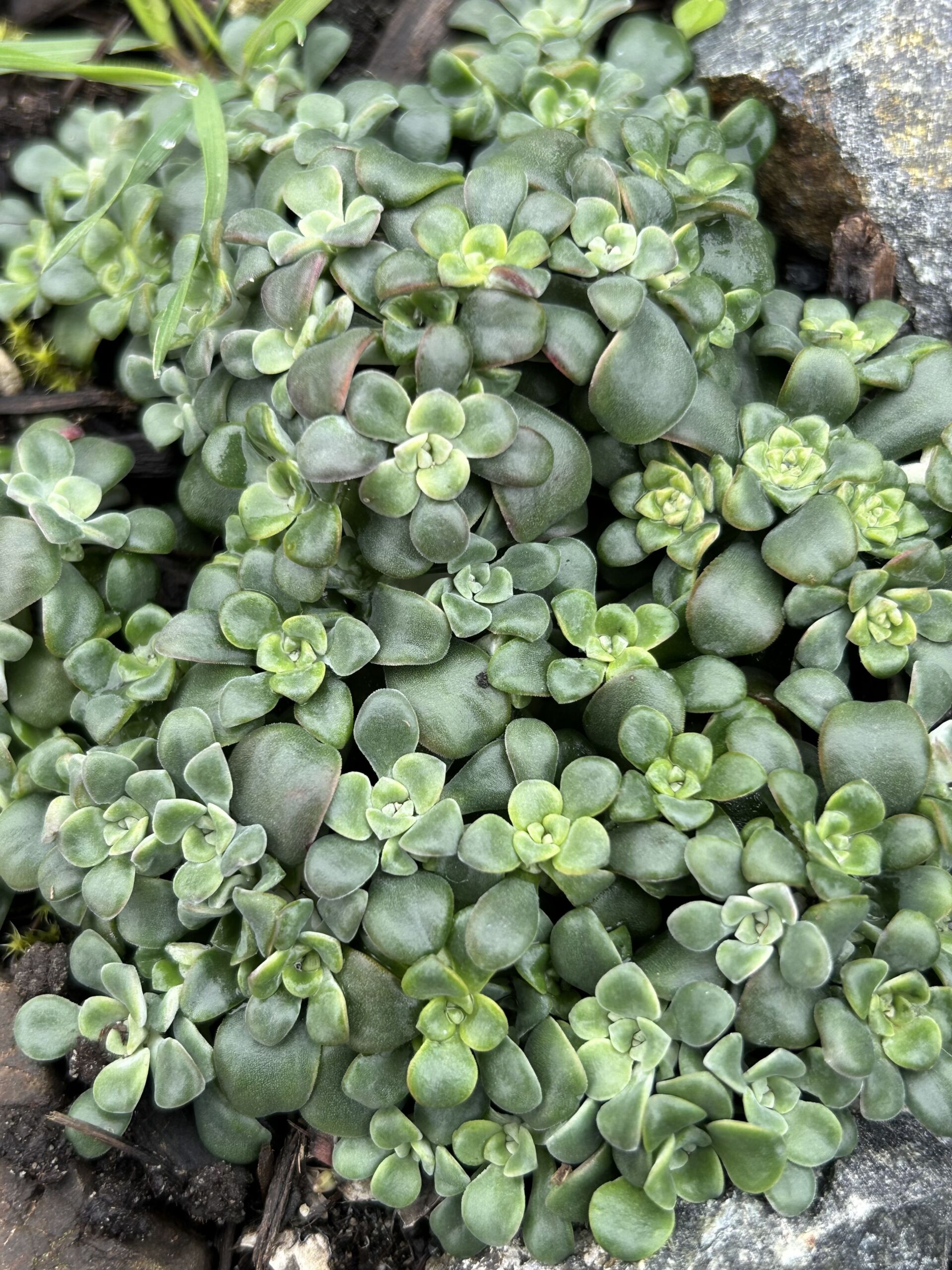
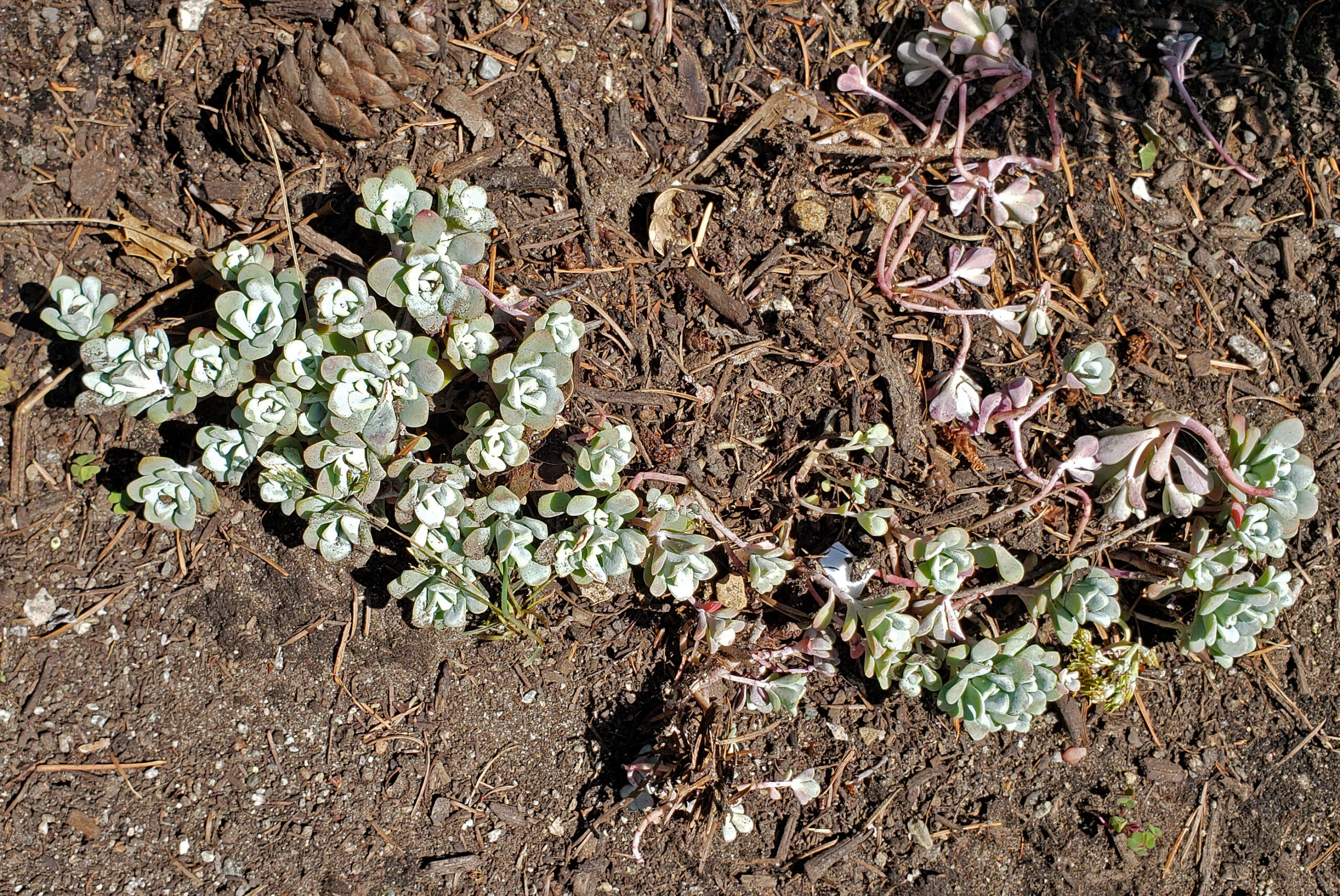
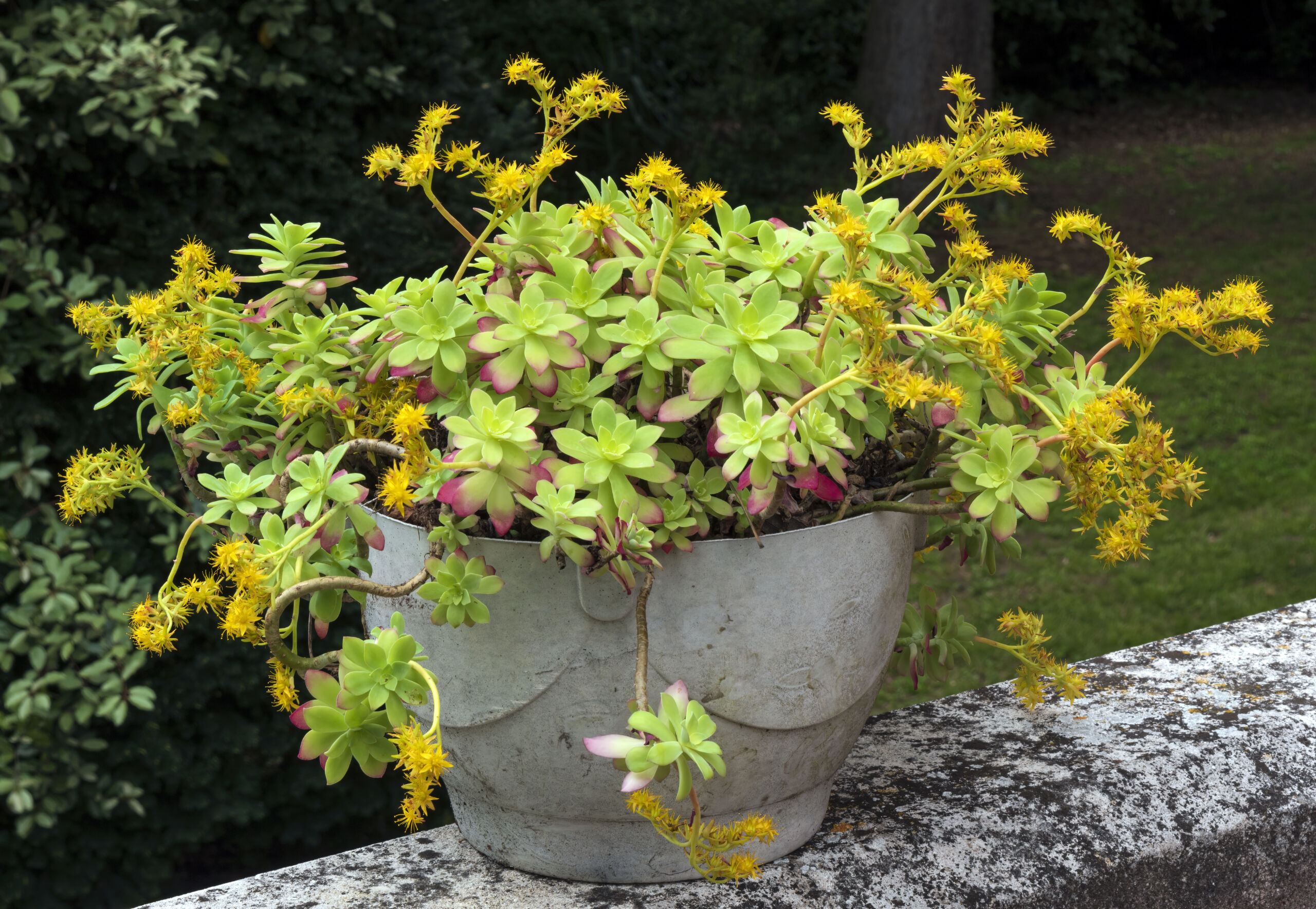
Broadleaf stonecrop is a plant that looks like it was designed by someone who loves rock gardens and hates watering cans. It is an evergreen, mat-forming perennial succulent in the stonecrop family (Crassulaceae), native to western North America from British Columbia south to southern California, where it grows in rocky habitat — coastal and inland hills and mountains, cliffs, ledges, and outcrops, often in shade, often where the soil is barely soil at all. The plant itself is small: about 4 inches tall and up to 24 inches wide as a mat, built from branching, fleshy, creeping stems that end in terminal rosettes of spoon-shaped leaves. The species name says it plainly — spathulifolium means “spade-shaped leaves,” or spoon-shaped, if you prefer your Latin in kitchen terms — and the rosettes are the whole show for most of the year: tight, chalky, frosted gray-green, sometimes tinted bronze-purple, each leaf about three-quarters of an inch long. In summer it sends up short stems carrying flat clusters of star-shaped, bright yellow flowers, each about half an inch across, and for a few weeks the gray-green mat turns into a yellow constellation.
The butterfly context is the reason this guide exists, and it is stated exactly as the butterfly guide states it. The Moss’s Elfin guide lists Broadleaf stonecrop (Sedum spathulifolium) in its Host plants section — and calls it, in the guide’s own words, the key host — alongside Lanceleaf stonecrop (Sedum lanceolatum), which has its own growing guide, and stonecrop relatives at the genus level. That is the one butterfly-guide mention this draft covers: Host plants section, exact forms “Broadleaf stonecrop” and “Sedum spathulifolium”. The elfin connection runs wider than one guide — the same plant is a larval food plant for the endangered San Bruno elfin butterfly in California — but this draft’s link is the Moss’s elfin listing, and the wider elfin story is context, not a second link claim. If you are planting for elfins, plant the species, by Latin name, on rock: the caterpillars do not eat “stonecrop” in general, they eat this plant and its close relatives.
A taxonomy note, stated openly because the sedum family is a taxonomic construction site. Since the 1990s, molecular studies have split the old, sprawling Sedum into segregate genera — Hylotelephium, Phedimus, and others — and some nursery listings now file stonecrops under a combined “Sedum–Hylotelephium” heading, which makes it look as if every stonecrop has been renamed. This species has not been: the Flora of North America and Plants of the World Online treatments keep Sedum spathulifolium in Sedum, and this guide follows them and the butterfly guide, which also says Sedum spathulifolium. If a tag says Hylotelephium spathulifolium, treat it as the same plant under a different filing system, not as a different plant — and if a tag says only “stonecrop,” check the Latin before buying, because the site’s own Sedum genus guide does not cover this species at all.
That last point is worth spelling out, because it is the duplicate check for this draft. The site already has a Sedum (Stonecrop) genus guide at /plant-guides/sedum-stonecrop/, and it contains zero mentions of spathulifolium or “broadleaf” — it is genus coverage, not species coverage, and under the project’s hard mislink rules a species must not be folded into a genus guide. The site also has a Lanceleaf Stonecrop species guide (Sedum lanceolatum), which is a different species that happens to share the Moss’s elfin host list. Neither covers broadleaf stonecrop, and this draft does not cover them: three stonecrops, three guides, no folding.
How to grow
Growing broadleaf stonecrop means imitating a cliff ledge, which is easier than it sounds and harder than it looks. The plant wants sun to light shade — full sun on the cool Pacific coast, light shade or afternoon shade inland where summer heat is stronger — and soil that drains like a sieve: gritty, rocky, poor, and shallow. A rock garden, a stone wall crevice, a trough, a green roof, or a raised bed built mostly of gravel and grit are all honest homes; a rich, moisture-holding perennial bed is not. Plant rosettes 6 to 12 inches apart in spring or fall, press them into gritty mix, and let them knit into a mat. They spread by creeping, rhizomatous stems, rooting as they go, and a single plant will cover a surprising amount of rock in a couple of seasons without any help.
Watering follows the succulent rule: water to establish, then mostly stop. Soak new plantings until rooted, then water only in genuine drought, and never let the mat sit wet in winter — wet feet in cold soil rot stonecrops faster than drought ever will. The plant’s natural haunts are often fed by winter seeps and dry in summer, so it is built for a wet winter and a dry summer, which is the opposite schedule of most garden watering. In a pot, use a cactus or alpine mix with extra grit, a drainage hole you actually trust, and a top dressing of gravel that keeps the rosettes off damp soil. Propagation is the easiest part of the whole plant: break off a rosette or a stem section, lay it on gritty soil, and it roots. Gardeners have been multiplying stonecrops by neglect for centuries, and this one is no exception.
Florida note, stated plainly: broadleaf stonecrop is a cool-coast, rocky-habitat plant of the Pacific Northwest and California, and Florida’s hot, humid summers and wet soils are a poor match for a mat succulent that wants sharp drainage and cool nights. It is not recommended as a Florida groundcover, and no zone figure here should be read as a Florida promise. Its place in this project is as the Moss’s elfin host, for gardeners in its native range — and as a lesson in how a plant the size of a coaster can carry an entire butterfly’s caterpillar stage on its back.
Water & feeding
Water: little, and never standing. Once established, broadleaf stonecrop largely waters itself from rain in a temperate garden, and in a dry summer a deep soak every couple of weeks is generous. The failure mode is always the same — soggy soil, especially in winter, rotting the fleshy stems from the base up. If your mat starts melting in the middle, check drainage before you check anything else, and lift the survivors onto grit. A gravel mulch helps enormously: it keeps the rosettes dry, reflects a little heat, and looks like the plant’s natural cliff ledge, which is not a coincidence.
Feeding: essentially none. This is a plant of poor, rocky soil, and fertilizer produces soft, stretched growth that loses the tight rosette form and rots more easily. No compost heap, no liquid feed program, no rich potting mix. If the mat looks pale and thin, the cause is almost always too much shade or too much water, not hunger. The soil science is the succulent story: in a lean, mineral, sharply drained soil, the plant stores water in its fleshy leaves, photosynthesizes slowly and steadily, and puts its energy into a dense mat that shades its own roots and traps a little leaf litter for the soil life beneath. Feed it like a perennial and you will get a perennial’s problems; starve it like a cliff plant and you will get a cliff plant’s toughness.
Common problems
- Wet feet, especially in winter. The number-one killer. Soggy soil rots fleshy stems from the base. Gritty mix, drainage, gravel top dressing, and no winter waterlogging.
- Too much shade. Rosettes stretch, loosen, and lose their chalky color. Give it sun on the coast, light shade only where summers are hot.
- Rich soil and fertilizer. Soft, leggy growth that rots easily. Lean, mineral soil is the point.
- Buying the wrong stonecrop. “Stonecrop” alone is a genus, not a species. Check the Latin: spathulifolium is broadleaf, lanceolatum is lanceleaf, and the genus guide covers neither in particular.
- Slugs in wet gardens. Succulent rosettes in damp shade attract slugs. Grit, sun, and drainage are better defenses than pellets near a butterfly host.
- Florida heat and humidity. Not a Florida plant. Hot, humid summers and wet soils are a poor match; do not plant it in Florida expecting Pacific-coast performance.
- Caterpillar feeding. Elfin caterpillars eating the rosettes are the point of planting a host. A healthy mat outgrows the damage; do not spray the caterpillars.
Harvest
The harvest is cuttings, divisions, and elfin-watching — in that order. Break off rooted rosettes or stem sections in spring, lay them on gritty soil, and they root within weeks; divide an overgrown mat the same way. There is a food footnote worth one honest sentence: stonecrop leaves in general are described as more or less edible, with several species bitter, acrid, or peppery, but this guide does not present broadleaf stonecrop as a food crop — it is a butterfly host and a rock-garden mat, and eating the caterpillars’ food plant is a strange way to thank them. Leave most of the mat standing through the elfin season, let the yellow stars bloom in summer, and watch the mat do what it has done on Pacific cliffs for a very long time: hold a little soil on bare rock, feed a butterfly almost nobody notices, and ask for nothing but drainage in return.
Browse all plant & pest guides
Saving seeds
Broadleaf stonecrop will happily make seed, but let us be honest about the pecking order here: seed is the slow, unpredictable route, and cuttings are the cheat code. If you want more plants that look exactly like the one you already love, especially a named selection such as the chalky-white ‘Cape Blanco’ or the purple-flushed ‘Purpureum’, propagate vegetatively. Seed-grown plants can vary, and a seedling is a gamble, not a photocopy.
Start with the easy win. In spring, summer, or fall, pull a healthy leaf gently sideways from the stem so it comes away whole, or snip a short stem cutting. Then do the hardest part for a succulent lover, which is nothing: lay the cutting in a warm, dry place for two or three days until the cut end calluses over. That callus is the plant’s own bandage, and skipping it is how a cutting rots instead of rooting. Set the callused cutting on gritty, sharply drained mix, roughly half potting soil and half sand or fine grit, in bright light but out of scorching sun, and mist lightly rather than soaking. Roots and tiny plantlets typically form within about a month. A creeping mat can also be divided, or a trailing stem simply pinned to soil until it roots and then snipped free, which is the plant doing the propagation for you while you take the credit.
For seed, wait until after the yellow summer flowers fade and the small follicle fruits dry. Clip the ripening heads into a paper bag before they spill, let them dry fully, then shake or crush gently to release the dust-fine seed. Surface-sow on gritty mix, barely covering, if at all, and keep it moist but never soggy. One published propagation protocol calls for a long cold period before warm germination, so do not be surprised if seed is slow and uneven compared with cuttings; that is normal for a rock-ledge plant, not a failure on your part.
Florida note, said with love: this is a western rock-garden plant that wants sharp drainage and air around its leaves, not a humid Florida summer in rich, wet soil. Dry any seed thoroughly before storage, keep it in a labelled, airtight container with a desiccant packet in a cool, dark place, and give cuttings a genuinely dry callusing spot, because Florida humidity is exactly the thing that turns an uncallused cutting to mush. Save seed from the species if you want the species; take cuttings if you want the cultivar.
Varieties
Broadleaf stonecrop is sold mainly as the species, with two varieties recognized in modern treatments and a handful of named garden selections. The varieties, in plain text: Sedum spathulifolium var. spathulifolium — the typical form, wider rosettes, green or glaucous leaves without a heavy waxy powder; and Sedum spathulifolium var. pruinosum — narrower rosettes, leaves thickly covered in a white, powdery, waxy bloom, thicker and more frosted-looking. The garden selections a gardener is most likely to meet are linked below: ‘Cape Blanco‘ — a heavily powdered, chalky-white selection prized for rock gardens; and ‘Purpureum‘ — a form whose rosettes are richly suffused reddish-purple. Each selection now has its own guide, and neither changes the butterfly story: for Moss’s elfin, plant the species, by Latin name, on rock, and let the variety be a garden choice, not a host-plant gamble. The related species on the same host list, lanceleaf stonecrop (Sedum lanceolatum), has its own guide and is not covered here.