
🪴 Monstera
What it looks like
There is no mistaking a monstera. The leaves start out whole and heart-shaped, like any respectable houseplant, and then — as the plant matures and the light gets good — they begin to split and punch holes in themselves. Those holes are called fenestrations, and they are the whole reason this plant owns half the internet. A mature leaf can be two feet across, glossy dark green, deeply split at the edges and perforated in the middle, like nature’s own Swiss cheese. Young plants look nothing like this, which is the first thing that confuses new owners: a baby monstera is a plain green vine with solid leaves, and the holes arrive with age, light, and a little patience.
In the wild, Monstera deliciosa is a hemiepiphyte of the rainforests of southern Mexico, Central America, and Panama. It starts life on the forest floor, crawls toward the nearest tree, and climbs it using thick aerial roots that grip bark and pull moisture from the humid air. Indoors, it does the same thing to your bookshelf, your wall, and — given half a chance — your ceiling. The name is honest: monstera means monstrous, for the size it can reach, and deliciosa means delicious, for the fruit. Yes, it fruits. More on that below.
Do not confuse it with its smaller cousins. Monstera adansonii (the “Swiss cheese vine”) has smaller leaves that are almost entirely holes, and Monstera ‘Peru’ and ‘Standleyana’ are different plants with different habits. If the tag just says “monstera,” it is almost always Monstera deliciosa, and this guide is for that plant.
Light: bright, but never sunburned
A monstera wants the brightest spot in your house that the sun never directly touches. A few feet back from a sunny window, or beside an east-facing window that gets gentle morning sun, is the sweet spot. Direct midday sun — especially through glass in a south- or west-facing Florida window — scorches the leaves, leaving bleached, papery patches that never heal. Too little light, and the plant survives but sulks: growth slows, new leaves come out small and solid, and the holes you bought it for never appear.
Here is the deal with fenestration: holes are a maturity and light response, not a variety trait. A young plant in dim light will make solid leaves forever. The same plant given bright indirect light, something to climb, and a year or two will start splitting its leaves like it is showing off. If your monstera’s new leaves have no holes, it is not broken — it is asking for more light (and probably a pole to climb). Rotate the pot a quarter turn every couple of weeks so it grows evenly instead of leaning hard toward the window like a sunflower with commitment issues.
In Florida, a monstera is happiest as a houseplant that summers outside. From spring through fall in zones 10–11, it can live on a shaded porch or under a live oak, where the humidity does half your work for you. Keep it out of direct sun even outdoors — dappled shade under a tree is perfect — and bring it back inside before the first cold snap.
Water: the top two inches are your gauge
Water thoroughly, then wait until the top two inches of soil are dry before watering again. In a typical home that means roughly once a week in summer and every two weeks or so in winter, but the calendar is not the boss — your finger is. Stick it in the soil. Dry two inches down? Water. Still damp? Walk away. The number one way to kill a monstera is loving it to death with the watering can: soggy soil suffocates the roots, and root rot is the one problem this plant rarely comes back from.
When you do water, water all the way through until it runs out the drainage holes, then empty the saucer. A monstera should never sit in standing water. If your pot has no drainage hole, it is a decorative cover, not a pot — repot into one that drains, or drill a hole. Florida tap water is generally fine, though very hard water can leave mineral spots on the leaves; rainwater is a treat, and the plant will notice.
Those thick, ropey aerial roots are not a defect — they are the plant doing what it evolved to do. In the wild they anchor the vine to a tree and drink from the air. Indoors, you can tuck them back into the soil (where they will root and help feed the plant), train them up a moss pole, or trim them if they are truly in the way. Do not panic when they appear, and do not cut them all off: a monstera with its aerial roots intact climbs better and grows faster.
Soil, pot, and something to climb
Monsteras want a chunky, airy mix that drains fast but holds a little moisture — think of it as forest floor in a pot. A good recipe is roughly equal parts potting soil, orchid bark, and perlite, with a handful of worm castings mixed in for slow, gentle nutrition. Straight potting soil holds too much water and compacts over time; straight bark dries out too fast. The chunky mix gives the thick roots air, which is what keeps rot away.
Repot every one to two years, or when roots start circling out of the drainage holes. Go up only one pot size at a time — a pot much larger than the root ball stays wet too long. Spring is the best time, when the plant is about to put on its fastest growth. While you are in there, give it a moss pole, a cedar plank, or a thick wooden stake. A monstera allowed to climb grows bigger leaves with more fenestration; a monstera left to trail stays smaller and leggier. The pole is not decoration, it is the difference between a plant and a statement piece. Mist the pole occasionally or keep it damp, and the aerial roots will grab it.
Florida humidity is a gift to this plant. Indoors, it is happy at 40–60% humidity, which most Florida homes hit without trying. In drier air-conditioned rooms, group plants together, set the pot on a pebble tray with water, or run a humidifier nearby. Brown, crispy leaf edges are the plant’s way of saying the air is too dry — or that you have been over-fertilizing.
Feeding: light and steady wins
Feed monthly in spring and summer with a balanced liquid houseplant fertilizer at half strength, or top-dress with worm castings a couple of times a year. A monstera is a hungry grower in the warm months, but it is not a heavy feeder by garden standards, and over-fertilizing burns the leaf tips brown and salts up the soil. If you see a white crust on the soil surface, flush the pot with plain water and skip the next feeding. No fertilizer at all in fall and winter, when growth slows — feeding a resting plant is like offering a second dinner to someone already asleep.
Common problems
- Yellow leaves, especially lower ones: usually overwatering. Let the soil dry more between waterings and check that the pot drains. One yellow leaf now and then is normal aging; several at once is a message.
- Brown, crispy leaf edges or tips: dry air, underwatering, or fertilizer burn. Check humidity first, then your watering and feeding habits.
- Black or mushy stems and a sour smell: root rot. Unpot, cut away black mushy roots, repot in fresh chunky mix, and water less. If the stem itself is mushy, take a healthy cutting above the rot and start over (see Propagation).
- New leaves with no holes: the plant is young, light is too low, or it has nothing to climb. Move it brighter and give it a pole; the splits come with maturity.
- Small, pale new leaves: not enough light, or the plant is pot-bound and hungry. Move it brighter, check the roots, and feed in the growing season.
- Thrips and spider mites: the two pests that love monstera most. Thrips leave silvery, stippled patches and tiny black specks; spider mites leave fine webbing and speckled leaves. Rinse the leaves, wipe them down, and treat with insecticidal soap; isolate the plant so the pests do not move in with the neighbors.
- Leggy, stretched stems with big gaps between leaves: not enough light. Move it brighter and prune the leggiest stems back to a node — the cuttings root easily.
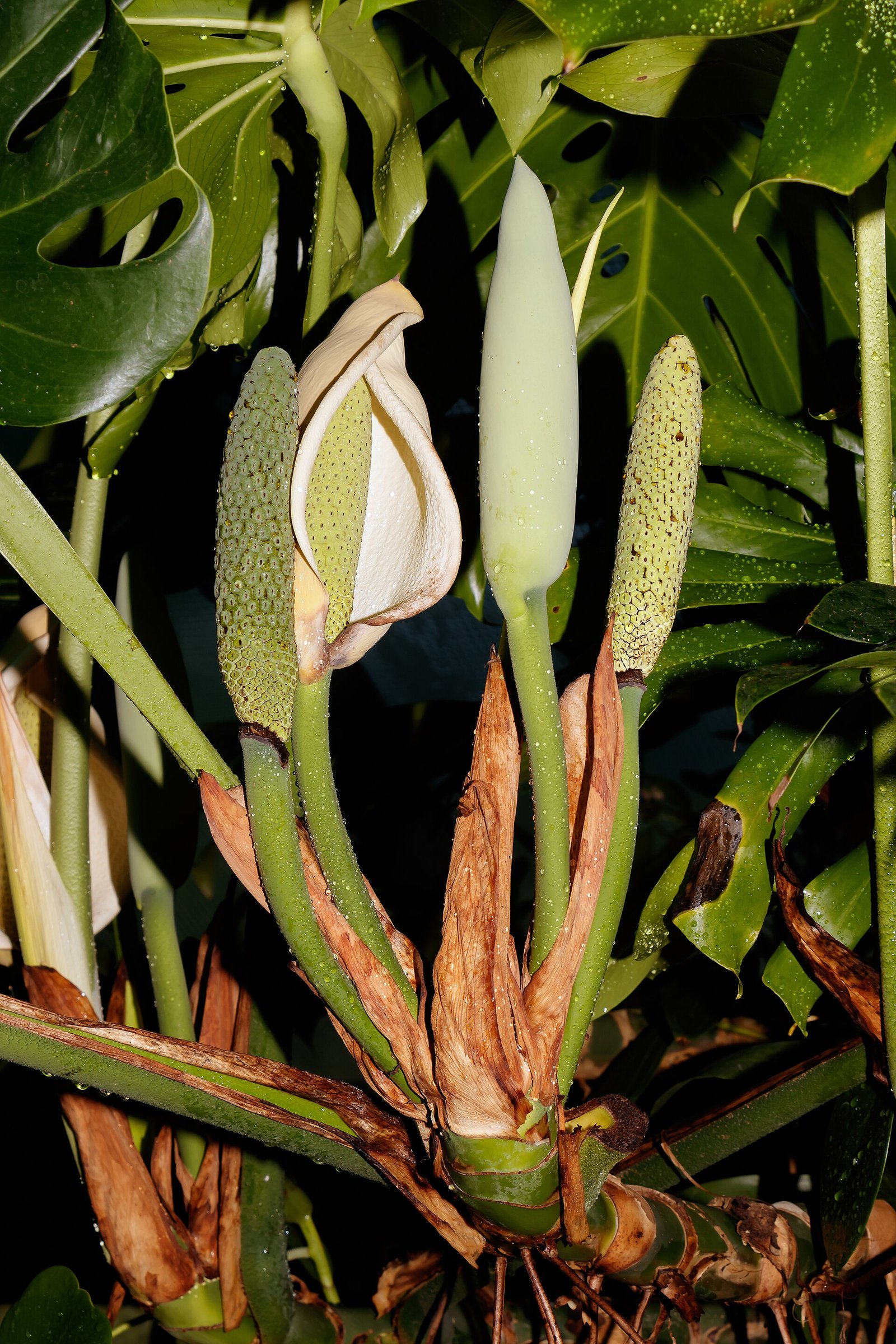
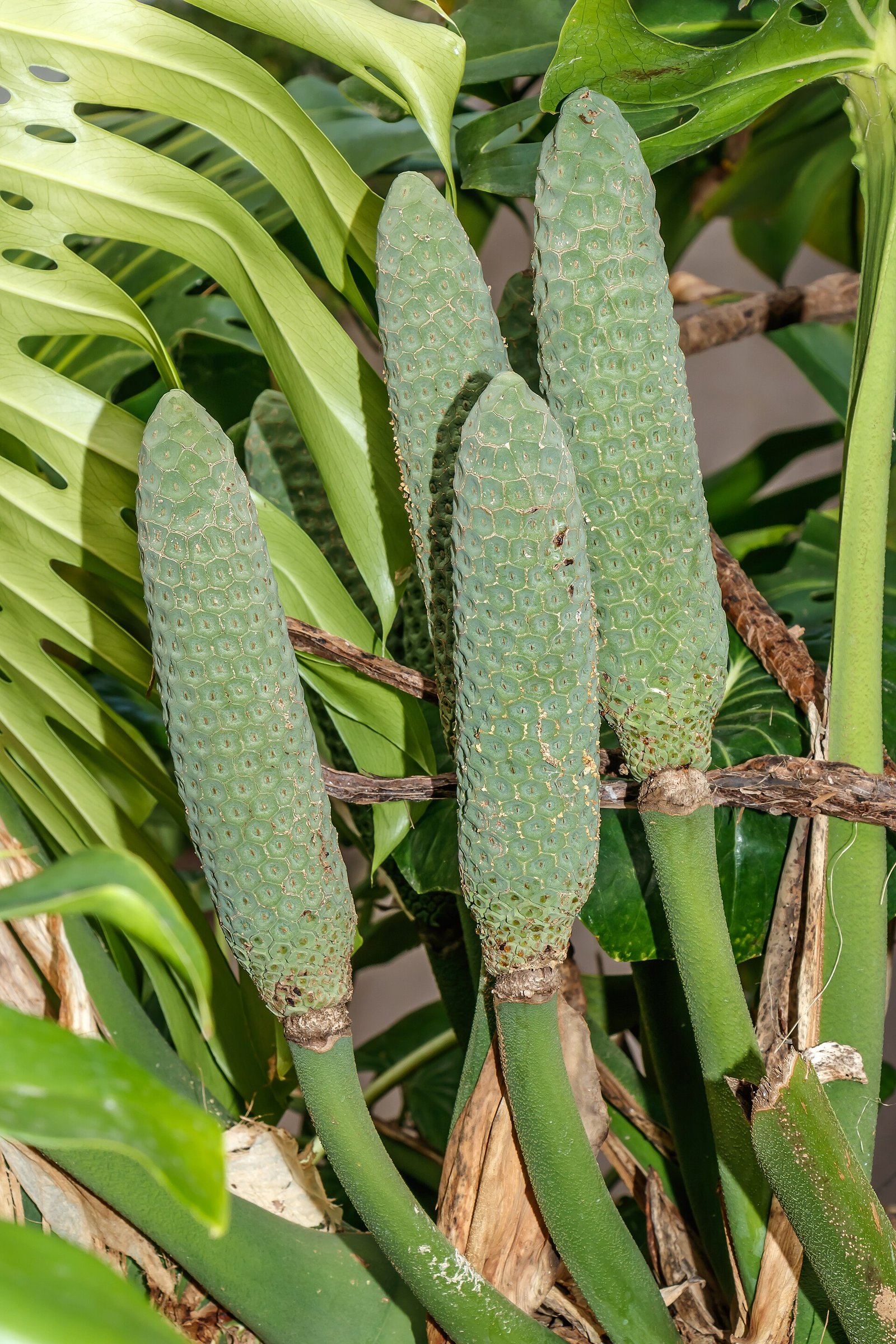
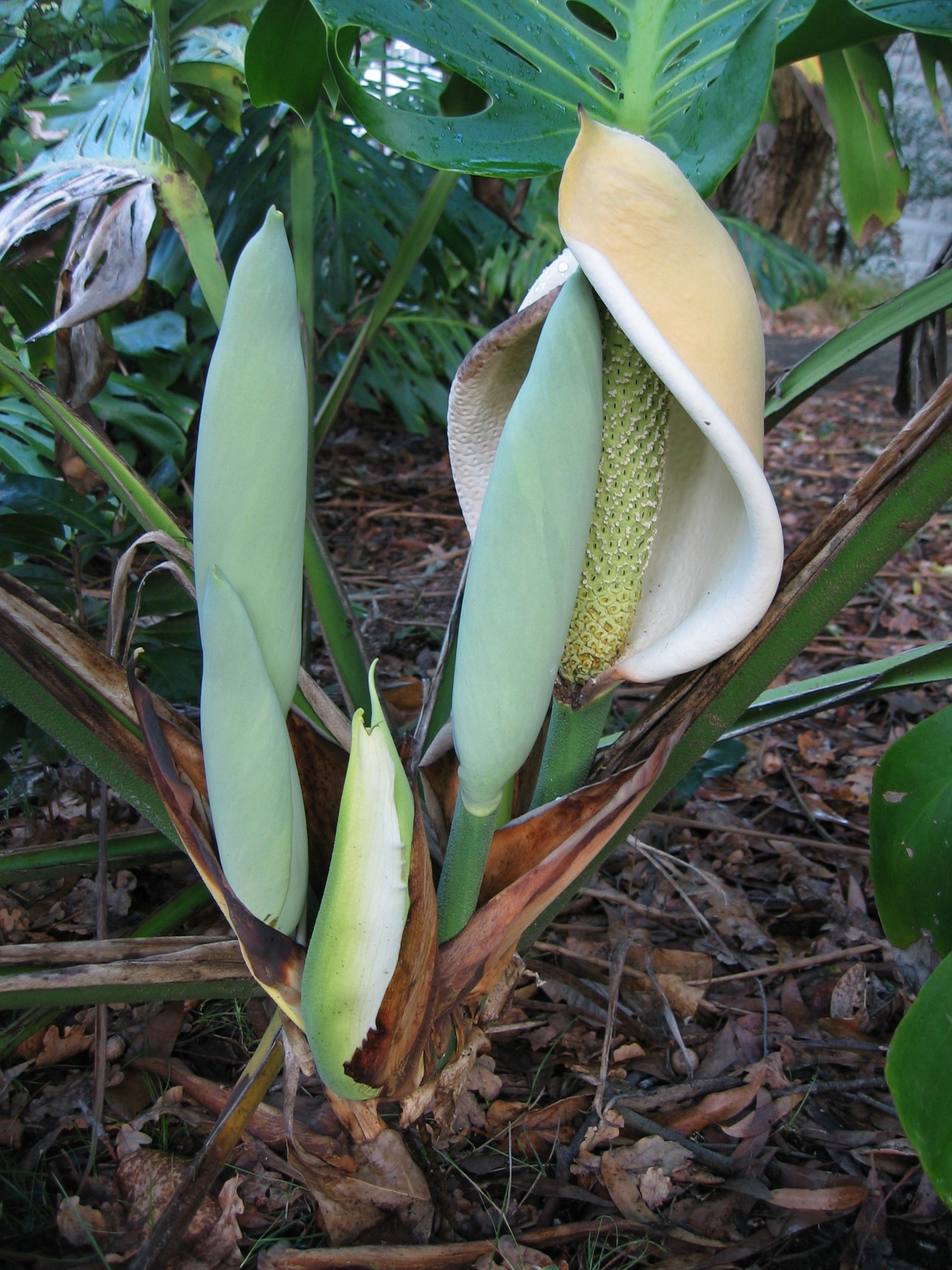
A word on the fruit, because someone always asks: a ripe monstera fruit is edible and tastes, by all accounts, like pineapple and banana had a very successful baby — which is what deliciosa is bragging about. But an unripe fruit is full of calcium oxalate crystals and will irritate your mouth and throat badly. Indoors, fruit is rare anyway; the plant needs to be large, mature, and very happy to flower. If yours ever does, wait until the green scales fall off on their own before even thinking about tasting it. And keep the leaves away from curious pets and small children: chewing a leaf hurts, thanks to those same oxalate crystals. It is rarely dangerous, but it is a miserable afternoon for everyone involved.
Florida notes: outdoors, cold snaps, and hurricanes of growth
In South Florida (zones 10b–11), a monstera can live outdoors year-round in shade, climbing a tree or a fence, and it will get enormous — leaves three feet across are not unusual on an established outdoor plant. In Central Florida (zone 9b–10a), it can summer outdoors and needs shelter or frost cloth on cold nights. Anywhere in the state, treat 50°F as the “bring it in” line and freezing as the “say goodbye” line: a hard freeze kills the leaves outright and often the whole plant.
Outdoors, a monstera planted in the ground in Florida can become a genuine landscape feature — and a genuine commitment. It climbs trees, roots into the soil at every node, and does not volunteer to leave. Plant it where you want a jungle, not where you want a tidy border. In a pot on the porch, you keep the jungle on a leash, which is the right call for most of us.
Propagation
Monsteras propagate by stem cuttings, and it is one of the most satisfying cuttings in the houseplant world, because it is nearly foolproof. You need a cutting with at least one node — the knobby bump on the stem where a leaf and an aerial root emerge. No node, no plant: a leaf in water will root and sit there looking hopeful forever, but it will never become a monstera. This is the most common propagation mistake, and now you will never make it.
Cut just below a node with clean, sharp pruners, keeping one or two leaves on the cutting. Let the cut end dry for a few hours, then set it in water or straight into moist, chunky mix. In water, roots appear in two to four weeks; change the water weekly so it stays fresh. In soil, keep the mix damp (not soggy) and the cutting in bright indirect light, and roots form in about a month. Once the roots are a few inches long, pot a water-rooted cutting into mix — do not leave it in water indefinitely, or the roots adapt to water and struggle in soil.
Air layering is the deluxe method for a big, leggy plant: wrap damp sphagnum moss around a node with an aerial root, cover it with plastic wrap, and wait for roots to fill the moss. Then cut below the node and pot up a cutting that already has a root system. It is the best way to rescue a monstera that has grown up to the ceiling and out of the room.
One honest note: the pricey variegated monsteras — the white-and-green Thai Constellation and albo types — propagate the same way, but only cuttings that include variegated growth will stay variegated, and a cutting can revert to plain green. If you buy a variegated cutting, buy from a seller who shows the mother plant, and expect to pay for it: variegation is a mutation, and the market prices it like one.
🌱 Keep learning
Three related guides worth reading next:
- Air Plant — the soilless bromeliad cousin that drinks from the air; perfect for the same bright bathroom shelf.
- Bromeliad — the tropical family behind the air plant, the pineapple, and the most forgiving flowering houseplants.
- Worm Castings 101 — the gentle, slow-release feeding your monstera actually wants, explained start to finish.