
Under a wet leaf in a northern garden, there is a small brown barrel with legs. Not a worm, not a caterpillar — a millipede the shape of a tiny wooden keg, bronzed brown, smooth, and curled into a neat spiral when you touch it. The barrel millipede, Cylindroiulus caeruleocinctus, is a European immigrant that has become one of the most common millipedes in North American yards and gardens: the largest barrel millipede in Ohio, the millipede of parks and cemeteries and compost heaps, the animal that arrived in ship’s ballast and potted plants and never left. It is the millipede most northern gardeners actually meet — and the one almost nobody can name. This guide is about the little brown barrel, where it came from, and what it is doing in your garden.
And if you are reading this because you just found a cluster of small brown cylindrical millipedes under a board or in your compost — stay with us. They are not dangerous, they are not a pest in any serious sense, they are recyclers doing a useful job, and everything in the “what to do” section works for yours too.
What it looks like
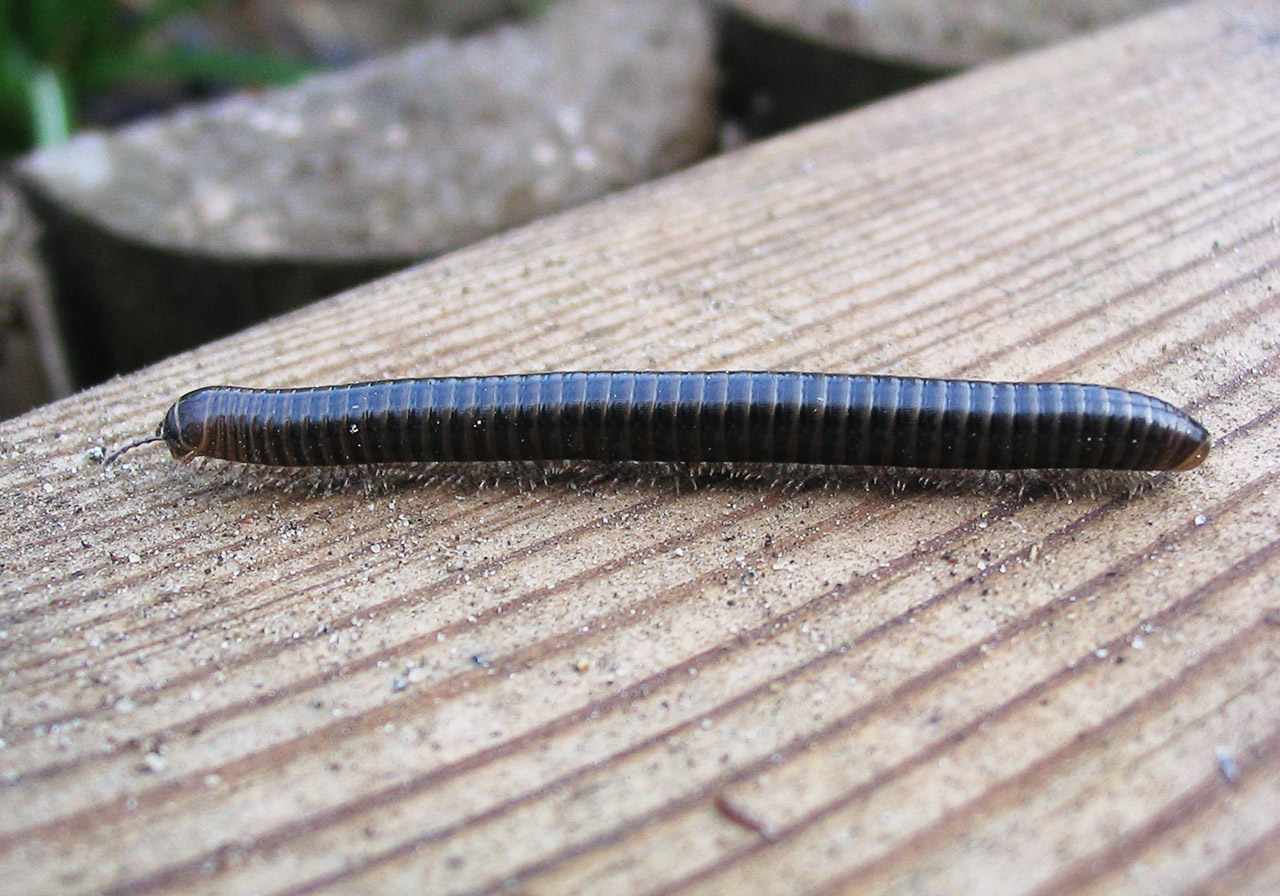
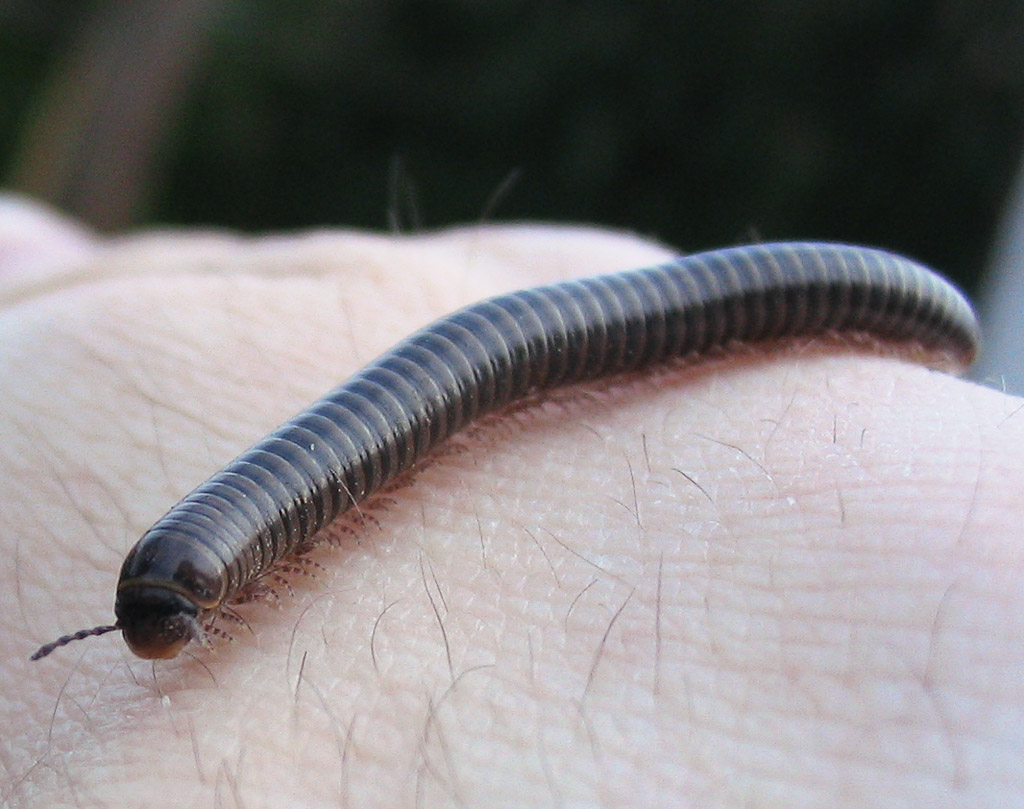
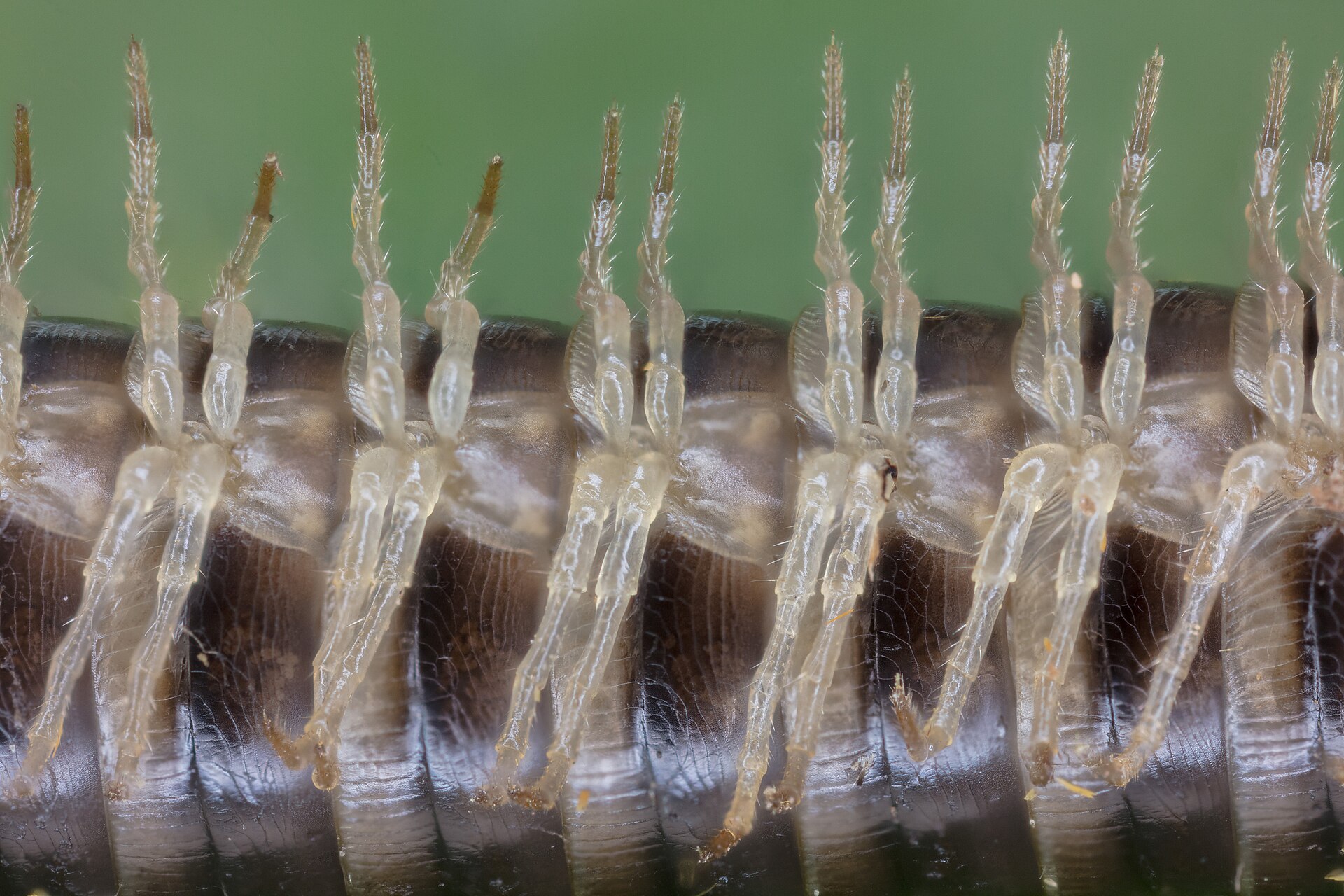
The barrel millipede is a julid millipede — a member of the order Julida, the cylindrical millipedes — and it looks it: a smooth, round-bodied cylinder, like a tiny barrel or a short length of brown wire, with two pairs of legs on most segments and a blunt, rounded tail. Adults are 20 to 29 millimeters long (about 0.8 to 1.1 inches), making it the largest barrel millipede in Ohio, where four Cylindroiulus species occur. The color is bronzed brown, sometimes with a faint bluish iridescence in some lights — a hint of the name, since caeruleocinctus means “blue-banded,” for the bluish banding on the segments. It lacks a tail: where its relative Cylindroiulus londinensis has a club-shaped, protruding telson, this species ends bluntly, and that blunt tail is the field mark that separates the two.
The body is smooth, not bumpy, not ridged, and not flattened — a plain brown cylinder, which is exactly why it is so hard to identify with confidence. A barrel millipede in the hand looks like every other small brown julid, and the differences between species live in the male gonopods and the shape of the telson, not in anything a gardener can see at a glance. The Ohio field guide is honest about this: the barrel millipedes are a group, and caeruleocinctus is the most common species in the state, the largest, the bronzed-brown one without a tail. In practice, a small brown cylindrical millipede in a northern garden, in leaf litter or under decaying wood, in an urban or disturbed habitat, is most likely this species — and this guide says “most likely” rather than “certainly,” because certainty needs a microscope.
Young animals are smaller versions of the same barrel, starting out at only a few millimeters long, and they add rings and legs with every molt, the way all millipedes do. The animals are active year-round in Ohio, with activity rising significantly in spring and fall and dropping in summer and winter — the damp seasons, when the leaf litter is wet and the fungi are growing.
The name game
The name is a small etymology lesson. Cylindroiulus is the genus — cylindro- for the cylindrical body, -iulus for the little Iulus, the classical name for a millipede — and caeruleocinctus means “blue-banded,” for the bluish banding on the segments. The species was described by Wood in 1864, and it was long known under the synonym Cylindroiulus teutonicus (Pocock, 1900) — “the German one” — before the older name was restored. The common name, barrel millipede, belongs to the whole genus: the Ohio field guide calls all four Ohio Cylindroiulus species barrel millipedes, and this guide uses the name for the most common of them, with the scientific name attached so you know which barrel you are reading about.
The taxonomy, for the nerds in the back: kingdom Animalia, phylum Arthropoda, class Diplopoda (the millipedes), order Julida, family Julidae, genus Cylindroiulus, species caeruleocinctus (Wood, 1864). The family Julidae is entirely introduced in North America: all ten julid species known from the United States originated in Europe, assumed to have arrived in colonial-era ship’s ballast and, later, in the soil of transported plants. Four Cylindroiulus species occur in Ohio — caeruleocinctus, latestriatus, punctatus, and truncorum — and the genus is found across the northern United States and Canada, in the Maritimes, in British Columbia, and in California. C. latestriatus, the closest look-alike, is widespread but infrequent and prefers drier habitats; caeruleocinctus is the common one, especially in or close to human settlements.
Where it lives
The barrel millipede is native to northern Europe — most commonly found in Germany, the United Kingdom, Sweden, and Switzerland — and it has been introduced to North America, where it is now widespread. It occurs across the northern United States and Canada, from the Atlantic Maritimes (where it was the first millipede species recorded in both New Brunswick and Prince Edward Island, in 1983) to British Columbia, and south into the northern tier of states and into California, where it is established in the cooler, moister regions. In Ohio it occurs statewide in urbanized and disturbed habitats, and it has been introduced in other localities throughout North America.
Within that range it is a creature of human places: common in parks, gardens, and cemeteries, under wet leaves, beside rivers in towns, in leaf litter and under decaying wood, in grassland, hedges, and small woods, and rarely in deep forest. It is found in the same places people put their gardens — which is the point. The julid millipedes spread within North America mainly through landscape management and the transport of plants by humans, and caeruleocinctus is the species that has ridden that human network furthest. It is most common in moist habitats, especially in or close to human settlements, and it is the millipede a northern gardener is most likely to find under a board, in a compost heap, or in the leaf litter at the back of the lot.
The range does not include Florida as an established population. This is a cool-climate, northern animal — a creature of damp springs and falls, of wet leaves in parks — and the hot, sandy soils of Florida are not its habitat. A small brown cylindrical millipede found in Florida would be something else, most likely the rusty millipede or the greenhouse millipede, and this guide says so plainly, because northern garden guides are so often read as if they applied everywhere.
What it eats: the quiet recycling job
Like every millipede in this library, the barrel millipede is a detritivore — it eats dead plant matter, and the fungi and microbes that grow on it. Its preferred foods, where they have been studied, are broadleaves first, followed by grass and moss: the dead leaves of broadleaved trees, the thatch of a lawn, the moss on a damp wall. It grazes the litter layer, shredding dead leaves into smaller pieces, and its droppings feed the fungi and bacteria that turn dead leaves into soil nutrients. In a garden it is one of the small mouths that keep the recycling running, in the leaf litter, in the compost heap, and under the boards.
What it does not like is equally clear, and it is the one qualification on the “not a pest” verdict below. It does not eat living plants as a rule — but julid millipedes occasionally feed on soft plants, sometimes causing minor damage to gardens as they chew seedlings or ripening fruit lying on the soil, and there are records of this species as an agricultural pest, including old Estonian records of potato damage that probably refer to caeruleocinctus rather than to the species they were attributed to. The honest version is: a barrel millipede in a garden is a recycler first, and a nibbler of soft, damaged, or soil-lying plant tissue second, in the way that any detritivore will take the softest food available. It does not eat healthy, standing plants, it does not eat your house, and it does not eat your stored food.
The curl and the chemistry
Disturb a barrel millipede and it does what julid millipedes do: it curls into a tight spiral, head tucked in the center, armored rings facing outward, and plays dead with total commitment. It cannot bite, cannot sting, and cannot run away fast — the curl is the whole defense plan, plus one chemical backup. Along the sides of its body it carries rows of tiny defensive glands, opening through pores called ozopores, and if you squeeze or crush it, those glands discharge a fluid.
What exactly is in that fluid? Here the honest answer is: the julid defense is quinone-based at the family level — the sharp-smelling, staining compounds that most cylindrical millipedes use — but no published chemical assay of this exact species exists, and this guide will not present a family-level recipe as a species-level fact. What is certain is that the fluid is a deterrent to predators, that it can stain skin, that it would be irritating in the eyes, and that it is not venom — there is no bite, no injection, nothing that gets it into your bloodstream. Wash your hands after handling one and keep it away from your eyes. For a person, the defense is a non-event; for a ground beetle, it is a reason to look elsewhere.
Life cycle
Like all millipedes, the barrel millipede grows by molting: it hatches from an egg laid in soil or leaf litter with only a few segments and a handful of legs, and earns the rest over successive molts, adding rings and legs each time it sheds its exoskeleton. Adults reach 20 to 29 millimeters long, and the animals are active year-round, with activity rising significantly in spring and fall and dropping in summer and winter.
Beyond that basic pattern, the details of this species’ life cycle are thinly known, and the gaps are worth naming honestly rather than papering over. No published study follows a barrel millipede from egg to adult in North America, and there is no species-specific account of its mating season, its egg-laying, or its lifespan. What can be said is what is true of julid millipedes generally: the animals are most active in the damp seasons, they shelter in leaf litter and under wood through dry spells and through winter, and the females lay their eggs in the soil or litter, where the young hatch and begin the slow climb through the molts. A millipede this common, in gardens across a continent, still keeps its private life private — and the spring and fall activity peaks are the most visible part of that life, and the reason gardeners meet it when they do.
An immigrant’s paper trail
The barrel millipede’s history in North America can be read in the literature like a shipping manifest. The family Julidae is entirely introduced in the New World: ten species are known from the United States, all of them European in origin, assumed to have arrived in colonial-era ship’s ballast and later in the soil of transported plants. The first record of Cylindroiulus caeruleocinctus in New Brunswick and Prince Edward Island dates to 1983, when it was the first millipede species ever recorded in either province — a reminder of how recently, and how incompletely, the millipede fauna of the North Atlantic region has been documented. A 2025 survey of the region notes that the myriapods of Canada and New England are “still poorly known,” and that the North Atlantic region, from Maine to the Gaspésie peninsula, is “particularly neglected.”
The species’ abundance is documented in an unexpected place: a study of phoretic mites — the tiny mites that ride on millipedes without harming them — sampled julid millipedes across the eastern United States in 2008 and 2009 and collected 365 C. caeruleocinctus and 337 C. latestriatus, the two commonest barrel millipedes in the sample, carrying sixteen mite species between them. Five mite species were recorded on caeruleocinctus alone. The mites were restricted by locality rather than by host species — the same mite species rode whichever julid lived in that place — which is a small, neat demonstration of how thoroughly these introduced millipedes have become part of the North American soil fauna: they have acquired a retinue of native mites, and they carry them from garden to garden, the way they themselves were once carried in ballast and potted plants. The Ohio field guide, the best regional account, calls caeruleocinctus the most common barrel millipede in the state, the largest, and the one found statewide in urbanized and disturbed habitats — the immigrant that made itself at home.
Is it a pest?
Plainly: not a pest in any serious sense, with one honest qualification. It does not bite, sting, or spread disease. It does not eat your house, your clothes, or your stored food. It does not swarm patios after rain in the way the Portuguese millipede does, and it does not invade houses in numbers. What it does do, occasionally, is nibble soft plant tissue — seedlings, or ripening fruit lying on the soil — and there are old agricultural records of it as a pest, including potato damage in Estonia that probably refers to this species. The honest version is: this is a beneficial recycler that will take the softest food available, and a seedling or a soil-lying strawberry is soft food. The damage is minor, occasional, and confined to soft, damaged, or soil-lying tissue — it does not eat healthy, standing plants — and it does not make the animal a pest in the way a cutworm or a slug is a pest.
The other side of the coin is the numbers. In a damp garden with deep leaf litter and a compost heap, barrel millipedes can be numerous — and a gardener who lifts a board to find fifty small brown cylinders underneath can be forgiven for thinking they have a problem. They do not. They have a recycling crew, and the crew is doing its job.
How to get rid of it — or how to attract it
If they are outdoors, the best management is none at all — with one practical exception, for the seedling-nibbling described above. Do not spray: broad-spectrum insecticides will kill the millipedes, and they will also kill the ground beetles, the spiders, and the other predators that eat millipedes, leaving the garden with fewer enemies and the same number of millipedes next spring. The animals are recyclers, and the garden is better with them than without them.
If they are nibbling seedlings, the fix is mechanical, not chemical. Keep seedlings off the soil — raise them in pots or on a bench until they are sturdy — and keep ripening fruit off the ground with mulch or a straw bed, so the millipedes cannot reach the soft tissue. Reduce the damp leaf litter piled against the seedling bed, and keep mulch a few inches away from the stems. A dry, well-drained seedling bed is not a millipede habitat, and the animals will stay in the litter where they belong.
If they come indoors — and they do, occasionally, through gaps under doors and around windows — sweep them up and put them back outside under leaf litter, then seal the gaps they came through. Do not use indoor insecticide sprays for millipedes: the animals die inside the walls and the spray does nothing about the next damp spring. They do not breed indoors, they do not eat the house, and they do not carry disease — they are lost, and the kindest and most effective thing is to put them back outside.
If you want to attract them — and there are good reasons to, because a garden with barrel millipedes is a garden with a working litter layer — the recipe is the same as for every detritivore in this library: leave the leaves. A deep, damp leaf litter under shrubs and trees, a log or two left to rot in a shady corner, and a compost heap kept moist will bring them, and the fungi and the beetles and the springtails with them. What they do not like is the opposite: bare, dry, sun-baked soil with nothing rotting in it.
Effects on the garden
On the plus side, everything this animal does in a garden is helpful. It eats dead leaves — broadleaves first, then grass and moss — shreds them into smaller pieces, and its droppings feed the fungi and bacteria that turn dead leaves into soil nutrients. In a northern garden it is one of the main recyclers of the litter layer, and a garden with a healthy barrel millipede population is a garden whose leaf litter is being processed, not piling up into a sodden mat. It does not compete with your plants for anything, because it does not eat healthy, standing plants.
On the minus side, there is one entry, and it is the seedling-nibbling described above: soft seedlings, and ripening fruit lying on the soil, can be chewed. The damage is minor and occasional, and it is confined to soft, damaged, or soil-lying tissue — but it is real, and this guide lists it rather than hiding it behind the “not a pest” verdict. A gardener with a seedling bed and a millipede population should keep the two apart with the mechanical fixes above, and let the millipedes work the litter everywhere else.
Effects on other garden animals
The barrel millipede sits in the middle of the garden food web. As a detritivore it eats only dead plant matter — it does not hunt other animals, does not eat living insects, and does not compete with predators for prey. Its competition is with the other recyclers: the beetles, the woodlice, the springtails, and the fungi that all eat the same dead leaves. It helps the soil microbes by shredding litter into bite-size pieces, and its droppings are food for fungi and bacteria, which in turn feed the whole underground web.
As prey, it is a defended meal — and a common one, because it is numerous. Most predators learn to leave it alone after one taste of the quinone defense, but some animals eat millipedes anyway: ground beetles, birds, toads, shrews, and hedgehogs take millipedes generally, and the same is likely true here. It is also a host, in the small and unglamorous way: a study of julid millipedes across the eastern United States found sixteen species of phoretic mites — mites that ride on millipedes without harming them — on thirteen julid species, including this one, with five mite species recorded on caeruleocinctus alone. For pets, the risk is small: a dog that crunches one will get a mouthful of foul-tasting fluid and learn not to do it again. Unpleasant, not an emergency.
Look-alikes: the concrete checks
Small brown cylindrical millipedes all look alike until you know what to check, and with this species the first check is the tail: blunt, not club-shaped. Work through these in order and you will rarely go wrong.
Barrel millipede, Cylindroiulus latestriatus — the closest look-alike, and the hardest one, because it is a genuine barrel millipede in the same genus, also introduced from Europe, also widespread in the northern United States and Canada. Check: habitat. C. latestriatus is widespread but infrequent and prefers drier habitats; caeruleocinctus is the common one, especially in or close to human settlements, in moist habitats. In the hand, the two are separated by the male gonopods, not by anything a gardener can see — and in most northern gardens, the common barrel millipede is this one. No guide exists for C. latestriatus yet; it is named here so you know it exists.
Portuguese Millipede (Ommatoiulus moreleti) — the small dark cylindrical millipede of patios. Also smooth and cylindrical, but slate-grey to black, slightly smaller at up to about 1.8 inches, and famous for swarming patios after rain in enormous numbers. Check: black and smooth and swarming means Portuguese; bronzed brown and in leaf litter means barrel millipede. Note the range caution: the Portuguese millipede has no verified record in Florida at all. Read the full guide: Portuguese Millipede.
Rusty Millipede (Trigoniulus corallinus) — the red one. Reddish-brown to brick red, smooth and cylindrical, 2 to 3 inches long, and one of the most common millipedes on Florida patios. Check: red means rusty, bronzed brown means barrel — and the rusty millipede lives in damp leaf litter and compost in warm climates, while the barrel millipede is a cool-climate northern animal. Read the full guide: Rusty Millipede.
Greenhouse Millipede (Oxidus gracilis) — the small, bumpy one. Under an inch long, dark brown to black on top with pale, creamy-white legs, and visibly bumpy and ridged along its back, and slightly flattened rather than round. Check: under an inch, pale legs, bumpy back, slightly flat — the barrel millipede is smooth, round, and bronzed brown. Read the full guide: Greenhouse Millipede.
Centipedes — the one that actually matters, because this is the split with consequences. Centipedes have one pair of legs per segment, not two, and they move fast — darting, flickering, gone under the log before you have finished the sentence. Millipedes move slowly, in a steady wave, and curl up when disturbed; centipedes run. Centipedes are also flattened, with long legs that stick out sideways and a pair of venomous front fangs, and they can bite. Millipedes have short legs tucked under a round or flat body and no bite at all. Check: count the legs per segment (one pair means centipede, two pairs means millipede), then watch the speed (fast means centipede, slow means millipede), then watch what it does when poked (runs means centipede, curls means millipede). Read the full guide: Garden Centipedes.
Frequently asked questions
Is the barrel millipede dangerous?
No. It does not bite, sting, or spread disease. Its only defense is curling into a spiral and a bad-tasting chemical fluid from glands along its sides. Wash your hands after handling one, as with any millipede.
Is it a pest?
Not in any serious sense. It is a beneficial recycler that eats dead leaves. The one qualification: it will occasionally nibble soft seedlings or ripening fruit lying on the soil. The damage is minor, occasional, and confined to soft, damaged, or soil-lying tissue — it does not eat healthy, standing plants.
How big does it get?
Adults are 20 to 29 millimeters long (about 0.8 to 1.1 inches), making it the largest barrel millipede in Ohio, where four Cylindroiulus species occur. The color is bronzed brown, sometimes with a faint bluish iridescence.
Where does it come from?
Northern Europe — most commonly Germany, the United Kingdom, Sweden, and Switzerland. It was introduced to North America, probably in colonial-era ship’s ballast and later in the soil of transported plants, and it is now widespread across the northern United States and Canada. All ten julid millipede species known from the United States originated in Europe.
Where does it live?
Across the northern United States and Canada, from the Atlantic Maritimes to British Columbia, and in California — in parks, gardens, cemeteries, leaf litter, and under decaying wood, especially in or close to human settlements. It does not occur in Florida as an established population; it is a cool-climate northern animal.
What does it eat?
Dead plant matter — broadleaves first, followed by grass and moss — and the fungi and microbes that grow on it. It does not eat healthy, standing plants, but it will take soft seedlings and soil-lying fruit.
How do I tell it from Cylindroiulus latestriatus?
In the field, mostly by habitat and abundance: latestriatus is widespread but infrequent and prefers drier habitats, while caeruleocinctus is the common one in moist habitats near human settlements. A certain ID needs the male gonopods under magnification — and in most northern gardens, the common barrel millipede is this one.
Will it hurt my plants or my pets?
Almost certainly not, beyond the seedling-nibbling above. Keep seedlings off the soil until they are sturdy, and keep ripening fruit off the ground. A pet that crunches one will get a mouthful of foul-tasting fluid and learn not to do it again. Unpleasant, not an emergency.
Why are there so many under one board?
Because the habitat is right: damp, dark, with dead leaves and rotting wood underneath. Barrel millipedes gather where the food and moisture are, and a board on damp soil is a perfect shelter. They are not breeding in the board, and they are not eating anything under it except dead leaves.
What should I do if I find them in my compost?
Leave them. They are doing the composting — shredding dead leaves and returning them to the soil as droppings that feed the microbes. A compost heap with barrel millipedes is a compost heap that is working.
🌱 Keep learning
Three related guides worth reading next:
- Portuguese Millipede — The little black millipede that stopped trains: rain swarms, a staining chemical defense, and the curl that gives it away — Florida patio edition.
- Compost Accelerators — Twelve things that actually wake up a lazy pile, and the microbes behind all of it, Florida edition.
- Soil Food Web Explorer — Meet the whole underground crew, from bacteria to beetles, and see where the millipedes fit in the chain.
🪱 Your Soil Needs This
Reading about healthy soil is great. Growing in it is better. Our small-batch, traceable worm castings are the shortcut your garden deserves.
Shop Worm Castings Subscribe & SaveEvery bag comes with a lot certificate. Know what's in your soil.