
Compost Accelerators: 12 Things That Actually Wake Up a Lazy Pile
Every composter knows the feeling. You built the pile right — or so you thought. You layered your greens and browns like a lasagna made by someone who actually read the recipe. You watered it. You waited. And three weeks later, you stick your hand in and find… a lukewarm pile of yard waste that smells faintly of nothing, doing absolutely nothing, at the speed of absolutely nothing.
Your pile is stalled. And a stalled pile is not a compost pile. It is a landfill with better PR.
Here is the good news: a stalled pile is almost always a fixable pile. And the fix is usually an accelerator — something you add that gives the microbes in the pile either more food, more nitrogen, or more microbes. That is the whole secret. There is no magic powder. There is only biology, and biology runs on lunch.
This guide covers twelve accelerators that genuinely work, the nerdy mechanism behind each one, how much to use, and what to watch out for — plus two honorable mentions and a short list of the stuff that is mostly a waste of your money. Everything here is something you can actually get your hands on, most of it for free.
First, Why Piles Stall: The Four Fundamentals
Before you throw anything at your pile, check the four things every pile needs. An accelerator cannot rescue a pile that fails on fundamentals — it is like putting premium gas in a car with no wheels.
1. Volume. A pile needs a minimum of about 3 cubic feet (roughly a 3-by-3-by-3-foot cube) to hold its own heat. Smaller than that, and the heat the microbes generate leaks away faster than they can make it. This is simple geometry: heat production scales with volume, heat loss scales with surface area, and small piles are nearly all surface.
2. Moisture. Microbes live in water films. Too dry and they go dormant; too wet and the water fills the air spaces and the pile goes anaerobic. Aim for 40–60% moisture — the classic test is the wrung-out sponge. Grab a handful and squeeze: a drop or two of water should come out, not a stream, and the material should stay clumped when you open your hand.
3. Aeration. The microbes doing the fast work are aerobes — they need oxygen. Turning the pile reintroduces oxygen and moves the cool outer material into the hot center. A pile that never gets turned develops dead zones that go slimy and sour.
4. Carbon-to-nitrogen ratio. Microbes burn carbon for energy and use nitrogen to build protein — including the enzymes that do the actual decomposing. The target for a working pile is around 30 parts carbon to 1 part nitrogen. Cardboard sits up around 350:1 (nearly all carbon), dried leaves around 60:1. A pile of pure browns is a pile of microbe food with no microbe building material, so nothing happens. An accelerator is, most of the time, just a concentrated dose of nitrogen — or of the microbes themselves.
If your pile is big enough, damp enough, aired enough, and balanced enough, it will heat up on its own. If one of those four is off, fix that first. If all four check out and the pile is still sitting there like a teenager on a Sunday morning, that is when you reach for an accelerator.
One more honest note before the list: accelerators work hardest at the start of a pile, when the microbial community is small and getting established. A pile that has been cooking happily for weeks already has all the microbes it needs. Adding more to a thriving pile is like hiring extra cooks for a kitchen that is already running at full speed — nobody gets fed faster.
1. Urine: The Free Fertilizer You Make Every Morning
Let us get the awkward one out of the way first, because it is also one of the best. Human urine is, chemically speaking, a nitrogen delivery system with a plumbing problem. It runs about 11-1-2.5 on the N-P-K scale — that is 11% nitrogen, 1% phosphorus, 2.5% potassium, roughly speaking — which makes it richer in nitrogen than most bagged organic fertilizers. The nitrogen arrives mostly as urea, and soil microbes carry an enzyme called urease that splits urea into ammonia and carbon dioxide within hours. The ammonia is exactly what nitrogen-hungry compost microbes want, and the pile temperature often jumps within a day or two.
How to use it: Dilute it about 10 parts water to 1 part urine and pour it over the pile, or just apply it directly to a big, carbon-heavy pile that needs the nitrogen. First thing in the morning is the most concentrated, since your kidneys have been working all night. One person can keep a modest pile well supplied.
Florida notes: In a Florida summer, a pile dries out fast, so the water in diluted urine does double duty — nitrogen plus moisture. In a Florida downpour, the same nitrogen leaches straight out the bottom, so keep a tarp or lid on the pile when the afternoon storms roll in.
Cautions: Only use urine from a healthy person who is not on medication — pharmaceuticals pass through into urine, and a compost pile is not a drug disposal system. And keep it on the pile, not on your lettuce. The hot composting process breaks down the urea and any pathogens, but the pile is the right place for it, not the salad bed.
The dad joke you knew was coming: yes, you can literally pee on your compost and call it science. Your microbes will not judge you. They will throw a party.
2. Grass Clippings: The Green Avalanche
Fresh grass clippings are one of the highest-nitrogen materials in the average yard, running about 4-1-2 on the N-P-K scale when fresh, with a carbon-to-nitrogen ratio around 15:1. They are also the material most likely to teach you a hard lesson about pile physics, because a thick layer of fresh clippings mats down into a dense, airless slab within a day. The microbes in the middle burn through the available oxygen, the slab goes anaerobic, and your pile starts smelling like a swamp had a baby with a gym sock.
How to use it: Never dump clippings in a thick layer. Mix them thin — about 2 parts browns (shredded cardboard, dry leaves) to 1 part clippings — and turn the pile about 24 hours after adding a big batch of them. The nitrogen is real and the heat follows fast, but only if the oxygen can get in.
Florida notes: Florida lawns grow year-round, which means a year-round supply of the single best free accelerator in the state. That is the good news. The caution is that clippings from a lawn recently treated with herbicide should stay out of the pile — some lawn chemicals, particularly the persistent broadleaf herbicides, survive composting and can damage garden plants later. If you sprayed it, do not compost it.
Cautions: Fresh clippings lose nitrogen fast as they dry, so use them the day you mow. A pile of dried grass is just brown hay with ambitions.
3. Blood Meal: The Heavyweight
Blood meal is dried, powdered blood from slaughterhouses — 12-0-0 on the N-P-K scale, which is about as concentrated a nitrogen source as the organic world offers. Twelve percent nitrogen, no phosphorus, no potassium, no apologies. A little goes a very long way: a light sprinkle, roughly 2.5 ounces per cubic yard of carbon-heavy material, is enough to wake a pile up. It dissolves fast, the microbes gorge, and the temperature climbs.
How to use it: Sprinkle it thinly between layers as you build the pile, or scatter it over a stalled pile and water it in. Wear gloves. Keep the bag sealed and dry — wet blood meal clumps into something you will regret opening.
Florida notes: Blood meal is an animal product, and Florida has no shortage of animals that would love to investigate it. Raccoons, opossums, and dogs can all smell it, so bury it inside the pile rather than leaving it on top, and put a lid or wire on the bin if your local raccoons are the ambitious type.
Cautions: More is not better. Too much blood meal dumps so much nitrogen at once that the pile goes ammonia-heavy — you will smell it — and the excess nitrogen just volatilizes away as ammonia gas. That is nitrogen you paid for, floating off into the sky. A little, watered in, beats a lot, dumped on top.
4. Alfalfa Meal: The Legume That Fixes Its Own Nitrogen
Alfalfa (Medicago sativa) is a legume, and legumes are the overachievers of the plant world: they host Rhizobium bacteria in nodules on their roots, and those bacteria pull nitrogen straight out of the air and hand it to the plant. Alfalfa meal — dried, ground alfalfa — carries that nitrogen into your pile at about 3-1-2 on the N-P-K scale. It is gentler than blood meal, slower to release, and it brings a bonus: alfalfa contains triacontanol, a naturally occurring plant growth stimulant that gardeners have credited with livelier growth for decades.
How to use it: Sprinkle a few handfuls of alfalfa meal or pellets between layers as you build the pile. If you can only find pellets, soak them first or crush them — whole pellets are slow to break down and slower to feed anyone. A thin layer every few inches of browns is plenty.
Florida notes: Alfalfa does not grow well in Florida’s heat and humidity, so you will be buying the meal rather than growing it — but it is cheap, it stores well dry, and a bag lasts a long time when you are only using handfuls.
Cautions: None of real note, which is part of its charm. Alfalfa meal is one of the most forgiving accelerators on this list. If you are the kind of person who overdoes everything, this is the one to overdo.
5. Feather Meal: Keratin, the Toughest Protein in the Yard
Feathers are about 90% keratin, and keratin is one of the toughest proteins in nature — it is the same stuff as hair, horns, and fingernails. Most microbes look at keratin and shrug. But a specialized crew of keratin-degrading microbes carries enzymes called keratinases that can crack it open, and once they do, what comes out is nitrogen: feather meal runs 12–15% nitrogen, usually sold as 12-0-0. That makes it one of the most concentrated organic nitrogen sources you can buy, and it releases slowly as the keratin crew works through it, which means it feeds a pile for weeks instead of days.
How to use it: About a cup of feather meal scattered through a new pile is a good starting dose. If you have raw feathers — from a backyard flock’s molt, for instance — soak them in water for 24 hours first to soften them up and give the keratin crew a head start, then mix them into the pile rather than layering them, or they mat together the same way grass clippings do.
Florida notes: Backyard chickens are everywhere in Florida, and molt season leaves a surprising amount of feathers behind. Collect them, soak them, compost them. Your chickens are literally shedding fertilizer.
Cautions: Feather meal is slow. If your pile needs heat today, this is not your accelerator — it is your accelerator for next week and the week after. Pair it with something fast, like coffee grounds or urine, if you want both a quick jump and a long burn.
6. Spent Coffee Grounds: The Morning Ritual, Recycled
Spent coffee grounds are about 2% nitrogen by weight, with a carbon-to-nitrogen ratio around 20:1 — a solid green material, and one of the easiest accelerators to get in quantity if you know where to ask. The research on grounds in compost is unusually specific, and it is worth knowing the numbers. Washington State University horticulturist Linda Chalker-Scott recommends keeping grounds at 10–20% of the pile by volume, and warns that above 30% they can start harming the microbes and earthworms doing the work. An informal field trial by Oregon State University Extension found that a pile made of about 25% coffee grounds held temperatures of 135–155°F for at least two weeks — hotter, for longer, than a comparable manure pile. Spent grounds also test close to pH-neutral, around 6.5 to 6.8, because the acid in coffee is water-soluble and mostly ends up in the cup, not the grounds.
How to use it: Mix grounds through the pile rather than dumping them in a layer — a thick layer of wet grounds compacts into a water-repellent crust. Roughly 3 parts dry leaves, 1 part grass clippings, and 1 part coffee grounds lands you at about 20% grounds, which is right in the sweet spot. Use them wet, not dried: the moisture is part of the gift.
Florida notes: This one is personal for us. Our partner cafes donate their used grounds for our precompost, and a five-gallon bucket of fresh grounds is a nitrogen delivery with a smell that will make your whole yard smell like a coffee shop for an afternoon. If your local café is throwing grounds away, ask — most are delighted to have someone haul them off. Keep the filter papers in too; they are just brown material.
Cautions: Fresh, unbrewed coffee grounds are a different story — they are acidic and can suppress seed germination. Always compost grounds before they go near seeds or seedlings, and keep them under about 20% of a worm bin’s food, added gradually, or the bin’s pH drops and the worms object.
7. Comfrey Leaves: The Deep Miner
Comfrey (Symphytum spp.) is the plant world’s deep miner. Its roots dive 6 to 10 feet down, past the zone your vegetables can reach, and haul up potassium, calcium, phosphorus, and trace minerals from the subsoil. The leaves come back up loaded: comfrey leaf analyzes around 1.8-0.5-5.3 on the N-P-K scale — note the potassium, which runs two to three times higher than farmyard manure — and the fresh leaves have a carbon-to-nitrogen ratio of about 10:1 to 15:1, right in the same league as alfalfa and grass clippings. Low C:N plus high potassium plus leaves that are nearly all water and almost no fiber means comfrey collapses into the pile fast and the microbes hit it like a buffet that just opened.
How to use it: Cut the leaves, wilt them for a day or two so they lose a little water, then layer 3 to 5 inches of chopped leaves between your browns. A 6-inch layer of fresh comfrey over a 2-foot layer of carbon material is a classic ratio. The pile temperature often jumps within 24 to 48 hours.
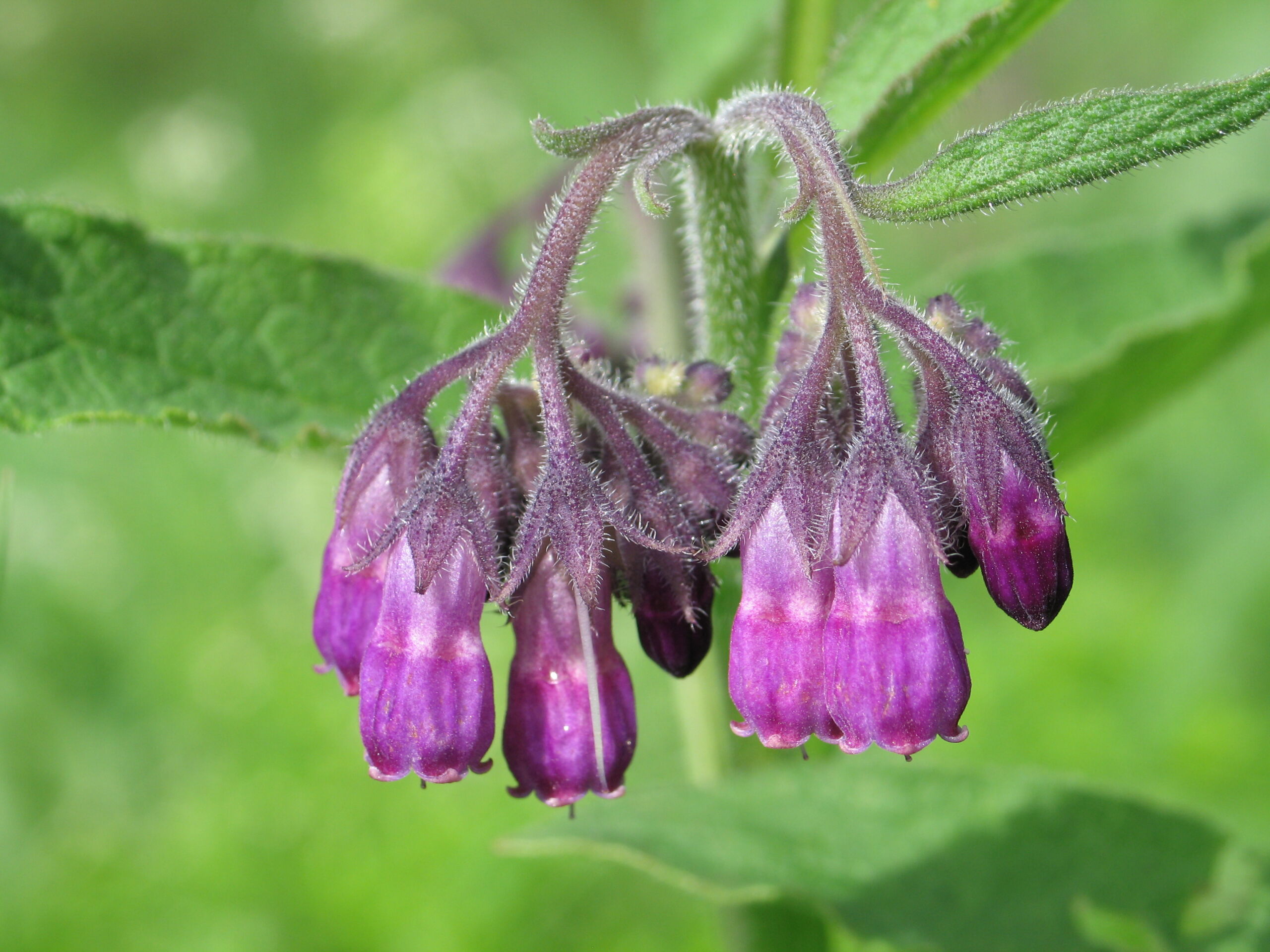
Florida notes: Comfrey grows well in Florida with a little afternoon shade and regular water, and it is a cut-and-come-again plant — one established plant can be harvested four or five times a season. Grow the sterile ‘Bocking 14’ cultivar (Symphytum × uplandicum ‘Bocking 14’), which does not set viable seed and will not take over your yard the way the species type can. We have a full growing guide for comfrey if you want to put it to work.
Cautions: Comfrey contains pyrrolizidine alkaloids, which are toxic to the liver if eaten — this is a compost plant, not a salad plant, so do not eat it and do not feed it to anything you plan to eat. And do not add comfrey in huge quantities all at once: it breaks down so fast it can turn into a dark sludge that needs more fibrous browns to balance it.
8. Fresh Chicken Manure: The Rocket Fuel (Handle With Respect)
If urine is a nitrogen delivery system, fresh chicken manure is a nitrogen freight train. It is the richest of the common animal manures, typically around 1.1 to 1.5% nitrogen fresh, with a carbon-to-nitrogen ratio somewhere between 6:1 and 15:1 depending on how much bedding is mixed in. For comparison, horse manure sits around 25:1 and cow manure around 20:1 — chicken manure has roughly twice the nitrogen punch of either. A few shovelfuls layered into a carbon-heavy pile can take it from cold to 130–160°F within days.
How to use it: Mix about 2 to 3 parts carbon-rich bedding (straw, wood shavings, dry leaves) to 1 part droppings by volume, and layer it through the pile rather than dumping it in one spot. A 4- to 6-inch layer of browns, then a 2- to 3-inch layer of manure and bedding, repeated, is a solid pattern. Keep the pile hot and turned: the USDA organic standard for pathogen reduction is 131–170°F for 3 days in a static system, or 15 days with at least 5 turns in a windrow.
Florida notes: Florida’s backyard chicken boom means fresh manure is not hard to find, and the deep-litter method — letting droppings accumulate in carbon bedding in the coop — produces a pre-mixed activator that is already halfway to compost. If you keep chickens, your coop cleanout is your accelerator. Just remember Florida heat plus fresh manure plus a closed bin equals ammonia, so keep the pile aired and do not seal it up tight.
Cautions: This is the one to respect. Fresh chicken manure carries Salmonella and E. coli, and it is far too hot to use directly on growing plants — it will burn roots with ammonia. Never apply it fresh to a bed, never use it on a pile you plan to harvest before it has fully hot-composted and cured (six months minimum for the cautious), and wash your hands after handling it. The heat is the point, and the heat is also the safety system — but only if the pile actually gets hot and stays hot.
9. Finished Compost: The Inoculant (Your Best Accelerator Is Your Last Batch)
Here is the plot twist: the single best accelerator for a new pile is the finished compost from your last pile. A few shovelfuls mixed in as you build introduces a complete, established microbial community — mesophilic bacteria, thermophilic bacteria, actinobacteria, fungi — already adapted to your exact materials, your climate, and your pile. It skips the lag phase, which is the slow two-week stretch where a new pile sits around waiting for the right microbes to find it, move in, and multiply. With an inoculant, colonization drops from weeks to days.
How to use it: Add a few shovelfuls of finished compost — roughly 10% by volume — scattered through the layers as you build. Garden soil works as a backup inoculant at about 20% by volume, since soil is also full of microbes, though it brings weed seeds and less of the heat-loving community that finished compost carries.
Florida notes: In Florida’s heat, microbial life is abundant and fast, and a shovelful of finished compost here is practically a starter culture with opinions. Save a bucket of every finished batch specifically for inoculating the next one. It is the cheapest accelerator on this list, because you already made it.
Cautions: Use finished compost from a healthy pile. If your last batch went anaerobic and smells like a swamp, its microbial community is the wrong crowd — do not invite them to the new pile. And remember the honest limit: an inoculant only helps a pile that already has the right food, water, and air. Adding microbes to a pile of dry cardboard is like seating guests at a party with no food. They will leave.
10. Kelp and Seaweed Meal: The Ocean’s Multivitamin
Kelp meal is dried, ground brown seaweed — usually Ascophyllum nodosum — and it is not really a nitrogen accelerator at all. Its NPK is modest. What it brings is everything a standard fertilizer leaves out: more than 60 trace minerals (iron, zinc, manganese, copper, boron, iodine), natural plant growth hormones called cytokinins and auxins, and alginates — the compounds that give seaweed its slimy texture and that help soil hold water and structure. Fresh seaweed runs a carbon-to-nitrogen ratio of about 10:1 to 19:1, so it is a genuine green material, and it breaks down fast: shredded and mixed with browns, fresh seaweed is mostly gone in 4 to 8 weeks. Its real job in a pile is feeding the microbial community a mineral-diverse diet, which is why composts amended with kelp meal tend to test higher in trace elements.
How to use it: A few handfuls of kelp meal scattered between layers, or fresh seaweed mixed at about 1 part seaweed to 3 parts browns. If you are using fresh seaweed, rinse it first — that washes off excess salt, though it also washes off some of the water-soluble potassium, so it is a trade-off. Dried meal avoids the question entirely.
Florida notes: Florida beaches deliver free seaweed by the truckload, especially when the sargassum comes in. Beach-cast seaweed is fair game in most places, but check local rules first, rinse the salt off, and skip any that smells strongly of rotten eggs (hydrogen sulfide) or looks oily — that is seaweed that has been sitting too long or picked up something you do not want. Sargassum in particular can carry elevated arsenic, so rinse it well and use it in the pile, not directly on beds.
Cautions: Salt is the one to watch. Seaweed is salty by nature, and too much of it raises the salinity of the finished compost. Used as a handful-per-layer accelerator, it is no problem. Used as the main ingredient, it is.
11. Stinging Nettle: The Weed That Fights Back (and Pays Rent)
Stinging nettle (Urtica dioica) is a plant most gardeners meet at the worst possible moment — bare-handed, weeding — and then spend years avoiding. That is a shame, because nettle is one of the highest-nitrogen green plants you can grow, rich in nitrogen, iron, magnesium, and potassium, and it is a classic compost activator in the English gardening tradition. The sting comes from hollow hairs called trichomes that work like tiny hypodermic needles, injecting histamine and other irritants. The plant defends itself with chemistry, and that same chemistry is why it is so good at waking up a pile: it is a concentrated package of nitrogen and minerals that microbes tear into immediately.
How to use it: Wear gloves — this is not optional, and long sleeves are a good idea too. Chop the fresh tops and layer them at about 1 part nettles to 2 parts dry leaves or straw. If you are digging out a patch, drown the creeping yellow rhizomes in a bucket of water for about three weeks before composting them, or they will cheerfully re-root inside your pile and you will have nettle in your compost forever.
Florida notes: Nettle is less common in Florida than in cooler climates, but it does grow here in moist, fertile spots, and it is worth growing on purpose in a contained patch if you want a free, perennial accelerator. We have a growing guide for nettle — and yes, it includes the glove lecture.
Cautions: The sting is real but short-lived; cooking, drying, or composting destroys it. The rhizomes are the actual hazard — they spread aggressively and survive composting if the pile does not get properly hot. Drown them first, every time.
12. Spent Mushroom Substrate: The Fungal Crew Moves In
Spent mushroom substrate is what is left after mushrooms have been grown on it — usually a mix of straw, manure, gypsum, and lime, thoroughly colonized by mycelium and then harvested. The word “spent” is misleading, because the material is still full of value: roughly 1.8–2.2% nitrogen, 0.8–1.1% phosphorus, 1.3–1.9% potassium, and 25–35% organic matter by dry weight, plus a fungal-dominated microbial community that a regular garden pile does not have. Fungi are the specialists that break down lignin and cellulose — the tough, woody stuff that bacteria struggle with — so adding spent substrate is like hiring a demolition crew that specializes in the exact walls your bacteria cannot knock down.
How to use it: Break the blocks up and mix a few shovelfuls through the pile as you build it, like seasoning — not the main ingredient. It works especially well in a pile heavy with woody browns, cardboard, or straw, which is exactly where the fungal crew earns its keep.
Florida notes: This one is personal for us. Our precompost starts with spent mushroom substrate from our partners, and it is the reason our first batches cooked as fast as they did. If you have a local mushroom grower, ask about their spent blocks — most are happy to give them away rather than pay to dispose of them. Use them wet, not dried, and break them up by hand.
Cautions: Two. First, spent substrate runs salty — electrical conductivity typically 3.5 to 7.0 dS/m, well above what seedlings tolerate — so use it as an accelerator in the pile, not as a direct soil amendment, and let the composting process and time bring the salts down. Second, skip any block that has gone green with mold (usually Trichoderma): that green is a competing fungus that will fight your pile’s microbes instead of helping them. And let the substrate age a bit before use — fresh substrate can temporarily tie up nitrogen while its remaining fungi finish their meal.
Two Honorable Mentions That Almost Made the List
Molasses — the sugar rush. Unsulphured blackstrap molasses is pure, soluble sugar, and sugar is the fastest food in the microbial world. A little molasses watered into a new pile — about a quarter cup per 10 gallons of fresh green material — triggers a bacterial population explosion, and a 2026 study on low-temperature cattle manure composting found that molasses plus a microbial inoculant pushed peak temperatures higher and held the hot phase about two days longer. But the honest version is that the rush is brief: the bacteria gorge, the sugar runs out, the population crashes back down, and the long-term microbe population ends up roughly where it started. Molasses is a jump-start, not a fuel tank. Use unsulphured only — the sulfur dioxide in sulphured molasses inhibits the very microbes you are trying to feed — and never pour it on a finished or cooling pile, which just invites vinegar flies.
Worm castings — the inoculant, not the heater. A few handfuls of worm castings scattered through a new pile seed it with a dense, diverse microbial community, the same way finished compost does — castings are, after all, finished compost that has passed through a worm. But castings are not a nitrogen accelerator: they are already fully digested, low in available nitrogen, and they will not heat a pile on their own. Think of them as a starter culture, not a fuel. And one rule, always: castings only. Never add leachate — the liquid that drains from a worm bin is not worm tea, it is excess moisture from a bin that is too wet, and it does not belong in a compost pile or on your plants. If you want the full story on that distinction, our castings tea guide tells it straight.
Accelerators That Are (Mostly) a Waste of Money
Commercial compost activator powders. Walk down the garden-center aisle and you will find tubs and packets promising to supercharge your pile. Open one up and you will generally find three things: a nitrogen source (often urea or a meal), a dose of bacteria (usually Bacillus strains that like it hot), and sometimes a fungal inoculant such as Trichoderma. None of that is fake — those microbes are real, and they do decompose things. The problem is the price, and the fact that your pile already has all of them. The bacteria in those tubs are the same bacteria floating around your yard, sitting in your soil, and living in your finished compost. Multiple garden writers and extension sources land in the same place: a handful of finished compost does the same job for free. The honest verdict is that commercial activators are not a scam, exactly — they are a convenience product with a heroic markup, selling you microbes you already own.
Effective microorganisms (EM-1) and bottled inoculants. The evidence here is genuinely mixed. A review of vegetable trials found positive effects in roughly 70% of published studies and no significant effect in the rest, while a four-year Swiss field study comparing living EM against sterilized EM found no reliable effect from the organisms themselves — most of any benefit came from the organic matter they were applied with, not the microbes. If you enjoy using them, they are harmless. If you are buying them because your pile is stalled, spend the money on a compost thermometer instead and check the four fundamentals first.
The one exception. A commercial starter can earn its keep in exactly one situation: a pile built entirely from sterile, store-bought materials — bagged leaves, fresh cardboard, nothing from your yard — where the local microbial community genuinely has not moved in yet. Even then, a shovelful of garden soil is the free version of the same thing.
Frequently Asked Questions
Do I even need an accelerator?
Often, no. A pile built with the right volume, moisture, air, and carbon-to-nitrogen ratio will heat up on its own. Accelerators are for piles that are stalled, piles built mostly from browns, and new piles you want cooking fast. If your pile is already running hot, save your accelerators for the next one.
Can I use more than one accelerator at once?
Yes — and it is usually the smart move. Pair a fast one (urine, coffee grounds, grass clippings) with a slow one (feather meal, comfrey) and you get a quick jump plus a long burn. Just do not stack three heavy nitrogen sources at once, or the pile will go ammonia-heavy and lose nitrogen to the air.
Will urine make my compost smell?
Used correctly, no. Diluted and watered into a carbon-heavy pile, urine is just nitrogen — the smell disappears within a day. A pile that smells of ammonia has too much nitrogen and not enough carbon, and the fix is browns, not less urine.
Is it safe to use manure or urine on a pile that will feed food gardens?
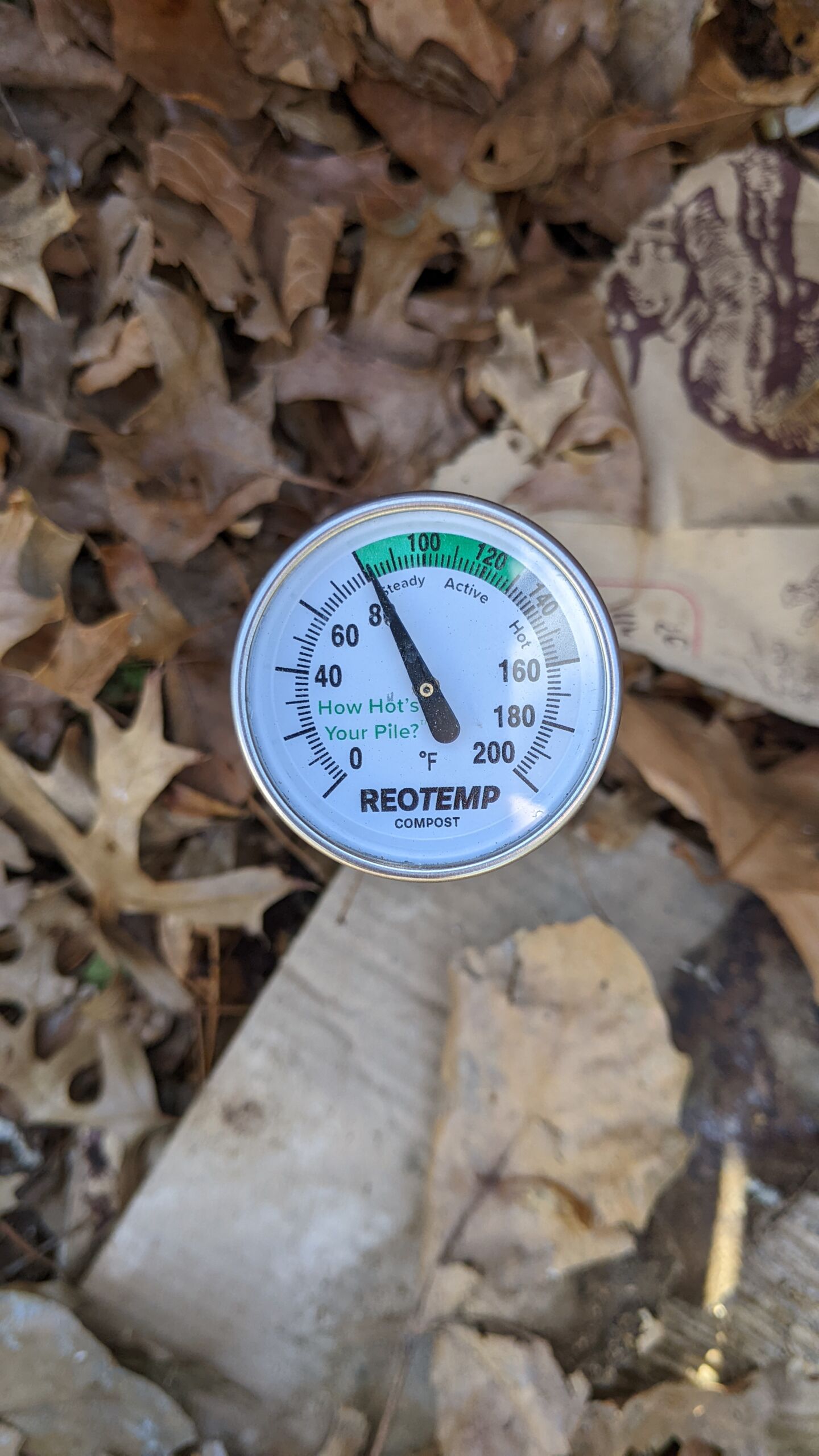
Yes, if the pile genuinely hot-composts: sustained temperatures of 131–170°F for at least 3 days (or 15 days with 5 turns in a windrow) kill the pathogens that matter, including Salmonella and E. coli. That is why the thermometer matters — “it felt warm” is not a food-safety standard. Cure the finished compost for a few weeks after the hot phase, and wash your vegetables, as you should anyway.
Why is my pile still cold after I added an accelerator?
Go back to the four fundamentals. Nine times out of ten, the pile is too small, too dry, or too compacted. An accelerator is nitrogen or microbes; it cannot replace water, air, or volume. Check moisture with the squeeze test, turn the pile, and make sure it is at least 3 cubic feet. Then add the accelerator.
Can I put these accelerators in my worm bin?
Mostly, no. A worm bin is not a hot compost pile — it is a cool, moist ecosystem, and the things that heat a pile will cook or poison it. No blood meal, no feather meal, no urine, no fresh manure in a worm bin. Coffee grounds are fine in small amounts (under about an eighth of the worms’ food, added gradually), and a few castings are already what the bin makes. Different system, different rules.
How fast will my pile finish with an accelerator?
A well-built hot pile can produce finished compost in as little as two to three weeks with regular turning, and an accelerator helps it get to temperature days sooner. But “finished” means dark, crumbly, earthy-smelling material — not “I turned it three times and got bored.” Let the pile tell you when it is done, not the calendar.
Do accelerators work in winter?
They help, but cold is the bigger enemy: microbial activity slows sharply below 50°F, and no accelerator fully compensates for a freezing pile. Insulation and size matter more than additives in winter. Here in Florida, of course, winter is the good composting season — cool enough that piles do not dry out in a day, warm enough that the microbes never really stop.
Can I use dog or cat manure as an accelerator?
No. Dog and cat waste can carry parasites and pathogens that hot composting does not reliably kill, including Toxoplasma and roundworms, and it has no place in a pile that will feed a food garden. Herbivore manure (chicken, horse, cow, rabbit) is the safe list. Carnivore and omnivore pet waste goes in the trash, not the pile.
What is the cheapest accelerator?
A tie between three free ones: urine, grass clippings, and finished compost from your last batch. All three cost nothing, all three work, and all three are already in your yard. The most expensive accelerator is the one you buy in a tub at the garden center, and it is also the one you needed least.
🌱 Keep learning
Three related guides worth reading next:
- How to Make Hot Compost — the full build: layers, ratios, turning schedule, and how to know when it is done.
- Leaf Mold: The Free Soil Conditioner Hiding in Your Yard — what to do with all those leaves once the pile is fed.
- Worm Castings 101 — the other end of the compost world: what castings are, how worms make them, and why leachate is not worm tea.
🪱 Your Soil Needs This
Reading about healthy soil is great. Growing in it is better. Our small-batch, traceable worm castings are the shortcut your garden deserves.
Shop Worm Castings Subscribe & SaveEvery bag comes with a lot certificate. Know what's in your soil.