
🌿 Comfrey
What it looks like
How to grow
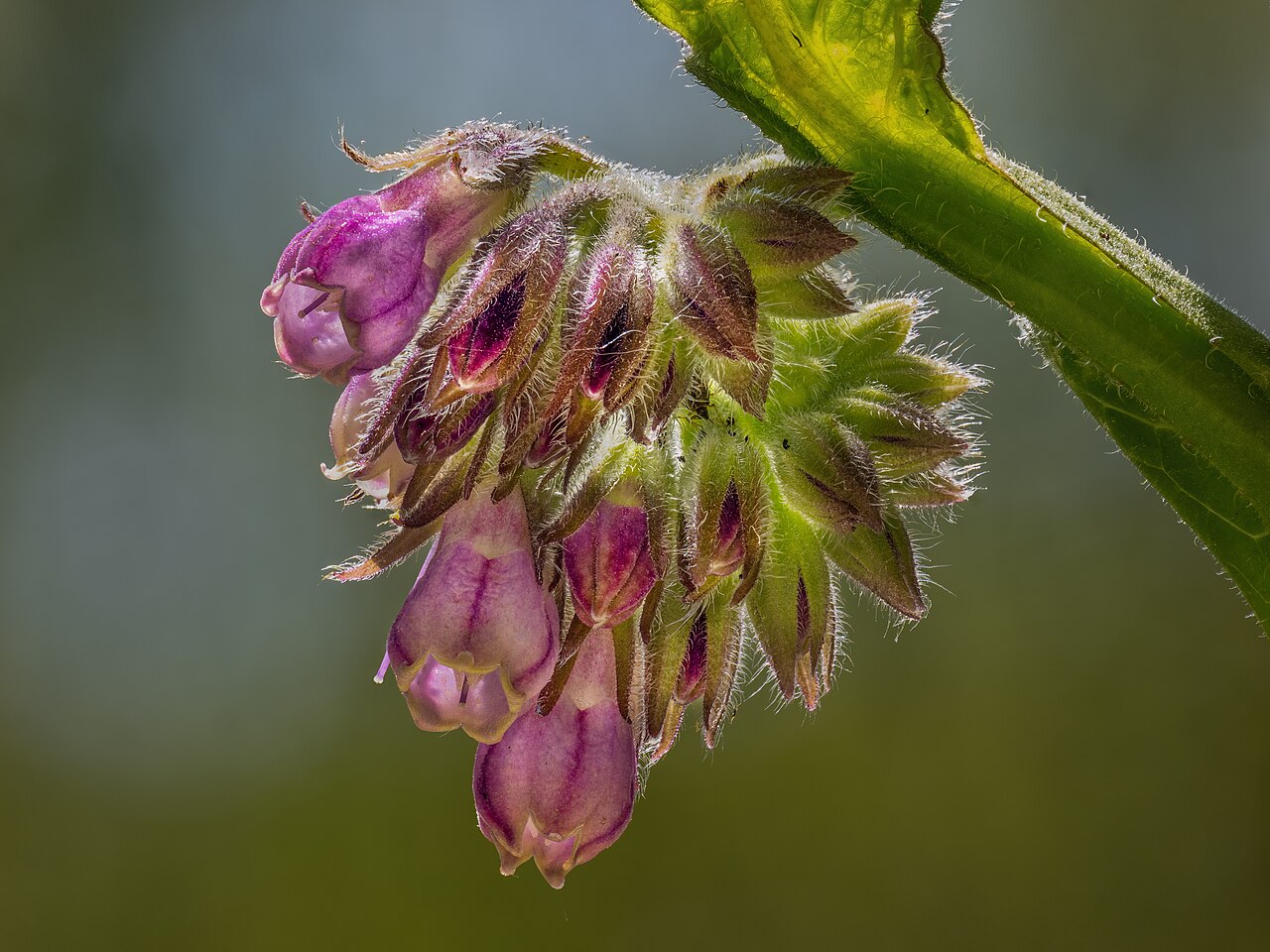
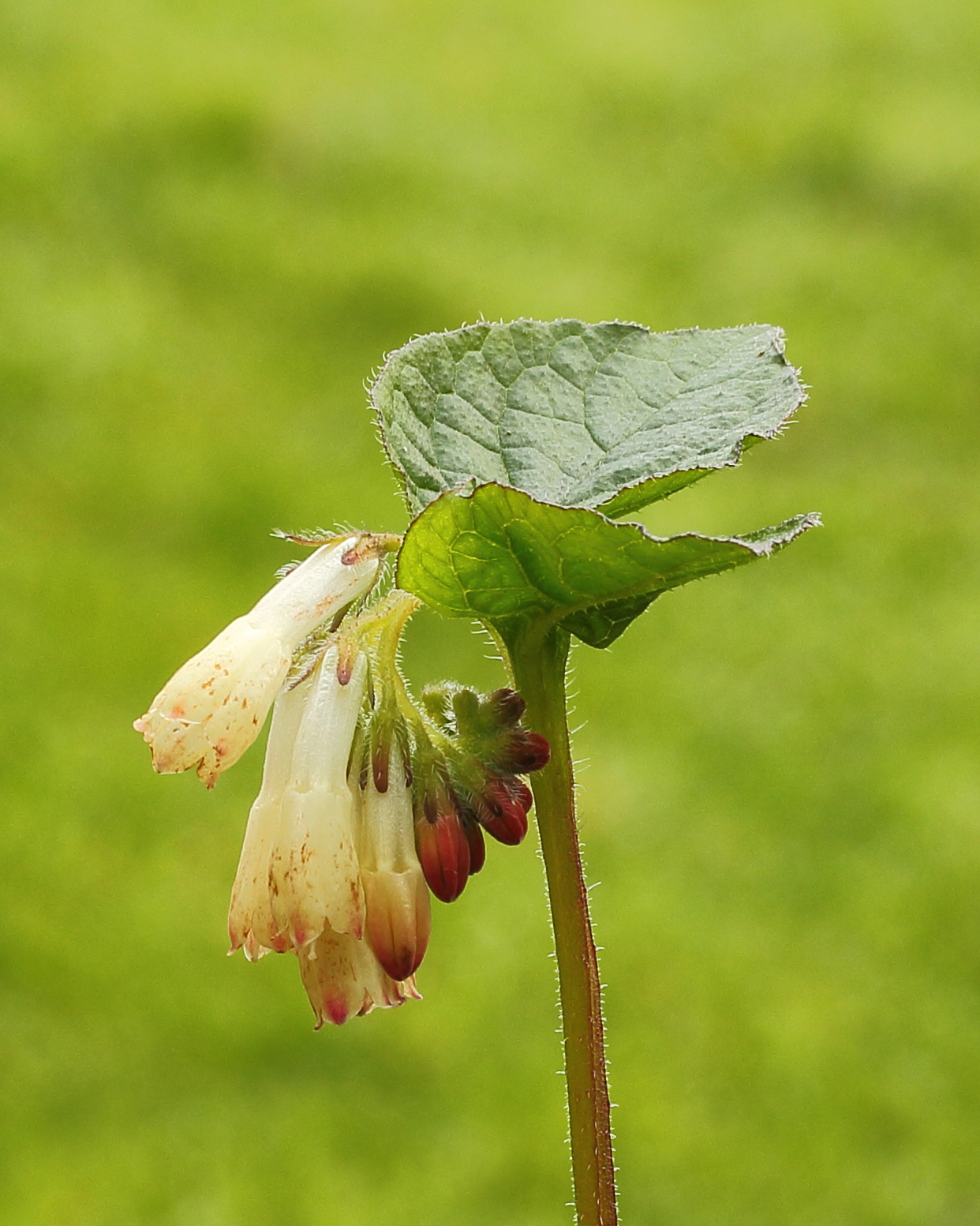
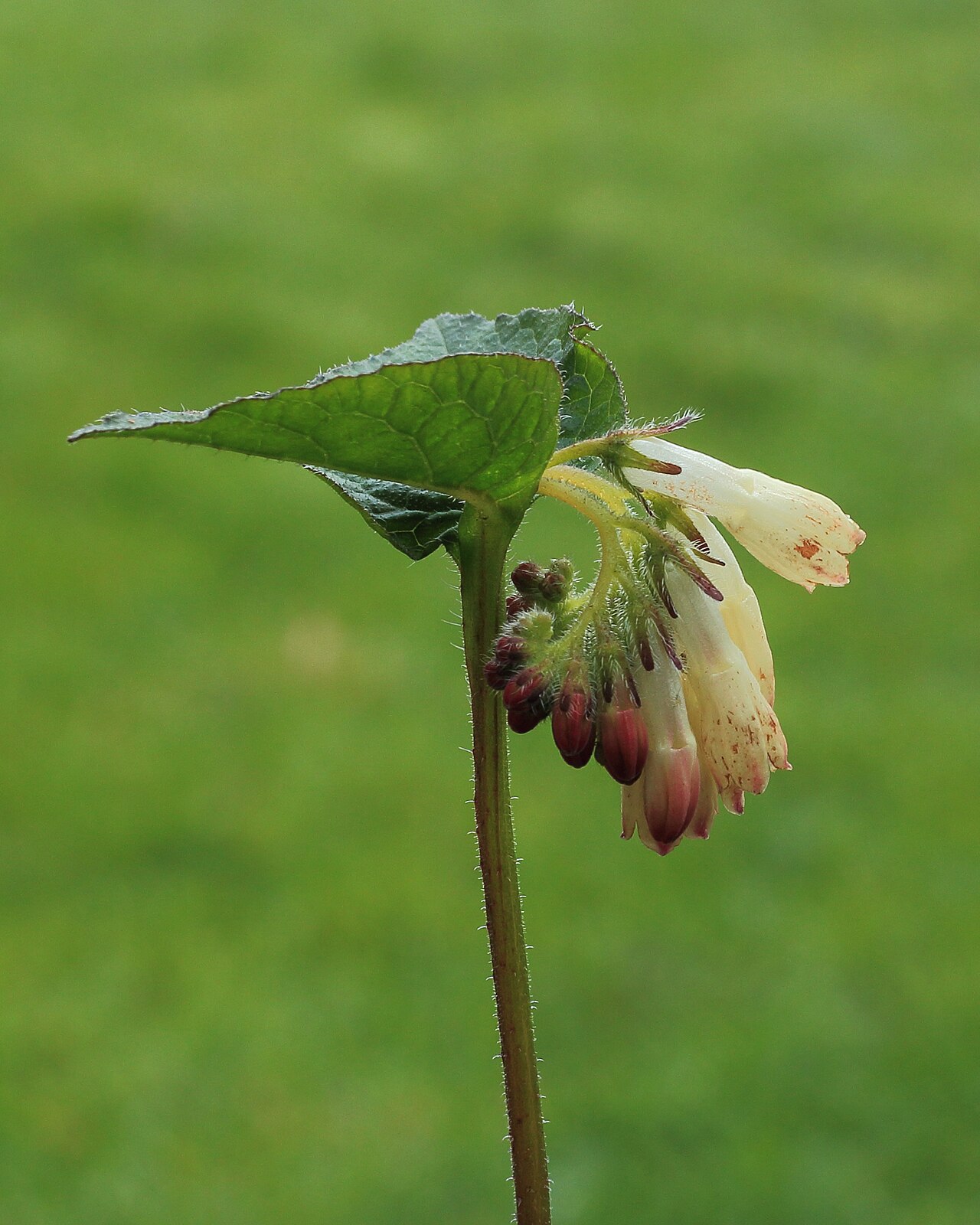
Comfrey is a large, fast-growing perennial with broad, slightly hairy leaves and bell-shaped purple, pink, or white flowers that bees adore. Plant it where it can stay for decades, because any scrap of root left in the ground regrows — this is a permanent resident, not a trial plant. Start from root cuttings (2-6 inch pieces planted horizontally 2-3 inches deep) or crown divisions in spring or fall; the sterile Russian comfrey hybrid (Symphytum × uplandicum) will not self-seed, while common comfrey seeds freely, so choose the hybrid if spread worries you. It loves deep, moist, fertile soil and full sun to part shade, and it mines nutrients from deep in the subsoil with roots that can reach several feet down. That is why gardeners plant it beside fruit trees and compost bins: cut leaves make superb mulch and compost activator.
Water & feeding
Water well while establishing and during dry spells — comfrey is a thirsty plant that wilts dramatically when dry, then bounces back. Feed the soil, not the plant: compost or manure dug in at planting keeps a comfrey patch productive for years, and the leaves themselves return nutrients when used as mulch. Cut leaves back to about 2-3 inches above the crown, never scalping the crown itself, and the plant regrows within weeks.
Common problems
- Spreading beyond its spot — plant the sterile hybrid, or sink a root barrier, and never rototill an old patch unless you want dozens of new ones.
- Slugs and snails on young leaves — they rarely kill an established plant; hand-pick at dusk or accept a few holes.
- Comfrey rust and powdery mildew — improve airflow, remove affected leaves, and cut the plant back hard; it regrows clean.
- Wilting in drought — deep water and mulch; established plants are far tougher than they look.
Harvest
Cut leaves from the second year onward, taking outer leaves and leaving the crown intact, up to 3-4 times a season. Use the leaves fresh as mulch around fruit trees and vegetables, or wilt and add them to the compost heap, where they break down fast and heat things up. Safety note, plainly: comfrey contains pyrrolizidine alkaloids that can harm the liver, so do not eat it or drink comfrey tea — grow it for the soil, the compost, and the bees, and leave internal use out of it entirely.
Propagation
Comfrey does not have one propagation story; it has two, and knowing which comfrey you own decides which story applies. Common comfrey, Symphytum officinale, sets fertile seed and spreads itself around with cheerful disregard for your plans. The sterile Russian comfrey hybrid, Symphytum crossed with uplandicum, sold most often as Bocking 14, sets no viable seed at all, which is precisely why it is the comfrey most gardeners are told to plant. If you bought root cuttings or a named sterile cultivar, you will never get seed from it, and looking for seed is a waste of a season. You propagate it the way it wants to be propagated: by root and crown.
Root cuttings are the workhorse method. In spring or autumn, dig up a strong, healthy, established plant and slice lateral roots into pieces a few inches long. Plant them horizontally, a couple of inches deep, with the growing points just below the surface, spaced a couple of feet apart in soil you have weeded well and enriched with compost. Crown divisions are faster: split the crown into sections, each with roots and at least one bud, and replant them the same way. Crown pieces usually show leaves within days to a couple of weeks, while plain root sections can take several weeks to push growth, because the root has to build a shoot from scratch before it shows you anything.
Here is the caution that comes with the method, and it is not optional reading. Every scrap of comfrey root left in the soil can regrow into a new plant. That is wonderful when you want more comfrey and maddening when you want less, and it means you should never toss comfrey roots on an open compost heap, rototill near a comfrey patch, or plant comfrey somewhere you might later change your mind about. Plant it where it can stay for decades, beside the compost bin or the fruit trees it will feed with its cut leaves, and treat every division session as a tidy operation: collect every fragment, replant what you want, and bin or hot-compost what you do not, rather than scattering it.
If you do own seeding common comfrey and you want seed anyway, the method is straightforward, if rarely necessary. Let a few flower stalks mature, collect the seed when it is ripe and dry, and sow it where you actually want comfrey, because it will volunteer elsewhere if given the chance. Most gardeners with the seeding type do the opposite: they cut flower heads off before seed sets, especially in the first year, so the plant puts its energy into roots and leaves instead of into colonizing the neighborhood. Either way, keep the plant in its place on purpose, because comfrey is a permanent resident that rewards a gardener who plans for permanence and punishes one who plants it as a passing experiment.
One last practical note. Do not expect a harvest from new comfrey in its first season; let it establish, then cut leaves from the second year onward, a few times a season once the plant is strong. A plant propagated from your own root cutting is genetically identical to its parent, which is the whole point: Bocking 14 stays Bocking 14, sterile and well-behaved, only because you cloned it instead of sowing it. Share root pieces with gardening friends the way comfrey gardeners always have, with the warning attached, and you will have given them a fertilizer factory that outlives most of the other plants in the garden.
Browse all plant & pest guides
Varieties
Every named variety of Comfrey with its own growing guide:
- Bocking 14 Comfrey — The garden comfrey: sterile, high-potassium, and seed-free — the fertility plant that stays where you plant it and feeds everything around it.
- Bocking 4 Comfrey — The deep-rooted comfrey: roots to 10 feet, drought-tough, and sterile — the fertility plant for dry ground where Bocking 14 would sulk.