
Saw Palmetto (Serenoa repens)

Quick Facts
- Type: palm
- Size: 4-8 ft tall, clumping
- Sun: full
- Water: low
- Soil: Well-drained sand; extremely drought tolerant
- USDA zones: 8-11
Saw-toothed fan palm whose spring flowers make legendary honey and feed everything.
Nearly indestructible statewide; the silver form is a stunning landscape accent.
In the Landscape
The backbone of naturalistic Florida landscapes: mass it as a groundcover, use it as a buffer screen, or feature the silvery-blue form as a specimen. Nothing says 'old Florida' like a saw palmetto thicket.
Care & Propagation
Plant in full sun in well-drained sand and give it room — clumps spread 4 to 10 feet. Water until established, then it needs nothing; it's extremely drought-tolerant and fire-adapted. Site away from walkways: the saw-toothed leaf stalks earn the name.
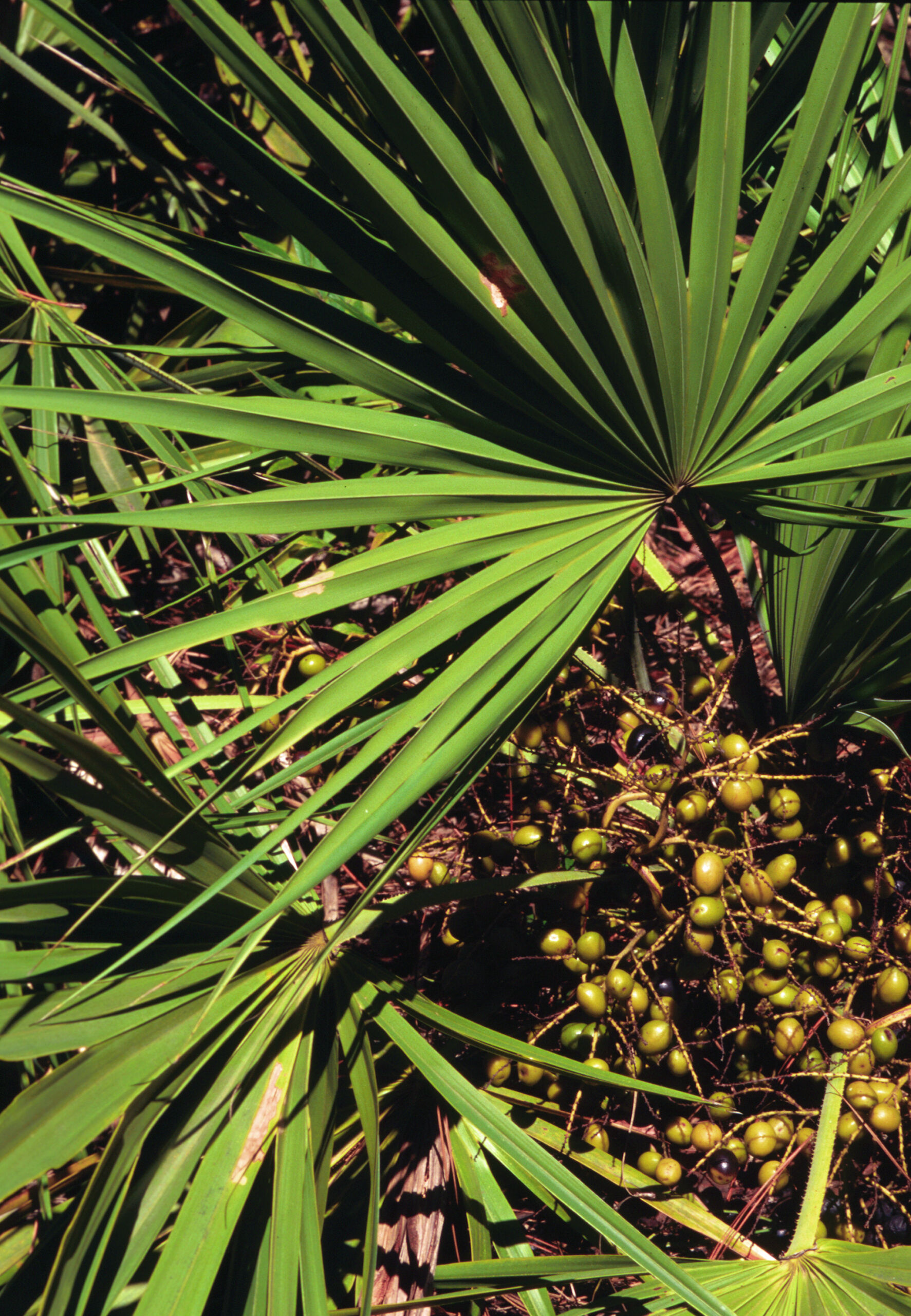
Propagate from seed — clean the pulp from ripe black fruits and sow; germination is slow and erratic, taking months. Buy nursery-grown plants rather than digging wild ones; established plants resent moving.
Wildlife Value
Spring flower stalks draw 300-plus insect species, and honeybees turn the nectar into prized saw palmetto honey. The blue-black fruits fatten black bears, raccoons, deer, wild turkeys, and gopher tortoises, while the dense clumps shelter panthers, nesting birds, and rodents.
🌱 Fun fact: Some saw palmetto clumps are estimated to be 500 to 700 years old — older than the state of Florida itself, spreading slowly outward from a single ancient seedling.
← Browse all Florida native plants
🌴 In Florida
Nearly indestructible statewide; the silver form is a stunning landscape accent.
🌿 Keep exploring
More Florida natives worth meeting:
🪱 Your Soil Needs This
Reading about healthy soil is great. Growing in it is better. Our small-batch, traceable worm castings are the shortcut your garden deserves.
Shop Worm Castings Subscribe & SaveEvery bag comes with a lot certificate. Know what's in your soil.