
Carolina Jessamine (Gelsemium sempervirens)
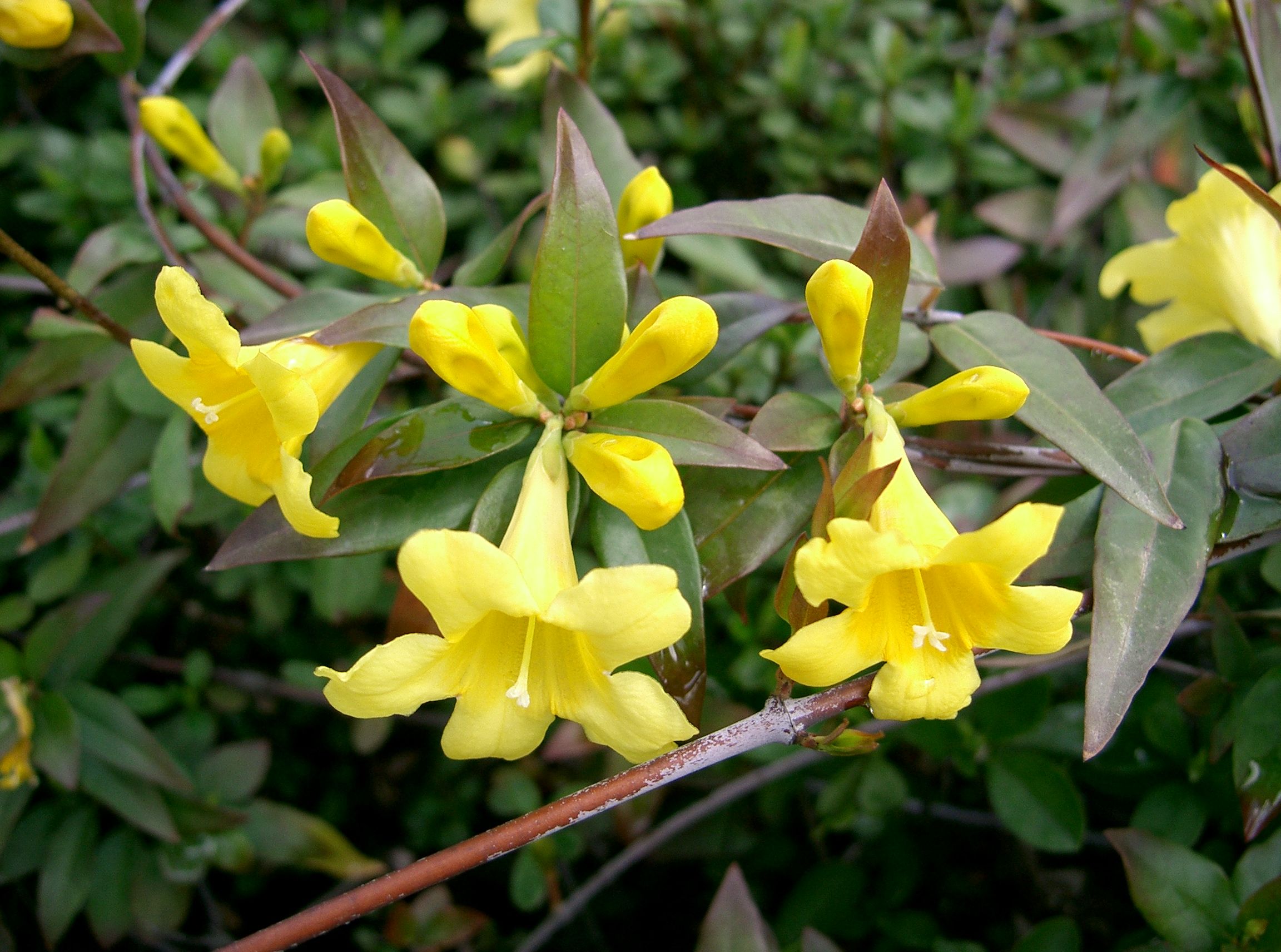

Also known as: Carolina yellow jessamine
Quick Facts
- Type: vine
- Size: to 20 ft long
- Sun: full
- Water: moderate
- Soil: Sandy to loamy soils
- USDA zones: 8-10
Sweetly fragrant yellow trumpets cover the evergreen vine in late winter, a promise that spring is coming.
All parts are poisonous if eaten, so site it away from curious pets and livestock; otherwise carefree.
In the Landscape
A fragrant evergreen vine for trellises, arbors, and fences where its late-winter yellow trumpets can be enjoyed up close. Keep it away from vegetable gardens and pet areas.
Care & Propagation
Plant in spring in full sun to part shade. Prune after flowering to shape. Important: all parts of this plant are toxic if eaten — enjoy the fragrance and flowers, and teach kids and pets to look, not taste.
Take semi-hardwood cuttings in summer or layer stems in spring. Nursery plants establish faster than seed-grown ones.
Wildlife Value
One of the earliest nectar sources of the year for bees and the first hummingbirds. Note the toxicity is a plant defense — pollinators handle the flowers fine, but mammals should not eat any part.
🌱 Fun fact: Carolina jessamine is South Carolina's state flower, but it grows wild across Florida too. Every part is poisonous, yet it has been used in traditional practices for centuries — a beautiful reminder that 'natural' and 'safe' are not synonyms.
← Browse all Florida native plants
🌴 In Florida
All parts are poisonous if eaten, so site it away from curious pets and livestock; otherwise carefree.
🌿 Keep exploring
More Florida natives worth meeting:
- American Wisteria (Wisteria frutescens)
- Atlantic Pigeonwings (Clitoria mariana)
- Beach Morning Glory (Ipomoea imperati)
🪱 Your Soil Needs This
Reading about healthy soil is great. Growing in it is better. Our small-batch, traceable worm castings are the shortcut your garden deserves.
Shop Worm Castings Subscribe & SaveEvery bag comes with a lot certificate. Know what's in your soil.