
🤍 Mock Orange
What it looks like
How to grow
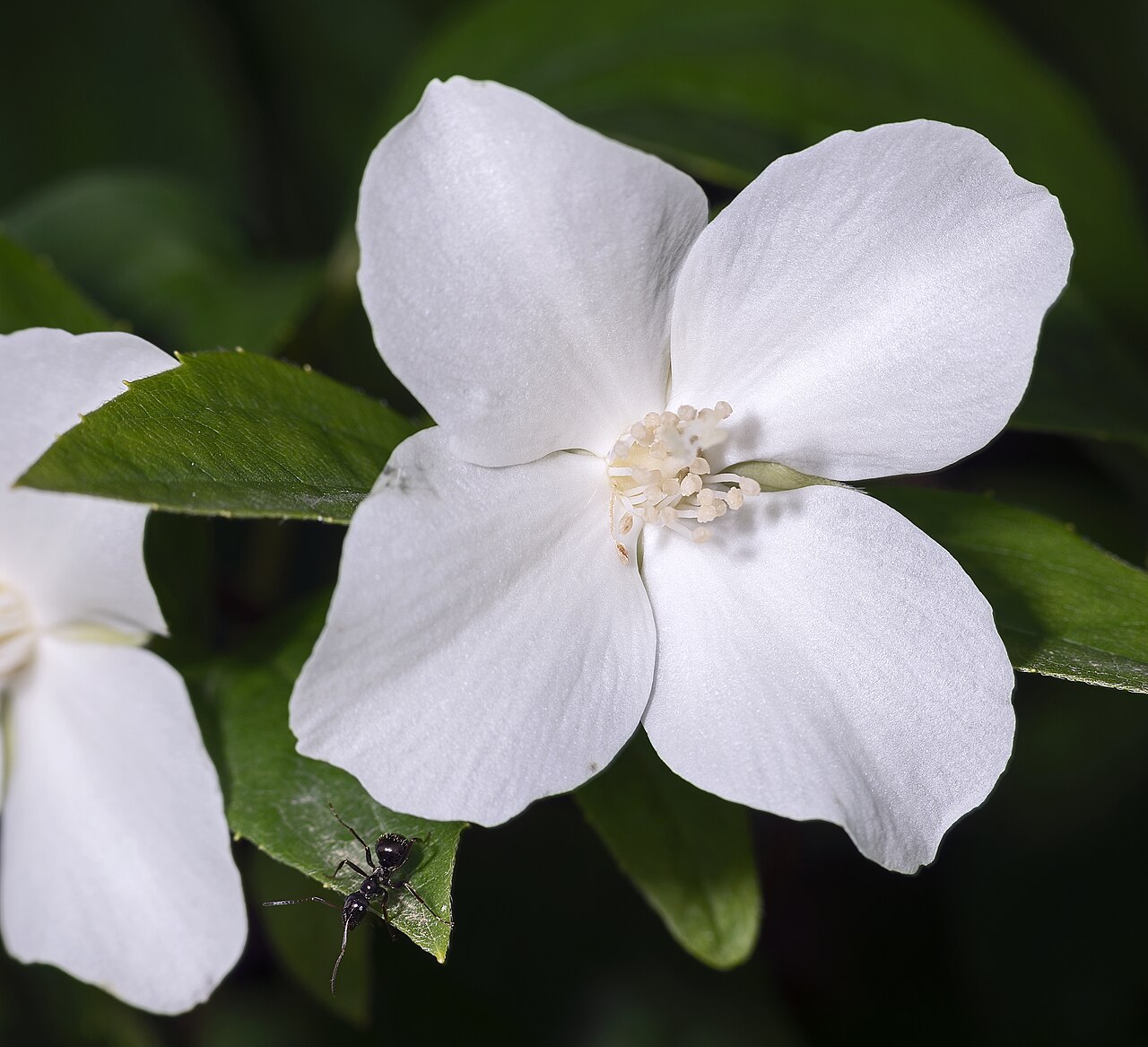
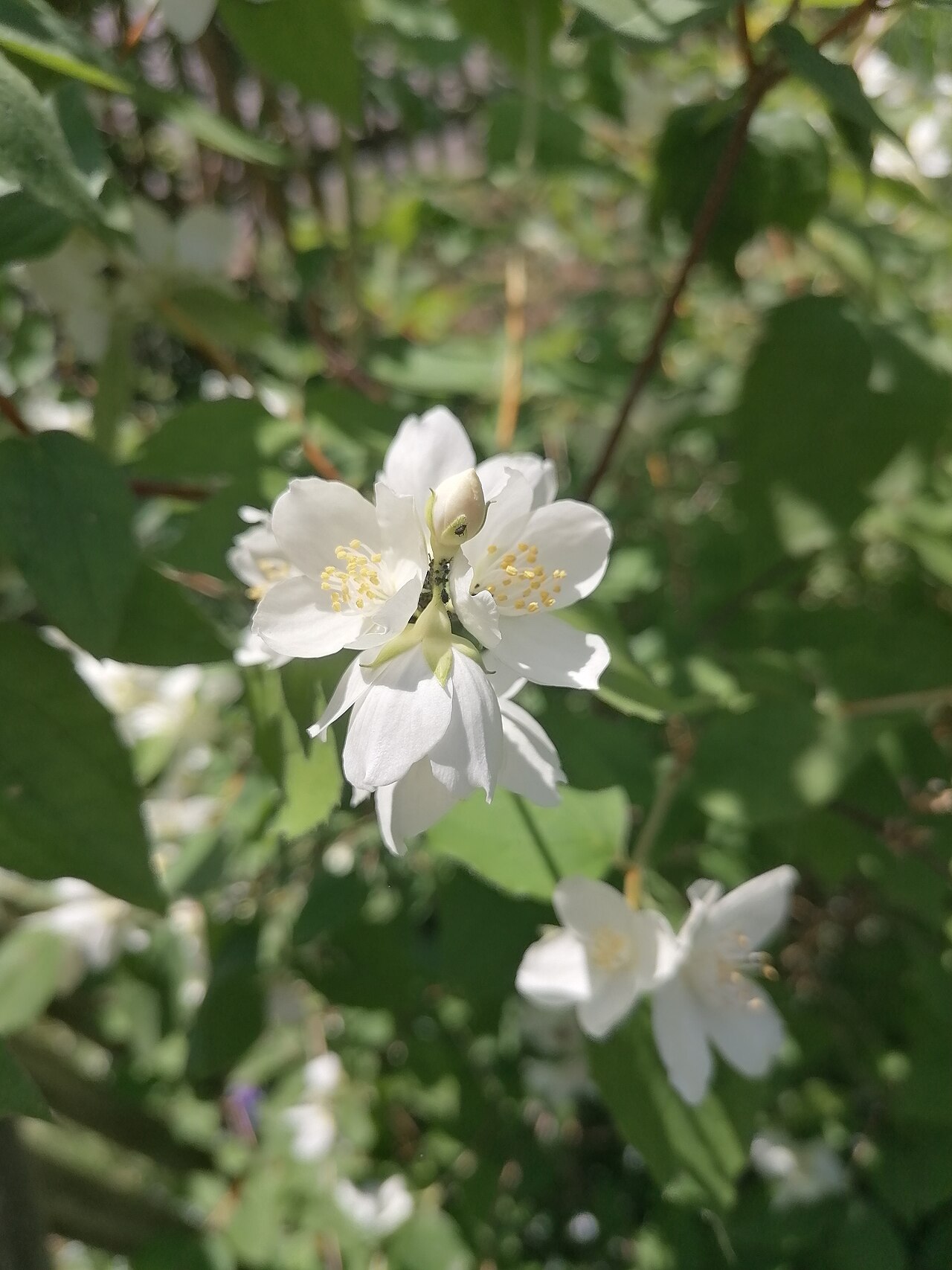
Plant in spring or fall in well-drained soil in sun to light shade — mock orange is grown for one glorious thing: intensely fragrant white flowers in late spring that perfume a whole yard. ‘Belle Etoile’ and ‘Virginal’ are classic fragrant cultivars; dwarf ‘Miniature Snowflake’ fits small gardens. It is a vigorous, arching shrub that looks best slightly wild, not sheared into a box. Give it room; a crowded mock orange blooms less and looks worse.
Water & feeding
Water to establish and during dry spells; mature plants are moderately drought-tolerant. Steady moisture in spring supports the best bloom.
Common problems
- Few serious pests — occasionally aphids on new growth
- Legginess and bare lower stems with age — renew oldest stems regularly
- Leaf spot in wet, crowded sites (usually cosmetic)
Harvest
Prune immediately after flowering — mock orange blooms on old wood, so summer or fall pruning removes next year’s flowers. Each year, cut a few of the oldest stems to the ground to keep it vigorous.
Browse all plant & pest guides
Saving seeds
Mock orange saves by seed, but the seed is the slow road and cuttings are the fast one — which is worth saying first. The flowers give way to small dry capsules, and the seed inside is tiny, almost dust. Collect the capsules when they turn brown and dry, crush them in a paper bag, and shake the fine seed out. It wants light to germinate, so sow it on the surface of moist mix and do not cover it at all.
A period of cold helps. Sow outdoors in fall and let winter do the work, or mix the seed with damp sand in a bag in the refrigerator for a month and sow in spring. Germination is slow and uneven — some sprout in a few weeks, some take a month or more — and the seedlings are small and unhurried for their first season. Grow them on in pots until they are sturdy enough to plant out, and do not expect flowers for a few years: a mock orange grown from seed is a patient gardener’s shrub.
Seedlings will not be identical to the parent if you grow a named cultivar, and cuttings are the cloning route for those — a softwood cutting in early summer roots readily, and a hardwood cutting in winter works too. But for the species itself, seed is the honest way, and the seedlings are vigorous once they get going.
Self-seeding is modest: a few volunteers near the parent in a moist bed, easy to pull or transplant while small. Stored dry, the seed keeps for a year or two. Florida humidity is the enemy of stored seed, so dry it thoroughly, jar it with a silica gel packet, and keep it cool and dark. The seed you save is next decade’s fragrant hedge, grown from a shrub that asked for almost nothing.
Varieties
Every named variety of Mock Orange with its own growing guide:
- Belle Etoile Mock Orange — The fragrant mock orange with a purple-blotched heart: white flowers with a maroon centre, smelling like an orange grove in June.