
🌼 Potentilla
What it looks like
How to grow
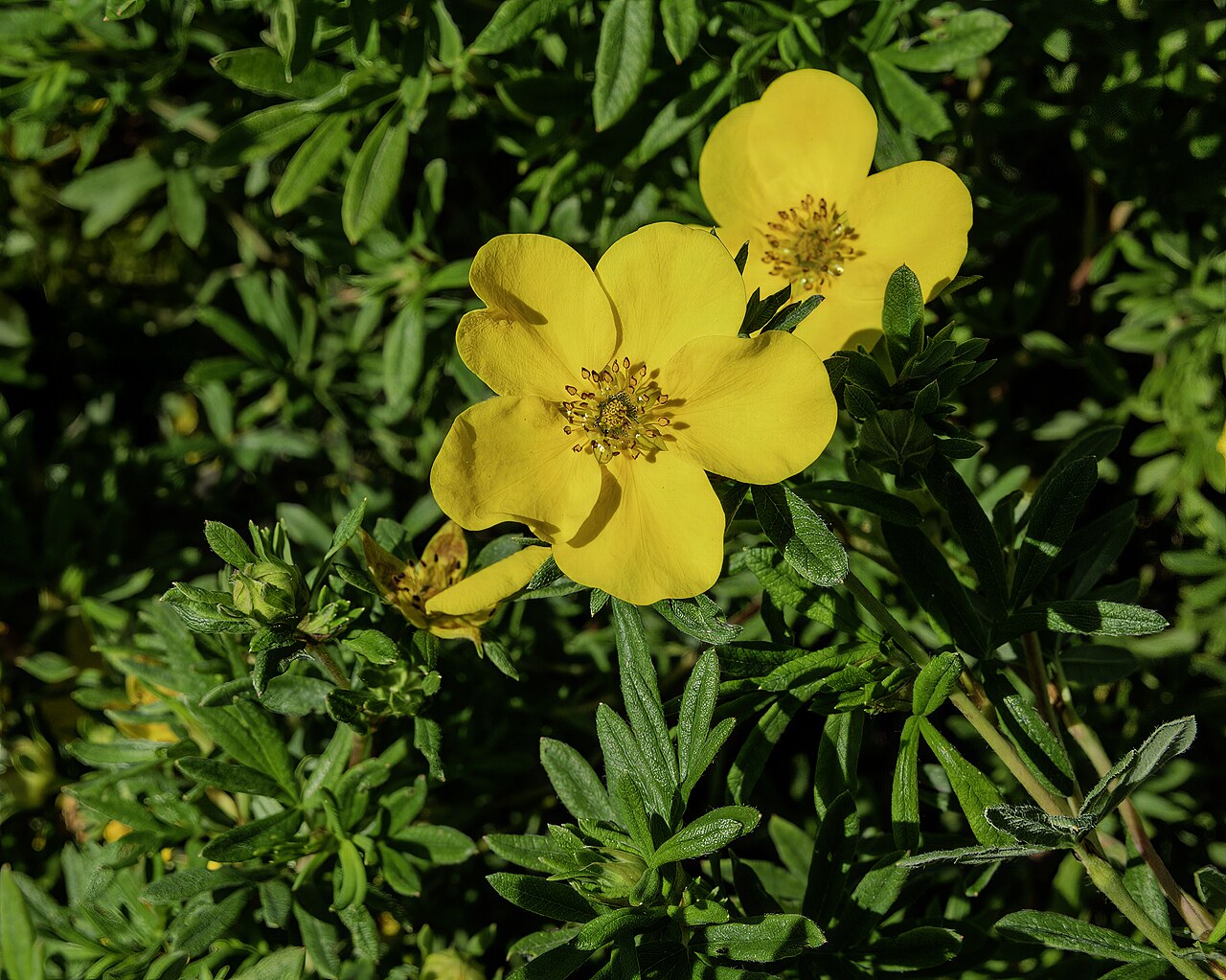
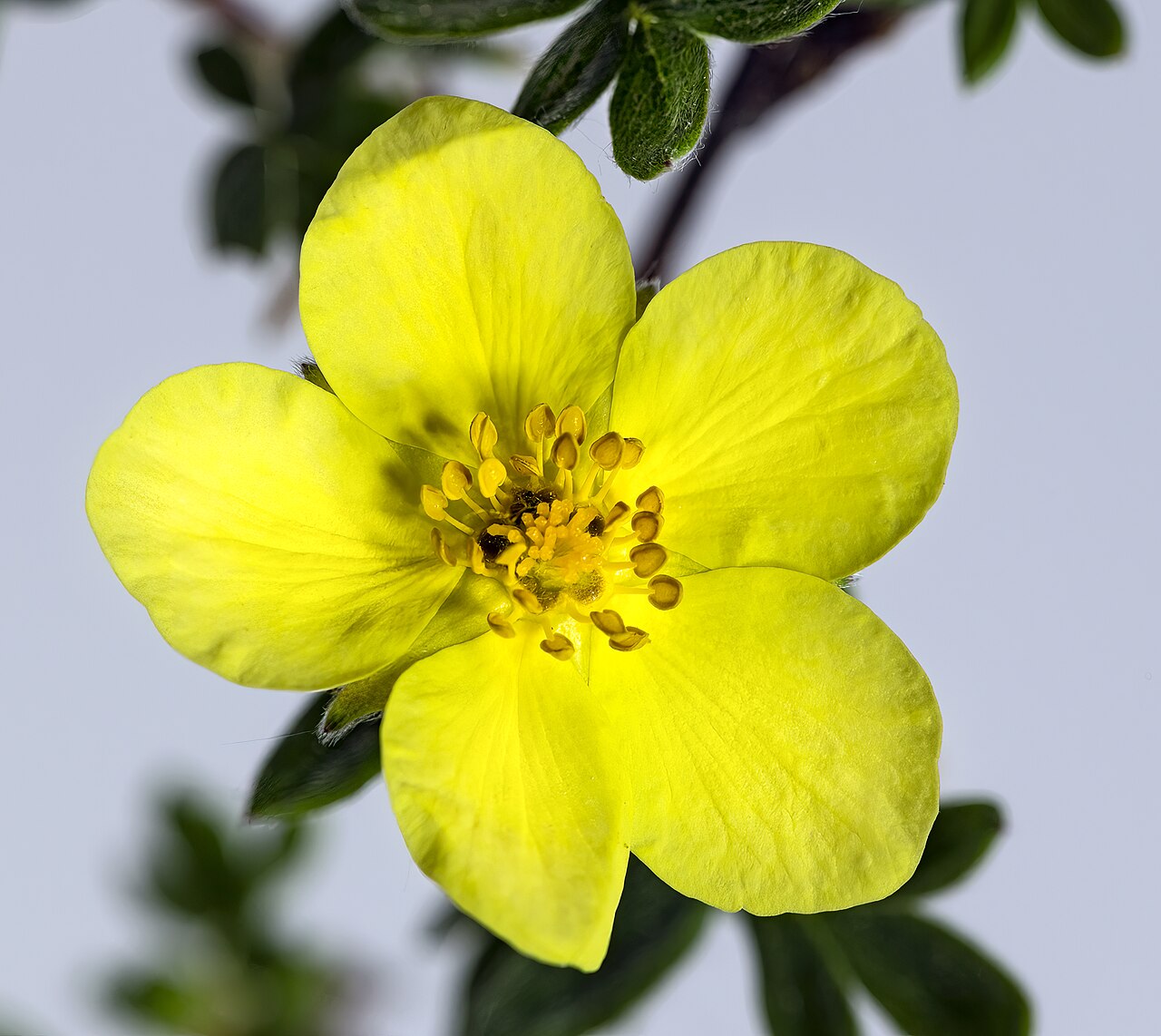
Potentilla, also sold as shrubby cinquefoil, is a tough little deciduous shrub with fine, dark green leaves and simple five-petalled flowers that look like small wild roses. Yellow is the classic color, but modern cultivars come in white, pink, orange, and red. It grows 2-4 feet tall and wide, blooms from late spring until frost, and asks for very little in return. Plant it in spring or fall in full sun and well-drained soil, setting the root ball level with the surrounding soil. It is a natural for low hedges, foundation beds, and slopes, and it pairs happily with grasses and late perennials. In hot climates, give it a little afternoon shade and expect flower colors, especially pink and red, to fade a bit in summer heat.
Water & feeding
Water deeply for the first growing season until the roots are established, then back off: potentilla is notably drought tolerant once settled and dislikes soggy soil more than dry soil. A spring mulch of compost or worm castings is plenty of feeding; heavy fertilizer pushes soft, leggy growth and fewer flowers. Do not overwater in clay soil — if water sits after rain, plant on a slight mound or amend with coarse organic matter for drainage.
Common problems
- Leggy, woody centers on old plants — cut back by about a third in early spring, or rejuvenate by cutting old stems to the ground.
- Fewer flowers — usually too much shade; move toward full sun.
- Root rot — almost always wet feet; improve drainage rather than reaching for a spray.
- Deer and rabbits — potentilla is generally left alone, which is part of its charm.
Harvest
There is no harvest to rush here: the reward is months of flowers. Deadhead lightly if you like a tidier look, but it is not required for rebloom. Prune in early spring before new growth, and take softwood cuttings in summer if you want more plants for free.
Browse all plant & pest guides
Saving seeds
This guide covers shrubby cinquefoil, Dasiphora fruticosa — the shrub that blooms like it is showing off, then shrugs off drought, deer, and neglect — and the seed rules are the genus rules with a cold-climate twist. Collect seed from the small, dry achenes that form after the yellow flowers fade, working over a paper bag — the seed is small and dark, and a single shrub makes plenty. Dry the seed fully before storing, and keep it in a paper envelope in a cool, dry place; it keeps for a couple of years, though fresh seed germinates best.
For the cold treatment, mix the seed with damp sand or vermiculite in a sealed bag and refrigerate at 35 to 40°F for 4 to 6 weeks. Fall sowing outdoors is the easy alternative: scatter the seed in autumn and let winter do the work, which is how cinquefoil reseeds itself in the wild. Sow on the surface or barely cover — the seed needs light, so press it into moist, well-draining mix and keep it evenly moist. Germination takes 2 to 3 weeks after stratification, in cool conditions, and it is uneven, so give the tray a full month before you give up on it.
The honest headline is that seedlings do not come true to type — named cultivars vary in flower color and habit, and a seedling from a favorite shrub will be its own plant. If you want an exact copy, take softwood cuttings in early summer or divide a mature clump instead. Seed is for the drift and the surprise, where a slightly different yellow is a bonus rather than a disappointment.
One Florida note, and it matters: shrubby cinquefoil is a cool-climate plant, hardy to zone 2, and it struggles in Florida heat. It wants cool summers, good drainage, and full sun, and in most of Florida it will decline once summer arrives. Growing it from seed here is a North Florida experiment, in the coolest, best-drained spot you have — not a reliable shrub. If you are in Central or South Florida, enjoy the knowledge and plant something else.
Varieties
Every named variety of Potentilla with its own growing guide:
- Abbotswood Potentilla — The white potentilla: masses of large, pure white flowers with yellow centers, the RHS Award-winning shrubby cinquefoil.
- Goldfinger Potentilla — The gold potentilla: bright yellow, buttercup-like flowers on a compact shrub, widely regarded as the best yellow potentilla.