
🤍 Fothergilla
What it looks like
How to grow
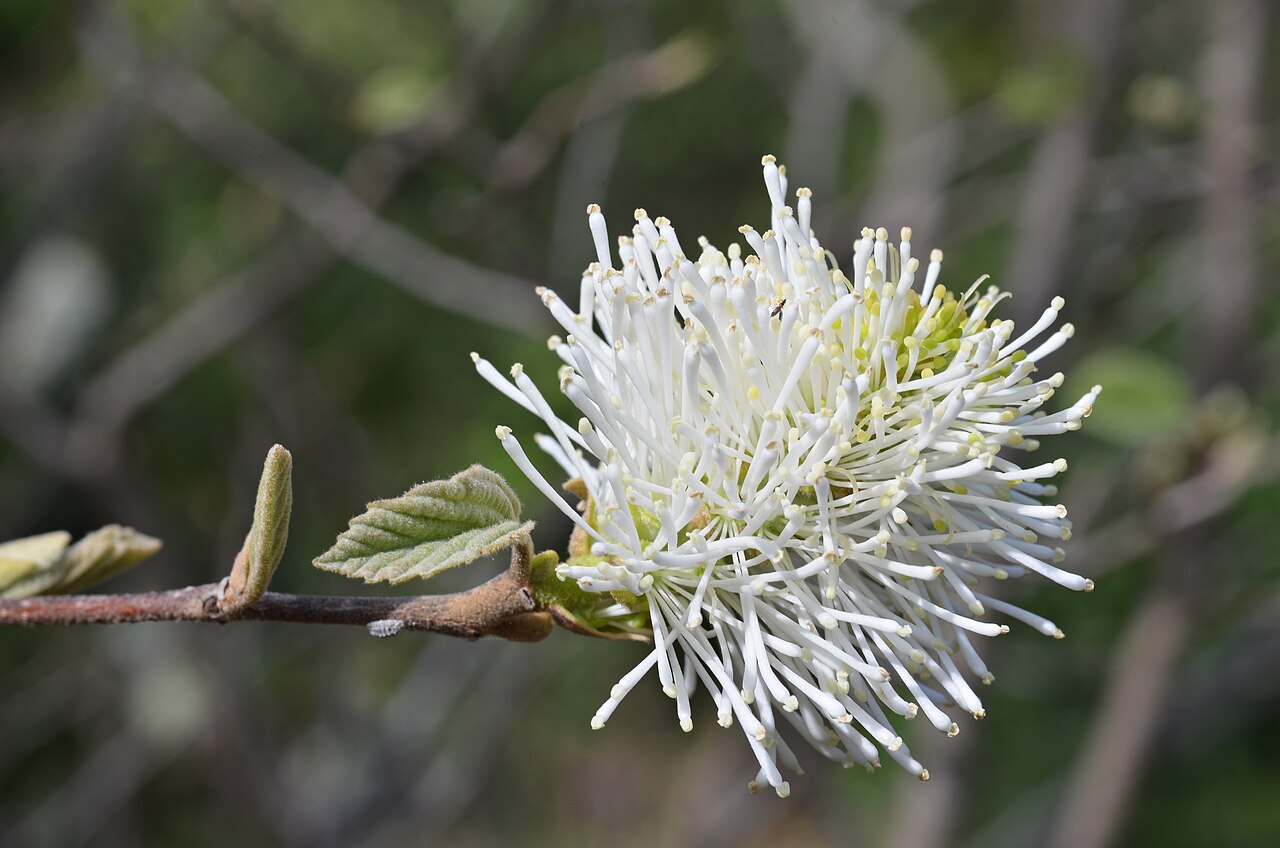
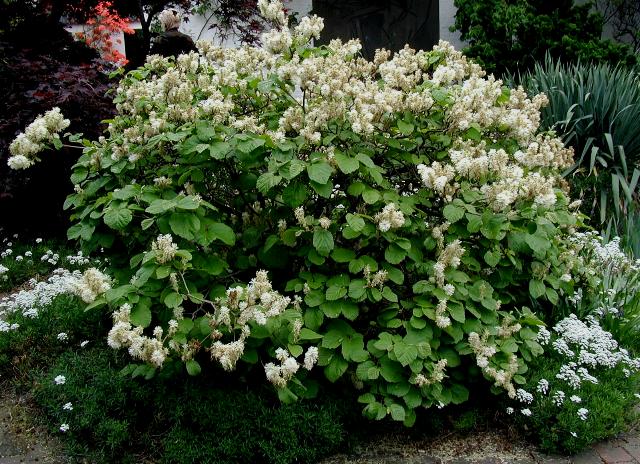
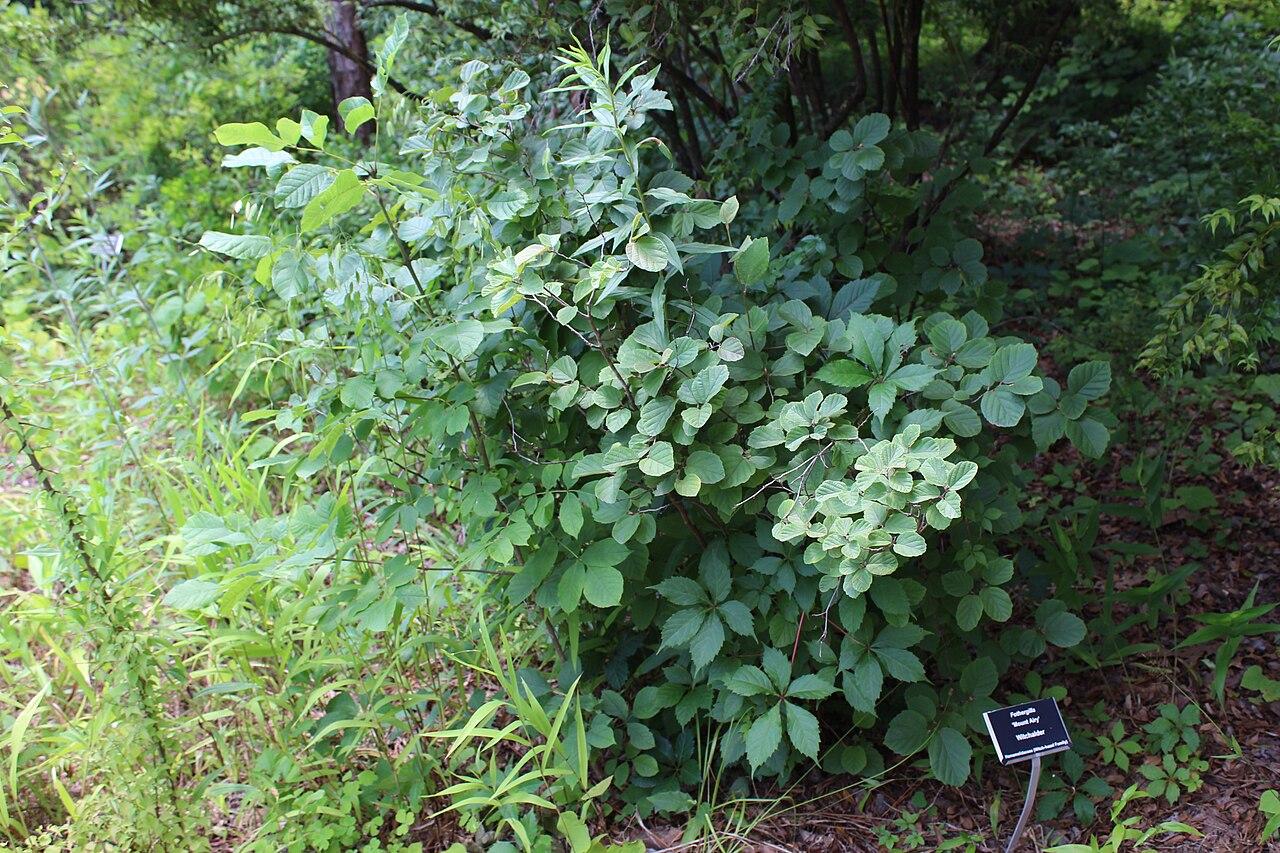
Fothergilla is a native deciduous shrub that quietly steals two seasons. In spring, before the leaves fully open, it produces fragrant white bottlebrush flowers that smell faintly of honey. In fall, the leaves turn a spectacular mix of yellow, orange, red, and purple — often all on the same plant. Dwarf fothergilla stays 2-3 feet tall; large fothergilla and the popular hybrid ‘Mt. Airy’ reach 4-10 feet. Plant in spring or fall in full sun to part shade — sun gives the best fall color — in moist, humus-rich, well-drained acidic soil. It is slow-growing, so buy the size you want rather than expecting it to hurry.
Water & feeding
Keep the soil evenly moist for the first couple of seasons; established plants tolerate some drought but color and flowering are better with consistent moisture. Mulch with pine needles or shredded leaves, which help keep the soil acidic as they break down. Feed lightly, if at all — compost in spring is plenty — and avoid lime, which pushes the pH up and can cause yellowing leaves.
Common problems
- Yellowing leaves — usually alkaline soil or iron chlorosis; check pH and mulch with acidic organic matter.
- Suckering colonies — remove unwanted suckers promptly if you want a single specimen, or let them fill in a natural hedge.
- Leaf spot — occasional and rarely serious; clean up fallen leaves in autumn.
- Slow growth — normal for this shrub; patience is the main care requirement.
Harvest
There is no crop to harvest, but the flowers are worth cutting a few stems for a vase in spring, and the fall foliage is a show in itself. Prune little and only to remove dead or crossing wood, ideally right after flowering, since fothergilla resents hard shearing.
Propagation
Fothergilla seed is a beautiful trap: the shrub makes it, flings it, and then dares you to grow it. This is a genus guide covering Fothergilla gardenii, F. major and their hybrid F. × intermedia, so the method below is genus-level, and the first thing it teaches is patience. Fothergilla fruits are two-valved capsules that ripen in autumn and then dehisce — split open — with enough spring to eject the seeds. If you wait until the capsules look brown and open, you are collecting an empty shell. The trick, used by woody-plant breeders, is to gather the capsules while they are still green, before any suture line shows, drop them into a closed paper bag or box, and wait for the popping sound as seeds ricochet off the sides. Clip the bag shut first, or your seed will decorate the room. The seeds themselves are brown to black, football-shaped, with a leathery coat — small, hard, and clearly not designed to make your life easy.
That hard coat is wrapped around a double dormancy. Sources disagree on the exact prescription — some give a simple month or two of cold stratification, others insist on a warm spell followed by cold, possibly repeated — and the honest summary is that fothergilla seed is slow and uneven by nature, with germination sometimes taking many months, and one guide putting the wait at nine to fifteen months. The reliable home method is to sow fresh seed in autumn in a pot or flat of acidic, well-drained mix and leave it outdoors through the seasons, letting natural warm and cold cycles do the unlocking, rather than trying to micromanage the fridge. Keep the mix moist but never soggy, give bright indirect light, and do not throw the flat away in spring just because nothing has appeared yet. Some seed will simply be on next year’s calendar.
Do not dry-store fothergilla seed on a shelf for months and expect gratitude. Keep it cool, clean and only briefly held, and stratify or sow promptly; long, dry storage is how recalcitrant, complex-dormancy seed loses vigour. And do not expect named cultivars or hybrids to come true from seed — where fruit sets at all, seedlings are new plants, not copies, and fruit on hybrid plants often aborts before maturity. To clone a favourite, take softwood cuttings in summer or lift a rooted sucker from a suckering type, keeping the parent’s genetics intact.
In Florida, add two cautions. First, this is a zones 5–8 shrub that wants acidic soil, so the seed project belongs mostly to north Florida gardeners with acidic beds; alkaline soil and heat are bigger enemies than your technique. Second, Florida humidity turns a closed stratification bag into a mould farm fast, so check weekly, keep the medium barely damp rather than wet, and give seed trays air. Slow growth is normal for this shrub — the guide says patience is the main care requirement, and that applies double to its seed.