
🍁 Large Fothergilla
Fothergilla major
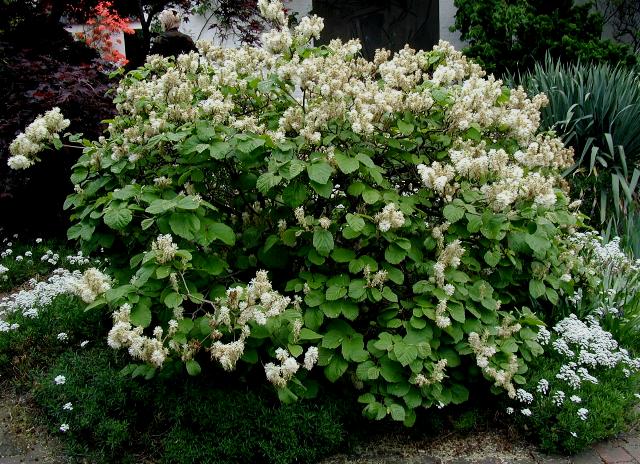
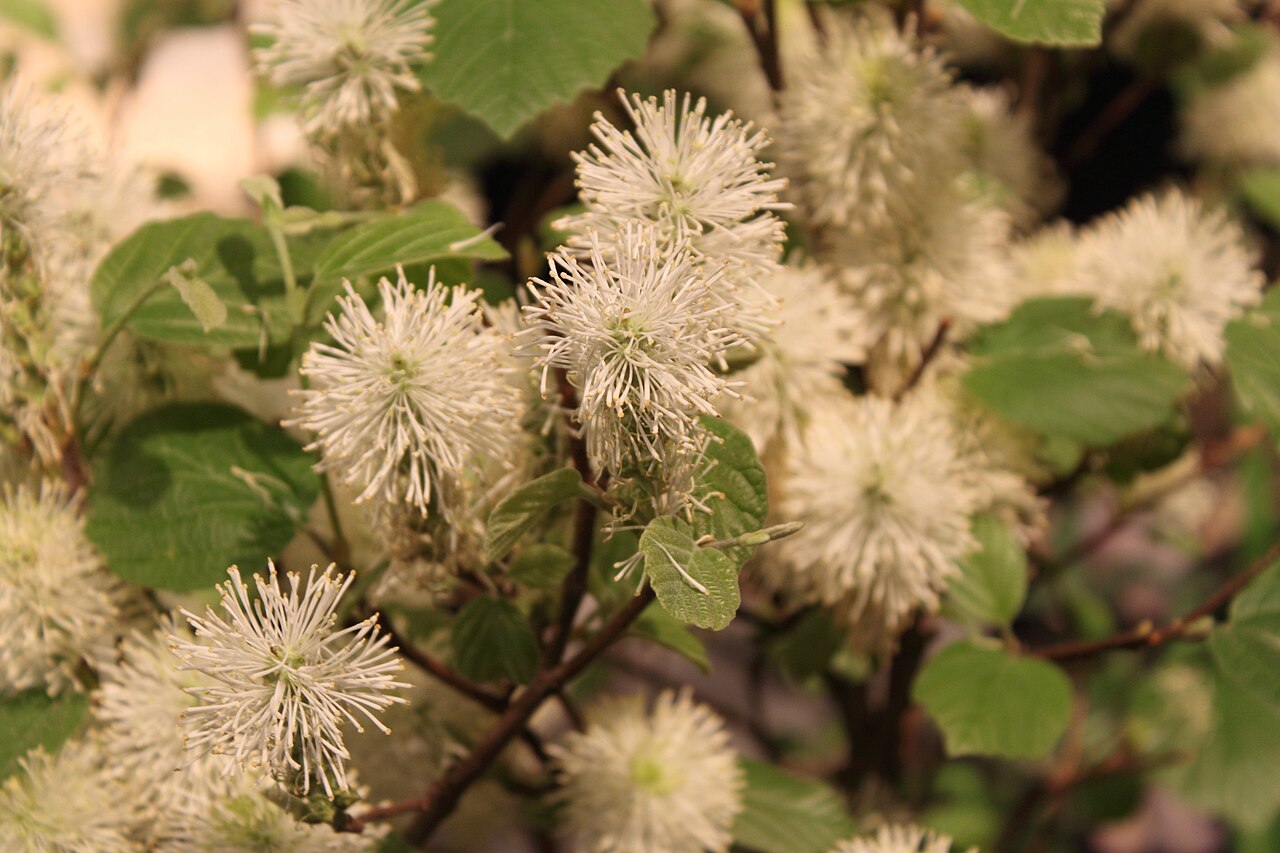
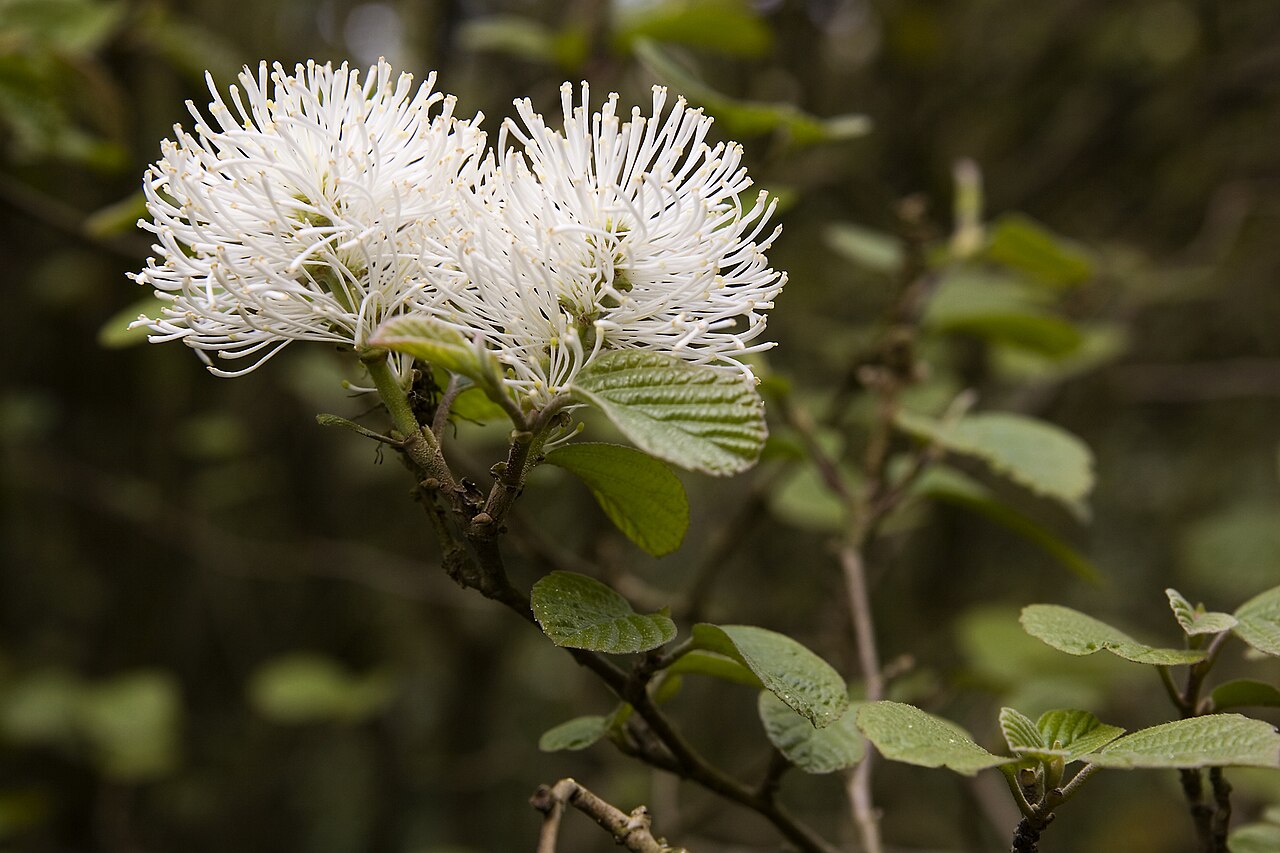
Large fothergilla is the shrub that does two seasons brilliantly and the other two perfectly well, which is more than most shrubs manage. In spring it covers itself in fragrant white bottlebrush flowers before the leaves even emerge, so the whole shrub looks dusted with snow. In fall it sets itself on fire in yellow, orange, and scarlet. In between it is a handsome, blue-green, rounded shrub that asks for almost nothing. It is one of the great native shrubs of the Southeast, and it is criminally underplanted.
Quick facts
- Sun: Full sun to part shade; best fall color in sun
- Soil: Moist, acidic, well-drained soil; tolerates a range of moisture once established
- Size: Roughly 6–10 feet tall and wide
- Life cycle: Deciduous shrub, slow-growing
- Bloom: Spring, fragrant white bottlebrush flower spikes, before the leaves
- Zones: USDA zones 5–8
- Native range: Southeastern United States, mountain woodlands and stream valleys
What it is
Large fothergilla (Fothergilla major), also called mountain witch-alder, is a deciduous shrub in the witch hazel family, Hamamelidaceae, native to the southeastern United States — the mountain woodlands and stream valleys of the Appalachians and nearby ranges. The genus is named for John Fothergill, an English physician and plant enthusiast, and the “witch-alder” name nods to its resemblance to witch hazel, its famous cousin. The flowers are the first act: upright, bottlebrush-like spikes of white stamens, honey-scented, appearing in spring before the leaves, so the shrub looks frosted. Then the leaves emerge — large, oval, dark green to blue-green, textured, handsome all summer — and in fall they turn every color a leaf can turn: yellow, orange, red, and purple, often all on the same plant at once.
It is a slow grower, which is a virtue in a shrub this size: it will not outgrow its spot in a season, and it holds a dense, rounded, multi-stemmed form without much help. At 6–10 feet it is a substantial shrub, best in a larger border or a woodland edge, not crammed against the house.
The Florida translation
Zones 5–8 reach into the northern part of the state, and large fothergilla’s native range in the Southeast makes it a closer fit here than many shrubs in this batch — but the fit still has limits. It wants acidic, moist, well-drained soil and a real winter, and it performs best where summers are moderate. In the northern part of the state, a part-shade spot with acidic, organic-rich, consistently moist soil is a genuine trial worth making, especially where the soil is naturally acidic. Farther south, heat and alkaline or droughty soils work against it, and the fall color — half the reason to plant it — will be weaker without a cool autumn. Test your soil pH before planting: fothergilla in alkaline soil is a chlorotic, unhappy shrub, and no amount of enthusiasm fixes pH.
How to grow it
Site. Full sun to part shade, with part shade preferred where summers are hot. Give it room — a 10-foot shrub needs a 10-foot spot — and site it where the spring bloom and fall color are both visible, because both are worth seeing.
Soil. Moist, acidic, well-drained soil is the recipe. Organic matter is essential: compost and leaf litter keep moisture even and feed the soil biology that makes nutrients available, and in sandy soils organic matter is what stands between the shrub and drought stress. If your soil is alkaline, amend honestly or pick a different shrub — fothergilla will tell you, in yellow leaves, that you should have listened.
Care. Water through dry spells, mulch to conserve moisture, and prune as little as possible — it has a naturally good shape, and it blooms on old wood, so prune right after flowering if you must prune at all. It is slow-growing, so patience is the main input. Fertilize lightly in spring if growth is poor; in good soil it needs little.
Trouble spots
Remarkably few. Large fothergilla has no serious pest or disease problems, is not a plant that runs or self-seeds aggressively, and is deer tolerant in most reports. Its faults are its size, its slow growth, and its soil preferences — all of which are really just the plant telling you what it needs. Give it acid soil, moisture, and room, and it will give you the best spring-and-fall double act of any native shrub in its size class.
For the whole fothergilla family — including the dwarf species and the hybrids — see the Fothergilla guide.
What it looks like
Saving seeds
Fair warning before you start: saving fothergilla seed is a test of patience, not skill. This shrub plays the long game. Its seeds are doubly dormant, which is a polite way of saying they refuse to wake up until they have had a long warm spell followed by a proper cold one. The Arnold Arboretum’s classic propagation notes put it at roughly twelve months of warm, damp stratification followed by about three months of cold before the seeds are ready to sow — and even then, germination takes a couple of weeks. The lazy gardener’s version is simpler: sow fresh seed outdoors in autumn and let nature run the calendar. Expect seedlings in the second spring, not the first. If nothing appears after one winter, do not dig the bed up in a fit of tidiness. The seeds are probably still in there, still counting.
Collecting the seed is the fiddly part. Fothergilla sets small two-seeded capsules after its spring bottlebrush flowers, and when they ripen they pop open and fling the seed away from the parent — a neat trick for the shrub, a nuisance for the seed saver. Watch the capsules from late summer onward and pick them just as they turn brown and dry, before they split. A small paper bag slipped over a ripening cluster and tied loosely at the stem catches the escapees if your timing is a day late. Dry the collected seed indoors for a week or two, then either sow it straight away or mix it with damp sand and peat in a bag for the long warm stratification.
One honesty rule: seed from the straight species will give you large fothergilla, but seed from a named cultivar such as ‘Mt. Airy’ will not give you ‘Mt. Airy’. Cultivars are clones, and seedlings scatter back toward the wild type. If you love a particular cultivar’s fall colour or compact habit, propagate it from softwood cuttings in early summer or by layering a low branch, and let seed saving be the route for the species itself — or for the pleasant surprise of a seedling that turns out to be something all its own.
Florida note: large fothergilla is a cool-climate native at heart, and it needs that winter chill to break seed dormancy, so it is a north Florida project at best, in acidic, well-drained soil with afternoon shade. In the warmer half of the state, enjoy it in other people’s gardens and spend your seed-saving energy on plants that actually want to live there.
Varieties
Every named variety of Large Fothergilla with its own growing guide:
- Arkansas Beauty Large Fothergilla — The true large fothergilla: a durable, dry-tolerant selection from an Arkansas population, about 6 feet, with the full red-to-yellow fall range.