
🌺 Oleander
What it looks like
How to grow
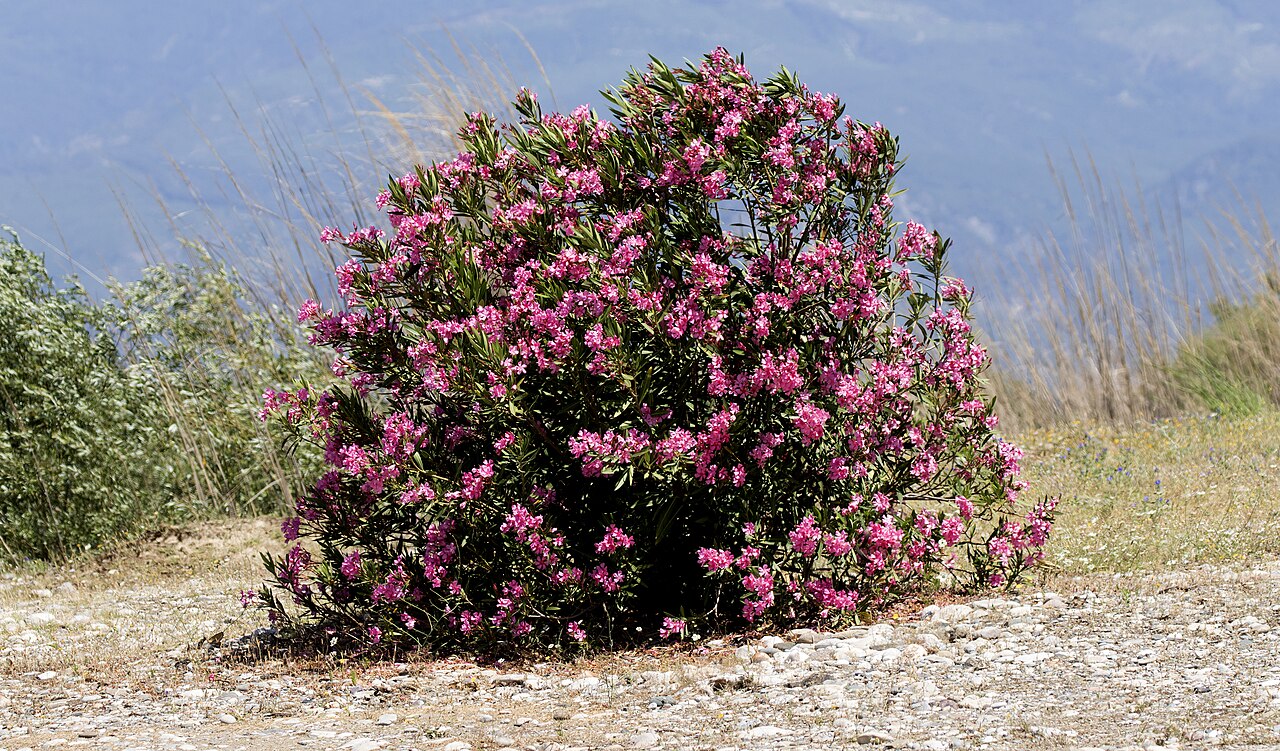
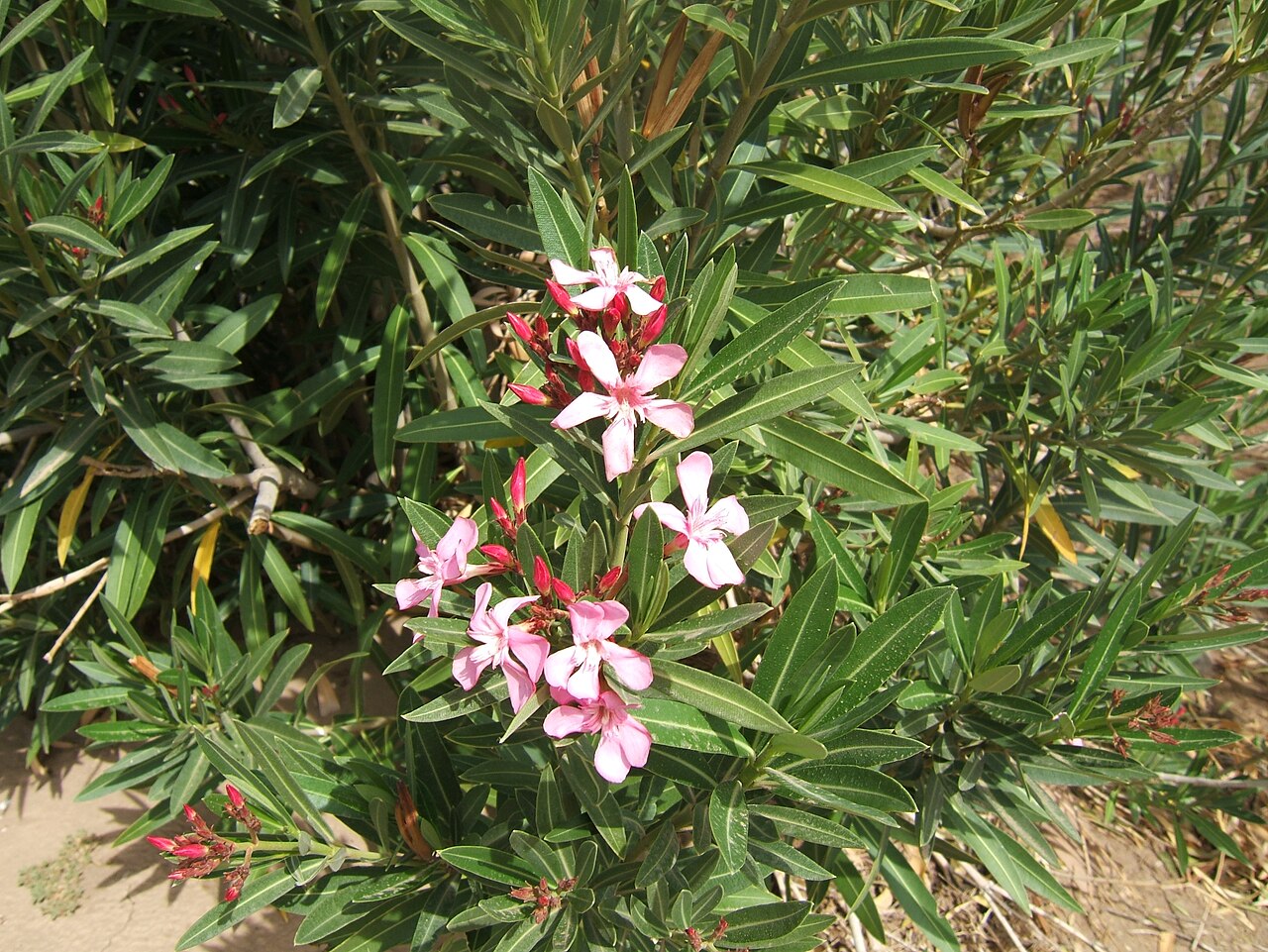
Oleander is a broadleaf evergreen shrub with long, leathery leaves and clusters of white, pink, red, or yellow flowers that bloom from late spring through fall in warm climates. Standard types reach 10-18 feet tall; dwarf cultivars like ‘Petite Pink’ stay 3-6 feet. It thrives where many shrubs fail: coastal salt spray, reflected heat, poor soil, and drought. Plant in spring after frost danger in full sun and well-drained soil, and give it room — oleander grows fast and a hedge planted too tight becomes a pruning chore. In zones below 8, grow it in a large container and overwinter indoors.
Water & feeding
Water deeply for the first season, then water only during extended dry spells; established oleander is highly drought tolerant, though regular water produces more flowers. Feed lightly in spring with a balanced fertilizer, or simply mulch with compost. Prune after flowering to shape, removing dead wood and thinning crowded stems — and always wear gloves, long sleeves, and eye protection when pruning, because the sap can irritate skin.
Common problems
- All parts poisonous — oleander is toxic to people, pets, and livestock if ingested; never plant it where children or grazing animals can chew it, never burn prunings, and never compost them.
- Oleander leaf scorch — a bacterial disease spread by insects; prune out affected branches well below symptoms and disinfect tools.
- Scale and aphids — wash off or treat with insecticidal soap; heavy infestations follow stressed plants.
- Cold damage — below about 15-20°F, foliage blackens; prune dead wood in spring and let it regrow from the base.
Harvest
Do not harvest oleander for any food, tea, or medicinal use — every part is poisonous, including the sap and smoke. The harvest is purely ornamental: long-lasting flowers, evergreen screening, and a shrub that laughs at heat and salt. Dispose of prunings in the trash, not the compost or burn pile.
Browse all plant & pest guides
Saving seeds
Before anything else: oleander is seriously poisonous. Every part of the plant — leaves, flowers, stems, roots, and seed — contains oleandrin, a cardiac glycoside that can kill a person or a pet. Do not let children handle the seed unsupervised, do not compost oleander prunings where animals might eat them, and never burn oleander — the smoke is toxic too. Wash your hands after handling any part of the plant, and wear gloves when you harvest seed. This is a plant to grow with respect, and the respect starts with the seed.
With that said, oleander seed is easy to save. The long, slender pods ripen in fall, split open along one side, and release fluffy, tufted seed on the wind. Slip a small cloth bag over the ripening pods to catch the seed before it blows away, or check the plant daily as the pods begin to split. The seed is light and feathery, so work indoors out of the wind.
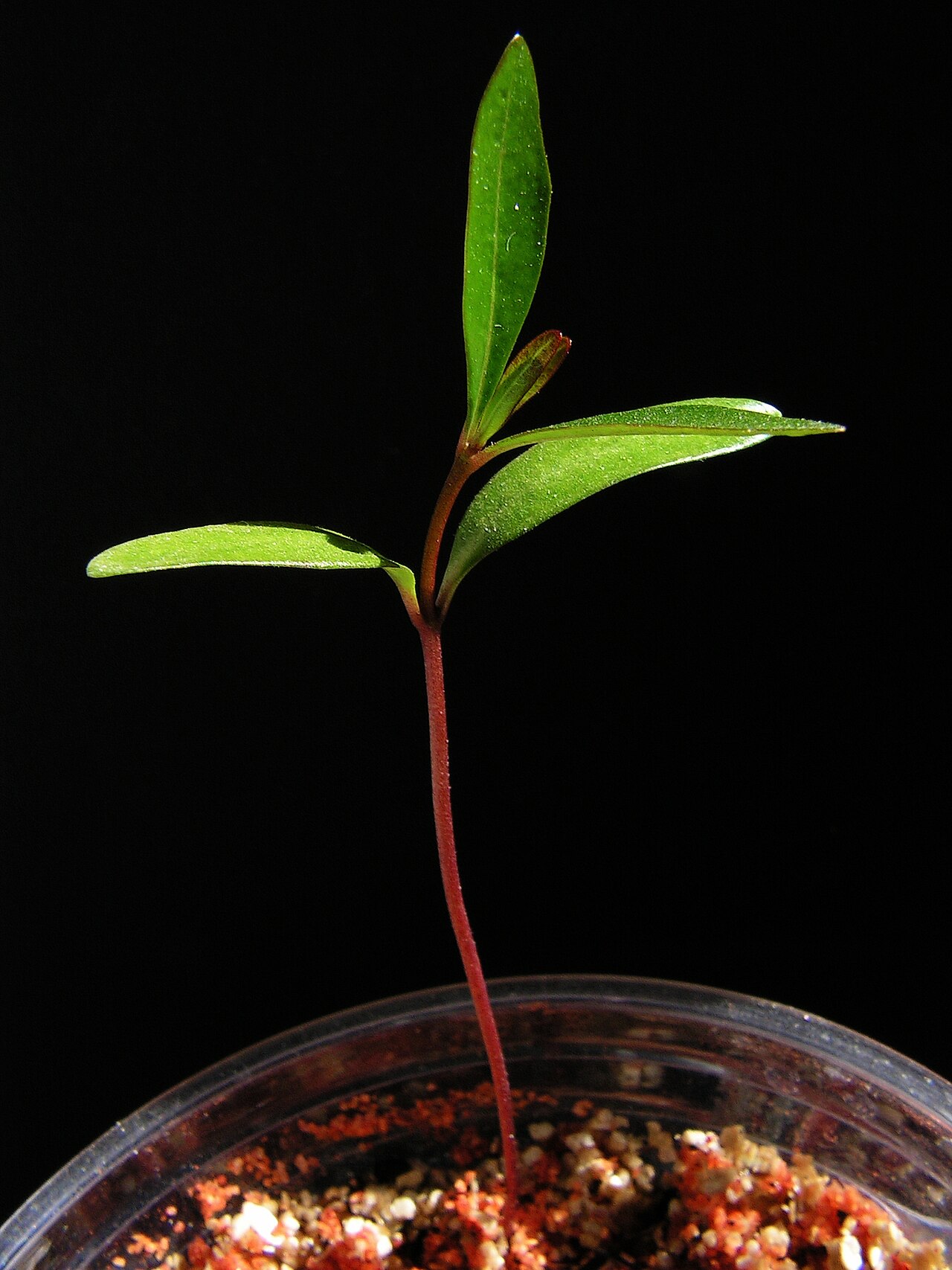
Sow the seed fresh — it loses viability quickly in storage — on the surface of a moist, well-draining mix, barely covered, and keep it warm and bright. Germination usually comes within one to two weeks at warm temperatures, and the seedlings grow fast. Grow them on in pots until they are sturdy, then plant them out in full sun.
The honest headline is the usual one for a shrub with named cultivars: seed-grown oleander will not match its parent. The single and double flowers, the dwarf habits, the particular pinks and reds — none of those come true from seed, so cuttings are the route for an exact clone. Seed is for the adventure, and for the gardener who wants a tough, drought-proof hedge and does not mind surprises. Save seed from a healthy plant, label the jar clearly with the warning, and keep it dry and cool — Florida humidity is the enemy of stored seed, and a labeled jar is a safe jar.
Varieties
Every named variety of Oleander with its own growing guide:
- Petite Pink Oleander — The dwarf pink oleander: soft pink flowers from late spring through fall, salt-tolerant, drought-proof — and poisonous, so plant with respect.
- Hardy Pink Oleander — The hardier pink oleander: soft pink flowers on a big, tough shrub that takes more cold than most oleanders dare.