
💜 Russian Sage
What it looks like
How to grow
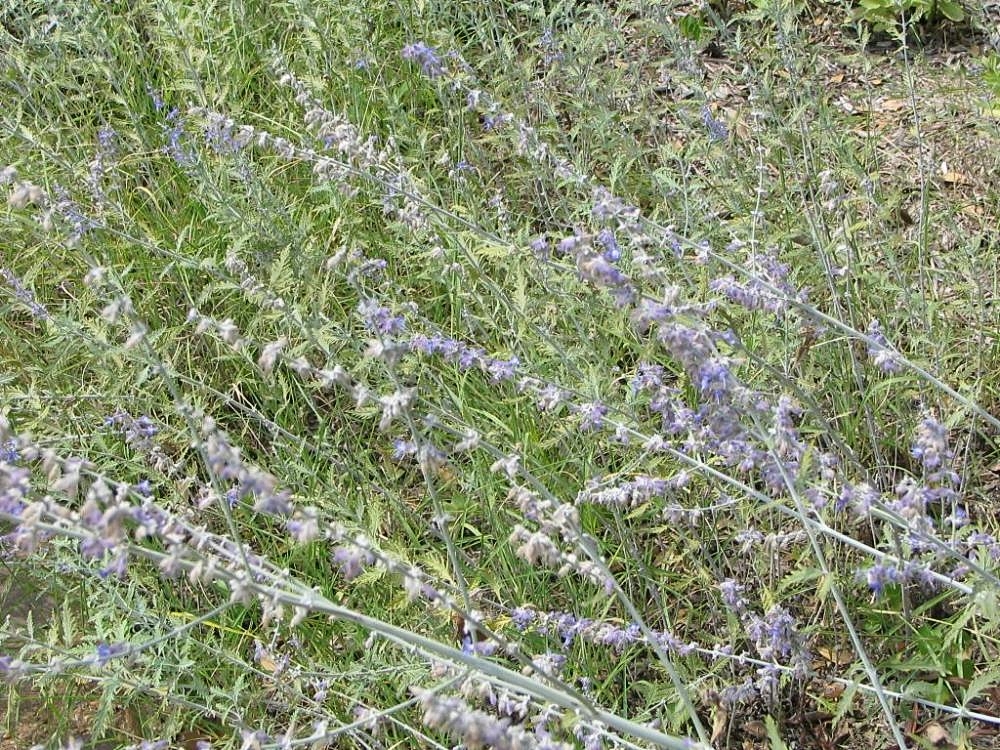
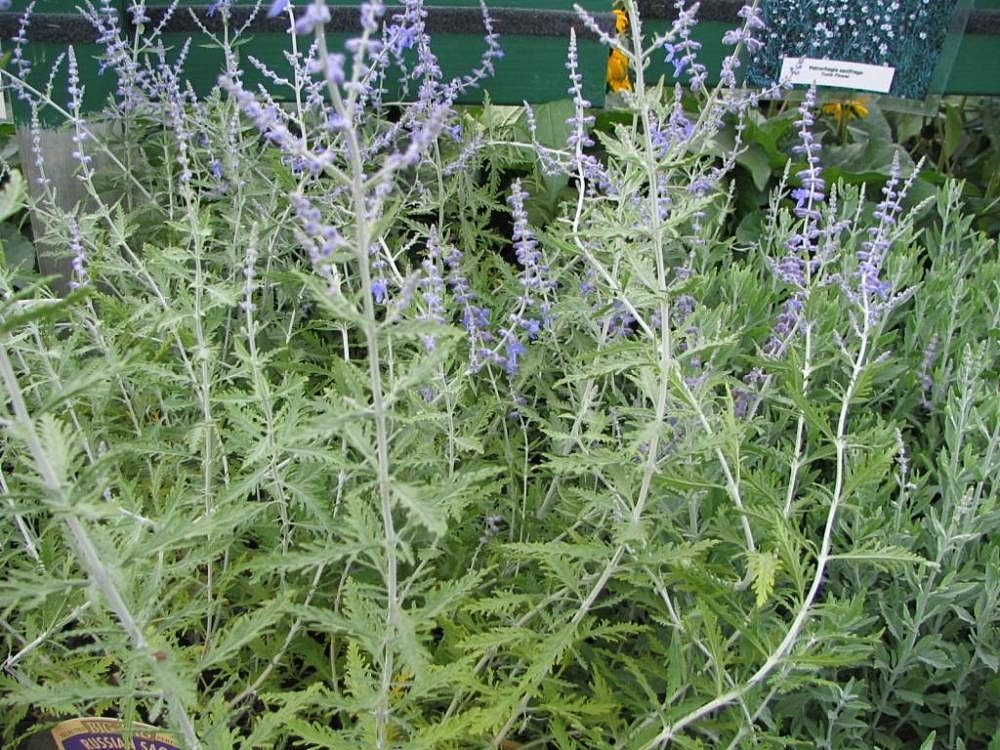
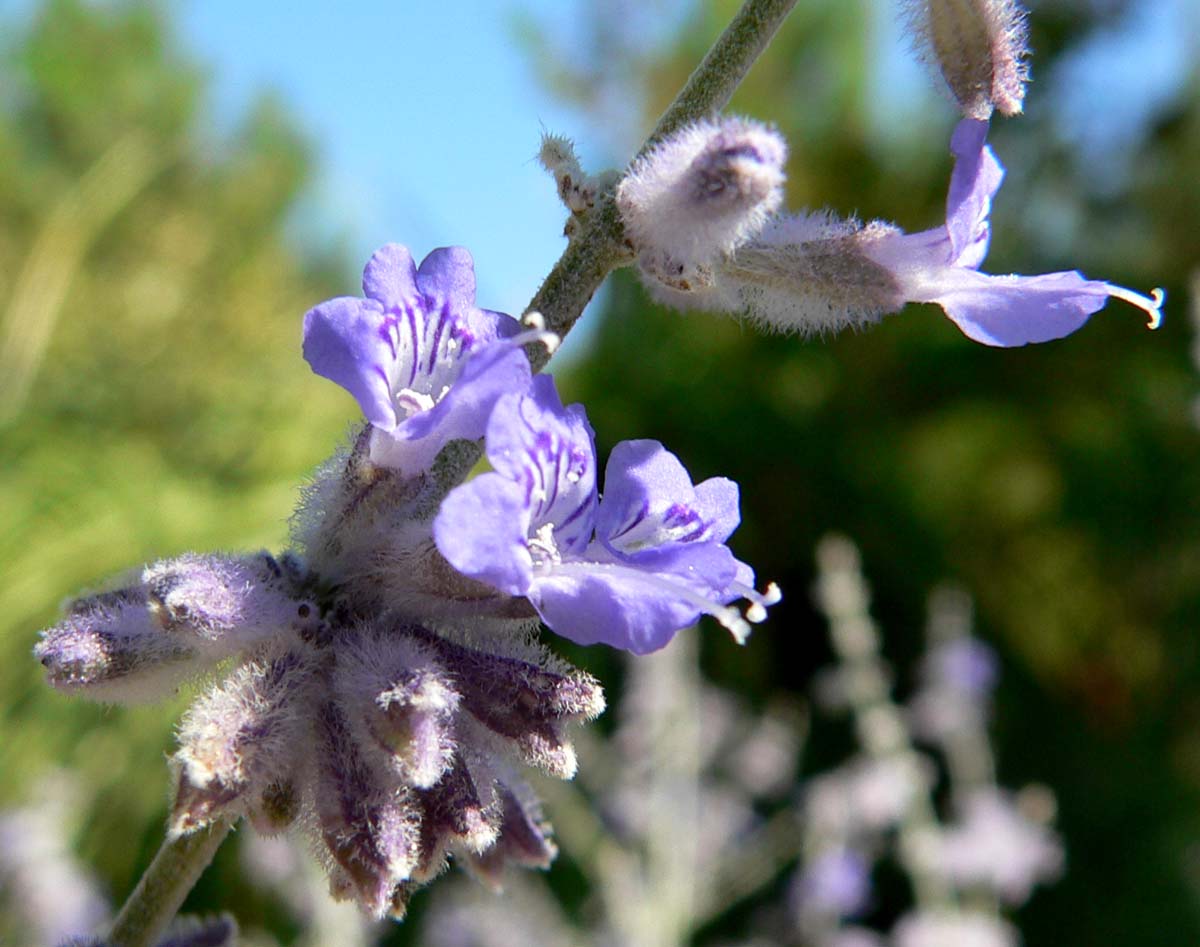
Russian sage is a woody perennial (now botanically a Salvia, though nurseries still sell it as Perovskia) that grows 3–4 feet tall with silver-white stems, finely cut silvery leaves, and long airy spires of lavender-blue flowers from mid-summer into fall. It is the plant for the hot, dry, poor-soil spot where lavender sulks and roses give up: give it full sun and excellent drainage, and it will take heat, drought, and neglect in stride. Plant in spring or early fall, and do not crowd it — mature plants spread 3–4 feet. Newer compact cultivars stay shorter and flop less, which is worth knowing if your space is small.
Water & feeding
Water regularly until established, then water sparingly — Russian sage is very drought-tolerant and wet soil, especially in winter, is its main enemy. Do not fertilize heavily; a light spring compost layer is plenty, and rich soil plus fertilizer makes tall, floppy growth. In cold zones, leave stems standing over winter for protection and cut back in spring.
Common problems
- Flopping — too much shade, water, or fertilizer; give full sun, lean soil, and a spring cut-back.
- Winter dieback in cold zones — normal; cut to just above the lowest live buds in spring.
- Root rot in wet soil — the number one killer; plant high and drain well.
- Woody, bare base — cut back hard each spring to renew from the base.
Notes
In spring, once new growth appears, cut last year’s stems back to 6–12 inches — this is the single most important job, and skipping it gives you a woody tangle. Deadhead lightly if you want to limit self-seeding, or leave flowers for bees, butterflies, and hummingbirds, which visit in droves. Take softwood cuttings in summer to make more.
Browse all plant & pest guides
Saving seeds
Russian sage seed is easy to save and almost never the way a gardener should multiply Russian sage — and both of those things are worth saying. Let a few flower spikes stay on the plant instead of cutting them back: after the lavender-blue flowers fade, tiny seed capsules form along the stems, and when they turn brown and dry, snip the spikes into a paper bag and let them finish drying indoors. Rub the spikes gently to free the small seeds, winnow away the chaff, and store the seed in a paper envelope in a cool, dry place. Russian sage seed keeps for a few years when it is dry.
Sow in fall, or stratify in the fridge for a few weeks and sow in spring. Russian sage seed germinates best cool — around 60 to 70°F — so sow on the surface of a well-draining mix and press the seed in lightly. Do not bury it: the seed needs light to germinate. Keep it moist and cool, and expect sprouts in two to four weeks. Seedlings grow slowly at first and need steady moisture without ever sitting wet, and they want sharp drainage from the start — a Russian sage seedling in soggy soil is a dead seedling.
The honesty part is the same one that applies to most named perennials: seedlings do not come true. Named selections are propagated by cuttings or division for a reason, and a seedling may grow taller, lankier, or paler than the parent. Cuttings are the practical route: take a softwood cutting in warm weather, strip the lower leaves, stick it in moist mix, and you get a true copy of the plant you loved. Seed is for the experiment and for the gardener with a spare corner and no hurry.
Save seed from a healthy plant with the silvery stems and lavender-blue haze that make Russian sage worth growing, and sow more than you need. In Florida, Russian sage grows well with sun and sharp drainage — it laughs at heat, drought, and poor soil — so start seedlings in pots with a gritty mix and plant them out once they are sturdy. And dry your seed thoroughly before storing it, because our humidity is the enemy of stored seed.
Varieties
Every named variety of Russian Sage with its own growing guide:
- Blue Spire Russian Sage — The classic Russian sage: tall, airy lavender-blue spires over silver stems — the original, still the standard.
- Lacey Blue Russian Sage — The refined Russian sage: deeply cut foliage and vivid blue flowers on a compact, upright plant.
- Little Spire Russian Sage — The compact Russian sage: the same lavender-blue haze at half the height, for small borders and containers.