
🌿 Maidenhair Fern
What it looks like
How to grow
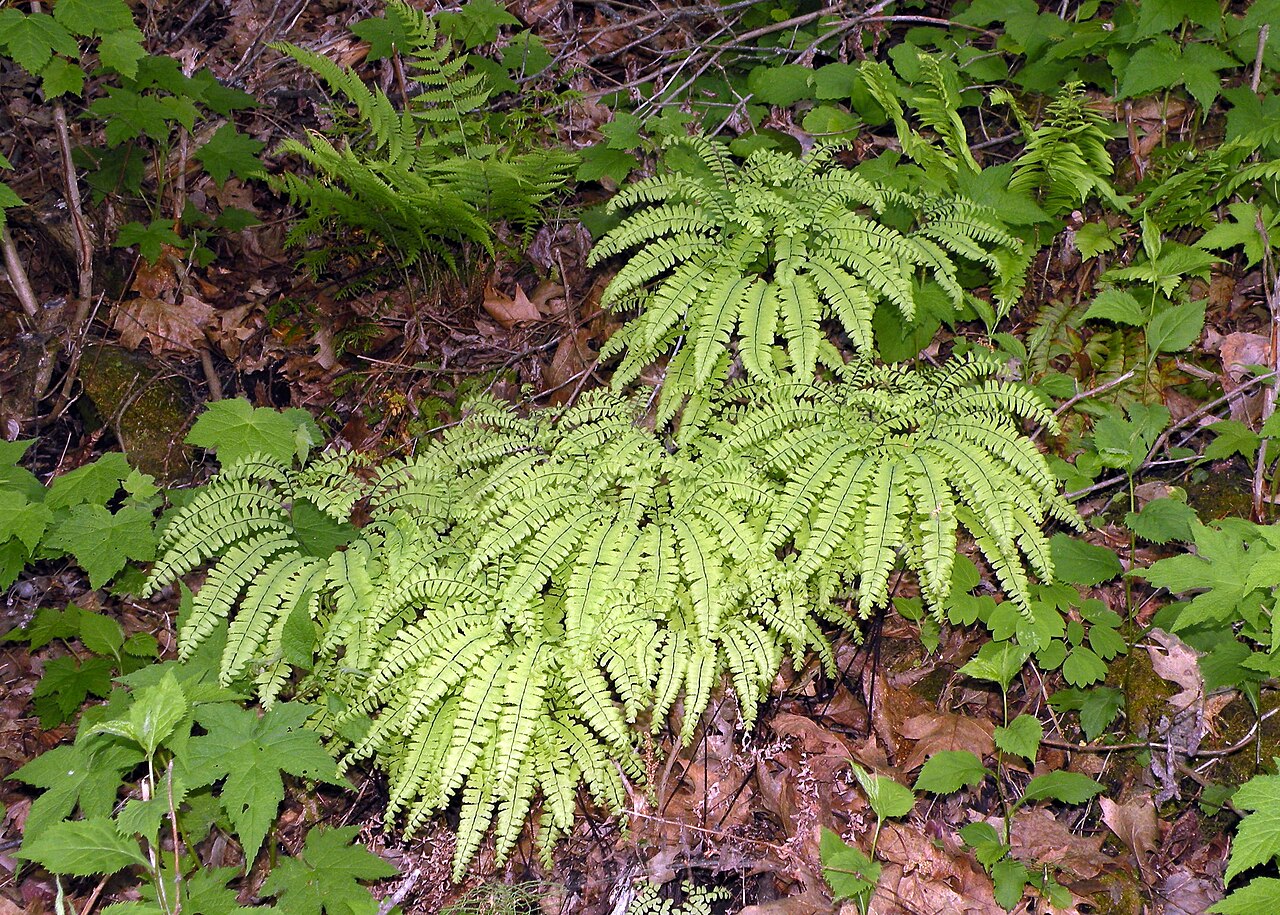
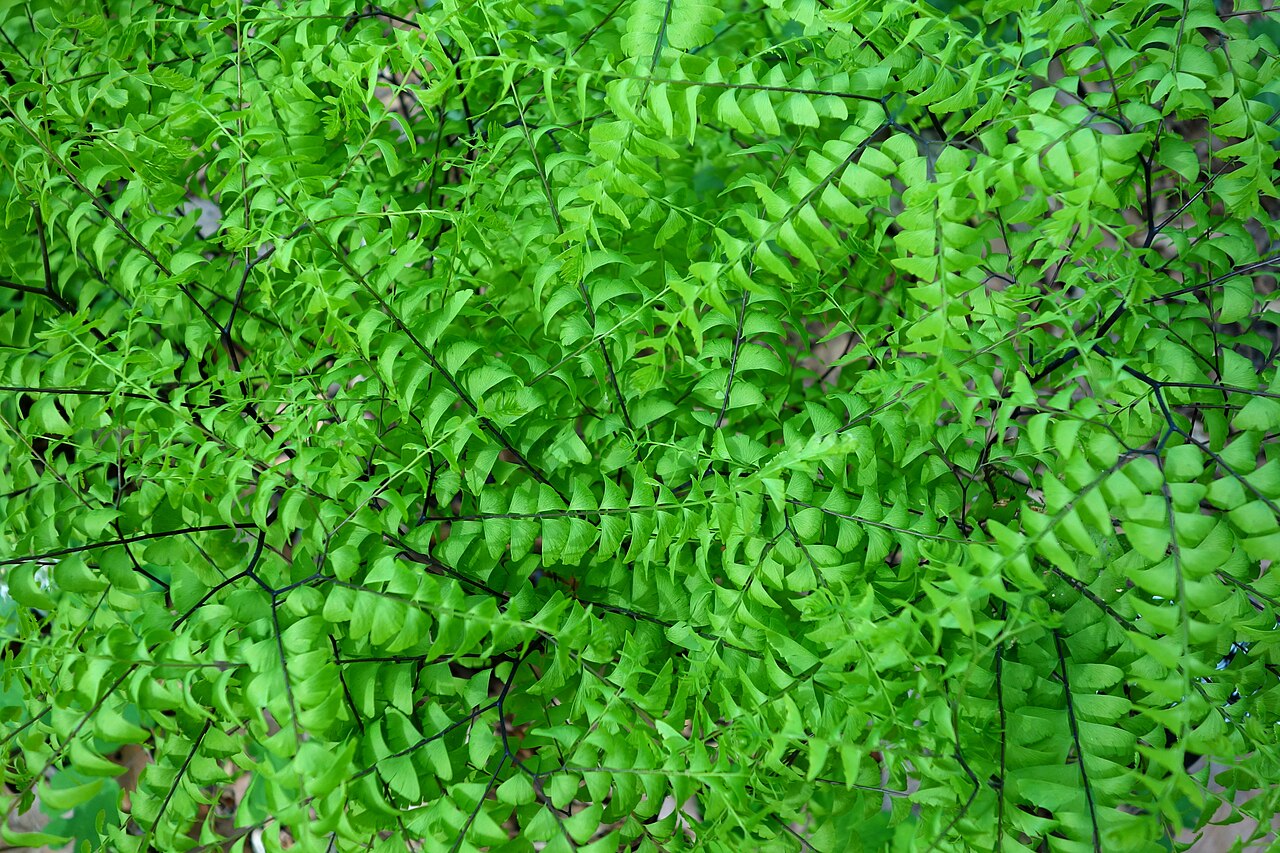
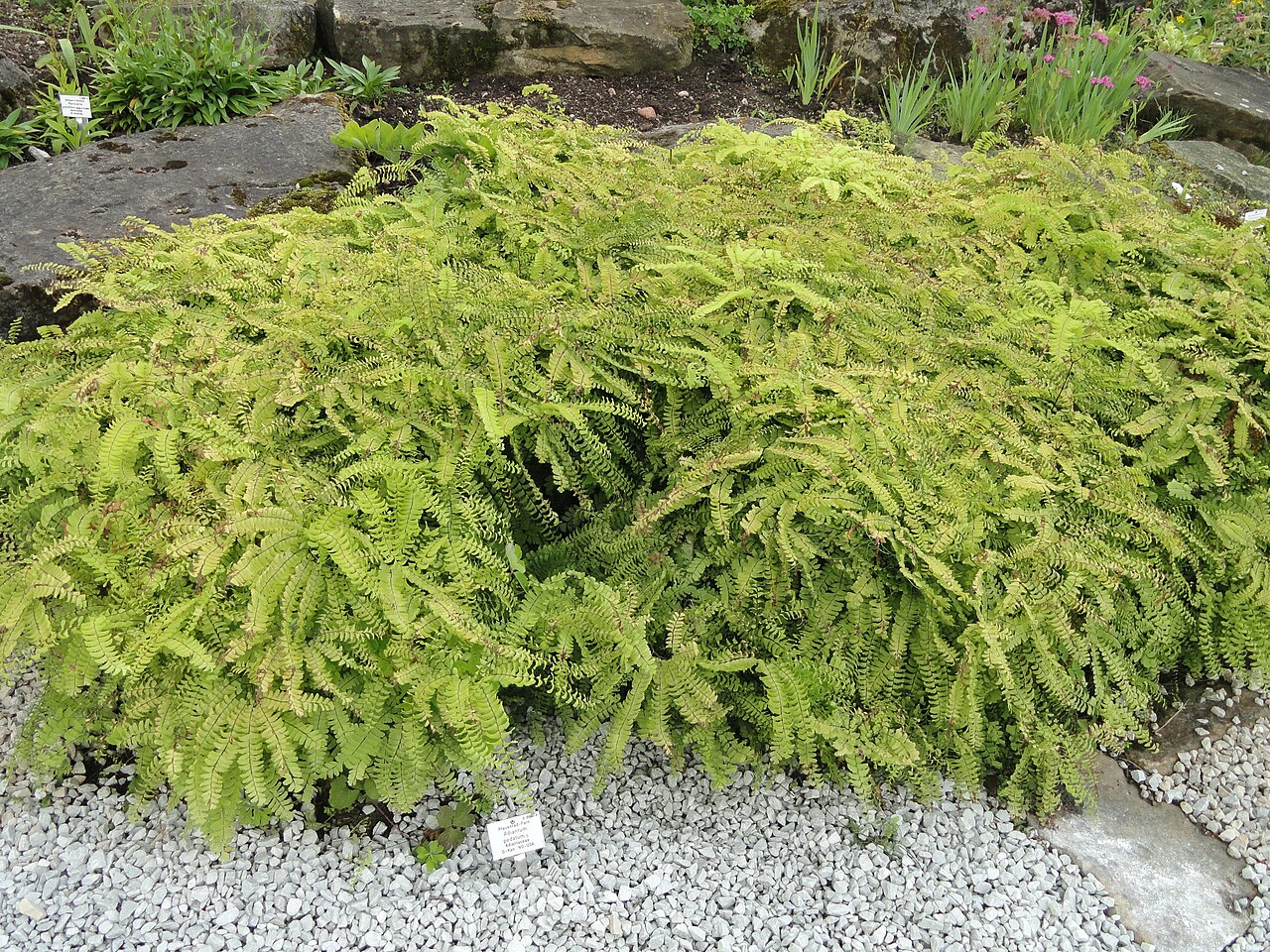
Northern maidenhair fern is a deciduous woodland fern, 12–24 inches tall, with glossy black, wiry stems carrying delicate fan-shaped leaflets in a horseshoe arrangement — one of the most beautiful ferns for shade, and one of the most particular about moisture. Plant in spring in part to full shade in moist, humus-rich, well-drained soil; it wants consistent moisture and high humidity, and it will crisp if soil dries out even briefly. It is hardy to zone 3 (unlike the tender southern maidenhair, A. capillus-veneris, hardy only to zone 7 or so — check which you are buying). Space 18–24 inches apart, mulch with leaf mold, and site it in a sheltered, humid spot — near a stream, in a woodland, or on the north side of a wall. Once settled, it forms a graceful colony.
Water & feeding
Keep soil consistently moist — maidenhair fern is unforgiving about drying out; water in dry spells and mulch deeply. Mist or humidity helps indoors, but outdoors the key is moist soil and shelter from drying wind. Feed with leaf mold or compost in spring; heavy fertilizer is unnecessary.
Common problems
- Crisping fronds — soil dried out or air too dry; water deeply, mulch, shelter from wind.
- Slow establishment — normal; colonies build over a few years.
- Crown rot in waterlogged soil — moist, not soggy; drainage still matters.
- Tender species confusion — southern maidenhair is not hardy in cold zones; buy A. pedatum for zones 3–8.
Notes
Cut back dead fronds in late winter before new fiddleheads unfurl in spring. Divide in spring every few years if a colony needs thinning — divisions with roots re-establish readily in moist soil. Maidenhair fern pairs with hostas, brunnera, and other woodland plants, and its fronds are lovely in small arrangements (though cutting reduces the plant’s display).
Browse all plant & pest guides
Propagation
Maidenhair fern does not make seed at all, so this section is a propagation note, not a seed-saving guide. Ferns reproduce by spores, and that one fact changes everything about how you get more of them.
The spores grow in sori, the rusty-brown dots on the undersides of mature fronds. To sow them, cut a fertile frond, lay it face down on a sheet of paper, and wait a day for the spores to fall like fine dust. Sprinkle the dust thinly over a tray of sterile, moist seed-starting mix, cover the tray to hold humidity, and keep it in bright shade. What grows first is not a fern. It is a prothallus, a tiny green heart-shaped plant the size of a fingernail, and it needs steady moisture to do its work. Months later, true fronds appear, and only then do you have a fern. It is a slow, fussy, rewarding project, and it is how nurseries raise ferns by the thousand.
Division is the reliable route for a gardener who already has a plant. In spring, just as new fronds unfurl, lift the clump and split it into sections, each with roots and growing points. Replant immediately in humus-rich, moist soil in shade, water it in well, and keep it damp until it settles. A divided clump establishes fast and looks like its parent, because it is its parent.
Self-seeding happens in damp, shady corners, where spores land and find the moisture they need. A maidenhair in a greenhouse or a shaded courtyard will often sow itself into pots and cracks, and the volunteers are worth potting up while they are small.
Florida honesty: this guide’s species, Adiantum pedatum, is a cool-climate woodland fern, and it struggles in Florida heat and humidity. The maidenhair that thrives in Florida is the Southern maidenhair, Adiantum capillus-veneris, a different species that loves limestone and damp shade. The propagation rules are the same either way, but do not plant a Northern maidenhair in a Florida garden and expect it to be happy.
Varieties
Every named variety of Maidenhair Fern with its own growing guide:
- Fragrans Maidenhair Fern — The fine maidenhair: light, highly dissected, feathery foliage, the most delicate delta maidenhair.
- Fritz Luthi Maidenhair Fern — The classic delta maidenhair: fine, triangular, lace-like fronds on black stems, the houseplant fern.