
🌼 Strawflower
What it looks like
How to grow
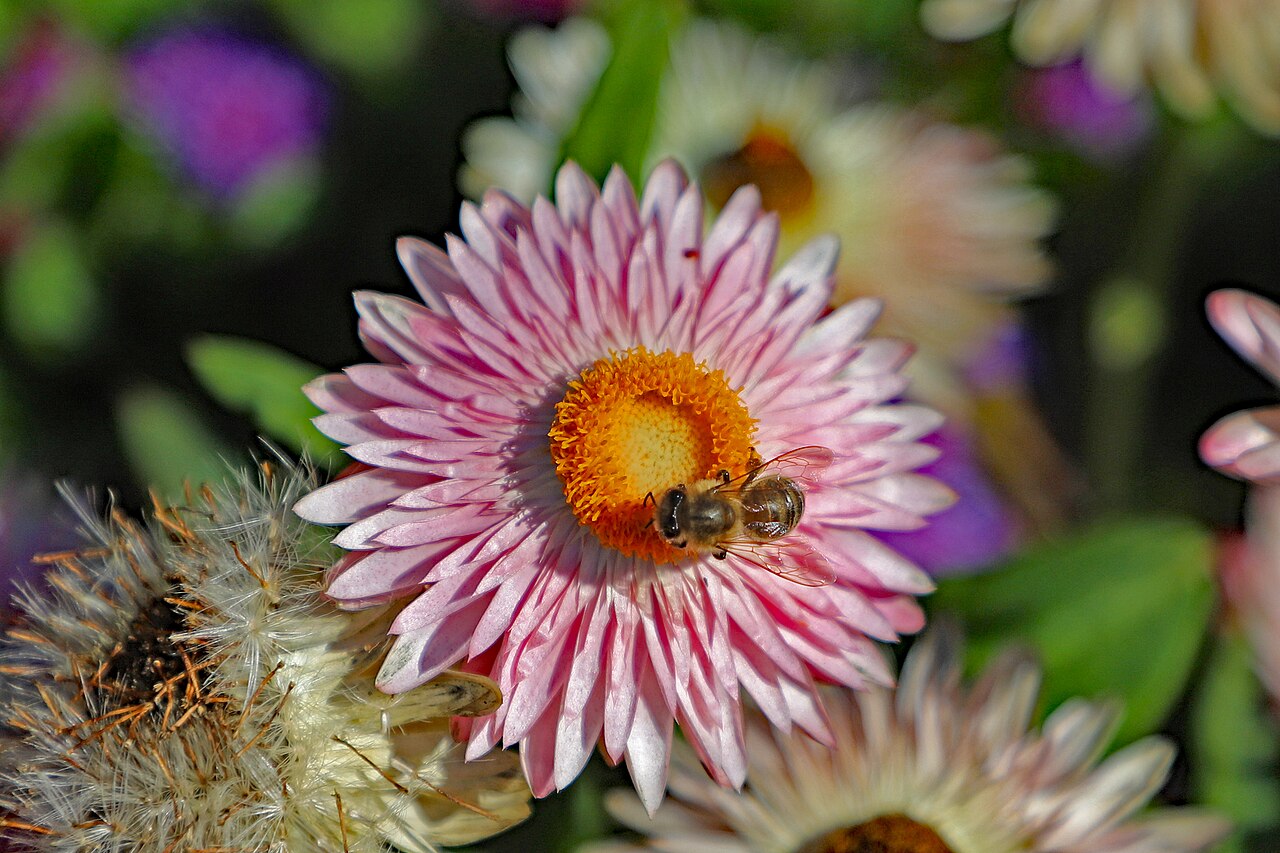
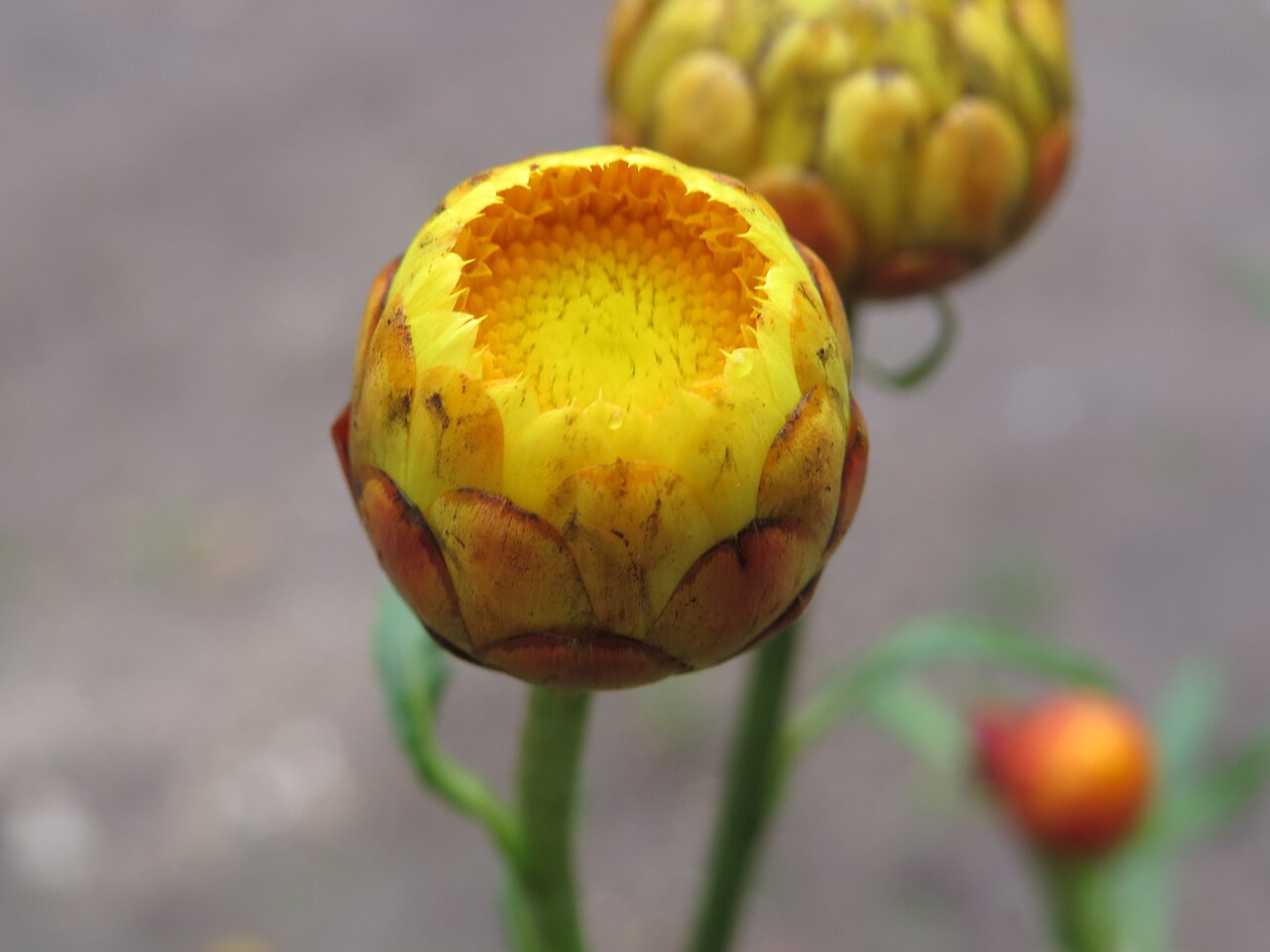
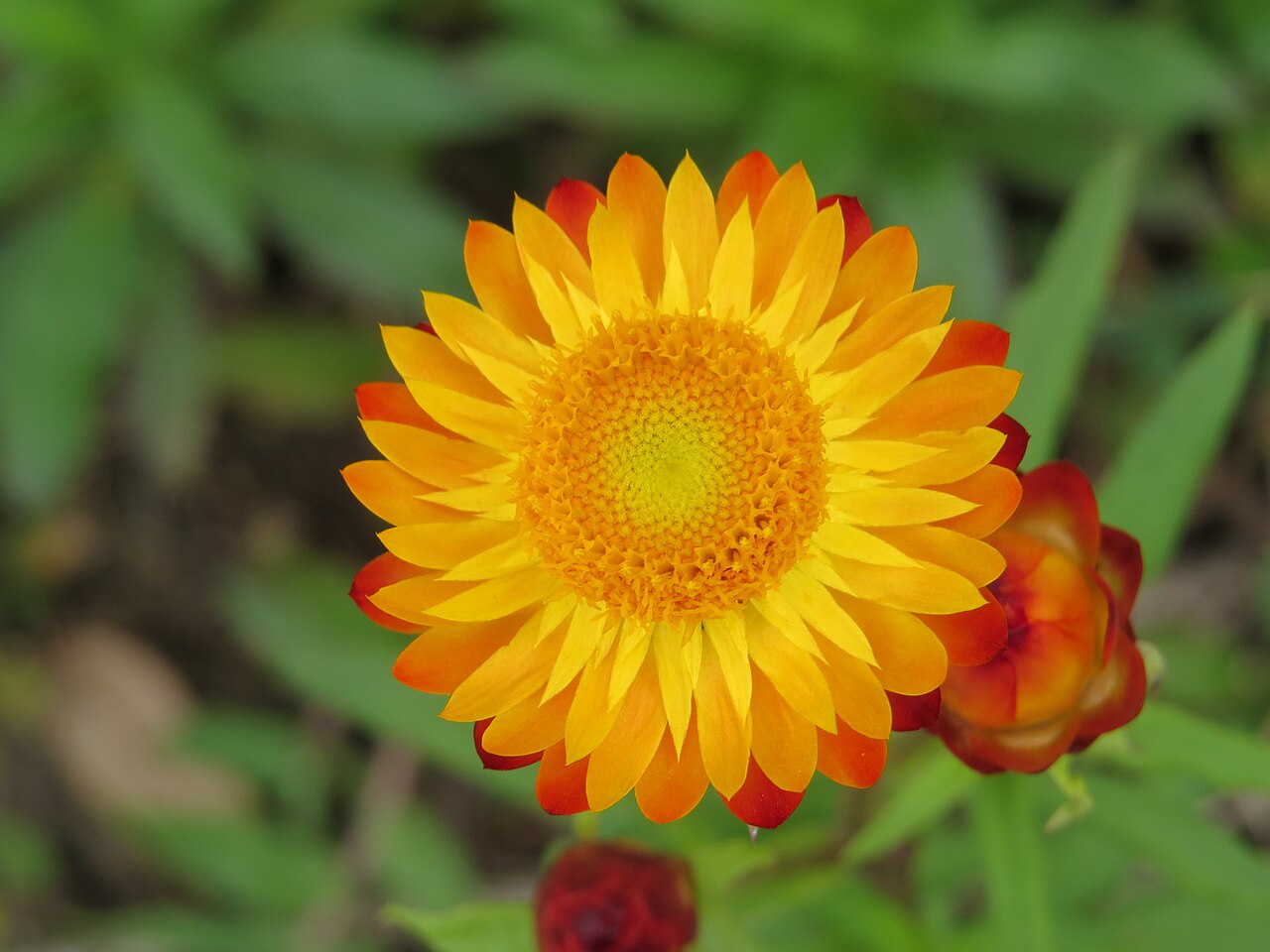
Strawflower is an annual, 1–3 feet tall, with daisy-like flowers in yellow, orange, pink, red, and white whose petals feel papery — because they are: the colorful ‘petals’ are actually dry bracts, which is why strawflowers look freshly cut for weeks and dry perfectly without losing color. Plant after last frost in full sun and well-drained soil, spacing 12–24 inches apart. It is a heat- and drought-tolerant cut-flower plant that blooms from summer to frost, and it is the easiest dried flower there is: cut, hang upside down in a dry place, and you are done. Taller types are best for cutting; dwarf types suit beds and containers.
Water & feeding
Water regularly until established, then water in dry spells; strawflower tolerates drought but blooms best with steady moisture. Feed lightly — compost at planting is enough; heavy fertilizer makes soft growth. Do not overwater in heavy soil.
Common problems
- Botrytis in wet, humid weather — give air flow, spacing, and avoid overhead watering.
- Short stems — usually too much shade; give full sun.
- Few pests — generally trouble-free.
- Flowers closing at night — normal; strawflowers open in sun and close in shade.
Harvest
Cut flowers for drying when they are about three-quarters open — they continue to open slightly as they dry. Hang bunches upside down in a dry, airy place out of direct sun for two weeks. For fresh bouquets, cut when fully open. Deadhead spent flowers to keep plants blooming to frost.
Browse all plant & pest guides
Saving seeds
Strawflower is easy seed. Let the flower heads ripen on the plant until they are dry and papery, then strip the seed into a paper bag. Sow on the surface of moist mix and do not bury the seed at all — it needs light to germinate. Keep it warm, and germination usually comes in one to two weeks. No cold treatment is needed.
It self-seeds lightly, so deadhead if you do not want volunteers, or let a few plants go and see what comes up. Save from the plants with the best color — the brightest yellows, oranges, and pinks — and dry the seed thoroughly before storing; it keeps a few years in a cool, dry jar.
Seedlings will vary in color, since strawflower crosses freely, so if you want a pure color, grow only one variety for seed. Sow more than you need, since the seed is fine and germination is uneven, and prick out seedlings once they are big enough to handle.
In Florida, strawflower is a cool-season flower for fall through spring, happiest in full sun and well-drained soil. It is the classic dried flower — cut the stems when the flowers are fully open and hang them upside down in a dark, dry place — and a plant grown from your own seed dries just as well as one grown from a packet.
Varieties
Every named variety of Strawflower with its own growing guide:
- Dargan Hill Monarch Strawflower — The perennial golden everlasting: grey leaves and big yellow paper daisies on a shrubby plant — the strawflower that comes back.
- Kimberley Sunset Strawflower — The pink everlasting: grey leaves and soft pink paper daisies — the strawflower in a color you did not expect.