
🥬 Komatsuna
What it looks like
How to grow
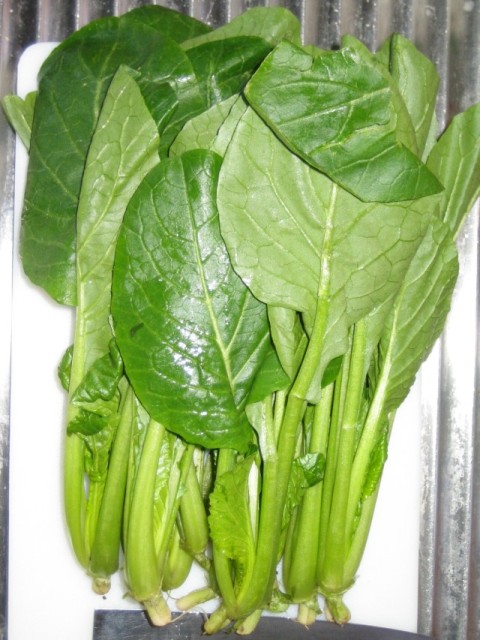
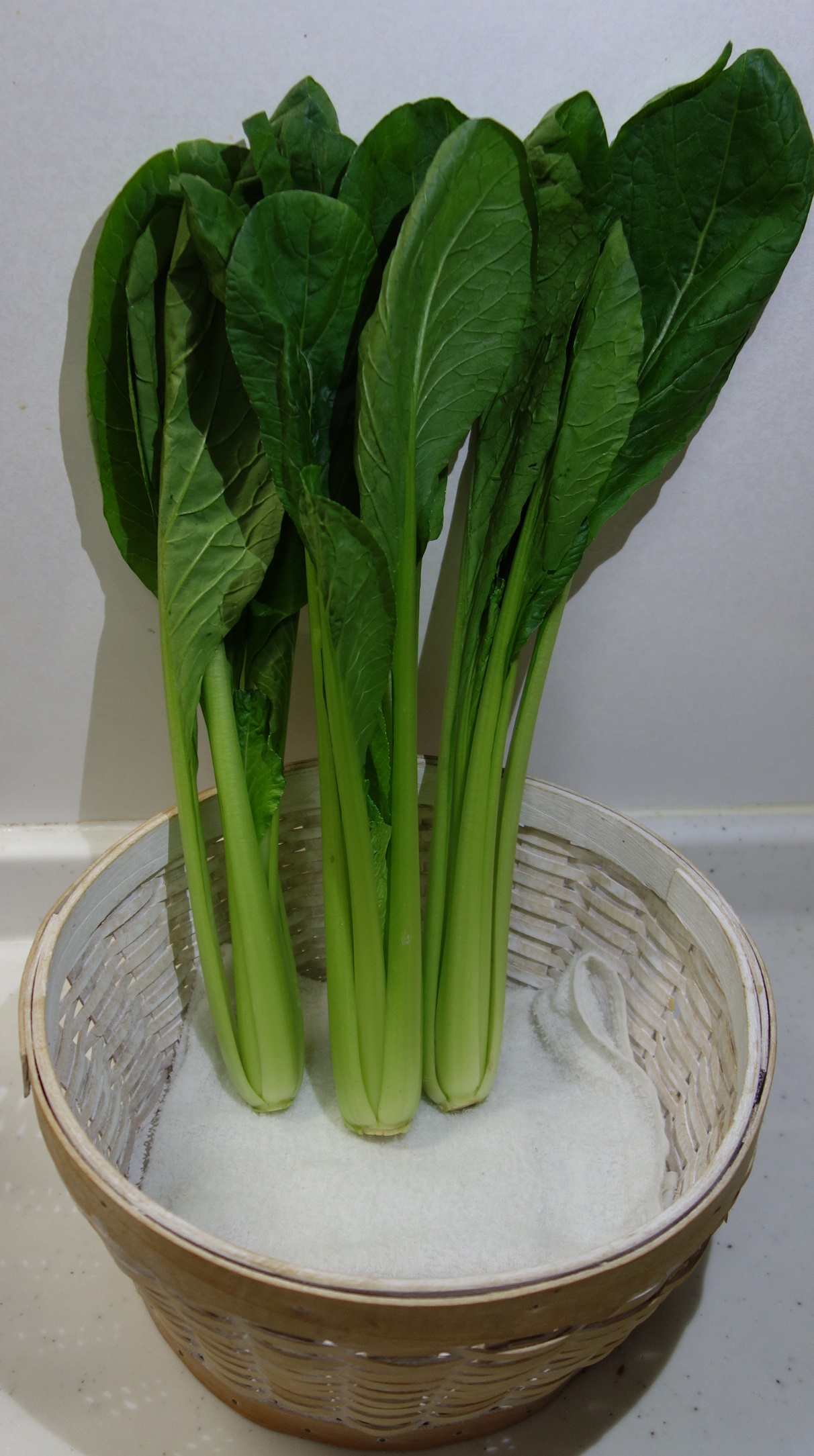
Komatsuna, also called Japanese mustard spinach, is a cool-season brassica grown for tender, dark-green leaves with a mild, sweet, spinach-like flavor and none of mustard’s bite. Direct-sow 1/4–1/2 inch deep in spring as soon as soil can be worked, or in late summer for fall — it germinates in 7–12 days at 68–77°F. Thin to 4–6 inches apart, or sow thickly for baby leaves. It grows best at 55–70°F, does not endure extreme heat or cold well, and should not be planted for midsummer harvest in hot climates; in mild climates it can overwinter with light protection. Rotate away from other brassicas.
Water & feeding
Keep soil consistently moist but not waterlogged, and mulch to hold moisture. Komatsuna is a quick crop: compost at planting is usually enough, with a light nitrogen side-dress only for repeated cuttings.
Common problems
- Bolting in heat — sow spring and fall, shade in warm weather, and harvest promptly.
- Flea beetles and cabbage worms — insect netting from sowing is the simplest fix.
- Slow germination — soaking seed 8–12 hours before sowing can help.
- Bitter leaves — usually heat or drought; water steadily and pick young.
Harvest
Harvest outer leaves as needed once plants are 10–12 inches tall, or cut whole plants at 30–50 days. Use komatsuna like spinach — raw in salads when young, or stir-fried, blanched, pickled, or added to soups. It cooks faster than spinach, so add it last.
Browse all plant & pest guides
Saving seeds
Komatsuna is one of the easier brassicas to save seed from, and the reason is a trait Florida gardeners usually curse: it bolts at the drop of a hat. A spring sowing that gets a warm spell will throw up a flower stalk almost before you have finished eating the leaves, and that eagerness is your seed crop. Unlike its biennial cousins, komatsuna flowers readily in its first year once it bolts, so there is no overwintering puzzle and no fridge full of bulbs. Sow a patch, let it bolt, and the seed almost makes itself — the trick is not getting the seed, it is keeping it true.
That is because komatsuna is Brassica rapa, and Brassica rapa crosses with every other Brassica rapa. Turnip, bok choy, napa cabbage, mizuna, tatsoi, and broccoli raab are all the same species, and bees will mix them without asking. Isolation by distance is the textbook answer, and sources disagree on the number — the common garden figure is about a half mile, while some references stretch it to a mile — which tells you honestly that distance is not a practical tool in a neighborhood garden. The practical rule is the one that works: let only one Brassica rapa type flower for seed in a season. Grow all the rapa greens you like for eating, but choose one to go to seed and eat the rest before they bolt, or cage the seed plants in insect-proof mesh and hand-pollinate with a small brush. If the neighbor’s turnips are flowering at the same time, your komatsuna seed will not stay true.
Grow a dedicated seed patch rather than saving from a plant you have been picking over all season. Let at least six plants bolt — more is better, since a narrow gene pool makes weak seed — and give the tall flower stalks room and a stake, because a komatsuna in full flower is taller than you expect and wind will lay it flat. The small yellow four-petaled flowers open over several weeks, and the thin pods that follow ripen from the bottom of the stalk upward, so harvest is not a single day: check every few days, and cut stalks into a paper bag as the pods turn tan, dry, and brittle, before they split and scatter. Cover drying pods against birds and rain, since both will take their share.
Thresh the dry pods by hand over a sheet of white paper and winnow away the chaff — the seed is small, dark, and round, and it bounces, so work indoors away from any breeze. Dry it completely before storage: spread it thin on paper in a dry room until it feels hard and papery, then keep it in a labeled envelope or an airtight jar with a desiccant packet, cool and dark. In Florida humidity this step is not optional — seed stored even slightly damp will mold in a closed container. Properly dried komatsuna seed keeps for about five years, so date the packet and sow the oldest first. And the honesty note: seed grows the variety only if the variety is open-pollinated and isolated. Named F1 hybrids will not come true from seed, and a crossed batch will grow into a leafy green that is neither komatsuna nor turnip. Save from an open-pollinated type, keep it isolated, and the calm cousin of spinach will come back true.
Varieties
Every named variety of Komatsuna with its own growing guide:
- Tendergreen Komatsuna — The classic mustard spinach — tender, mild, and fast, the standard komatsuna for home gardens.
- Summerfest Komatsuna — The heat-tolerant komatsuna hybrid — slow to bolt, tender at any size, bred for summer.
- Torasan Komatsuna — The vigorous Japanese komatsuna — upright, glossy leaves and a strong, steady grower.
- Red Komatsuna — The purple-red mustard spinach: broad, smooth leaves with green undersides and red veins, mild and tender, ready in about 30–39 days.
- Green Boy Komatsuna — The warm-weather komatsuna: an easy, mild, hybrid mustard spinach that sizes up fast in warm climates, ready in about 35 days.