
☀️ St. John’s Wort
What it looks like
How to grow
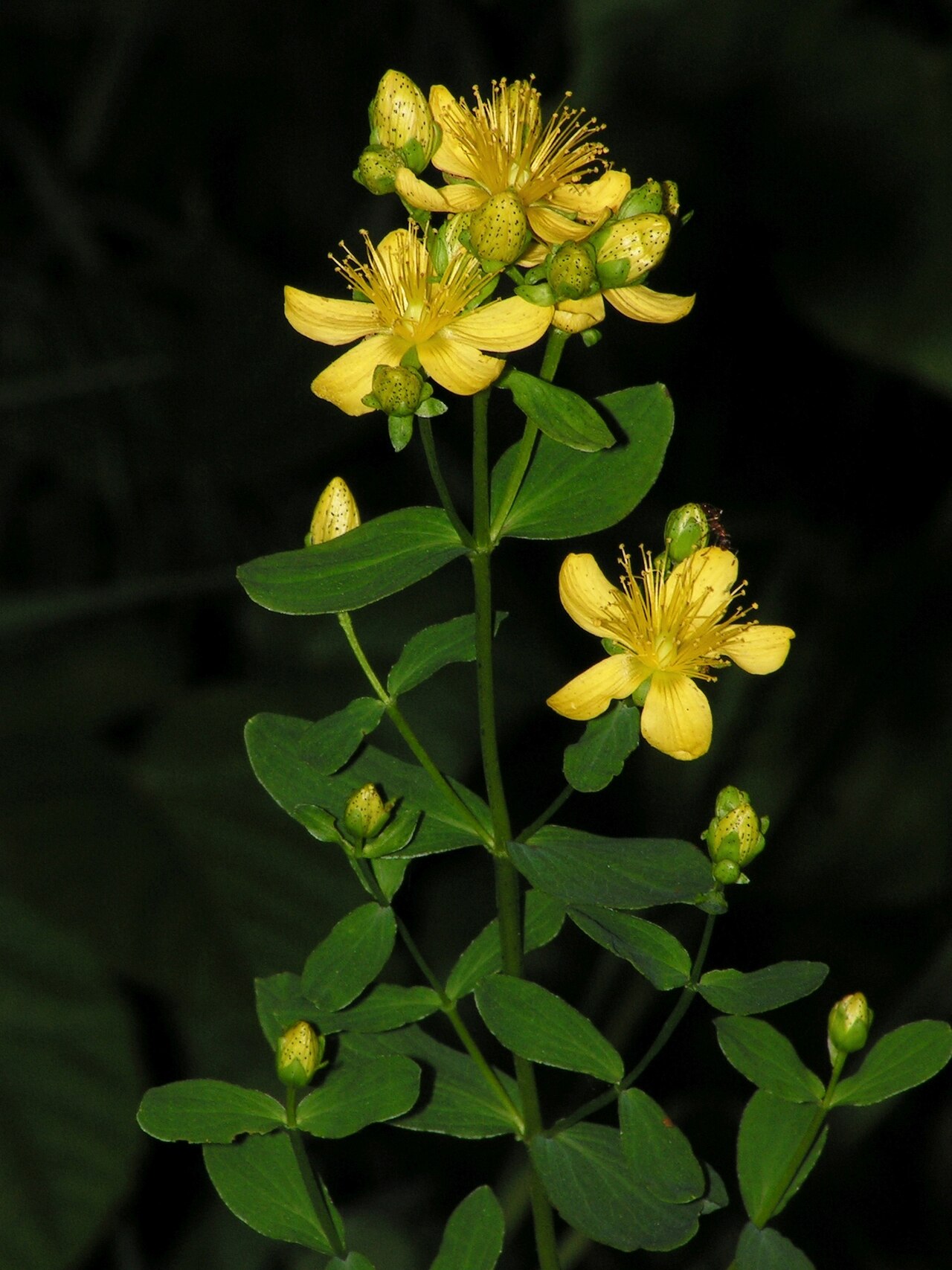
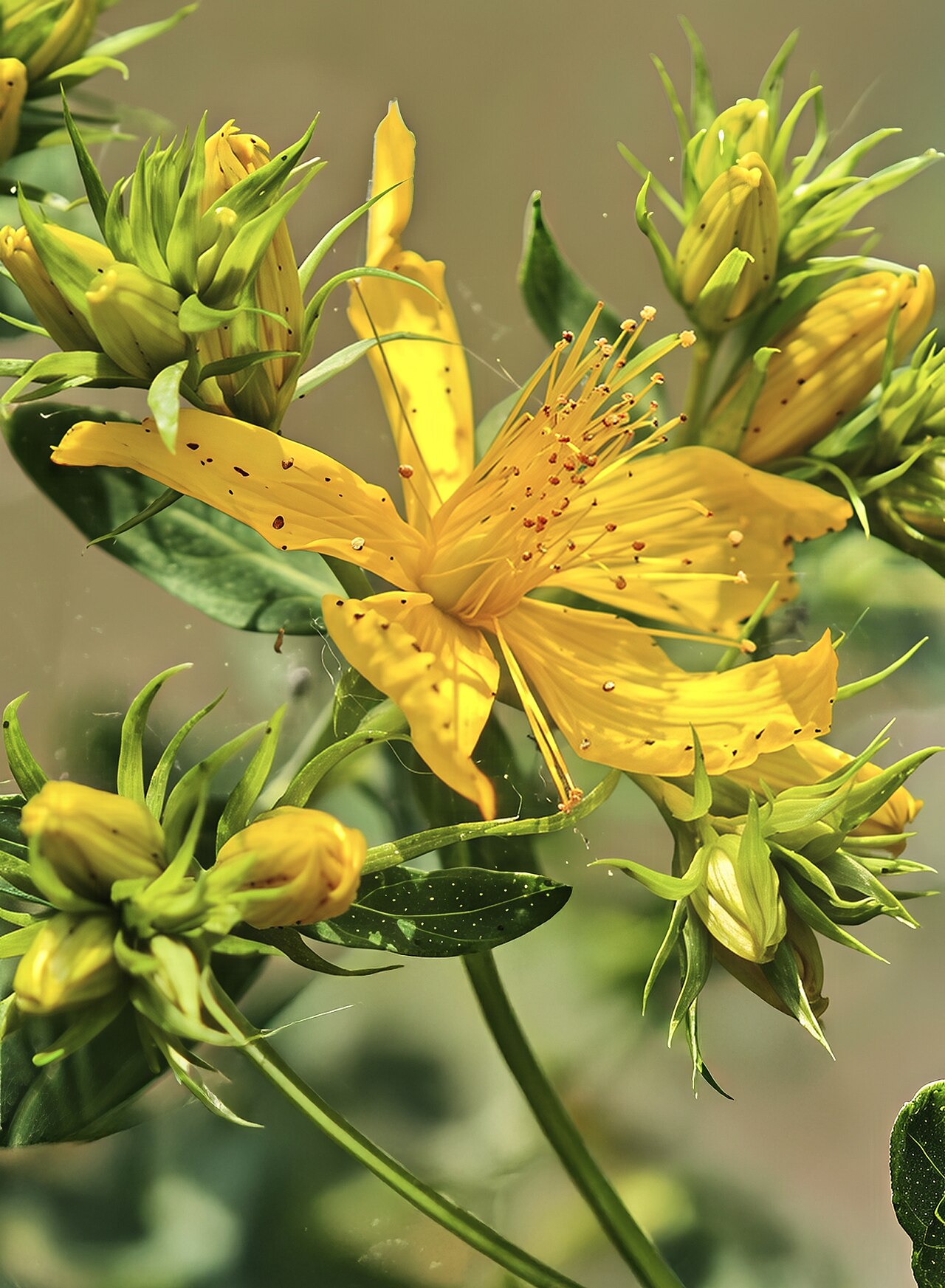
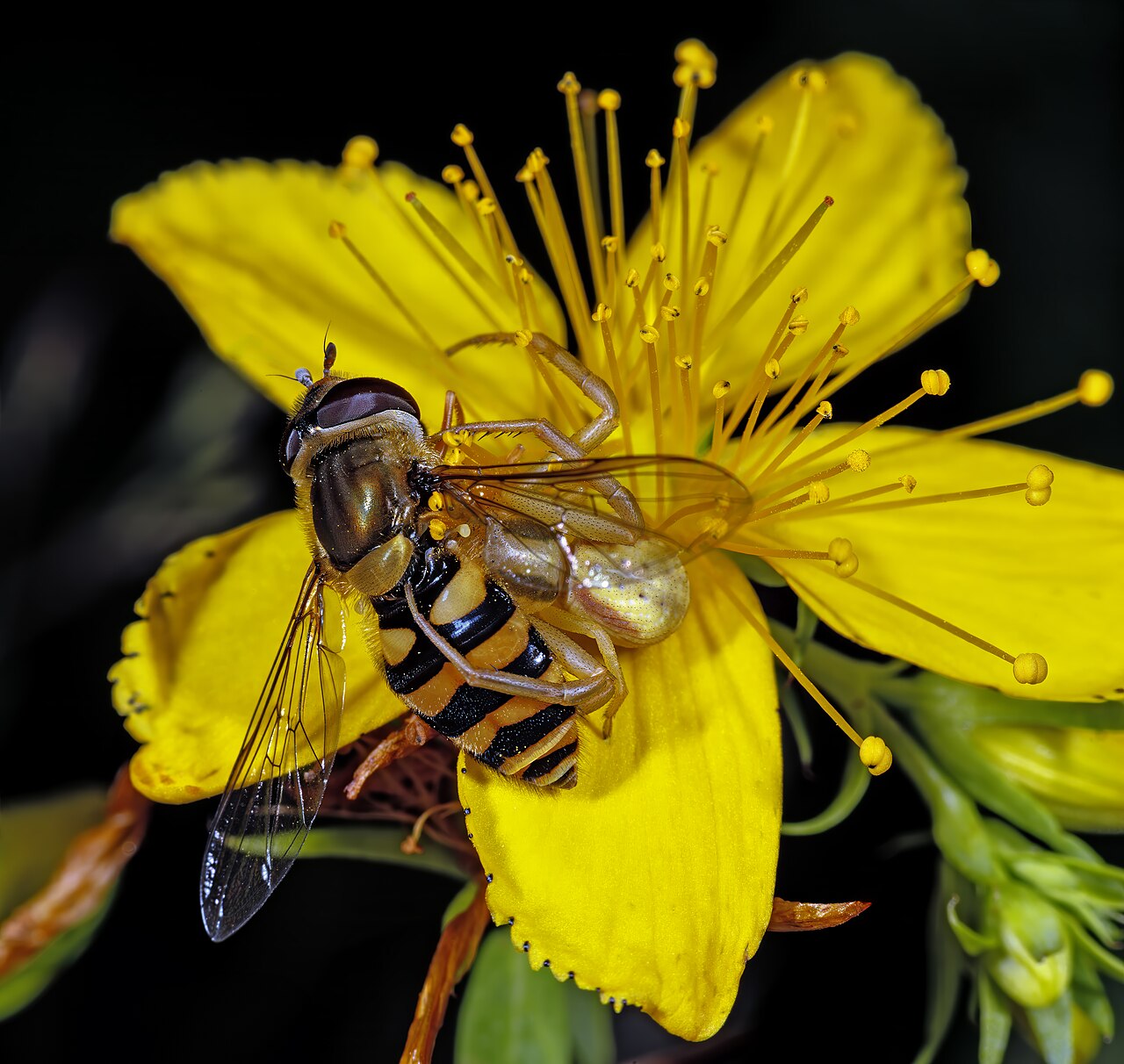
St. John’s wort is a tough perennial with small, narrow leaves that look pin-pricked when held to the light — those translucent dots are oil glands — and bright yellow, five-petaled flowers in early summer. Start seed indoors 6-8 weeks before last frost, surface-sowing (the tiny seeds need light), or direct-sow after frost danger, or propagate from cuttings or division in spring. It grows in sand, loam, clay, or rocky soil as long as drainage is decent, and tolerates a wide pH range. Give it full sun in cool climates and a little afternoon shade in hot ones. Expect a bushy plant about 2-3 feet tall and wide, and expect it to spread: it runs by rhizomes and a single plant can produce tens of thousands of seeds that stay viable for years.
Water & feeding
Water while establishing and during dry spells; once settled, St. John’s wort is notably drought-tolerant and asks for little. It needs almost no fertilizer — compost at planting is enough, and rich feeding makes soft, sprawling growth. Mulch lightly, and prune in spring to remove dead wood and shape the plant before new growth starts.
Common problems
- Rampant self-seeding — deadhead before seed ripens, and check your state’s noxious-weed list first: St. John’s wort is listed as a noxious weed in several western states, where you should not plant it at all.
- Spreading by rhizomes — grow in a contained bed or be ready to pull runners, especially in loose, sandy soil.
- Chrysolina beetles (the St. John’s wort beetle) chewing leaves — they are actually a biocontrol agent in rangeland; in a garden, hand-pick or tolerate light damage.
- Leggy growth in shade — move to more sun and cut back hard in spring to restore a bushy shape.
Harvest
Harvest flowering tops in early summer, when about half the buds are open and half in flower — traditionally around late June. Dry them promptly in a dark, airy place if you plan to keep them. Two plain safety notes: St. John’s wort is known to interact with many prescription medicines, so never start using it medicinally without talking to a clinician or pharmacist first, and this guide is about growing the plant, not about dosing it. Also keep grazing animals away from it, as it can poison livestock in quantity.
Browse all plant & pest guides
Saving seeds
St. John’s wort is easy seed with one requirement: light. Let the seed capsules ripen on the plant until they are dry and brown, then shake them into a paper bag. Sow on the surface of moist mix and do not bury the seed at all — it needs light to germinate. Keep it warm, and germination usually comes in two to three weeks. No cold treatment is needed.
It self-seeds freely, so deadhead if you do not want a patch of it everywhere, or let it go and pull the volunteers you do not want. Save from the healthiest plants with the most flowers, and dry the seed thoroughly before storing; it keeps a few years in a cool, dry jar.
Seedlings will vary, and named selections come only from cuttings or division. Sow more than you need, since the seed is fine and germination is uneven, and prick out seedlings once they are big enough to handle.
Two cautions. First, St. John’s wort is a medicinal plant with real drug interactions — this guide does not give medical advice, and the seed note here is for the garden, not the medicine cabinet. Second, it can be weedy and is listed invasive in some regions, so keep it where you can manage it and do not let it escape into natural areas.
Varieties
Every named variety of St. John’s Wort with its own growing guide:
- Helos St. John’s Wort — The tough cultivar: bred for tolerance to anthracnose disease, the St. John's wort that stands up when others spot and collapse.
- Topas St. John’s Wort — The field cultivar: a medicinal St. John's wort selected for reliable field production, the workhorse of the herb bed.