
💜 Passionflower
What it looks like
How to grow
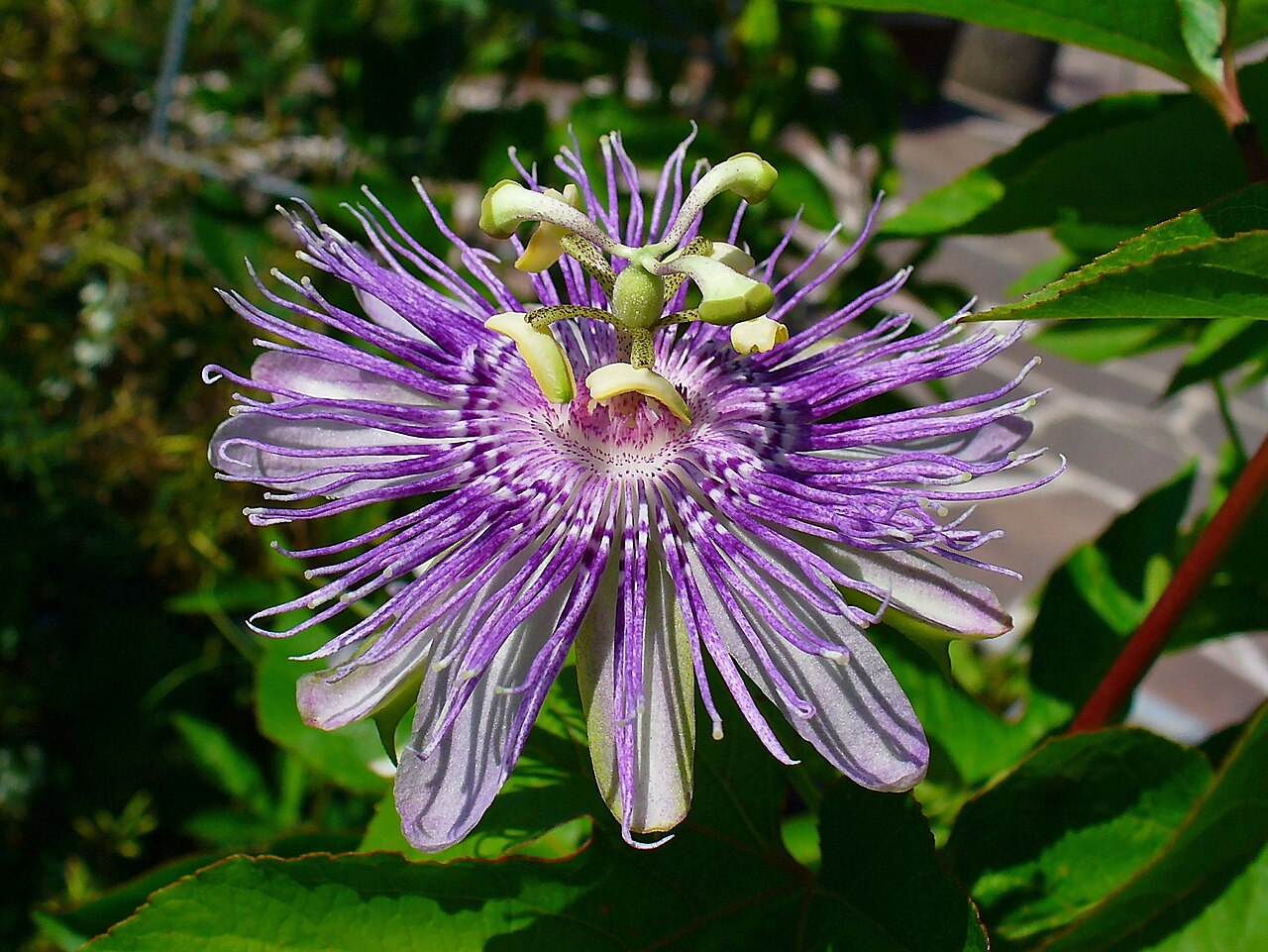
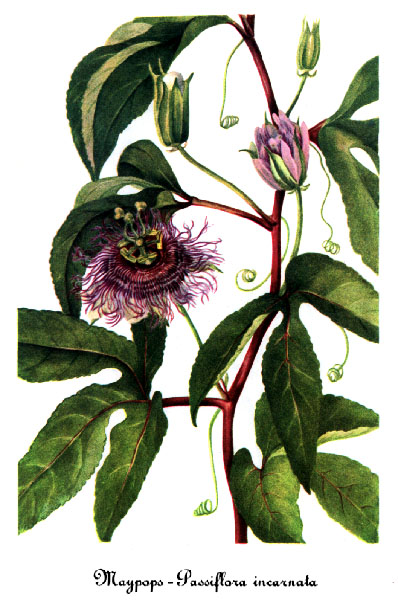
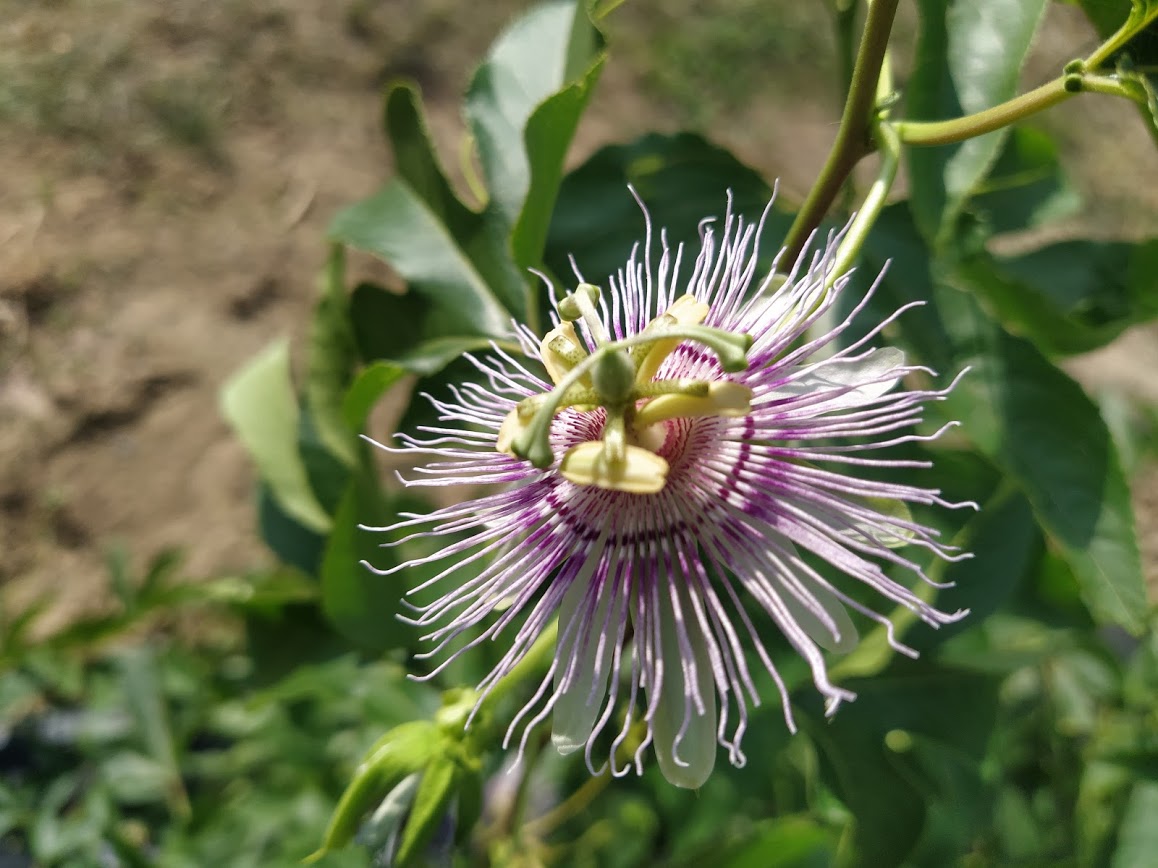
Passionflower (maypop) is a fast-growing native vine, 10-20 feet in a season, with deeply lobed leaves, curling tendrils, and large, intricate purple-and-white flowers with a fringed corona that look almost unreal — followed by egg-sized yellow fruits (maypops) in fall. Start from nursery plants or root cuttings in spring — the reliable routes, since seed is slow and needs scarification — or from seed sown indoors after nicking and soaking. Plant in full sun and well-drained, average soil, with a trellis, fence, or arbor to climb; it needs support and will happily cover a fence in one summer. In zones 6-7, roots survive winter and resprout in late spring (mulch heavily); in zones 8-10 it is more reliably perennial, and in colder zones it is a container plant to overwinter indoors. Note the distinction: this is Passiflora incarnata, the hardy native, not Passiflora edulis, the tropical passionfruit vine already covered elsewhere in this library — the flowers are cousins, not twins, and the fruits are different.
Water & feeding
Water regularly until established, then about an inch a week — passionflower likes steady moisture but tolerates short dry spells once settled. Feed lightly with compost in spring; heavy nitrogen makes leafy vines with fewer flowers. Mulch to hold moisture, and prune in spring to remove dead wood and shape the vine before new growth starts.
Common problems
- Late emergence in spring — passionflower resprouts late, sometimes into May, so do not dig it up thinking it died over winter.
- Spreading by root suckers — it sends up shoots several feet from the parent, so give it room or a root barrier, and pull suckers promptly.
- Gulf fritillary caterpillars eating leaves — this vine is their host plant, so expect caterpillars and plant extra; the butterflies are worth the holes.
- Powdery mildew in humid, crowded beds — space for airflow, water at the base, and prune for air circulation.
Harvest
Snip leaves and flowers as they open through summer, drying promptly in a dark, airy place if you want to keep them. Pick maypop fruits in fall, when they turn yellow and wrinkle slightly, and eat the pulp fresh — it is sweet-tart and aromatic, though seedy. This guide is about growing only: passionflower has a long traditional herbal history as a calming herb, and if you are considering it for health reasons, talk to a clinician first, especially since it can interact with sedative medicines. In the garden, its value is as a fast, beautiful, butterfly-hosting native vine, and that needs no health claim.
Browse all plant & pest guides
Saving seeds
Passionflower is the hardy native vine with impossibly intricate purple flowers, and its seed hides inside the fruit — the maypop — which is the first thing to know about saving it. Let the fruit ripen fully on the vine: it turns yellow, softens, and gives slightly when squeezed, and it may drop on its own when it is ready. Cut it open, scoop out the pulp, and wash the seed free — the pulp can inhibit germination, so rinse the seed well in a sieve under running water until it is clean, then dry it briefly on paper.
The seed has a hard coat, so give it a head start: soak it in warm water for 24 hours, or nick the coat lightly with a file. Sow the seed shallowly in a warm, moist, well-draining mix, and keep it warm and bright — 75 to 85°F is the sweet spot. Germination is uneven, usually two to four weeks and sometimes longer, so do not give up on a pot at three weeks. A heat mat helps in cool weather.
Seedlings grow fast once they get going, and passionflower is a vigorous vine — give it a trellis, a fence, or a shrub to climb, and do not be surprised when it sends up suckers several feet from the parent plant. Those suckers are the other route to more plants: a sucker with roots attached, dug in spring, is a guaranteed new plant, and an exact clone, which seed is not.
Save seed from fruit that was fully ripe, from a healthy, well-flowered vine, and sow more than you need. Keep saved seed dry and cool — Florida humidity is the enemy of stored seed, so jar it with a silica gel packet and keep it in a cool, dark place. And one thing worth knowing about the seed you are saving: the fruit is edible, tart and aromatic, so taste-test your harvest before you save it — if the fruit was good, the seed is worth keeping.
Varieties
Every named variety of Passionflower with its own growing guide:
- Frederick Passionflower — The giant purple passionfruit: the largest of the easy, self-fruitful types, with big flowers and bigger fruit.
- Purple Possum Passionflower — The reliable purple passionfruit: medium fruit, sweet and aromatic, on a vigorous self-fruitful vine.