
🌳 Prairie Sentinel Hackberry
What it looks like
Why this variety
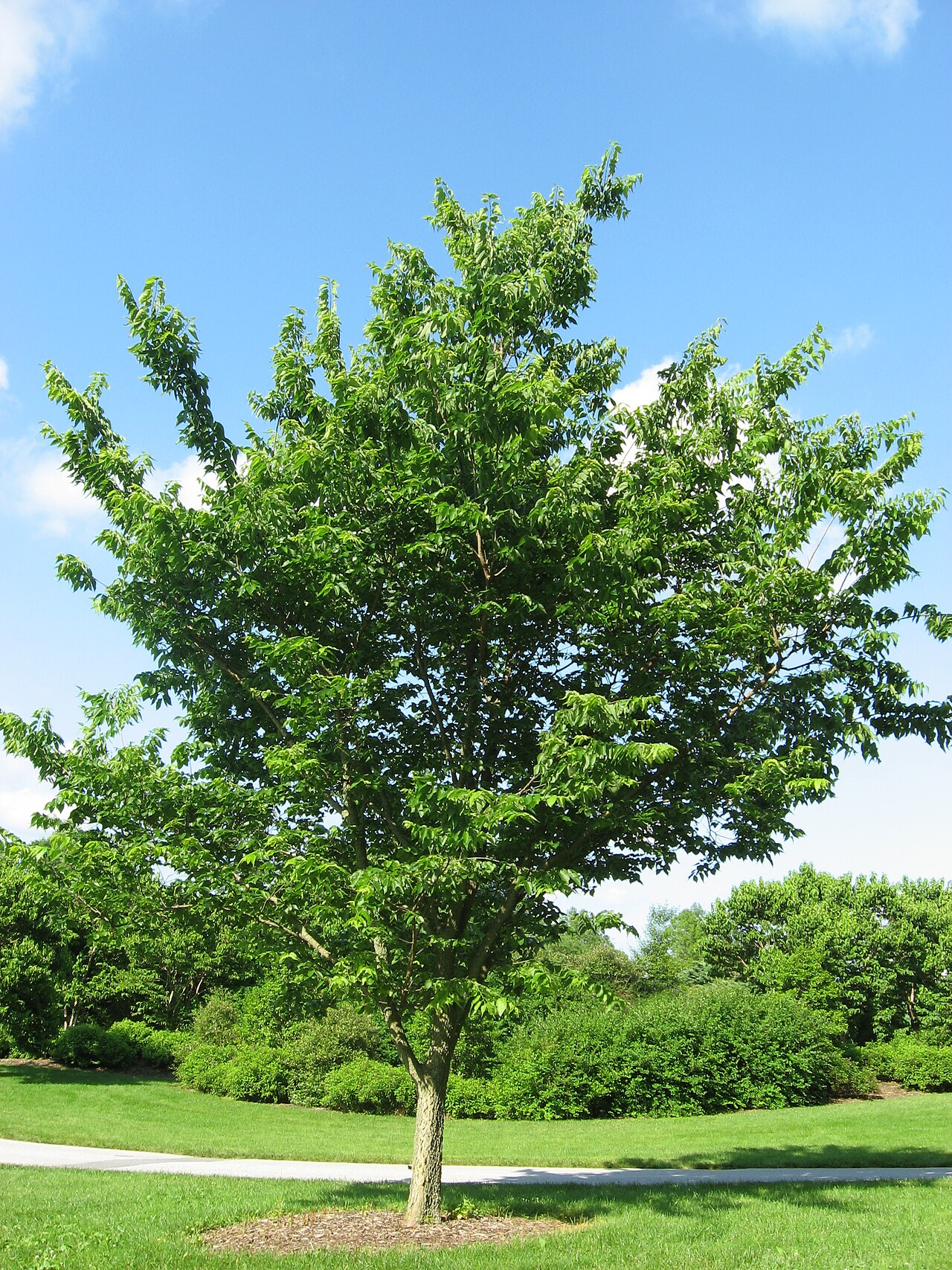
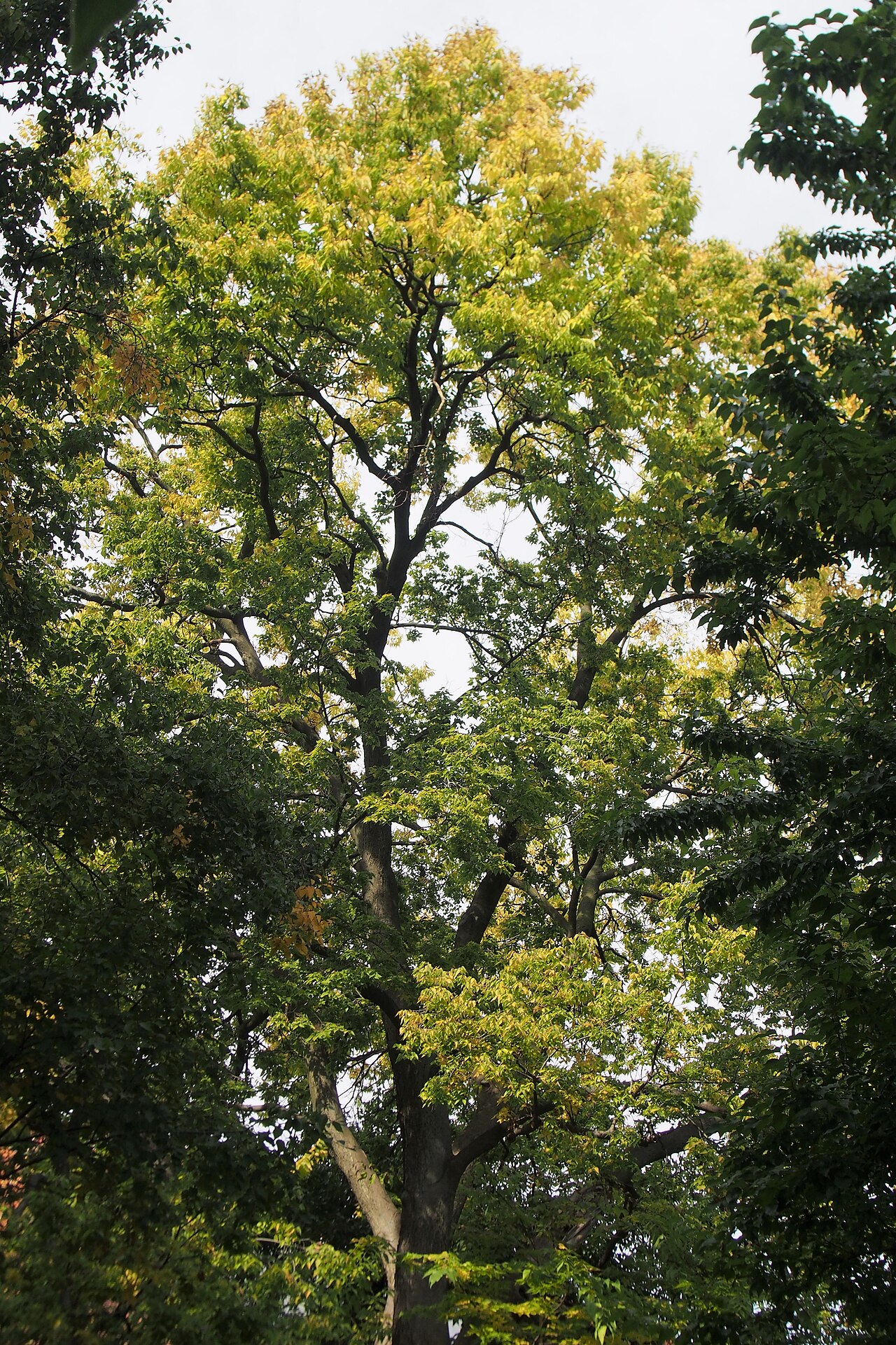
Prairie Sentinel is common hackberry in a narrow, upright form: 35–45 feet tall but only 12–15 feet wide, with the species’ warty grey bark, elm-like crown in miniature, and small dark drupes that birds devour in autumn. It is the hackberry for a street, a narrow yard, or a row where the species’ 50-foot spread would be a mistake — and it keeps the species’ famous toughness: clay, sand, rock, wet or dry ground, alkaline soil, city pollution, all shrugged off.
In Florida, Prairie Sentinel belongs in the north, where common hackberry is at home; farther south, sugarberry is the better-adapted cousin, and a struggling Prairie Sentinel is a range verdict, not a care failure. Plant it in full sun, 15–20 feet from structures, and water deeply for the first two years.
How to grow
Common hackberry is the tough native shade tree for gardeners who have already killed fussier trees: 50–70 feet tall with a broad, elm-like crown, warty grey bark, and small dark drupes that birds devour in autumn. It grows in clay, sand, rock and loam, in wet or dry ground, and tolerates alkaline soil that would yellow fussier trees. Plant in full sun in fall or spring, 30–50 feet from structures, and water deeply for the first two years. In Florida, plant it in the north; farther south, look to sugarberry (Celtis laevigata) instead and treat a struggling common hackberry as a range verdict, not a personal failure.
Water & feeding
Water deeply through establishment, then only in drought; established hackberry is notably tough and needs little feeding. Mulch widely. Do not over-fertilise — fast, soft growth is more brittle and more pest-prone than steady growth.
Common problems
Nipple galls on leaves look alarming and matter very little — they are cosmetic, caused by tiny insects, and the tree shrugs them off. Witches’ broom may disfigure branch tips; prune affected twigs if they bother you. Otherwise hackberry’s reputation is earned: it is a tree that survives the sites other trees die in.
Harvest
The harvest is shade and bird food, with no fruit mess worth complaining about — the drupes are small and the birds take them. Prune while young to maintain the central leader and the narrow form; mature trees need little beyond deadwood removal.
Nerdy fact: Hackberry’s warty bark is not a disease but a feature — the corky ridges are part of the species’ identity, and the drupes were once ground into a paste by Indigenous peoples as a food, which is a humbler use than shade but an older one.
Saving seeds
Prairie Sentinel is common hackberry in a narrow, upright form: 35 to 45 feet tall but only 12 to 15 feet wide, with the species’ warty grey bark, elm-like crown in miniature, and small dark drupes that birds devour in autumn. It is the hackberry for a street, a narrow yard, or a row where the species’ 50-foot spread would be a mistake — and it keeps the species’ famous toughness: clay, sand, rock, wet or dry ground, alkaline soil, city pollution, all shrugged off. As a named hackberry form it is kept true by grafting and cuttings, not by seed — seedlings would not hold the narrow, upright form. Plant it in full sun, 15 to 20 feet from structures, and water deeply for the first two years. The full method is in the Saving seeds section of the Hackberry guide.