
🍇 Alba Akebia
What it looks like
Why this variety
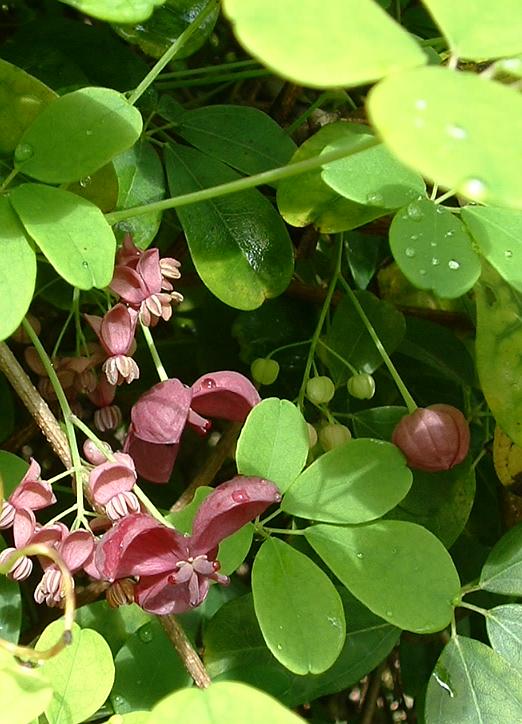
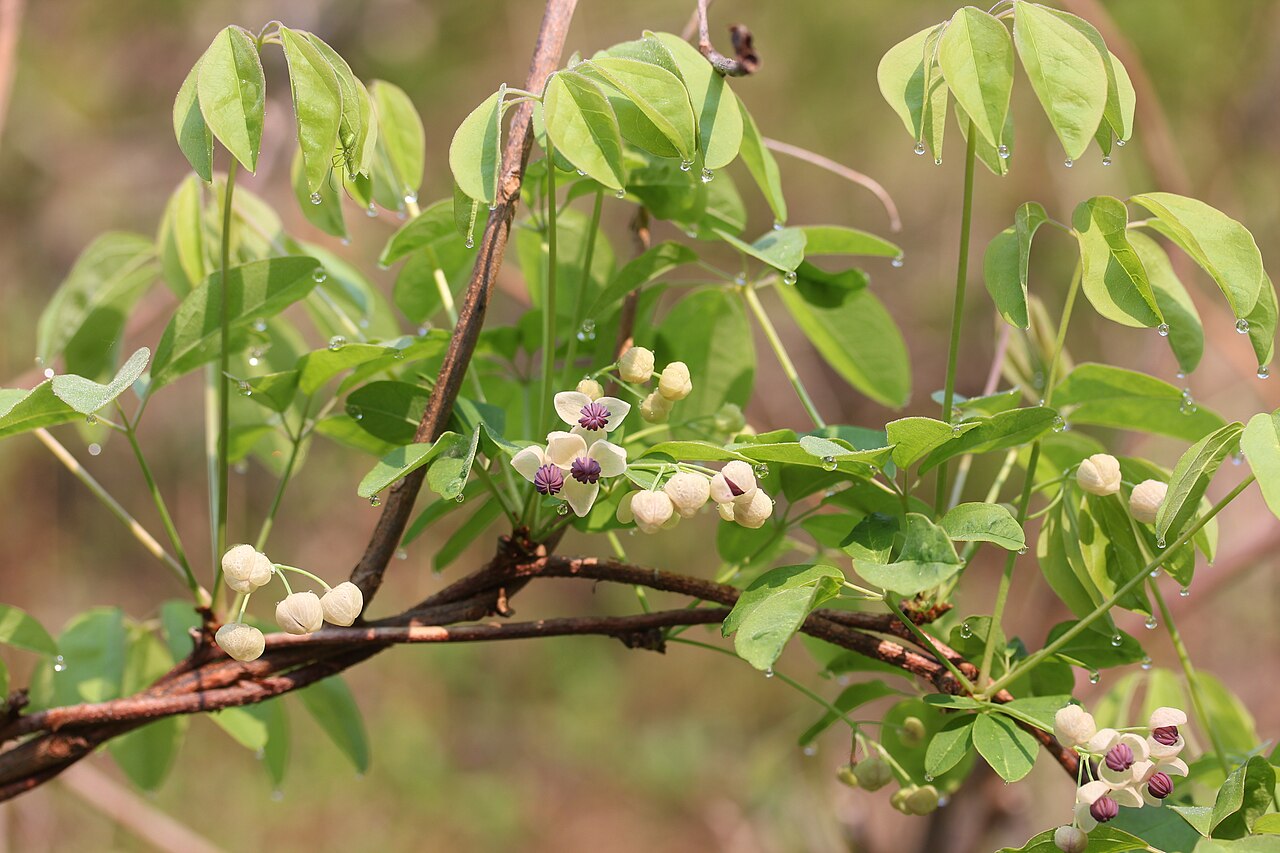
Alba is the white-flowered form of the five-leaf chocolate vine, and it is the one to plant if you want the vine’s scent and foliage without quite so much of its appetite. Its female and male flowers are both white to creamy, rather than the species’ chocolate-purple, and they carry the same faint vanilla-chocolate fragrance in spring. The foliage is the same handsome five-leaflet palmate leaf, semi-evergreen in mild winters, turning a decent yellow in fall where winters are cold enough to color it.
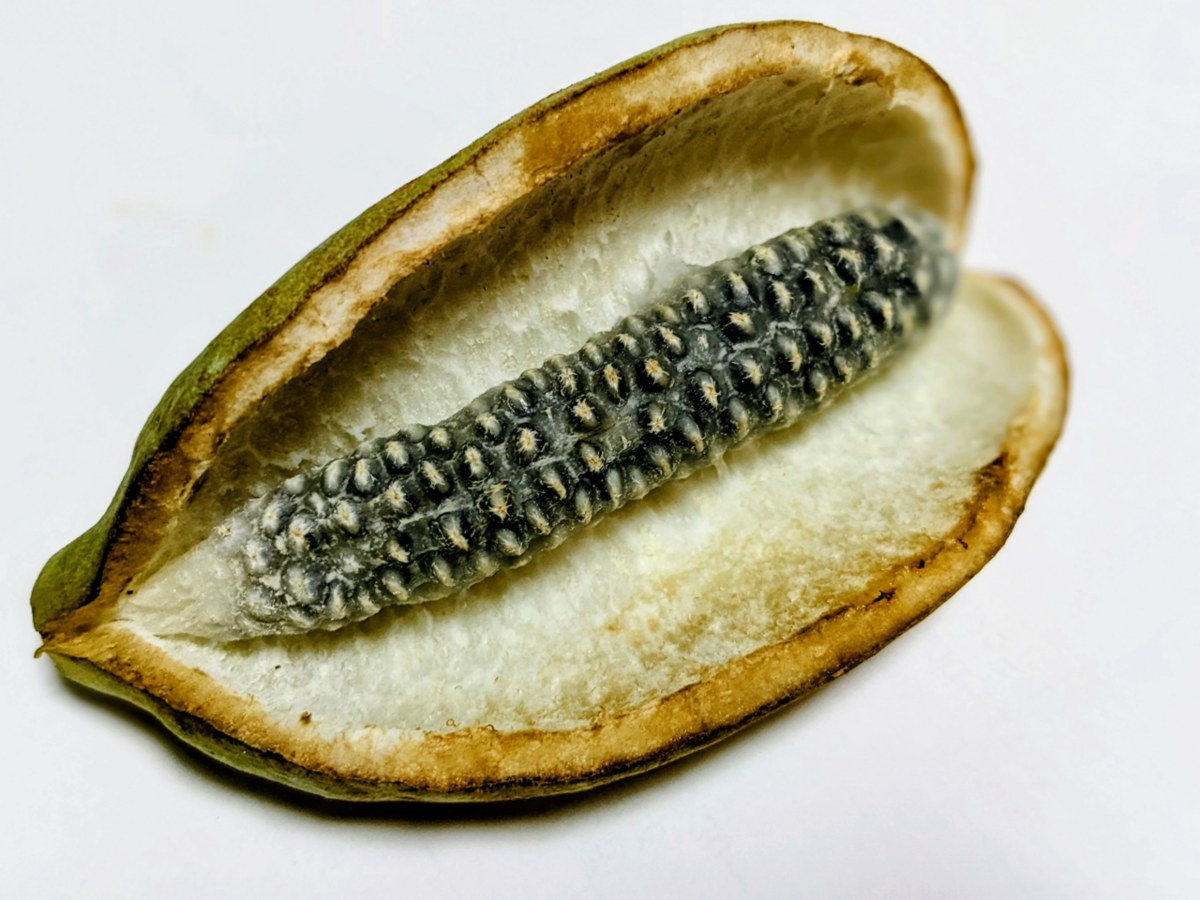
The practical difference is fruit: the white form is more likely to be sterile than the purple species, so if the sausage-shaped purple pods — sweet, jelly-like, and occasionally messy — sound like a chore rather than a treat, Alba is the lower-maintenance choice. The trade-off is that Alba is still an akebia, which means it is still vigorous to the point of pushiness: give it a strong trellis, fence, or arbor, and do not plant it where it can climb into a tree you care about, because it will, cheerfully, and it will not ask permission.
If you are new to choosing between cultivars, the Varieties Matter guide explains why the name after the plant matters as much as the plant itself. Alba is a perfect example: it is not just a akebia in the abstract, it is a akebia with a specific job, a specific history, and specific strengths.
Florida honesty, stated plainly: akebia is a North Florida trial plant, not a statewide promise. It is hardy to zone 9 on paper, but it wants a cool winter rest and a long, not-brutal summer, and Florida’s heat and humidity are not its native weather — expect it to struggle south of the Panhandle and to be short-lived or foliage-only in Central Florida. In North Florida, plant it in part shade with afternoon protection, give it rich, moist, well-drained soil, and treat any flowering as a bonus. If it fails, it will fail honestly and fast, not after years of nursing — and that is useful information, not a personal defeat.
How to grow
Plant in spring or fall in rich, well-drained soil, and give it a support worthy of a woody vine — a strong trellis, fence, or arbor, not a flimsy obelisk it will outgrow in a season. Akebia climbs by twining, so it needs something to wind around, and it needs pruning after flowering to stay in bounds: cut back long shoots, remove dead wood, and never let it climb into a tree you care about. Work worm castings into the planting hole, mulch to hold moisture, and water through the first season until established.
Set plants 6-10 feet apart along a support in soil with a pH around 6.0-7.5. Work worm castings into the bed at planting and mulch to hold moisture. A well-fed akebia plant rewards that care directly: steadier growth, better bloom, and a show that actually shows up.
Water & feeding
Keep soil evenly moist in the first season, then water through dry spells — established akebia is fairly drought-tolerant, but a young vine that dries out stalls. Water at the soil line, mulch to hold moisture, and feed lightly: castings at planting plus a balanced organic feed in spring is enough. Overfeeding a vigorous vine just makes a more vigorous vine, which is not always what you wanted.
Common problems
- Vigorous escape — akebia climbs into trees and spreads beyond its support; prune hard after flowering and never plant it near a natural area.
- No fruit on a lone vine — fruit needs cross-pollination by a different clone plus a long, hot summer; a lone vine usually flowers without fruiting, which many gardeners prefer.
- Scale and aphids on stressed vines — blast aphids with water, prune out badly infested growth, and avoid broad-spectrum sprays.
- Leaf spot in wet, humid conditions — space for air, water at the soil line, and remove badly spotted leaves.
- Winter dieback at the cold edge — cut back dead wood in spring; established vines regrow vigorously from the base.
Harvest
Harvest fruit, if it forms, in fall when pods split open to reveal sweet, jelly-like pulp around black seeds — taste a little before committing to a lot, because the flavor is mild and melon-like, not chocolatey, and the texture divides opinion. For flowers, cut a few spring racemes for scent indoors, but leave most on the vine for the bees. Prune after flowering for shape, not for harvest: the real yield of an akebia is shade, scent, and coverage, and the fruit is a bonus.
Browse all plant & pest guides
Saving seeds
Alba is the white form, and the guide notes it is more likely to be sterile than the purple species — don’t count on seed; propagate it from cuttings or layering instead. The Saving seeds section of the Akebia guide covers seed for the fruiting forms.