
🍇 Akebia
What it looks like
How to grow
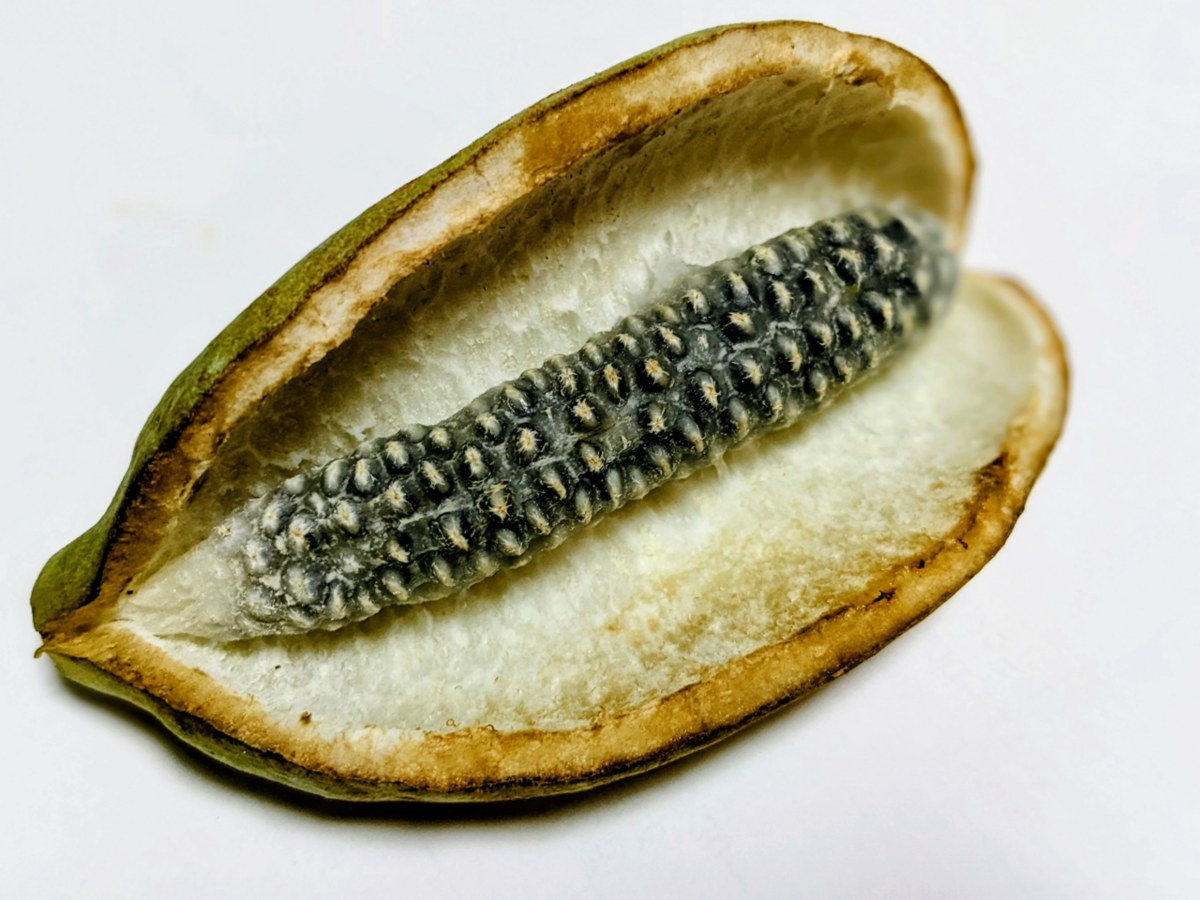
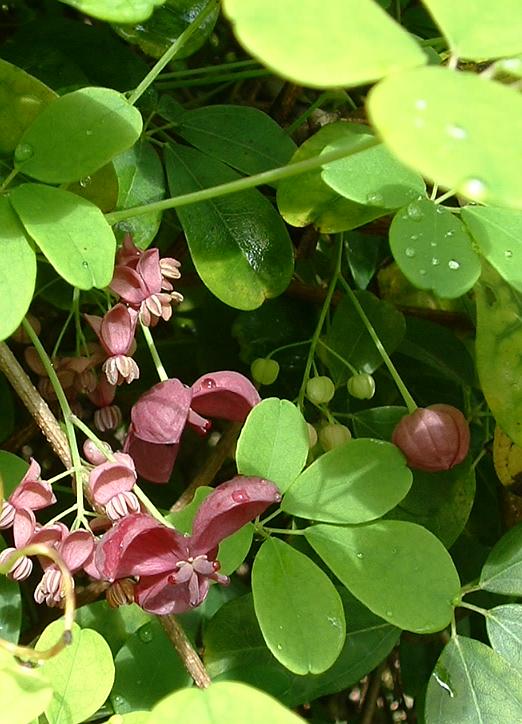
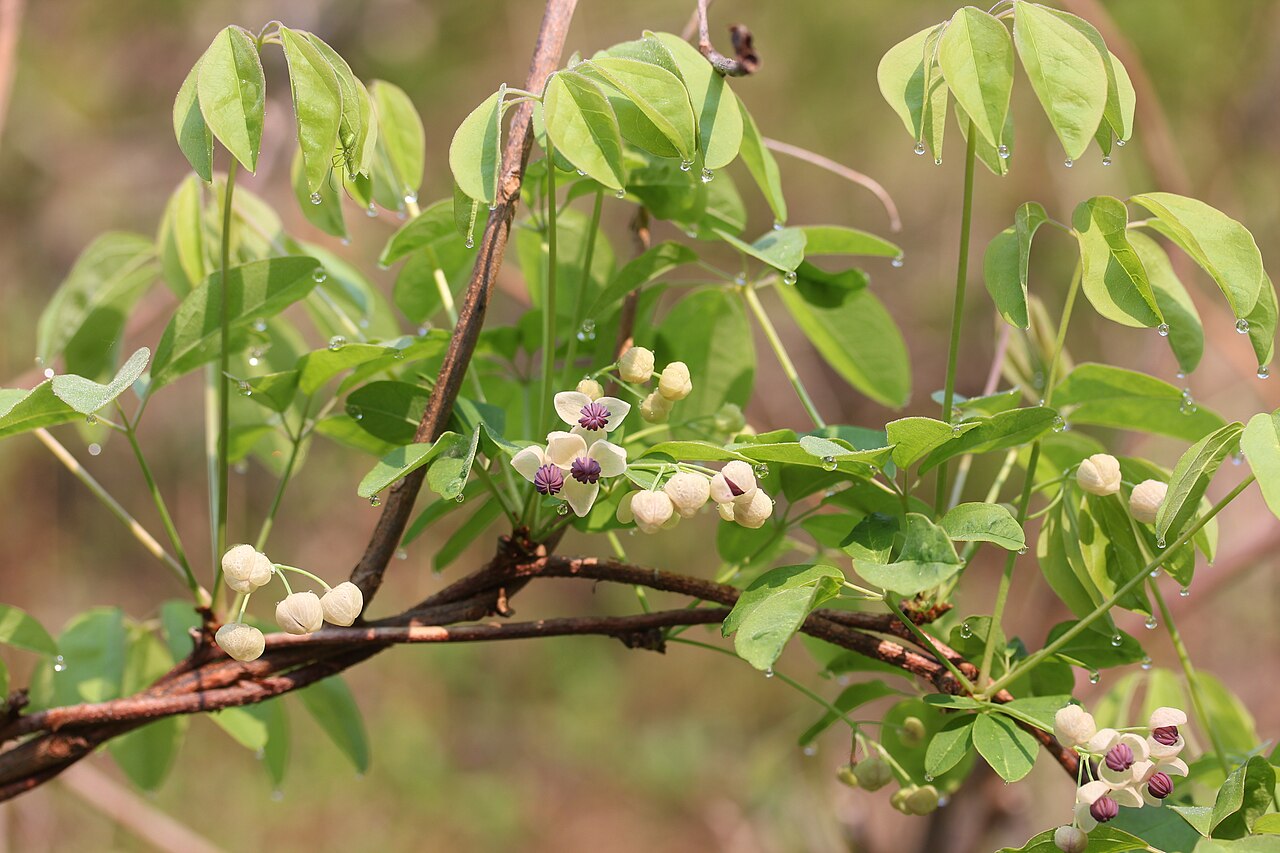
Akebia, the five-leaf chocolate vine, is a vigorous semi-evergreen vine whose spring flowers smell faintly of vanilla and chocolate, and whose purple pods split open in fall to reveal sweet, jelly-like pulp around black seeds. Give it a strong trellis, fence, or arbor — it climbs 20-40 feet and will swallow a weak support — in full sun to partial shade and well-drained soil. It fruits best with cross-pollination, so plant two genetically different plants, not two cuttings of one clone, or you will get flowers and empty promises. A frank warning belongs here: akebia is vigorous enough to be listed as invasive in parts of the eastern United States, so check your state list, plant it only where you can prune and contain it, and never let it escape into wild areas. In a contained garden, it is a delicious curiosity; outside one, it is a weed.
Water & feeding
Water while young and in dry spells; established akebia tolerates drought but fruits better with steady moisture. Mulch to hold moisture. Feed lightly in spring with compost; heavy nitrogen makes vines at the expense of flowers and fruit.
Common problems
- Invasiveness in the eastern US — prune hard, remove seedlings, and do not plant near natural areas where it is listed.
- No fruit — usually two clones of one plant, not two different plants; buy distinct varieties.
- Aphids on new growth — wash off and encourage ladybugs.
- Vine overwhelming its support — prune after flowering and again in winter to keep it in bounds.
Harvest
Pick pods when they split open on their own in fall — do not force them. Scoop the sweet, soft pulp and eat it fresh, spitting out the seeds; the rind is bitter and is usually cooked separately in Japan, not eaten raw. Use the pulp fresh, in desserts, or blended into drinks.
Browse all plant & pest guides
Saving seeds
Akebia seed saving starts with patience, and with a pod that has done the deciding for you. Wait until a pod splits open on its own in fall, then scoop out the sweet jelly-like pulp and wash the black seeds clean of it. Fresh seed is the reliable kind here: sow it promptly and it stands a fair chance, while stored seed turns stubborn and may barely germinate at all. That is the first honest rule of Akebia quinata — this vine does not keep its promises in a drawer.
The stubbornness has a name: dormancy. The seed wants a winter before it will wake up, so stored seed needs cold, moist stratification — mixed with damp vermiculite or sand in a bag in the refrigerator. How long? Sources disagree, and it is only fair to say so: some say about a month, others two to three months. Aim for the longer end if your seed has been stored, and sow outdoors in fall as the lazy alternative, letting a real winter do the work. Then sow on the surface or barely covered, because these seeds want light and steady moisture, not burial in a soggy pot. Germination is erratic — weeks to months, and never the tidy row the packet photograph implies.
Two warnings travel with every akebia seed. First, a seedling is not a clone. It will be akebia, but it will not reliably match a named cultivar, and fruit itself needs two genetically different plants, not two cuttings of one clone — so a lone seedling may flower beautifully and fruit never. Second, this vine is listed as invasive in parts of the eastern United States, so save and share seed only where it is legal and contained, and pull volunteers the way you would pull any weed with ambitions. In Florida, dry your seed thoroughly before it goes anywhere near a jar: our humidity will mold a half-dry seed in storage, so dry it completely, seal it airtight with a desiccant packet, and keep it cool and dark. And remember the timeline on the guide itself — a seedling takes years to fruit, so this is a project for a gardener who thinks in trellises, not weekends.
Varieties
Every named variety of Akebia with its own growing guide:
- Alba Akebia — The white chocolate vine: creamy-white, vanilla-scented flowers on the same vigorous twiner — and, usefully, the form least likely to set fruit.
- Rosea Akebia — The pink chocolate vine: pale pink to rose-colored, fragrant spring flowers on a 20- to 40-foot twiner that does not know when to stop.
- Silver Bells Akebia — The two-tone chocolate vine: silver-white male flowers with dark purple stamens beside pink female flowers, on a semi-evergreen twiner.