
🍇 Silver Bells Akebia
What it looks like
Why this variety
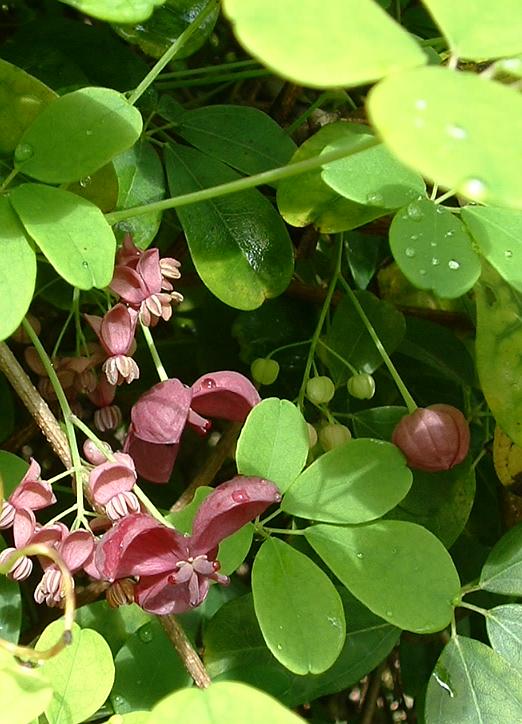
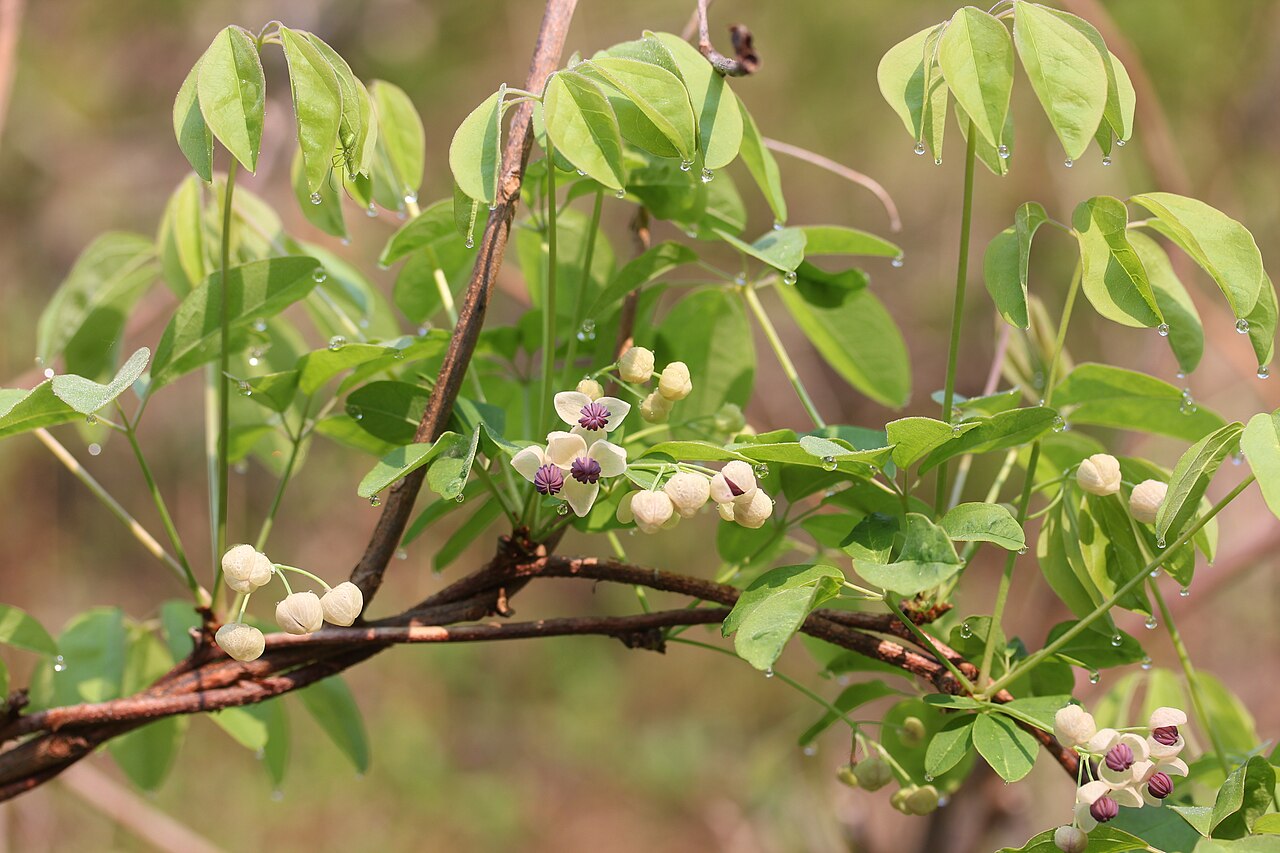
Silver Bells is the showiest of the named akebias, and the Royal Horticultural Society lists it as a distinct cultivar for good reason: its racemes carry silver-white male flowers with dark purple stamens alongside pinkish-purple female flowers, so each 12-centimeter cluster reads as two colors at once rather than one. The vine itself is the usual akebia — semi-evergreen, vigorous, 8 to 12 meters at maturity, with rounded dark-green five-leaflet leaves, blue-green beneath and tinted purple in winter — but the flower show is finer-grained and more interesting up close than the species’ solid purple.
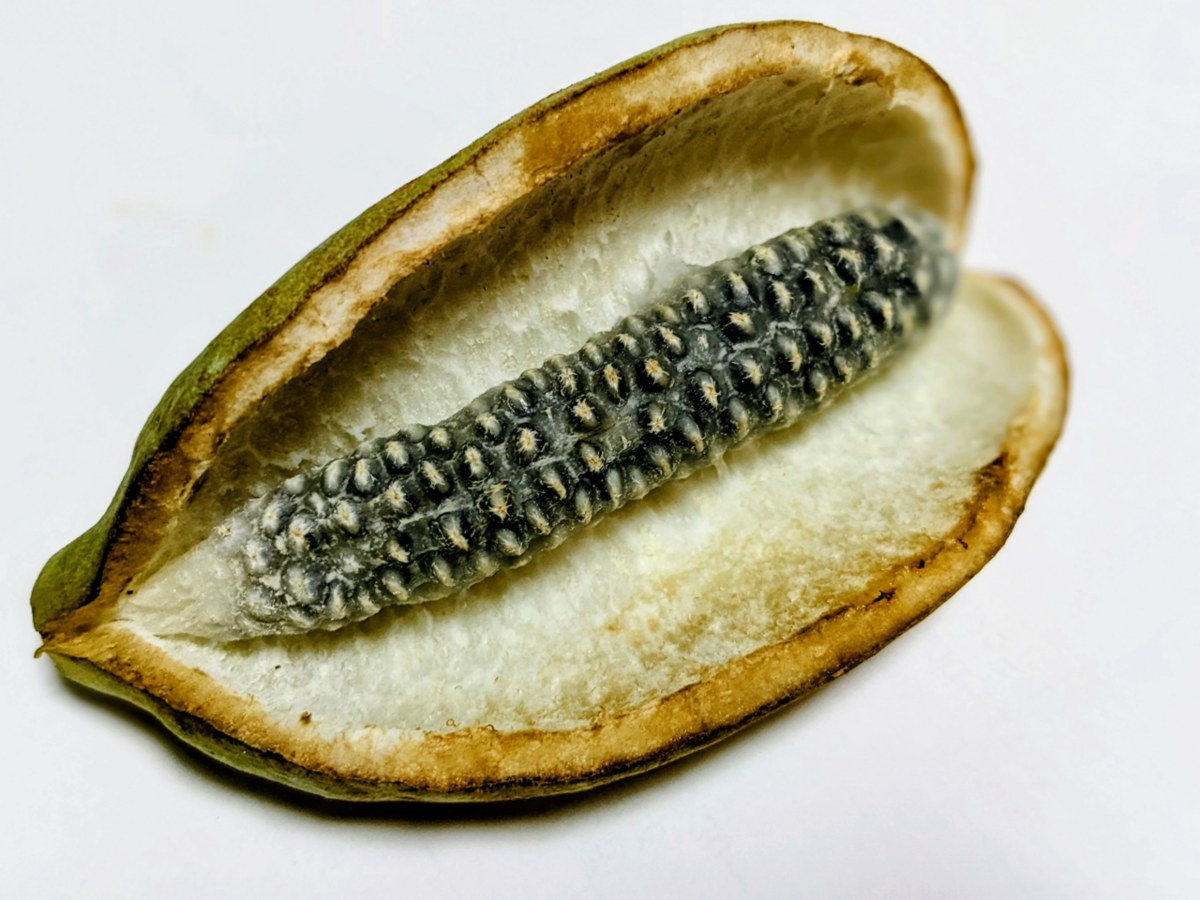
The trade-off, as always with akebia, is management: this is a vine that will cover a pergola, a wall, or a tree, and it needs a support strong enough to hold a woody climber that gains weight every year, plus a gardener willing to prune after flowering. Fruit, when it comes, needs long, hot summers and cross-pollination by another clone, so a lone ‘Silver Bells’ will usually flower without fruiting — which many gardeners prefer, since the pods split open and drop jelly-like pulp that is more curiosity than crop.
If you are new to choosing between cultivars, the Varieties Matter guide explains why the name after the plant matters as much as the plant itself. Silver Bells is a perfect example: it is not just a akebia in the abstract, it is a akebia with a specific job, a specific history, and specific strengths.
Florida honesty, stated plainly: akebia is a North Florida trial plant, not a statewide promise. It wants a cool winter rest and temperate summers, and Florida’s heat and humidity are not its native weather — expect it to struggle south of the Panhandle and to be short-lived or foliage-only in Central Florida. In North Florida, plant in part shade with rich, moist, well-drained soil, and treat flowering as a bonus. Keep it pruned and watch for escape: a vigorous exotic vine in a warm state is exactly the plant that needs a responsible owner.
How to grow
Plant in spring or fall in rich, well-drained soil, and give it a support worthy of a woody vine — a strong trellis, fence, or arbor, not a flimsy obelisk it will outgrow in a season. Akebia climbs by twining, so it needs something to wind around, and it needs pruning after flowering to stay in bounds: cut back long shoots, remove dead wood, and never let it climb into a tree you care about. Work worm castings into the planting hole, mulch to hold moisture, and water through the first season until established.
Set plants 6-10 feet apart along a support in soil with a pH around 6.0-7.5. Work worm castings into the bed at planting and mulch to hold moisture. A well-fed akebia plant rewards that care directly: steadier growth, better bloom, and a show that actually shows up.
Water & feeding
Keep soil evenly moist in the first season, then water through dry spells — established akebia is fairly drought-tolerant, but a young vine that dries out stalls. Water at the soil line, mulch to hold moisture, and feed lightly: castings at planting plus a balanced organic feed in spring is enough. Overfeeding a vigorous vine just makes a more vigorous vine, which is not always what you wanted.
Common problems
- Vigorous escape — akebia climbs into trees and spreads beyond its support; prune hard after flowering and never plant it near a natural area.
- No fruit on a lone vine — fruit needs cross-pollination by a different clone plus a long, hot summer; a lone vine usually flowers without fruiting, which many gardeners prefer.
- Scale and aphids on stressed vines — blast aphids with water, prune out badly infested growth, and avoid broad-spectrum sprays.
- Leaf spot in wet, humid conditions — space for air, water at the soil line, and remove badly spotted leaves.
- Winter dieback at the cold edge — cut back dead wood in spring; established vines regrow vigorously from the base.
Harvest
Harvest fruit, if it forms, in fall when pods split open to reveal sweet, jelly-like pulp around black seeds — taste a little before committing to a lot, because the flavor is mild and melon-like, not chocolatey, and the texture divides opinion. For flowers, cut a few spring racemes for scent indoors, but leave most on the vine for the bees. Prune after flowering for shape, not for harvest: the real yield of an akebia is shade, scent, and coverage, and the fruit is a bonus.
Browse all plant & pest guides
Saving seeds
Silver Bells is the showiest of the named akebias, and the Royal Horticultural Society lists it as a distinct cultivar for good reason: its racemes carry silver-white male flowers with dark purple stamens alongside pinkish-purple female flowers, so each 12-centimeter cluster reads as two colors at once rather than one. The vine itself is the usual akebia — semi-evergreen, vigorous, 8 to 12 meters at maturity, with rounded dark-green five-leaflet leaves, blue-green beneath and tinted purple in winter — but the flower show is finer-grained and more interesting up close than the species’ solid purple. As a named akebia it is kept true by cuttings, not by seed — plant in spring or fall in rich, well-drained soil, and give it a support worthy of a woody vine: a strong trellis, fence, or arbor, not a flimsy obelisk it will outgrow in a season. Akebia climbs by twining, so it needs something to wind around, and it needs pruning after flowering to stay in bounds: cut back long shoots, remove dead wood, and never let it climb into a tree you care about. The full method is in the Saving seeds section of the Akebia guide.