
🍇 Rosea Akebia
What it looks like
Why this variety
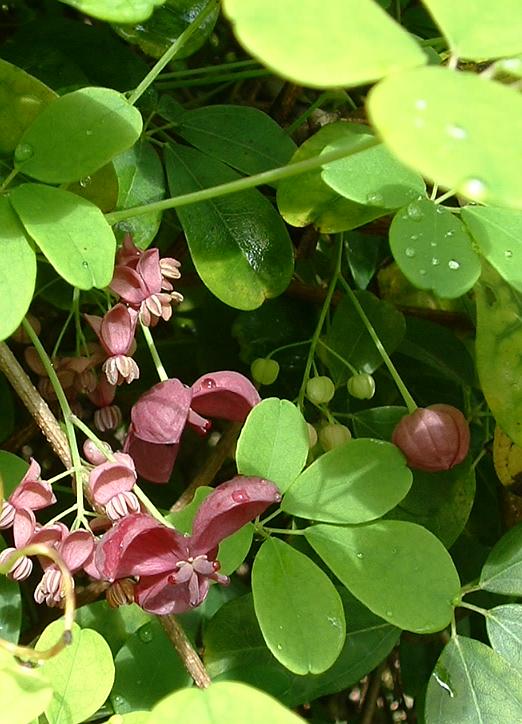
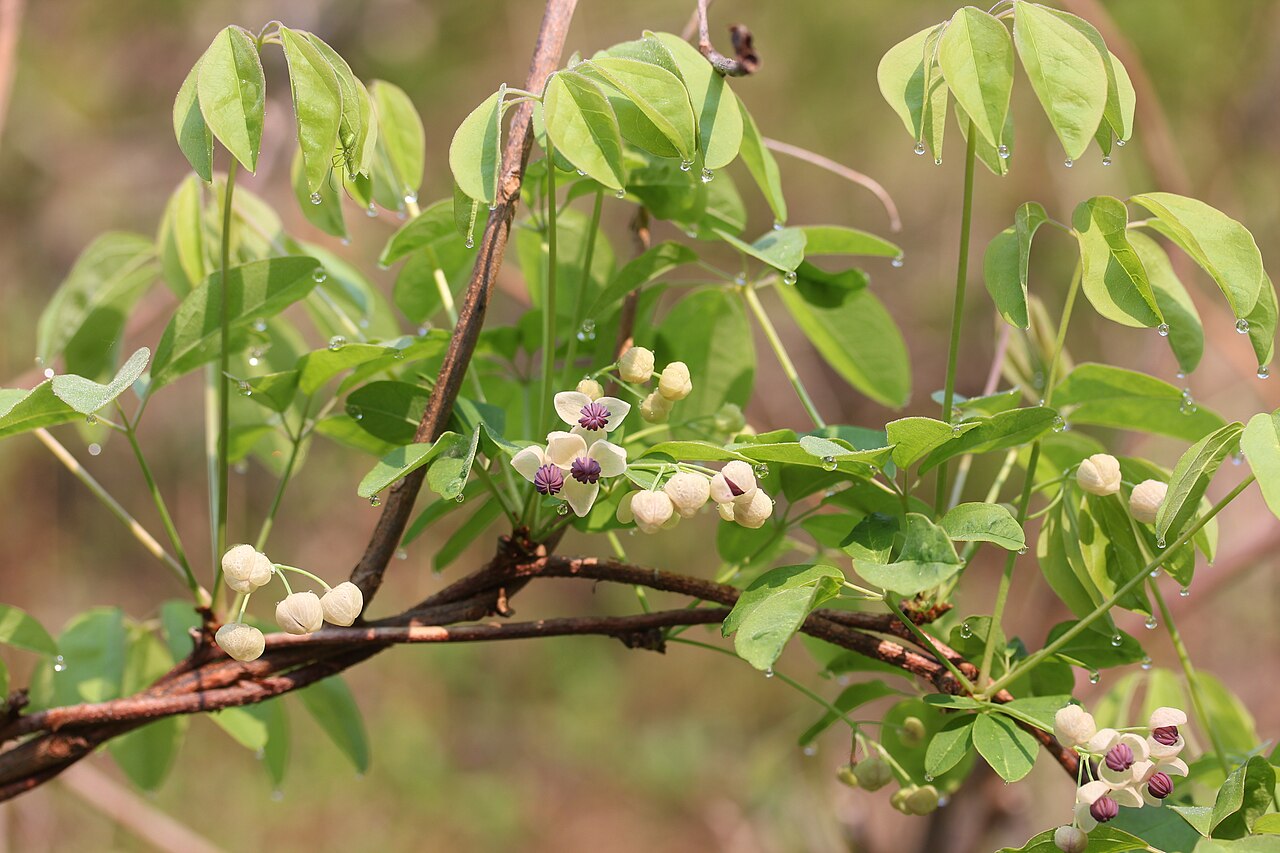
Rosea is the pink answer to the chocolate vine’s usual purple-brown: clusters of small, fragrant flowers in pale pink to rose in spring, over the same lush five-leaflet foliage, on a vine that climbs 20 to 40 feet when it has something to climb. The color is softer than the species, which makes it easier to place — it does not demand the garden’s attention the way the dark purple form does, and it pairs well with pale spring bulbs and white-flowered shrubs instead of competing with them.
The trade-off is the same as with every akebia: vigor. Rosea is not a polite vine that stays where you put it; it is a fast, twining, semi-evergreen climber that will cover an arbor in a season or two and then keep going into the nearest tree, fence, or gutter. Prune hard after flowering if you want it contained, and never plant it near a natural area you care about — in several eastern states it has escaped cultivation and earned invasive-plant warnings, and a responsible gardener treats that reputation as a real constraint, not a rumor.
If you are new to choosing between cultivars, the Varieties Matter guide explains why the name after the plant matters as much as the plant itself. Rosea is a perfect example: it is not just a akebia in the abstract, it is a akebia with a specific job, a specific history, and specific strengths.
Florida honesty, stated plainly: akebia is a North Florida trial plant, not a statewide promise. It wants a cool winter and a temperate summer, and Florida’s heat and humidity are not its home weather — expect struggle south of the Panhandle and short-lived or foliage-only performance in Central Florida. In North Florida, give it part shade, rich, moist, well-drained soil, and a support you can prune from safely. If it fails, it fails fast and honestly; if it succeeds, keep it pruned and watch for seedlings, because a vigorous vine in a warm state is a vine that needs a gardener, not just a trellis.
How to grow
Plant in spring or fall in rich, well-drained soil, and give it a support worthy of a woody vine — a strong trellis, fence, or arbor, not a flimsy obelisk it will outgrow in a season. Akebia climbs by twining, so it needs something to wind around, and it needs pruning after flowering to stay in bounds: cut back long shoots, remove dead wood, and never let it climb into a tree you care about. Work worm castings into the planting hole, mulch to hold moisture, and water through the first season until established.
Set plants 6-10 feet apart along a support in soil with a pH around 6.0-7.5. Work worm castings into the bed at planting and mulch to hold moisture. A well-fed akebia plant rewards that care directly: steadier growth, better bloom, and a show that actually shows up.
Water & feeding
Keep soil evenly moist in the first season, then water through dry spells — established akebia is fairly drought-tolerant, but a young vine that dries out stalls. Water at the soil line, mulch to hold moisture, and feed lightly: castings at planting plus a balanced organic feed in spring is enough. Overfeeding a vigorous vine just makes a more vigorous vine, which is not always what you wanted.
Common problems
- Vigorous escape — akebia climbs into trees and spreads beyond its support; prune hard after flowering and never plant it near a natural area.
- No fruit on a lone vine — fruit needs cross-pollination by a different clone plus a long, hot summer; a lone vine usually flowers without fruiting, which many gardeners prefer.
- Scale and aphids on stressed vines — blast aphids with water, prune out badly infested growth, and avoid broad-spectrum sprays.
- Leaf spot in wet, humid conditions — space for air, water at the soil line, and remove badly spotted leaves.
- Winter dieback at the cold edge — cut back dead wood in spring; established vines regrow vigorously from the base.
Harvest
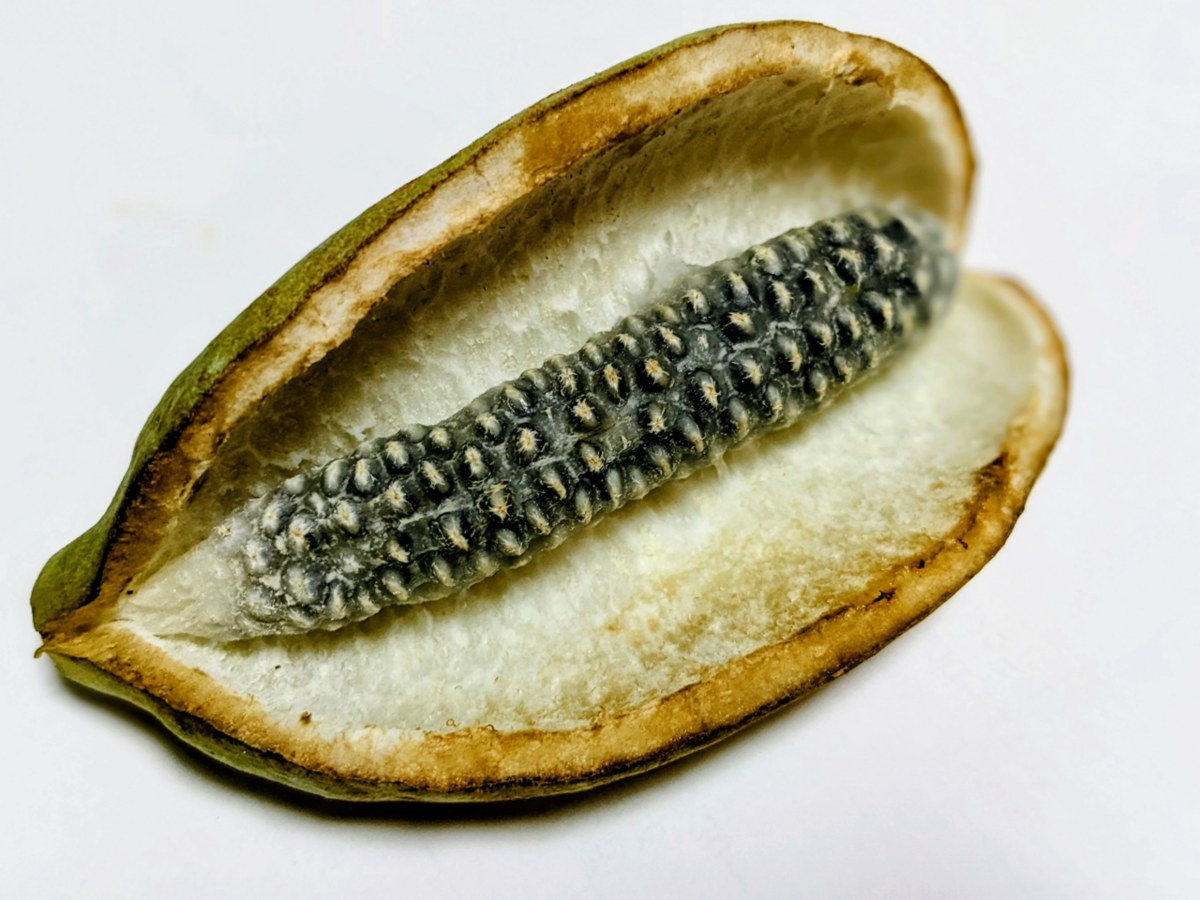
Harvest fruit, if it forms, in fall when pods split open to reveal sweet, jelly-like pulp around black seeds — taste a little before committing to a lot, because the flavor is mild and melon-like, not chocolatey, and the texture divides opinion. For flowers, cut a few spring racemes for scent indoors, but leave most on the vine for the bees. Prune after flowering for shape, not for harvest: the real yield of an akebia is shade, scent, and coverage, and the fruit is a bonus.
Browse all plant & pest guides
Saving seeds
Rosea is the pink answer to the chocolate vine’s usual purple-brown: clusters of small, fragrant flowers in pale pink to rose in spring, over the same lush five-leaflet foliage, on a vine that climbs 20 to 40 feet when it has something to climb. The color is softer than the species, which makes it easier to place — it does not demand the garden’s attention the way the dark purple form does, and it pairs well with pale spring bulbs and white-flowered shrubs instead of competing with them. As a named akebia it is kept true by cuttings, not by seed — seedlings would not hold the pale pink to rose flowers or the lush five-leaflet foliage. Plant in spring or fall in rich, well-drained soil, and give it a support worthy of a woody vine — a strong trellis, fence, or arbor, not a flimsy obelisk it will outgrow in a season. The full method is in the Saving seeds section of the Akebia guide.