
💜 Ruby Moon Hyacinth Bean
What it looks like
Why this variety
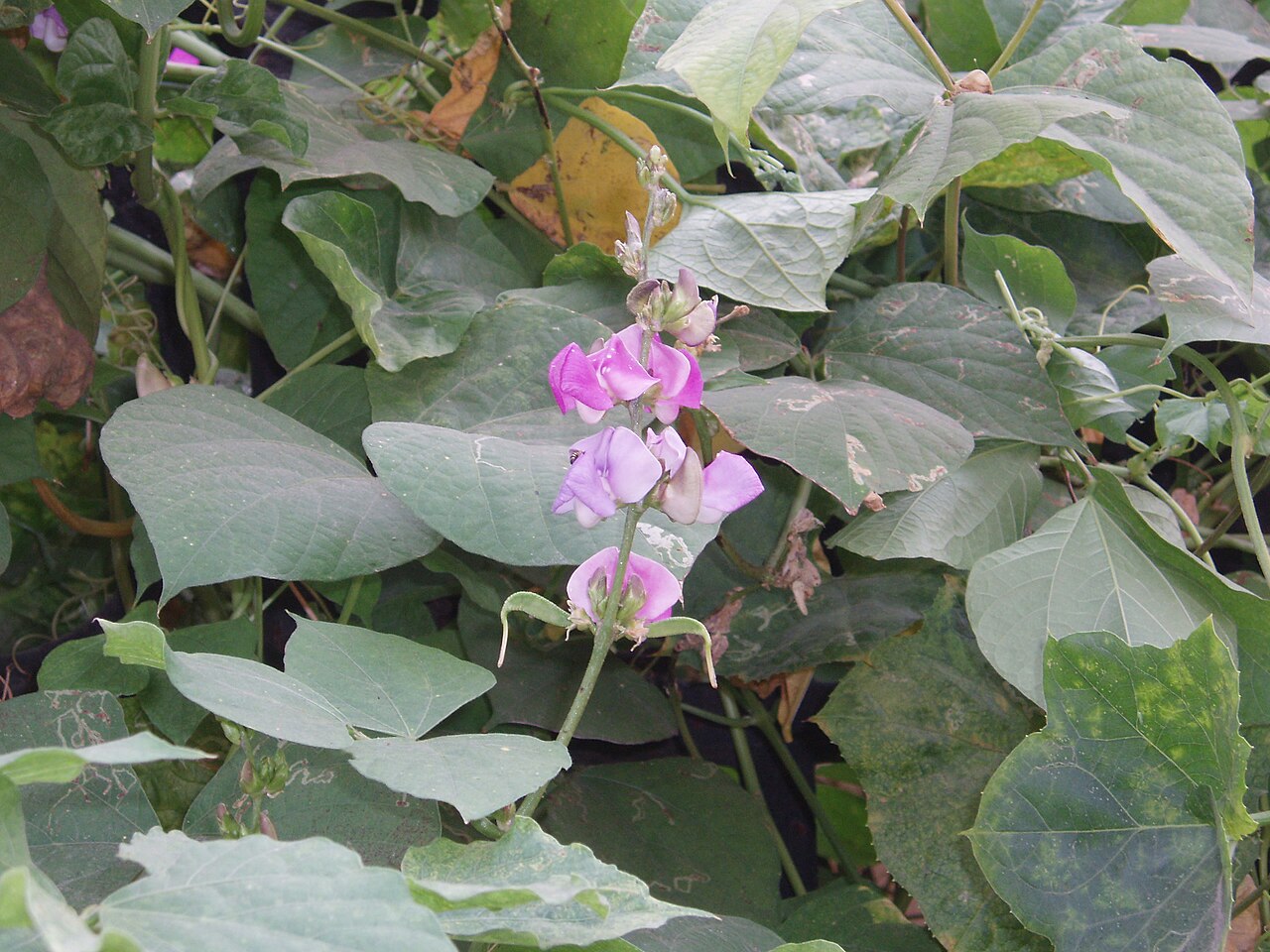
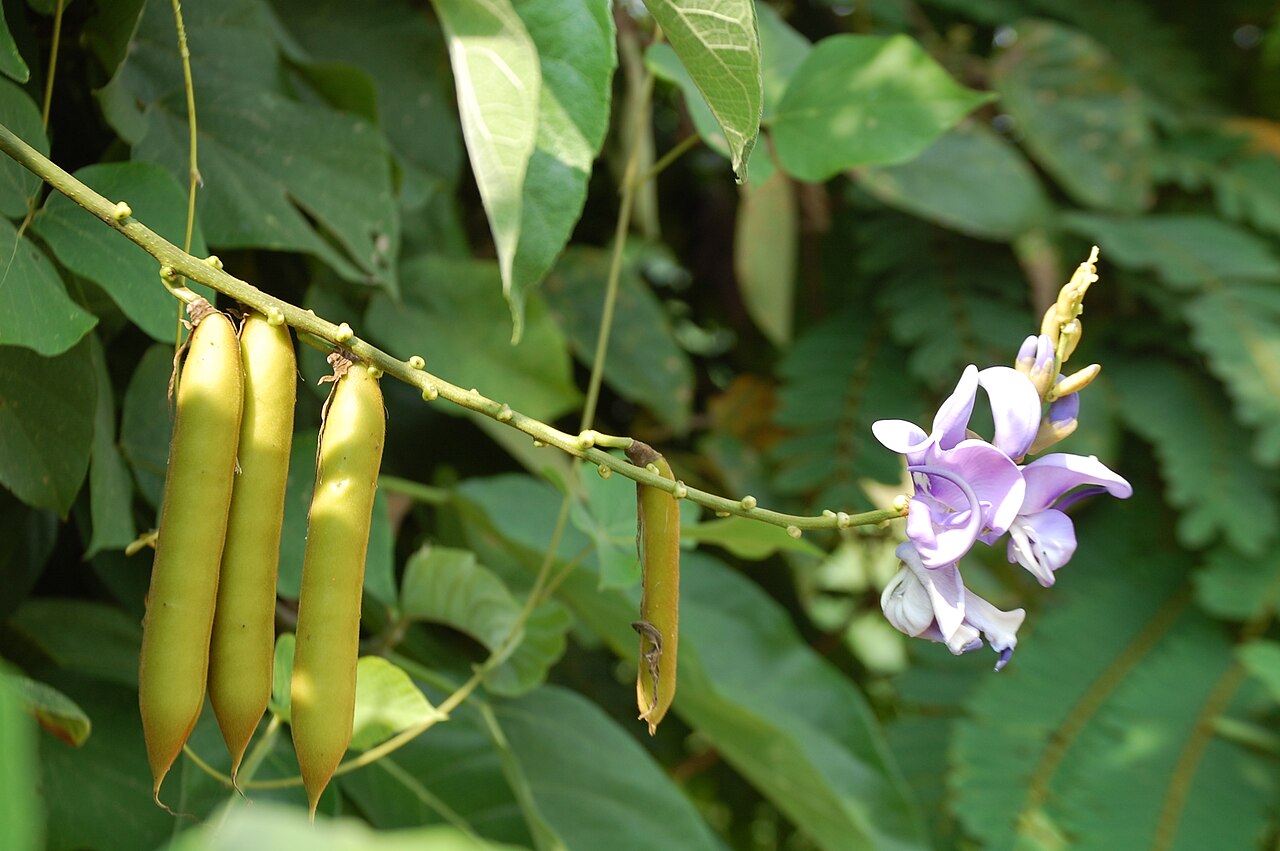
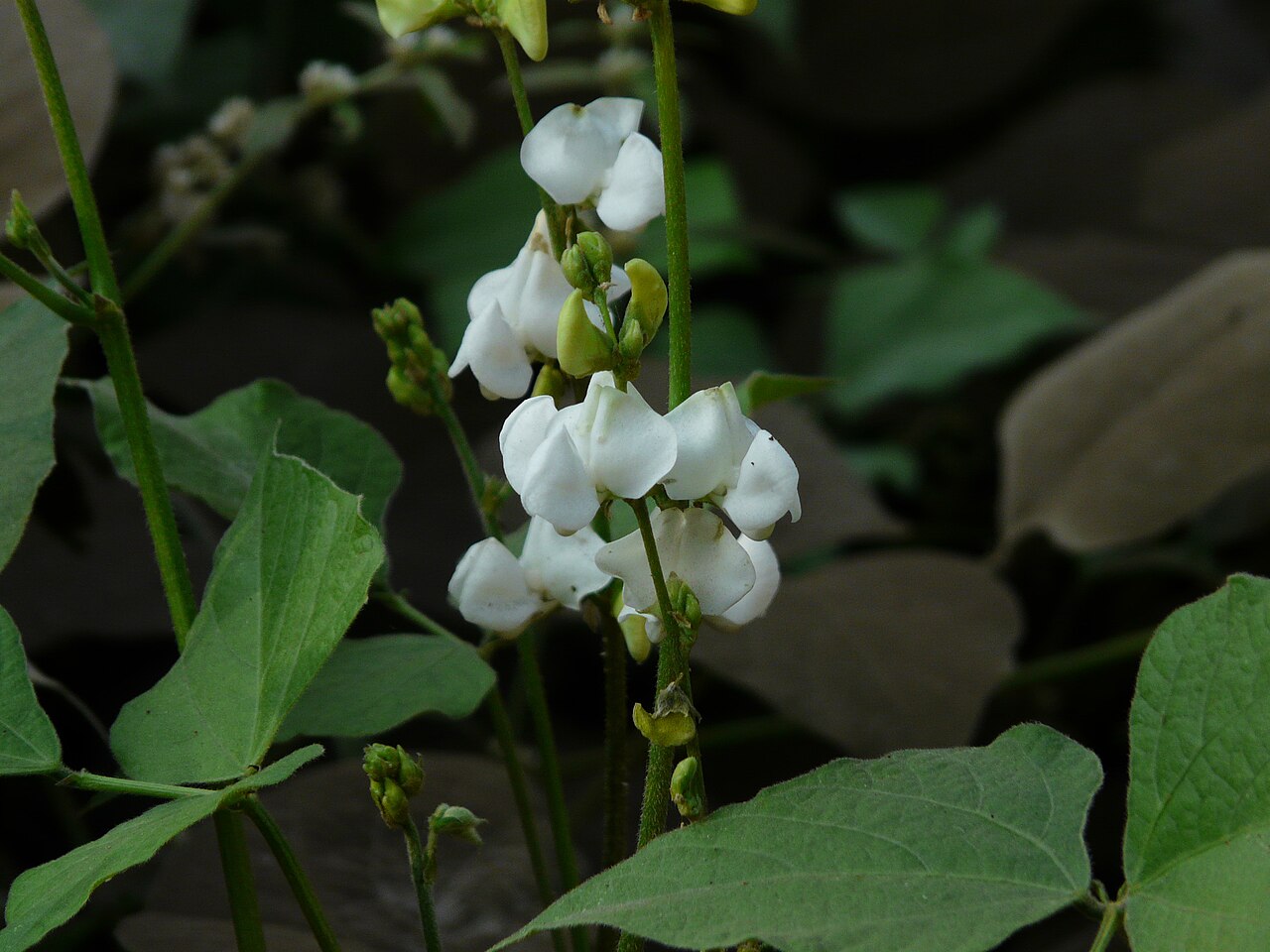
Ruby Moon is the hyacinth bean most gardeners picture when they hear the name: a vigorous vine with purple stems, pink-purple sweet-pea-like flowers, and showy purple pods that look ornamental enough for a flower garden and taste good enough for dinner — provided they are cooked thoroughly. It is the classic lablab, grown as much for screening a fence and feeding pollinators as for food, and it does all three jobs at once, which is a rare trick. Plants climb ten feet and more, flowers appear for months, and pods follow in clusters, purple and glossy, against dark green leaves.
The ornamental case is almost enough on its own: Ruby Moon turns an ugly fence into a flowering wall, attracts hummingbirds and bees all summer, and gives shade and privacy while it does it. The food case is the bonus — young pods, cooked well, are tender and bean-like, and the flowers themselves are edible when cooked — but the cooking warning is real and must be respected: mature hyacinth beans contain compounds that require thorough cooking, so young pods, well cooked, are the safe harvest, and raw beans are never a snack. Grow Ruby Moon for beauty first, food second, and respect the cooking rule always.
If you are new to choosing between cultivars, the Varieties Matter guide explains why the name after the plant matters as much as the plant itself. And if you want the whole clan at a glance, the broader Hyacinth Bean guide covers hyacinth beans generally.
How to grow
Hyacinth bean in Florida is almost unfairly well suited: it loves heat, it loves humidity, it climbs all summer while other beans quit, and in the warmer parts of the state it can even overwinter and come back. Give it a serious trellis — this is a vigorous vine that will swallow a flimsy support and then look for more — and sow after the last frost, once the soil is warm, in full sun. The flowers feed pollinators for months, the pods are showy enough to be ornamental, and the young pods, cooked thoroughly, are edible — that last point matters, because mature hyacinth beans must be cooked well and are not a raw snack. In a Florida garden, hyacinth bean is equal parts screen, pollinator plant, and dinner, and it does all three jobs at once.
Sow after the last frost, once the soil is warm, seeds an inch deep and 12 to 18 inches apart along a strong trellis, fence, or arbor — and mean strong, because a mature lablab vine is heavy and will pull down a flimsy support. In Florida, Ruby Moon can be perennial in the warmest gardens, coming back from the root after a mild winter, but treat it as an annual elsewhere and sow fresh each spring. Water steadily while establishing, mulch thickly, and train vines onto the support early, because a vine that starts on the ground stays on the ground.
Water & feeding
Hyacinth bean wants steady water while it establishes — about an inch a week — and once it is running, it tolerates dry spells better than most vines, though drought will slow flowering and pod set. Work worm castings into the planting hole, mulch thickly to hold moisture in sandy soil, and water at soil level. Go easy on nitrogen fertilizer: lablab fixes its own nitrogen, and extra nitrogen grows a jungle of leaves with fewer flowers. If the vine outgrows its trellis, prune the tips rather than letting it wander into the neighbor’s shrubs, because it will, given half a chance.
Common problems
Japanese beetles, bean beetles, and aphids may visit; check vines and hand-pick beetles, wash aphids off. Powdery mildew and other leaf diseases appear in humid, crowded growth — prune for air, water at soil level, and do not let vines mat into a solid, airless mass. Heat is not a problem — lablab loves heat — but drought slows flowering, so keep water steady while pods form. And repeat the safety rule in the garden, not just the kitchen: teach everyone who picks that hyacinth beans are cooked food, never raw, and mature dry beans need long, thorough cooking.
Harvest
Pick young pods when they are tender, glossy, and still small — about 65 to 90 days after sowing — and cook them thoroughly in soups, stir-fries, or curries, never eating them raw. Flowers can be cooked too, added to stir-fries. For dry beans, let pods mature fully, shell, and cook long and thoroughly before eating, following traditional preparation methods. Save seed from healthy vines; lablab is largely self-pollinating, though insects can cross varieties, so isolate if purity matters.
Nerdy fact: Hyacinth bean is also called lablab, and in many tropical cuisines it is a staple, not an ornamental — the purple flowers that American gardeners grow for beauty are, in India and Africa, the flowers of a serious food crop, which is a good reminder that ornamental and edible are often the same plant, seen from different angles.
Saving seeds
Ruby Moon is the hyacinth bean most gardeners picture when they hear the name: a vigorous vine with purple stems, pink-purple sweet-pea-like flowers, and showy purple pods that look ornamental enough for a flower garden and taste good enough for dinner — provided they are cooked thoroughly. It is the classic lablab, grown as much for screening a fence and feeding pollinators as for food, and it does all three jobs at once, which is a rare trick. As an open-pollinated hyacinth bean it comes true from seed: hyacinth bean in Florida is almost unfairly well suited — it loves heat, it loves humidity, it climbs all summer while other beans quit, and in the warmer parts of the state it can even overwinter and come back. Give it a serious trellis — this is a vigorous vine that will swallow a flimsy support and then look for more — and sow after the last frost, once the soil is warm, in full sun. The full method is in the Saving seeds section of the Hyacinth Bean guide.