
💜 Silver Moon Hyacinth Bean
What it looks like
Why this variety
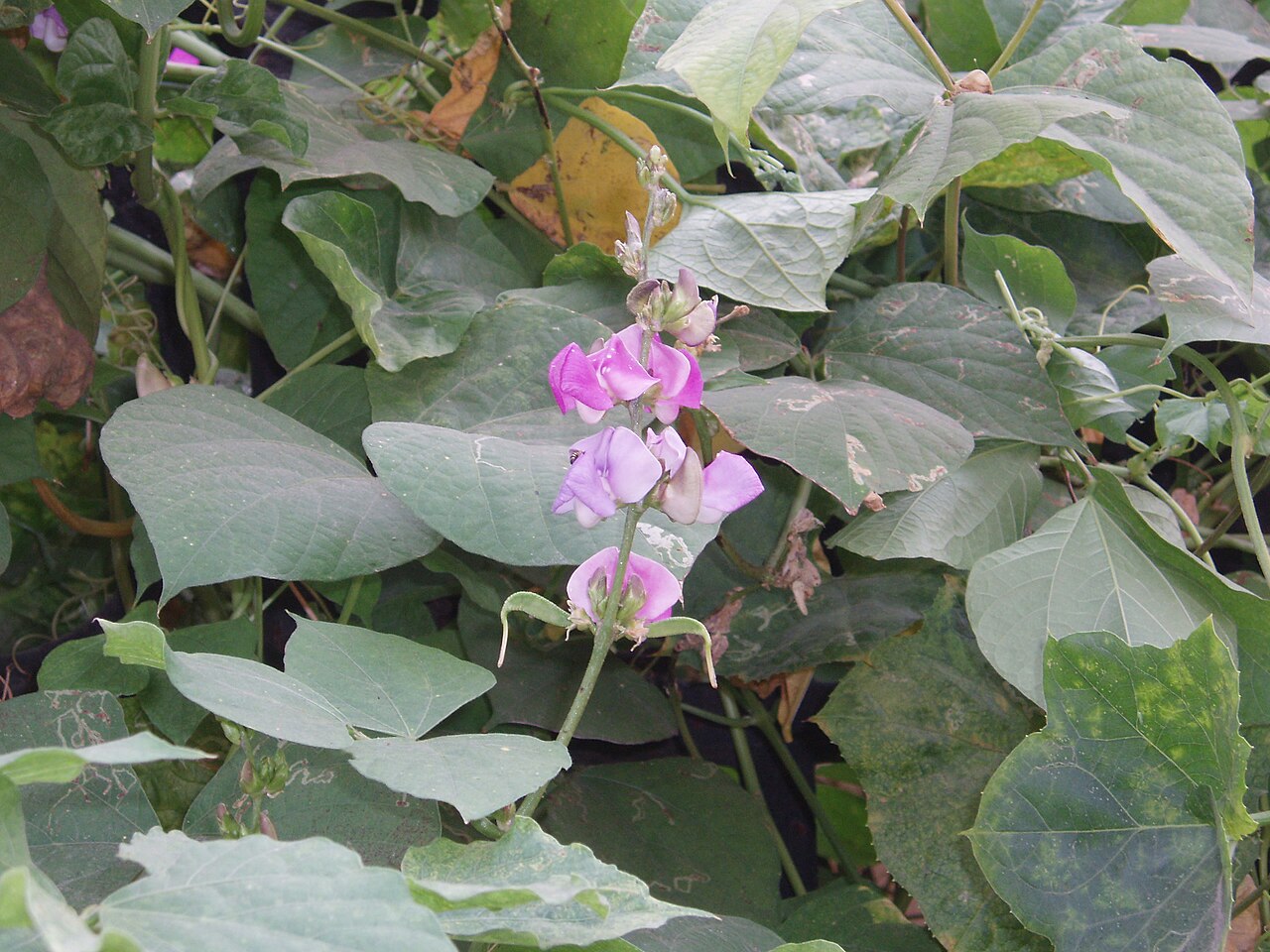
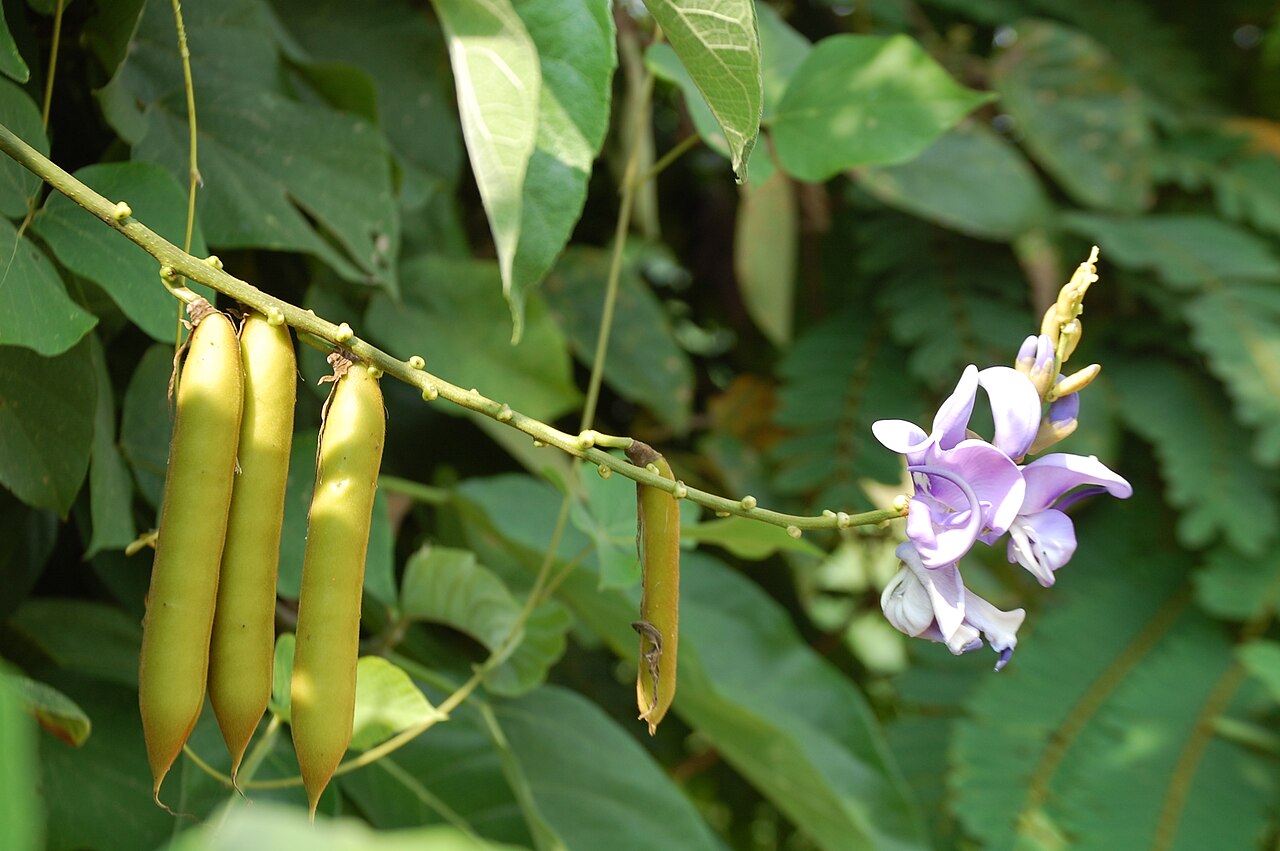
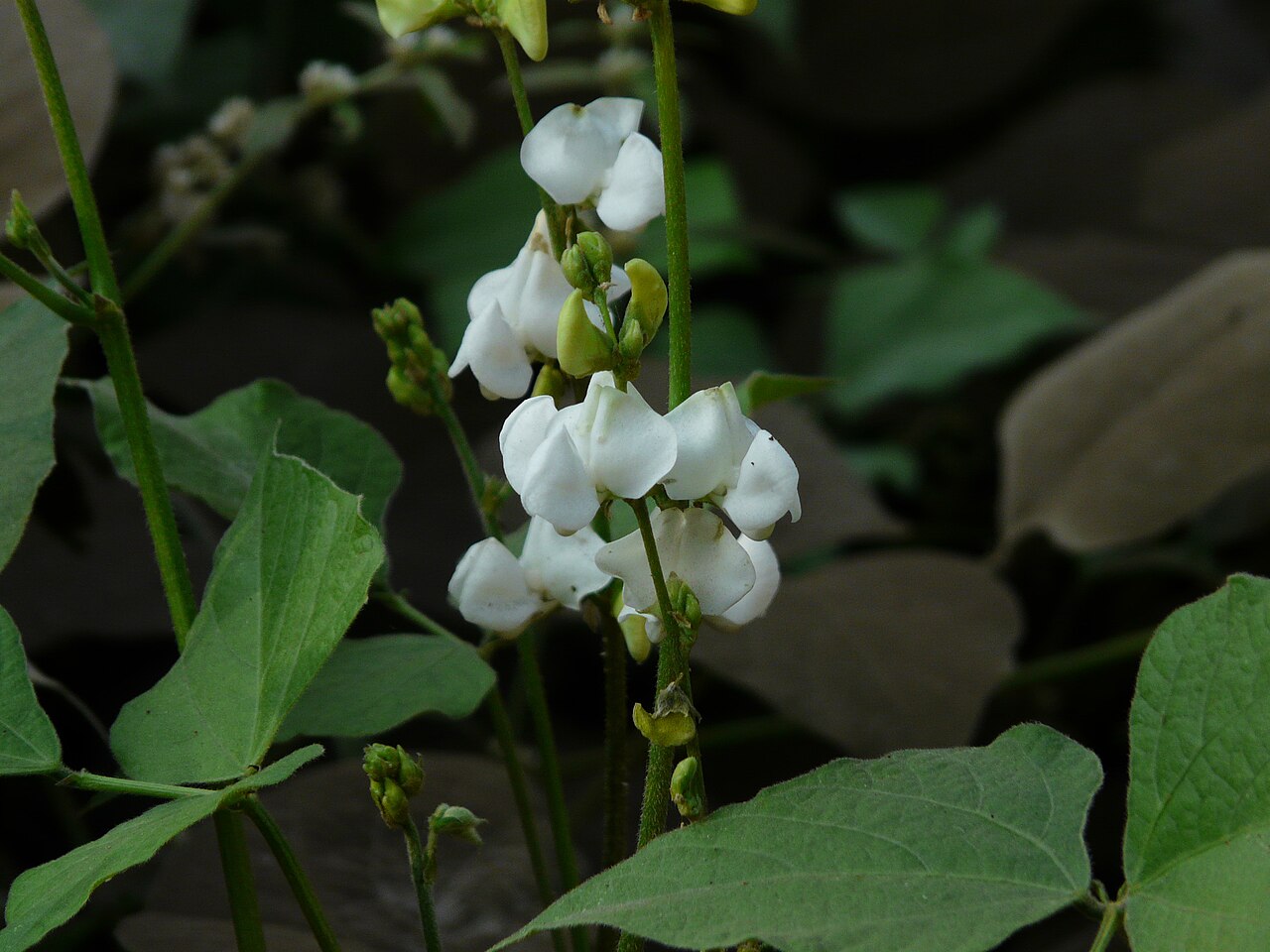
Silver Moon is Ruby Moon’s quieter sibling: a hyacinth bean with white flowers and green pods, on the same vigorous, heat-loving vine, for gardeners who want lablab’s screening, pollinator value, and food without the purple drama. The flowers are sweet-pea-like and white, the pods are green and glossy, and the vine climbs just as fast and just as far — ten feet and more, swallowing a trellis, fence, or arbor in a single season. If Ruby Moon is the showy one, Silver Moon is the elegant one, and in a garden already full of color, it is often the better choice.
The practical advantage is visibility: green pods against green leaves are harder to spot than purple pods, which means you must look more carefully at harvest — but the payoff is a vine that blends into a garden rather than dominating it, while still feeding pollinators for months and giving young pods for cooking. Silver Moon’s flowers are also a pollinator magnet, white blooms glowing in evening light and attracting moths as well as bees, which makes it a good choice for a garden you enjoy at dusk. Food rules are identical to Ruby Moon: young pods, cooked thoroughly, never raw, and mature beans only after long cooking.
If you are new to choosing between cultivars, the Varieties Matter guide explains why the name after the plant matters as much as the plant itself. And if you want the whole clan at a glance, the broader Hyacinth Bean guide covers hyacinth beans generally.
How to grow
Hyacinth bean in Florida is almost unfairly well suited: it loves heat, it loves humidity, it climbs all summer while other beans quit, and in the warmer parts of the state it can even overwinter and come back. Give it a serious trellis — this is a vigorous vine that will swallow a flimsy support and then look for more — and sow after the last frost, once the soil is warm, in full sun. The flowers feed pollinators for months, the pods are showy enough to be ornamental, and the young pods, cooked thoroughly, are edible — that last point matters, because mature hyacinth beans must be cooked well and are not a raw snack. In a Florida garden, hyacinth bean is equal parts screen, pollinator plant, and dinner, and it does all three jobs at once.
Sow after the last frost in warm soil, seeds an inch deep and 12 to 18 inches apart along a strong trellis, in full sun. In the warmest Florida gardens, Silver Moon may overwinter and resprout, but treat it as an annual elsewhere. Water steadily while establishing, mulch thickly, train vines early onto the support, and prune tips if the vine outgrows its trellis — it will, given half a chance, and a pruned vine branches and flowers more anyway. Give it room, because a lablab vine with nowhere to go becomes a ground-covering tangle.
Water & feeding
Hyacinth bean wants steady water while it establishes — about an inch a week — and once it is running, it tolerates dry spells better than most vines, though drought will slow flowering and pod set. Work worm castings into the planting hole, mulch thickly to hold moisture in sandy soil, and water at soil level. Go easy on nitrogen fertilizer: lablab fixes its own nitrogen, and extra nitrogen grows a jungle of leaves with fewer flowers. If the vine outgrows its trellis, prune the tips rather than letting it wander into the neighbor’s shrubs, because it will, given half a chance.
Common problems
Bean beetles, Japanese beetles, and aphids are the usual visitors; hand-pick beetles and wash aphids off. Leaf diseases appear in humid, matted growth, so prune for air and water at soil level. Drought slows flowering, so keep water steady through pod set. And the safety rule stands for every hyacinth bean, whatever the flower color: young pods cooked thoroughly, mature beans cooked long, never raw — color does not change the chemistry, only the appearance.
Harvest
Pick young, tender pods at 65 to 90 days, cook thoroughly, and use in stir-fries, soups, and curries. Cook flowers too if you like, and let some pods mature for dry beans, cooking them long and thoroughly by traditional methods. Save seed from healthy vines, noting that insects can cross lablab varieties, so separate Silver Moon from Ruby Moon if you want pure seed — or let them cross and enjoy the surprise, as many gardeners do.
Nerdy fact: White-flowered lablab types like Silver Moon are a reminder that a species is not a color: the same plant that makes purple pods in one variety makes green pods in another, and the difference is a few genes for pigment, not a different plant — which is why variety names, not just species names, matter in the garden.
Saving seeds
Silver Moon is Ruby Moon’s quieter sibling: a hyacinth bean with white flowers and green pods, on the same vigorous, heat-loving vine, for gardeners who want lablab’s screening, pollinator value, and food without the purple drama. The flowers are sweet-pea-like and white, the pods are green and glossy, and the vine climbs just as fast and just as far — ten feet and more, swallowing a trellis, fence, or arbor in a single season. As an open-pollinated hyacinth bean it comes true from seed: hyacinth bean in Florida is almost unfairly well suited — it loves heat, it loves humidity, it climbs all summer while other beans quit, and in the warmer parts of the state it can even overwinter and come back. Give it a serious trellis — this is a vigorous vine that will swallow a flimsy support and then look for more — and sow after the last frost, once the soil is warm, in full sun. The flowers feed pollinators for months, the pods are showy enough to be ornamental, and the young pods, cooked thoroughly, are edible — that last point matters, because mature hyacinth beans must be cooked well and are not a raw snack. The full method is in the Saving seeds section of the Hyacinth Bean guide.