
🌺 Thai Red Roselle
What it looks like

Why this variety
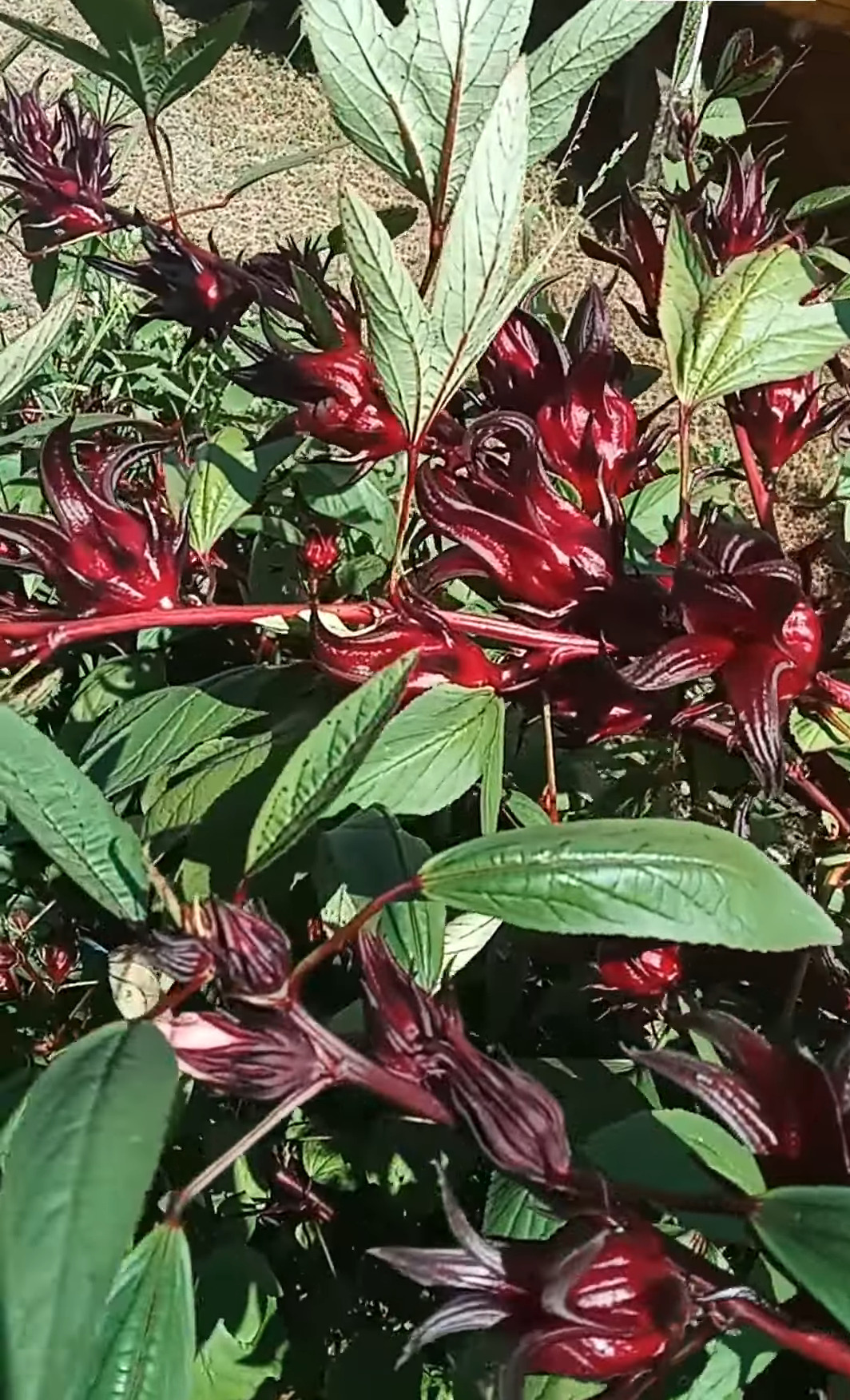
Thai Red is roselle’s standard-bearer, and for a practical reason: it is the one selection generally available to home gardeners, sold by seed houses across the country, with a track record in southern gardens. It grows 3–5 feet tall and wide, with red stems, deep red-veined leaves, creamy yellow flowers with dark red eyes, and — the prize — fleshy, deep red calyces that swell around the seed pod after flowers fade and make the tart, cranberry-like tea known as sorrel, Jamaica, or Florida cranberry.
In Florida, roselle is in its element: it wants heat, sun, and a long frost-free season, and it returns the favor with armloads of calyces from late summer into fall. It is a tropical hibiscus, not a hardy one, so anywhere colder it is a warm-season annual started indoors — but in zones 9–11 it can overwinter and grow into a shrub, which is why southern gardeners treat it as a perennial while northern ones treat it as a summer project.
How to grow
Start seed indoors 6–8 weeks before last frost, soaking seed overnight to help germination, which needs warm soil (75–85°F); or direct-sow in May in zones 8–11 once nights stay warm. Transplant only after nights stay warm — roselle does not tolerate cold at all — into full sun and fertile, well-drained soil, spacing 36 inches apart.
Pinch or prune plants when 12–18 inches tall to encourage branching, which means more flowers and more calyces; an unpruned roselle grows tall and leggy, a pruned one grows bushy and productive. Stake tall plants in windy spots, mulch to hold moisture, and give each plant room — a mature Thai Red is 3–4 feet wide and very vigorous.
Water & feeding
Water deeply and regularly through the growing season; roselle is a fast, thirsty grower in heat and yields best with consistent moisture, though it tolerates short dry spells once established. In Florida’s rainy season, drainage still matters — wet feet rot it even as it drinks heavily.
Feed moderately with castings at planting and a balanced side-dress as plants begin to flower. Roselle is a heavy feeder for a hibiscus, and hungry plants yield small, thin calyces; well-fed plants yield the thick, fleshy cups you want for tea.
Common problems
- Cold — the hard limit. A single frost finishes roselle; start indoors where seasons are short and transplant only after warm nights.
- Aphids on buds and young growth — a strong water jet or insecticidal soap handles them; heavy infestations usually mean a stressed plant.
- Whiteflies in late summer — common on hibiscus; encourage beneficials, remove heavily infested leaves, and avoid broad-spectrum sprays that kill the predators too.
- Short seasons in cool climates — roselle needs 120–150 days to calyces, so northern gardeners must start early indoors and choose the warmest, sunniest spot available.
Harvest
Harvest calyces after flowers drop, when the fleshy red cups are full-grown but still tender, about 1.5–2 inches long and bright, shiny cranberry-red. Twist or snip calyces from the plant, push the seed pod out while the calyx is fresh, and use fresh for tea, syrup, jelly, and sauces, or dry calyces on a screen for winter tea — dried calyces store for months in sealed jars.
Young leaves are edible too, with a tart, citrusy flavor for salads and cooking, and seeds can be roasted. Pick regularly through fall; a plant picked often keeps producing, while a plant left unpicked puts energy into seed instead of new calyces.
Browse all plant & pest guides
Saving seeds
Thai Red is roselle’s standard-bearer, and for a practical reason: it is the one selection generally available to home gardeners, sold by seed houses across the country, with a track record in southern gardens. It grows 3–5 feet tall and wide, with red stems, deep red-veined leaves, creamy yellow flowers with dark red eyes, and — the prize — fleshy, deep red calyces that swell around the seed pod after flowers fade and make the tart, cranberry-like tea known as sorrel, Jamaica, or Florida cranberry. In Florida, roselle is in its element: it wants heat, sun, and a long frost-free season, and it returns the favor with armloads of calyces from late summer into fall. As an open-pollinated heirloom — Sow True Seed lists Thai Red Roselle as Open Pollinated, and Southern Exposure Seed Exchange sells it as Thai Red Heirloom Roselle — saved seed comes true. The full method is in the Saving seeds section of the Roselle guide.