
🌺 Roselle
What it looks like

How to grow
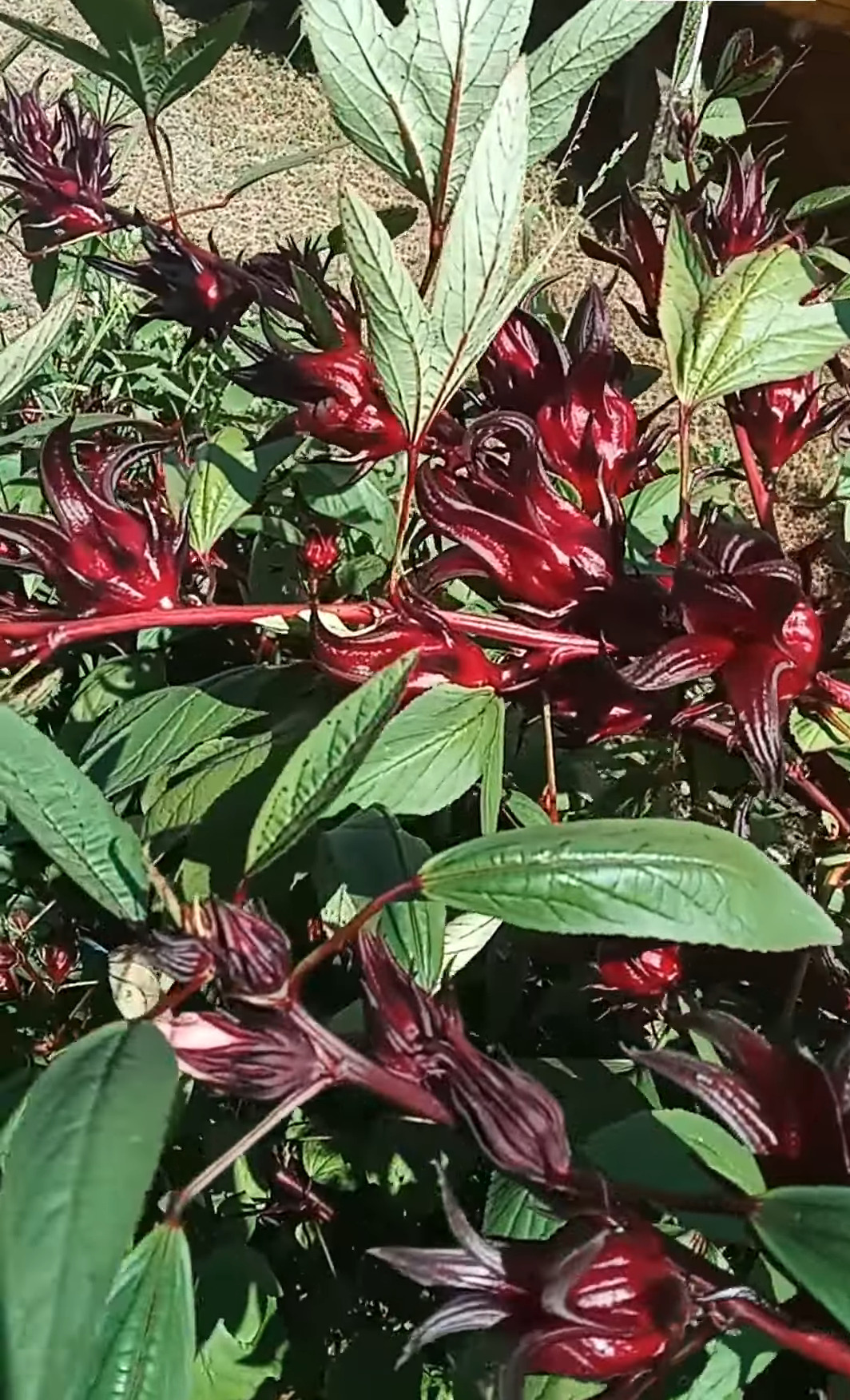
Roselle is a tall, bushy tropical hibiscus, 4-6 feet, with maple-like leaves, pale yellow flowers with a dark red eye, and — the prize — fleshy, ruby-red calyces that swell around the seed pod after flowers fade. Start seed indoors 6-8 weeks before last frost, soaking overnight to help germination, and transplant only after nights stay warm; roselle needs a long, hot, frost-free season and does not tolerate cold at all. Plant in full sun and well-drained, fertile soil, and give it room: a mature plant is 3-4 feet wide and very vigorous. In zones 9-11 it can overwinter as a short-lived perennial; everywhere else, grow it as a summer annual and start early indoors, since calyces need a full season to form and ripen before frost. In Florida, roselle is at its best — it loves heat and humidity — and it is one of the most rewarding tropical herbs for Gulf South gardeners.
Water & feeding
Water regularly — about an inch to an inch and a half a week — for lush growth and plump calyces; drought makes plants stunted and calyces small. Feed with compost at planting and a balanced fertilizer once or twice during the season; roselle is a hungry plant for a herb, and lean soil gives smaller harvests. Mulch to hold moisture, and stake tall plants in windy spots.
Common problems
- Short seasons — in cool climates, start early indoors and choose the sunniest spot; calyces need a long, hot summer to ripen.
- Frost — one cold night ends the season; harvest calyces before first frost and treat plants as annuals in cold zones.
- Aphids and whiteflies on buds — usually minor; blast with water and let beneficial insects handle the rest.
- Leggy growth in shade — grow in full sun for the bushiest plants and the most calyces.
Harvest
Pick calyces in late summer and fall, when they are plump, ruby-red, and just starting to open at the tip — snap them off the stem, peel away the papery outer layer, and use fresh or dry them promptly in a warm, airy place for teas, jams, and sauces. The tart, cranberry-like flavor is the point, and dried calyces keep for months in a jar. This guide is about growing only: roselle is a common food and tea plant, and normal culinary amounts are the way to enjoy it — if you are considering it for health reasons, talk to a clinician first, especially since it can lower blood pressure. Leave a few pods to ripen for seed, and save seed for next year’s patch.
Browse all plant & pest guides
Saving seeds
Roselle seed is easy to save — the plant makes it in abundance, and it practically falls into your hand. Grow roselle for its ruby-red calyces, and let a few calyces stay on the plant past harvest until they dry and split open. Inside each dried calyx is a seed pod, and inside the pod are small kidney-shaped seeds. Crack the pods open, save the seeds, and spread them in a single layer to dry for a few days. Store them in a paper envelope in a cool, dry place. Properly dried roselle seed keeps for several years.
Sow after the last frost, once the soil is warm — roselle wants heat, and seed sown into cold soil will sit and rot. Sow about half an inch deep in a warm, well-draining mix, or direct-sow where the plant will grow, and keep it moist and warm, around 75 to 85°F. Germination usually comes in one to two weeks. A light soak overnight before sowing speeds things along, and so does nicking the seed coat — roselle seed has a hard coat, and a little help getting water in is worth the effort. Give each plant room: roselle grows into a shrubby plant several feet tall and wide, and it will shade out its neighbors if you crowd it.
The cross-pollination catch is small but worth knowing. Roselle is Hibiscus sabdariffa, and it crosses with other roselle varieties — and, less readily, with other hibiscus in the neighborhood. If you grow two roselle types for seed in the same season, your saved seed may produce plants that are a mix. The reliable fix is to grow only one variety for seed at a time, or to bag and hand-pollinate a few flowers and mark the calyx with a ribbon so you know which one carries your saved seed.
Save seed from a plant that was vigorous, healthy, and heavily productive — the one with the fattest, reddest calyces — and save more than you need. In Florida, roselle is in its element: it loves the heat and the humidity, grows fast in the warm season, and fruits heavily into fall. Dry your seed thoroughly before storing it, because our humidity is the enemy of stored seed, and a packet that feels dry on a damp day may not be dry at all.
Varieties
Every named variety of Roselle with its own growing guide:
- Thai Red Roselle — The roselle everyone actually grows: red stems, deep red calyces, and the tart, cranberry-like tea — the one selection generally available to home gardeners.
- White Roselle — The green-calyx roselle: pale, lemony calyces for soups and sauces — the roselle that is a vegetable, not a tea.
- Victor Roselle — One of the best-known edible roselles: a classic red-calyx selection for teas, jams, and sauces — the name to know when you want the real thing.