
🏛️ Veitchii Boston Ivy
What it looks like
Why this variety
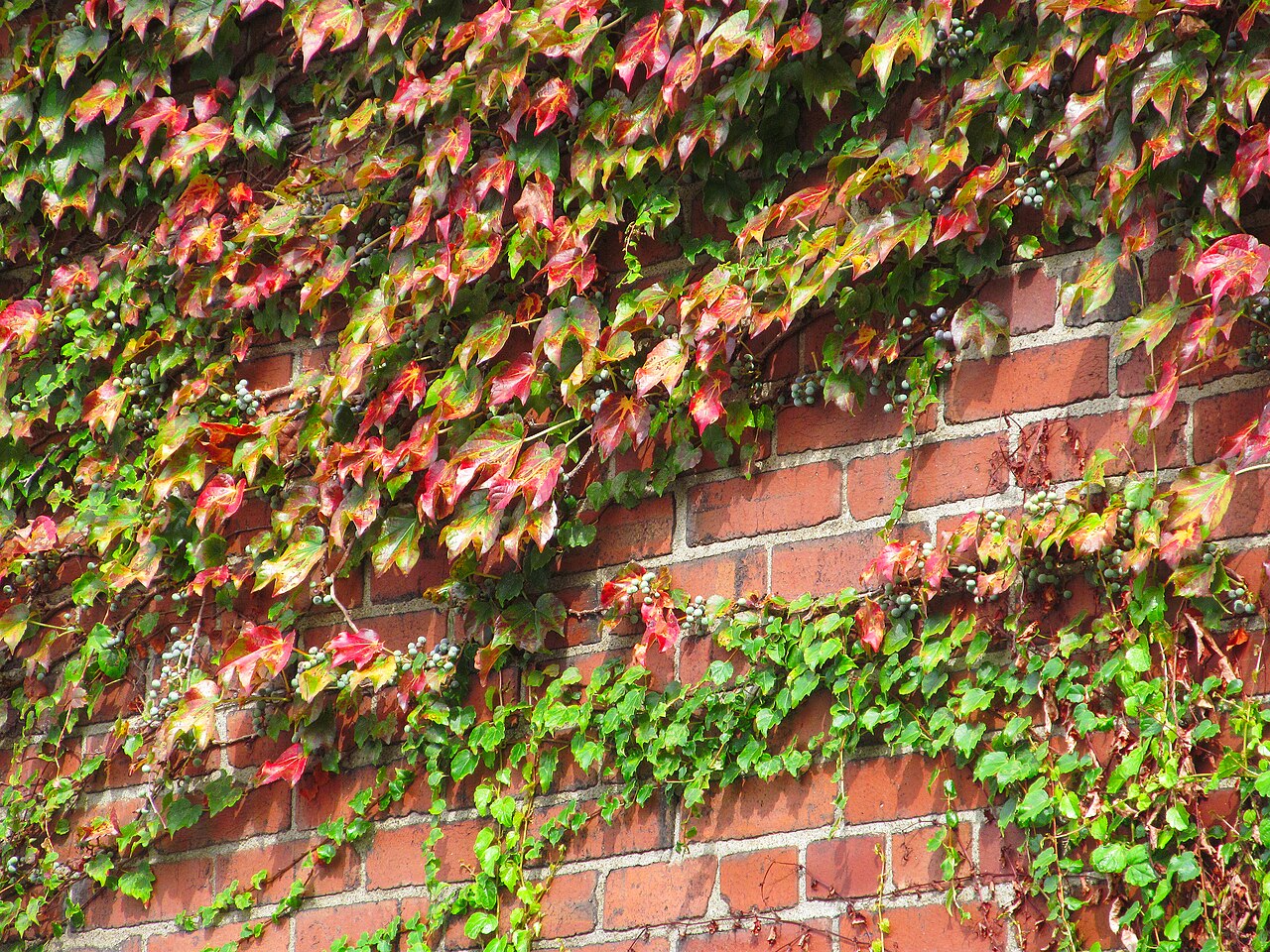
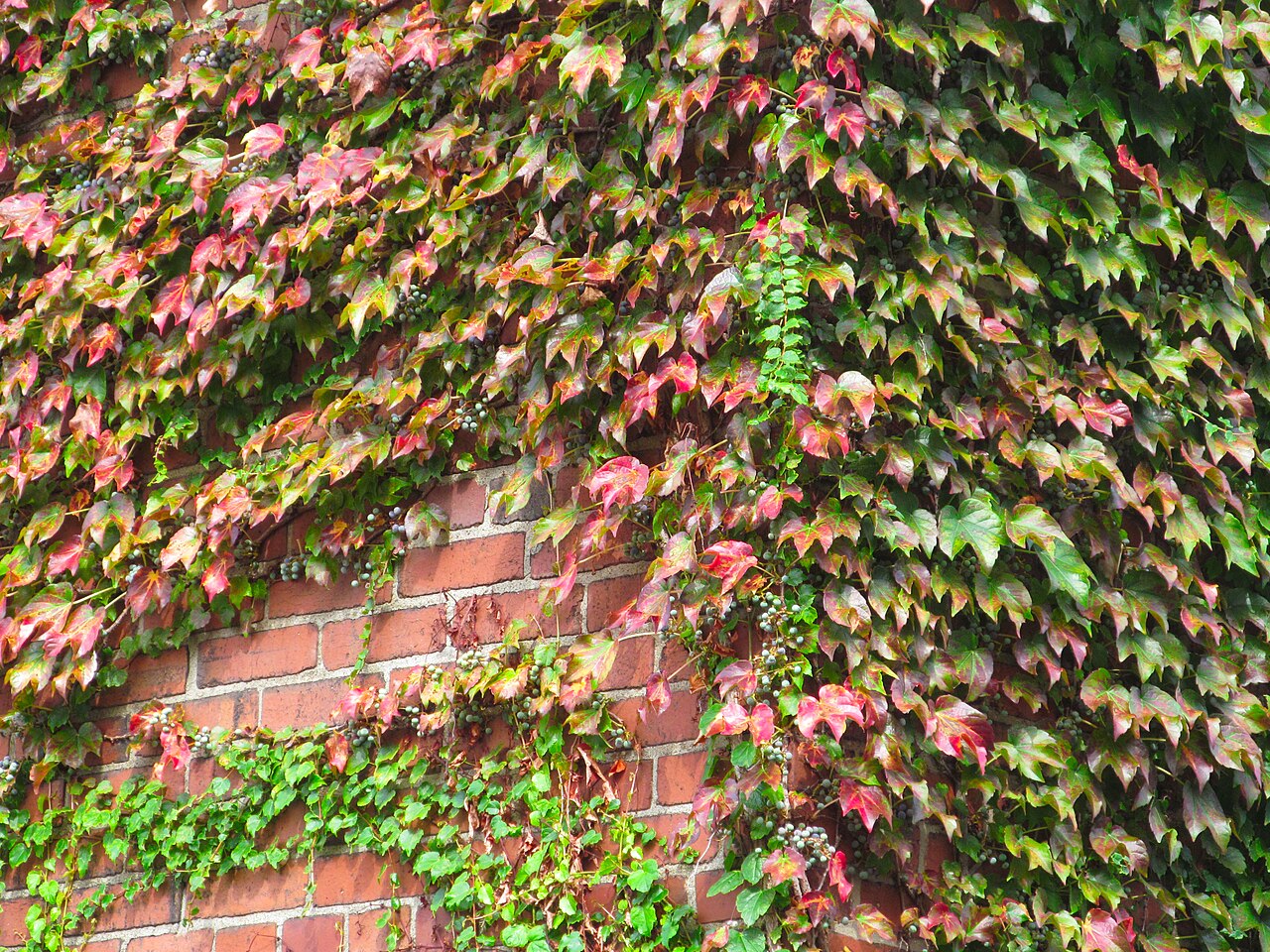
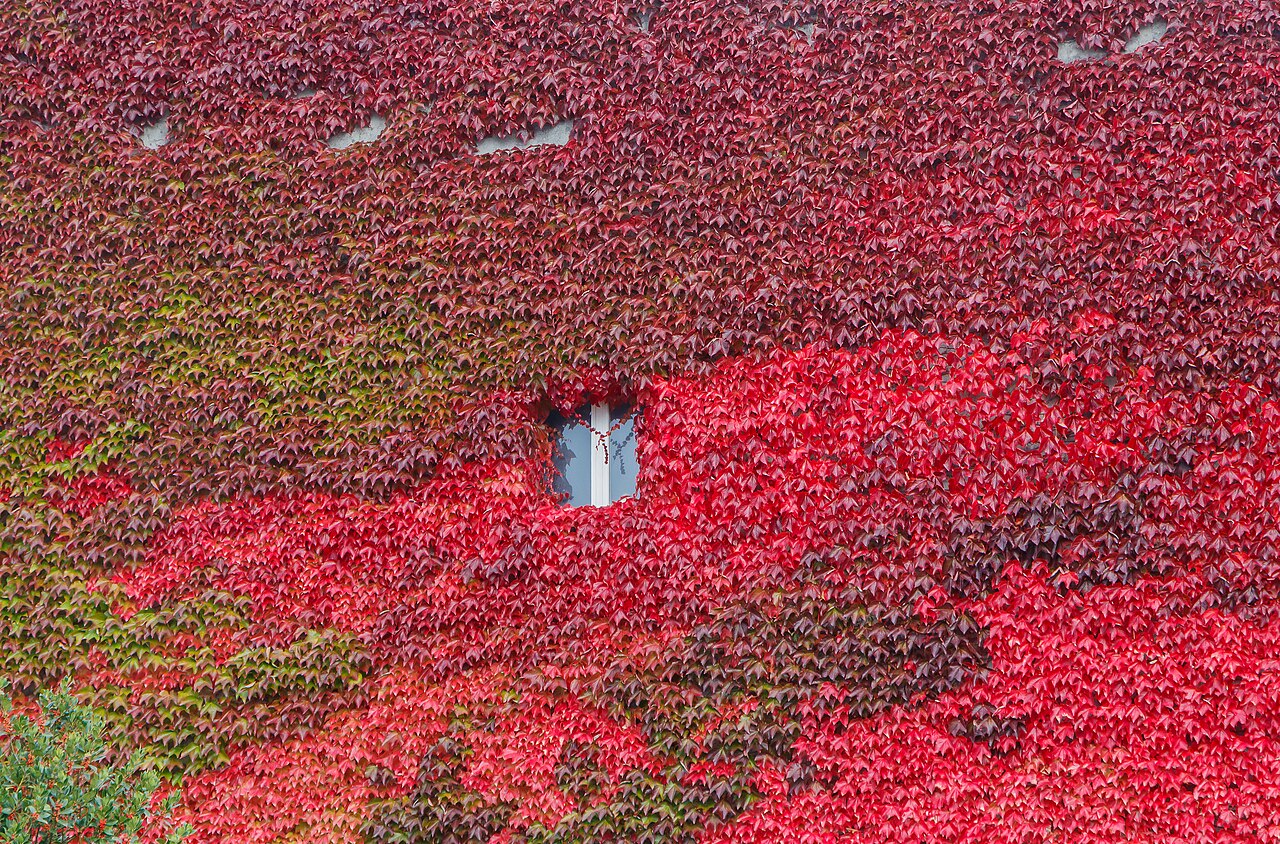
Veitchii is the refined Boston ivy: a selected form with smaller leaves and finer texture than the species, the leaves emerging purple in spring, maturing to dark green with white variegation in some accounts, and turning an outstanding red in fall. Nursery references list it among the better varieties for exactly that refinement — a wall covered in Veitchii reads as textured and detailed rather than coarse and billowy, which suits smaller walls, cottages, and garden structures where the species’ big, 4- to 8-inch leaves would overwhelm the architecture. It climbs to about 40 feet like the species, self-clinging by adhesive disks, and it is drought-tolerant once established, which is more than many wall vines can say.
The trade-off is hardiness plus surface risk, both worth stating: small-leaved Boston ivy types are noted as less hardy than the regular species, so Veitchii sits at the tender end of the Boston ivy range, and like all Boston ivies it attaches with disks that can damage paint and soft mortar — do not plant it on a wall you plan to repaint, and prune it annually off gutters, roofs, and windows. It is also vigorous: ‘refined’ describes the leaf, not the growth rate, and a Veitchii left alone will cover its wall and then look for the next one.
If you are new to choosing between cultivars, the Varieties Matter guide explains why the name after the plant matters as much as the plant itself. Veitchii is a perfect example: it is not just a boston ivy in the abstract, it is a boston ivy with a specific job, a specific history, and specific strengths.
Florida honesty, stated plainly: Boston ivy is a North Florida trial, not a statewide promise, and Veitchii is the more tender trial of the two in this wave, being less hardy than the species. It is hardy to zone 8, and Florida’s heat and humidity are not its temperate weather — expect decline or failure south of the Panhandle, and even in North Florida give it part shade with afternoon protection, well-drained soil, and a sturdy support you can prune from. Its smaller leaves scorch more readily than the species’ big ones in hot sun, so shade is not a compromise here, it is the trial plan.
How to grow
Plant in spring or fall in well-drained soil in sun to part shade, against a sturdy support you do not plan to repaint — Boston ivy attaches with adhesive disks that can damage paint and soft mortar. Work worm castings into the planting hole, water through the first season, and prune annually to keep it off gutters, roofs, and window frames. Give it a wall, fence, or arbor it can cover for decades, and manage it like the vigorous woody vine it is, not like a groundcover.
Set plants 5-10 feet apart for coverage; climbs 30-50 feet in soil with a pH around 6.0-7.5. Work worm castings into the bed at planting and mulch to hold moisture. A well-fed boston ivy plant rewards that care directly: steadier growth, better bloom, and a show that actually shows up.
Water & feeding
Water through the first season, then water in drought — established Boston ivy is drought-tolerant and vigorous, and it needs management more than feeding. Water at the soil line, mulch at the base (not against the wall), and feed lightly: castings at planting plus a spring top-dress is enough. Overfeeding makes a more vigorous vine, which, for a plant that already covers walls, is a mixed blessing.
Common problems
- Damage to paint and soft mortar — adhesive disks stick permanently; do not plant on walls you plan to repaint, and prune off gutters, roofs, and windows annually.
- Vigorous escape — Boston ivy covers whatever it reaches; prune hard every year and never let it climb into trees or onto roofs.
- Scale insects on stressed vines — prune out badly infested growth and encourage predators; avoid broad-spectrum sprays.
- Leaf scorch in hot sun — gold and small-leaved forms scorch more readily; part shade with afternoon protection is the safer trial in hot climates.
- Short life or sparse coverage in hot, humid climates — heat shortens Boston ivy life; in warm zones, treat it as a trial on a sturdy, prunable support.
Harvest
There is no flower or fruit harvest — Boston ivy’s flowers are insignificant and its blue-black berries are ornamental for birds, not for people (the berries are not edible and the foliage can irritate skin, so wear gloves when pruning). The real seasonal work is pruning: cut back annually to keep it off gutters, roofs, windows, and neighboring plants, and remove any growth heading for a tree or a painted surface you care about. A well-pruned Boston ivy is a wall covering; an unpruned one is a takeover.
Browse all plant & pest guides
Saving seeds
Veitchii is the refined Boston ivy: a selected form with smaller leaves and finer texture than the species, the leaves emerging purple in spring, maturing to dark green, and turning an outstanding red in fall. A wall covered in Veitchii reads as textured and detailed rather than coarse and billowy, which suits smaller walls, cottages, and garden structures where the species’ big, 4- to 8-inch leaves would overwhelm the architecture. Seed will not repeat this selected form, so Veitchii is kept true by cuttings or layering: take stem cuttings in summer, or peg a low stem to the ground and let it root. It climbs to about 40 feet like the species, self-clinging by adhesive disks, and it is drought-tolerant once established. The full method is in the Saving seeds section of the Boston Ivy guide.